Experience fit
- Main split
- Fresh lava, old crater, or indoors
- Live lava
- Never guaranteed
- Guide line
- Useful, but closures still apply
- Indoor fallback
- Exhibitions in Reykjavík and South Iceland
- Recheck
- Access, weather, roads, and air
Seeing flowing lava is never a standard tour promise. Iceland’s more dependable volcano experiences include recent lava fields, established craters, guided caves and magma chambers, and indoor exhibitions. Start with the type of experience you want, then check access, terrain, weather, roads, and volcanic gas before you go.
Experience fit
The orange lava in travel photos is an event, not a standing attraction. A good volcano day starts by deciding how much uncertainty, walking, weather, and booked access you want.
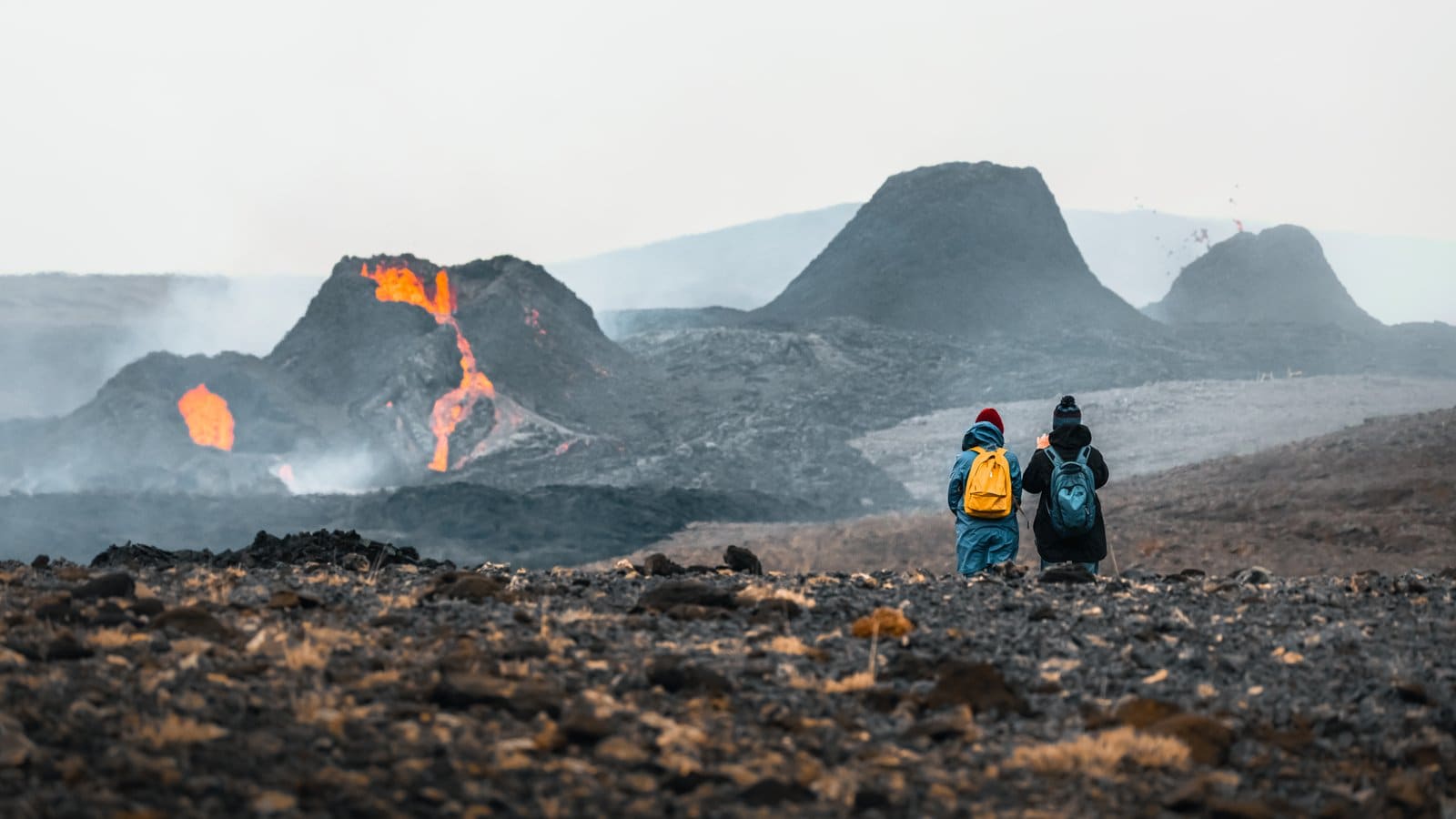
Fresh lava draws the attention, but it is the least dependable branch. An eruption may stop before your trip, a viewing area may close, gas may blow across the route, or there may be no public path. No guide, ticket, or aircraft can promise that nature will produce flowing lava on your date.
The alternatives are not consolation prizes. A walk beside the cooled lava at Fagradalsfjall, the crater rim at Hverfjall, a descent into Þríhnúkagígur, or an exhibition such as LAVA Centre answers a different question about how Iceland was formed.
| Experience | Access test | Guide line | If it fails |
|---|---|---|---|
| Active eruption viewpoint | Public access must be explicitly allowed that day | A guide helps only on an open route | Visit a recent lava field or established crater |
| Recent lava-field walk | Check the named path, weather, gas, and road | Useful for navigation and context; not always required | Use an easier old crater or indoor exhibit |
| Established crater or lava landscape | Check the path and approach road | Often self-guided on an open marked route | Pick a lower, shorter stop nearby |
| Lava cave or magma chamber | A confirmed tour and suitable participant rules | Managed underground visits are guided | Move to an above-ground attraction |
| Indoor volcano exhibition | Check the venue details before visiting | No outdoor guide needed | Use another museum on the route |
Photo guide
1 / 7
Recent lava can remain hot, rough, and changeable after the visible eruption ends.
Good to know
If an eruption is happening, the first useful question is not which tour has space. It is whether authorities allow visitors into a defined area at all.
Open the Icelandic Met Office hazard information, SafeTravel, and the local access notice for the named site. These sources do different jobs: volcanic monitoring describes hazards, while local authorities and rescue information tell travelers about closures and conditions. An aviation color map is about air traffic and is not permission to enter on foot.
Aerial sightseeing removes the walk but not the uncertainty. Flights depend on weather, visibility, airspace, and the operator’s go/no-go call, and an aircraft can only show flowing lava if lava is actually present. Compare cancellation and rebooking terms on the direct operator page rather than treating a flight as a guaranteed eruption view.
Build the day with a second volcanic stop that does not need an eruption. On Reykjanes, that might mean the wider Reykjanes Peninsula road trip, provided its roads and stops are accessible. If outdoor conditions are poor, a Reykjavík exhibition at Perlan gives the day a clear indoor anchor.
A previous eruption site may be quieter than an active fissure, but the walk can still involve rough lava, loose ground, wind, rain, and a route that changes with local instructions.
At Fagradalsfjall and Litli-Hrútur, go for the scale of the lava field and the contrast between older mossy land and newer dark rock. Do not expect heat or glowing lava. Stay on the marked route and keep away from brittle lava edges, cracks, and protected surfaces.
Wear sturdy shoes with grip, warm layers, and waterproof outerwear. A clear Reykjavík morning does not tell you what the wind and visibility are doing on the peninsula. If volcanic gas or smog is part of an official notice, check the nearest air-quality readings as well as the trail information.
A guide can remove some navigation and transport work and explain what you are seeing. Independent walking can suit prepared visitors on an officially open marked route. Neither format makes unstable ground, gas, or bad weather disappear.
Established volcanic landscapes are easier to place in an itinerary because the attraction does not vanish when an eruption ends. The road, path, snow, wind, and group ability still matter.
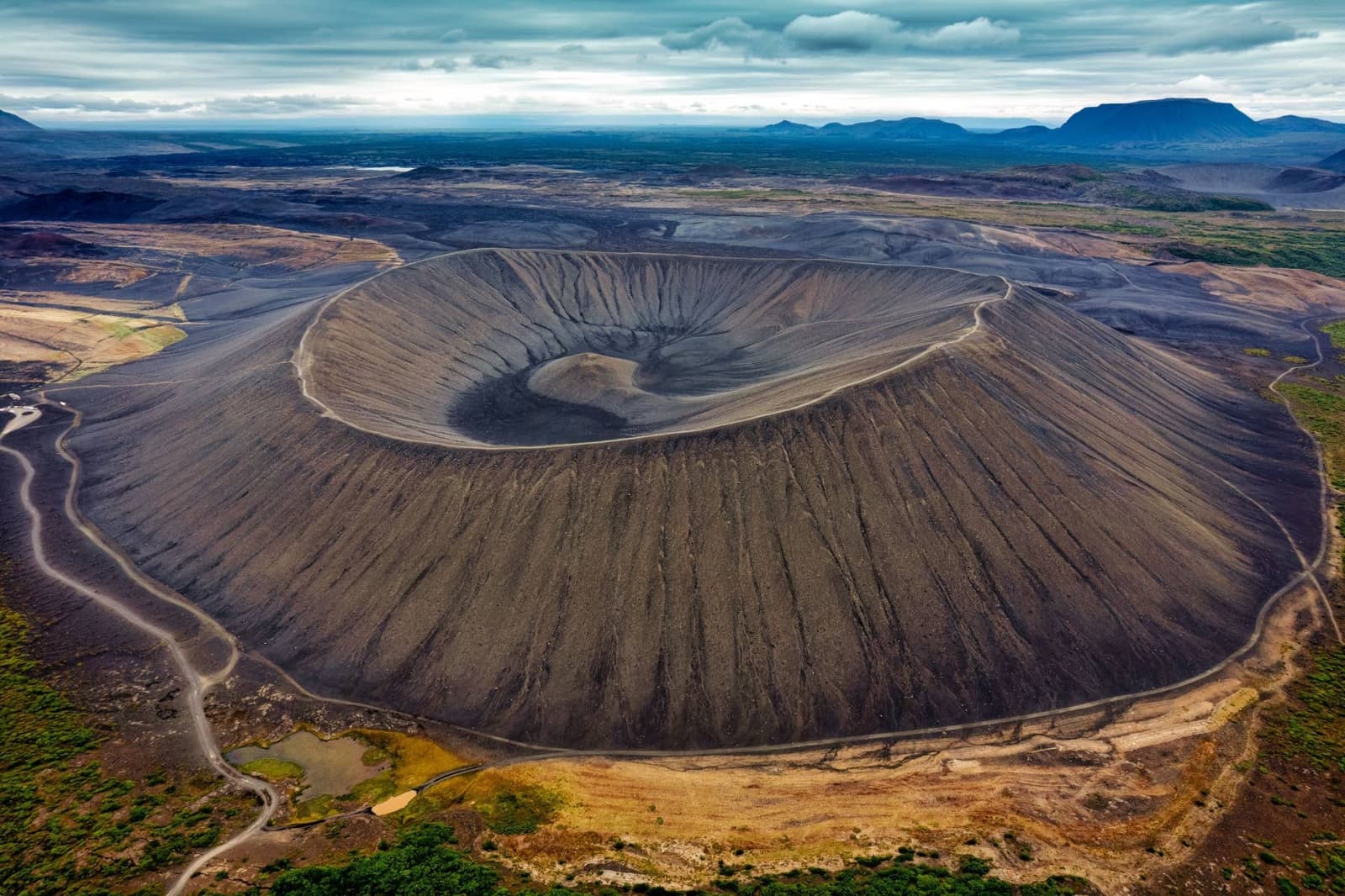
In North Iceland, Hverfjall is a broad tephra crater beside Lake Mývatn. Its dark rim and open view make the landform easy to read, while nearby Krafla and Víti add caldera, crater-lake, and geothermal context. These stops make most sense when North Iceland is already part of the trip.
In West Iceland, Eldborg is a more compact crater walk that can fit a Snæfellsnes or Borgarfjörður journey. In South Iceland, Hekla is better treated as a volcanic landscape and monitored system than as a casual summit promise. Mountain conditions and route choice need their own hiking judgment.
“Old” does not mean unrestricted. Stay on marked paths, respect protected land, and never drive off road to shorten the approach. Check official road information before a remote crater, especially outside summer or when the route leaves the Ring Road.
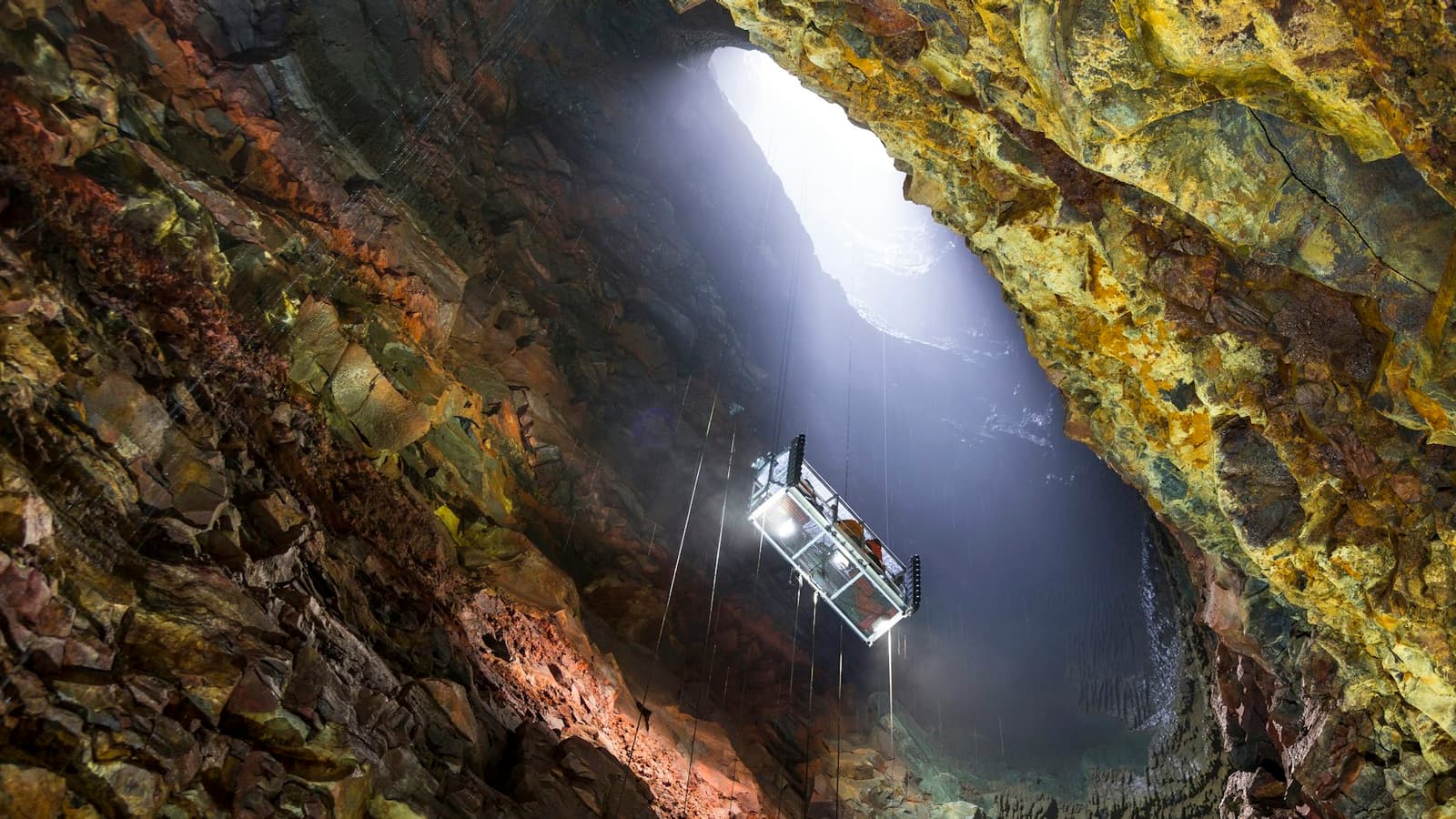
Going underground trades live-eruption uncertainty for a booked format with defined equipment, walking surfaces, stairs, and participant rules.
A lava tube is rock left behind by an older flow. Some tours use lit walkways, while others involve spiral stairs, darkness, loose rock, low passages, or more work on hands and knees. Compare managed routes at Raufarhólshellir, Víðgelmir, and Vatnshellir Cave with rougher cave formats before choosing.
Þríhnúkagígur is different: the visit crosses open ground and then descends by an open lift into a magma chamber. It is not a quick indoor substitute for a rainy day. Check operating dates, the approach walk, clothing, age and mobility rules, and meeting details on the direct tour page before booking.
Tell the operator about claustrophobia, vertigo, knee or balance concerns, or limited mobility before paying. Choose the walkway, stairs, rough cave, or open-lift format everyone actually wants—not the one with the most dramatic photograph.
Exhibitions are the most dependable option when the group needs level floors, less exposure, a shorter stop, or a day that does not depend on the weather.
LAVA Centre in Hvolsvöllur uses interactive halls, eruption footage, earthquake material, and monitoring displays to explain the systems around the South Coast and Reykjanes. It fits naturally between Reykjavík and the South Coast and states that its main exhibition is on one level. Recheck admission, opening, and access details with the venue.
Perlan works better from a Reykjavík base and combines its volcano material with wider Icelandic nature exhibits. Eldheimar Museum on Heimaey tells a more specific human story about the 1973 Eldfell eruption, but reaching it belongs to a Westman Islands plan rather than a casual mainland backup.
An exhibition cannot reproduce the wind, scale, or rough ground of a lava field. It can explain what an eruption image does not show: monitoring, different volcanic systems, the way communities respond, and why access instructions change.
The value of a guide is practical support and interpretation, not special permission to ignore a closure or a promise that lava will appear.
For a surface outing, a guide may handle transport, interpret hazard and access information, keep the group on the intended route, and explain the geology. That can be worthwhile if you do not want to drive, if conditions are unfamiliar, or if local context is a major reason for the day.
For managed caves and the Þríhnúkagígur chamber, the guide is part of the access format. For an established marked crater, you may not need one when the route is open and suits your group. In every case, official instructions and your own comfort come before finishing the planned outing.
Use the source that matches the uncertainty: volcanic hazards, public access, outdoor conditions, roads, or air quality. A tour page cannot replace them.
Check again shortly before leaving, and repeat the check if the weather, seismic activity, gas notice, or route changes. Save the links before driving into an area with weaker reception.
Read the ground-hazard assessment and its warning that conditions and mapped hazards can change. The source is in Icelandic.
Check traveler alerts, eruption-area guidance, hiking conditions, and road-weather concerns before an exposed walk.
Use the regional links for named-site access, marked routes, weather, gas, and local instructions.
Check the approach road before driving toward Reykjanes or a remote crater.
Check nearby sulfur dioxide and particle readings when volcanic gas or smog may affect the day.
Verify the Hvolsvöllur exhibition, access information, admission, and visit details.
These answers separate the experience you can plan from the volcanic event you cannot schedule.
No tour can guarantee that. Flowing lava requires an eruption, suitable visibility, and authorized access or airspace on the day. Book only after you understand what the outing does when no eruption is visible.
Some established craters and officially open marked lava-field routes can be self-guided when conditions and group ability suit them. Managed caves and magma-chamber visits are guided. A closure applies to guided and independent visitors alike.
An exhibition or an easier established crater can suit many families. Fresh-lava routes, rough fields, caves, stairs, and open lifts need a closer look at distance, terrain, gas, age rules, mobility, and each child’s comfort.
An indoor exhibition removes the exposed trail and road-to-trailhead pressure, though you still need safe transport to the venue. Do not use a cave or chamber tour as an automatic weather backup; its approach and operating decision may still depend on conditions.
Reykjanes is convenient from Reykjavík and Keflavík for recent lava and geothermal terrain. North Iceland has Hverfjall and Krafla, South Iceland has museums and major volcanic systems, and West Iceland has Eldborg and lava-cave options. Use the region already on your route.
By ThorPublished
Where to do it
Go underground, plan a surface walk, or add geothermal bathing without depending on a live eruption.
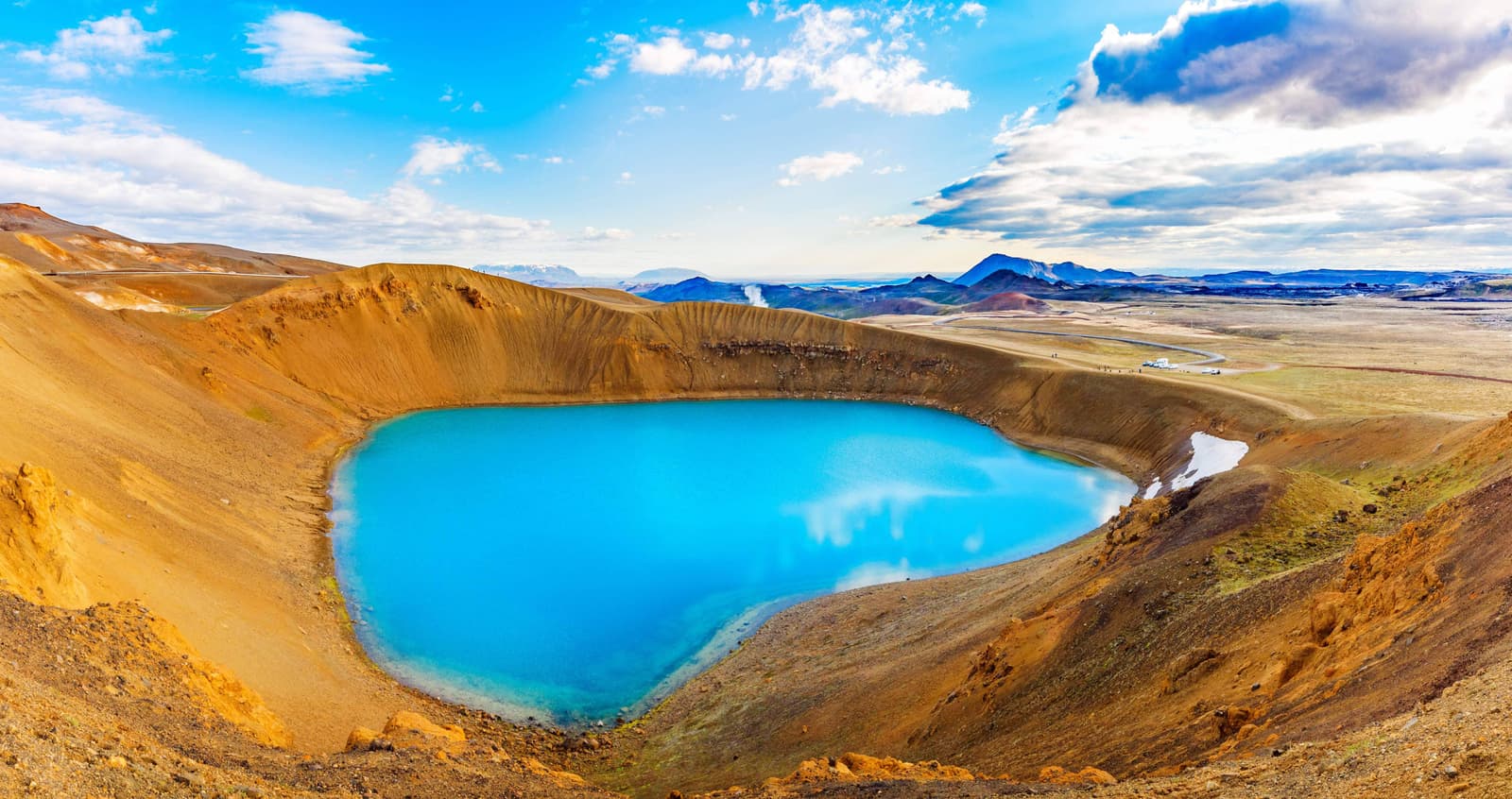
Víti in Krafla is a blue-green maar crater above Lake Mývatn, useful as a short Diamond Circle volcanic stop when road, wind, and rim conditions support more than a quick viewpoint.
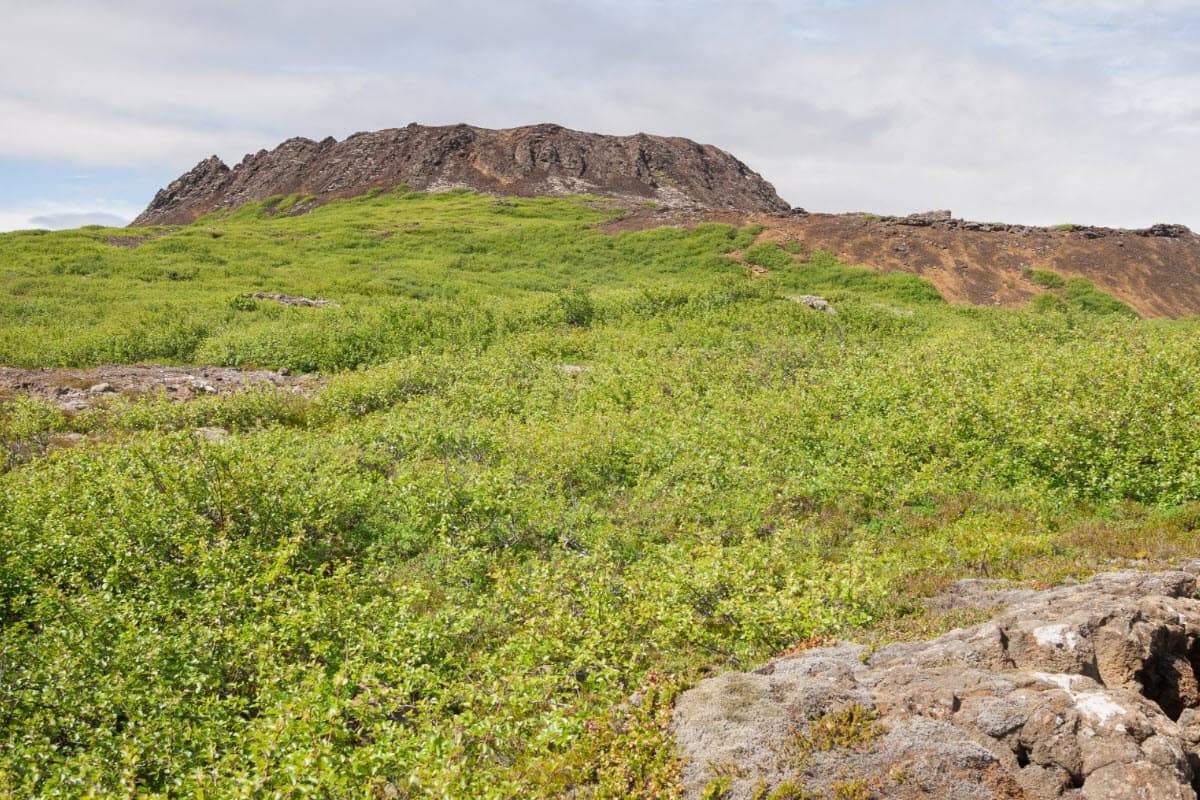
Eldborg is a protected volcanic crater in West Iceland, worth adding when you want a real lava-field hike near the Snæfellsnes approach rather than another quick roadside geology stop.
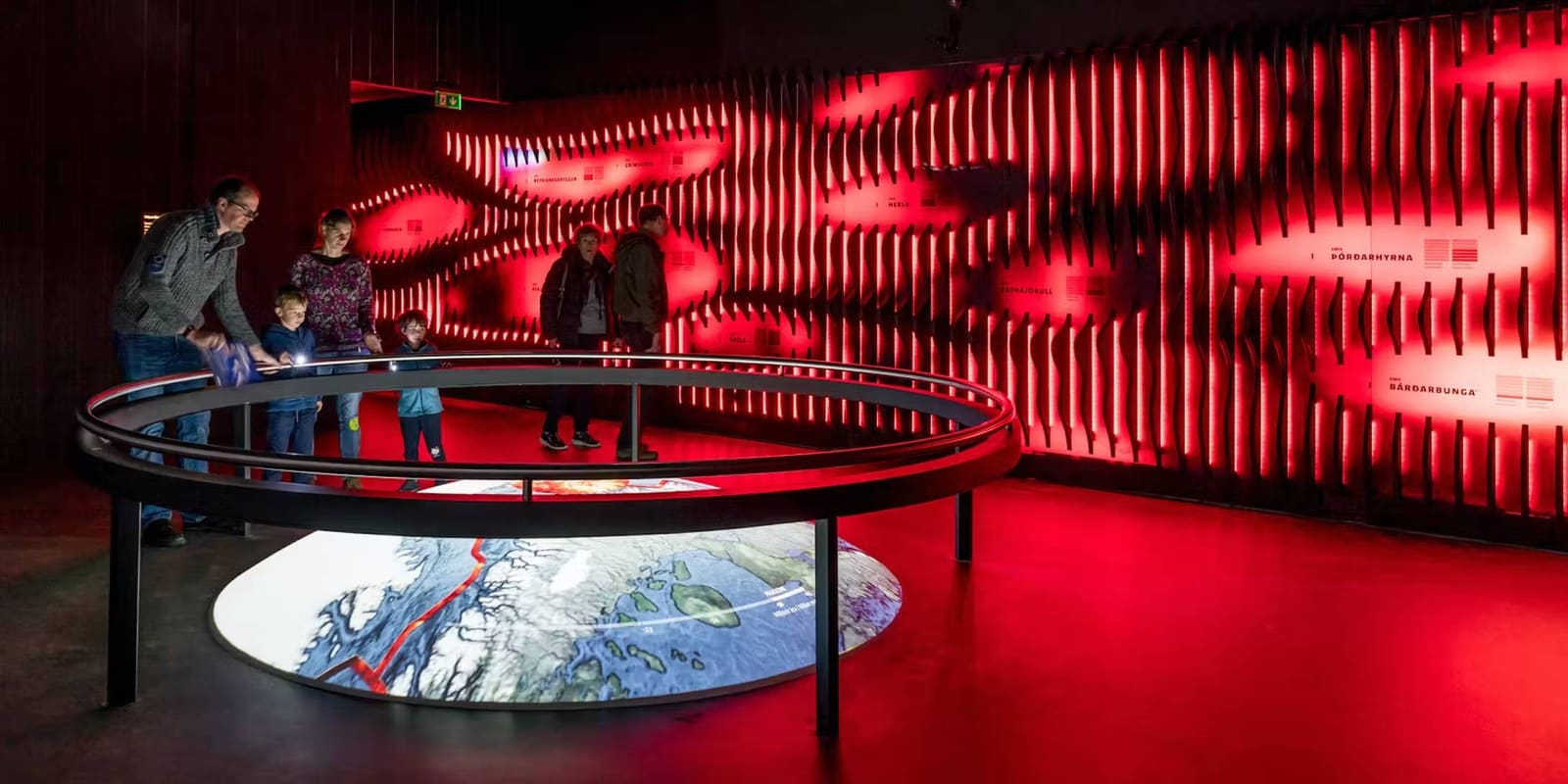
LAVA Centre is an interactive volcano and earthquake exhibition in Hvolsvöllur, useful when a South Coast day needs indoor context, family-friendly pacing, or a weather-resilient stop near major route anchors.
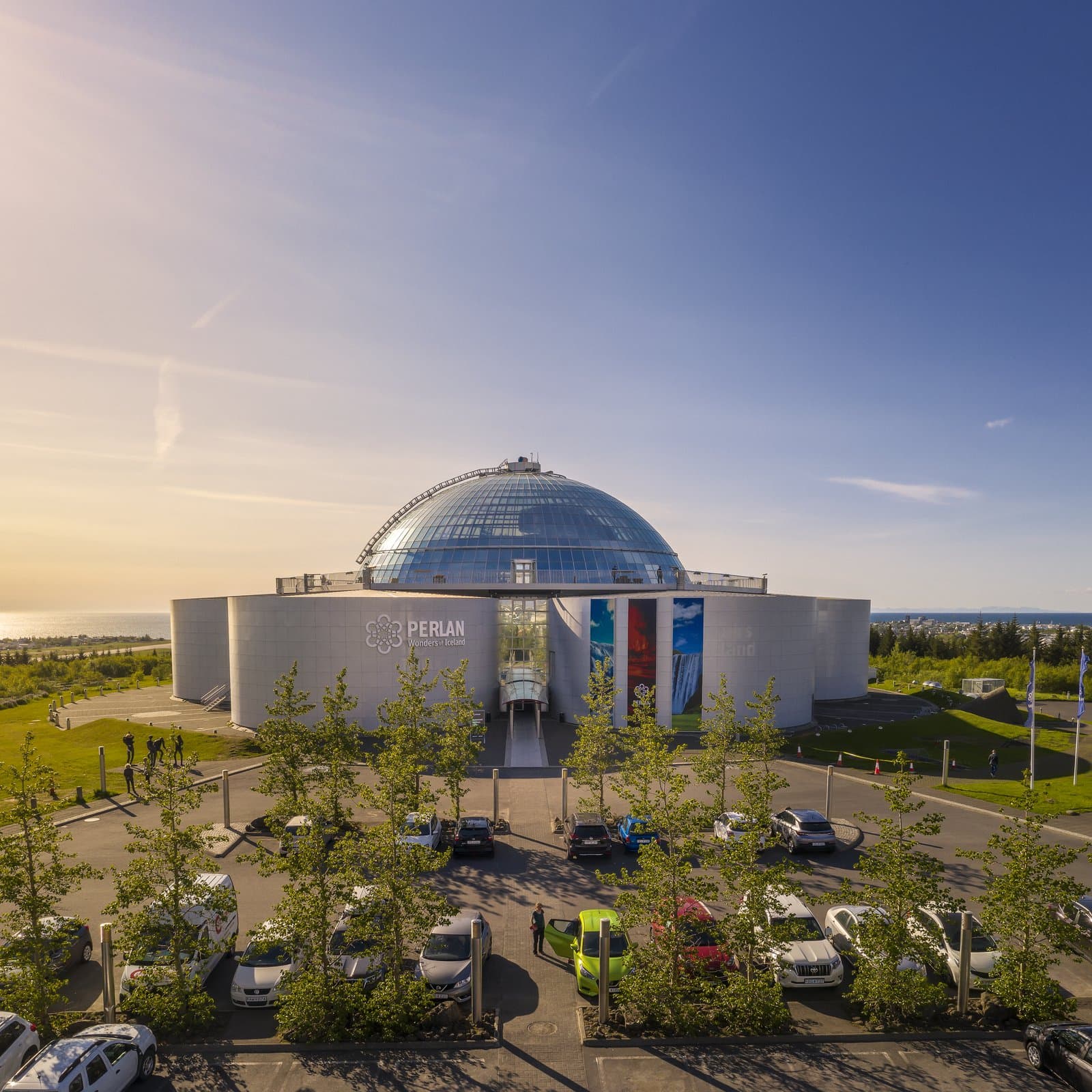
Perlan is a Reykjavík museum and viewpoint, useful when a city day needs weather-resistant exhibits, skyline views, and official visitor-detail checks before committing, with enough flexibility for conditions and nearby route choices.
Regions
See which part of Iceland is most convenient for this experience and what else you can visit nearby.
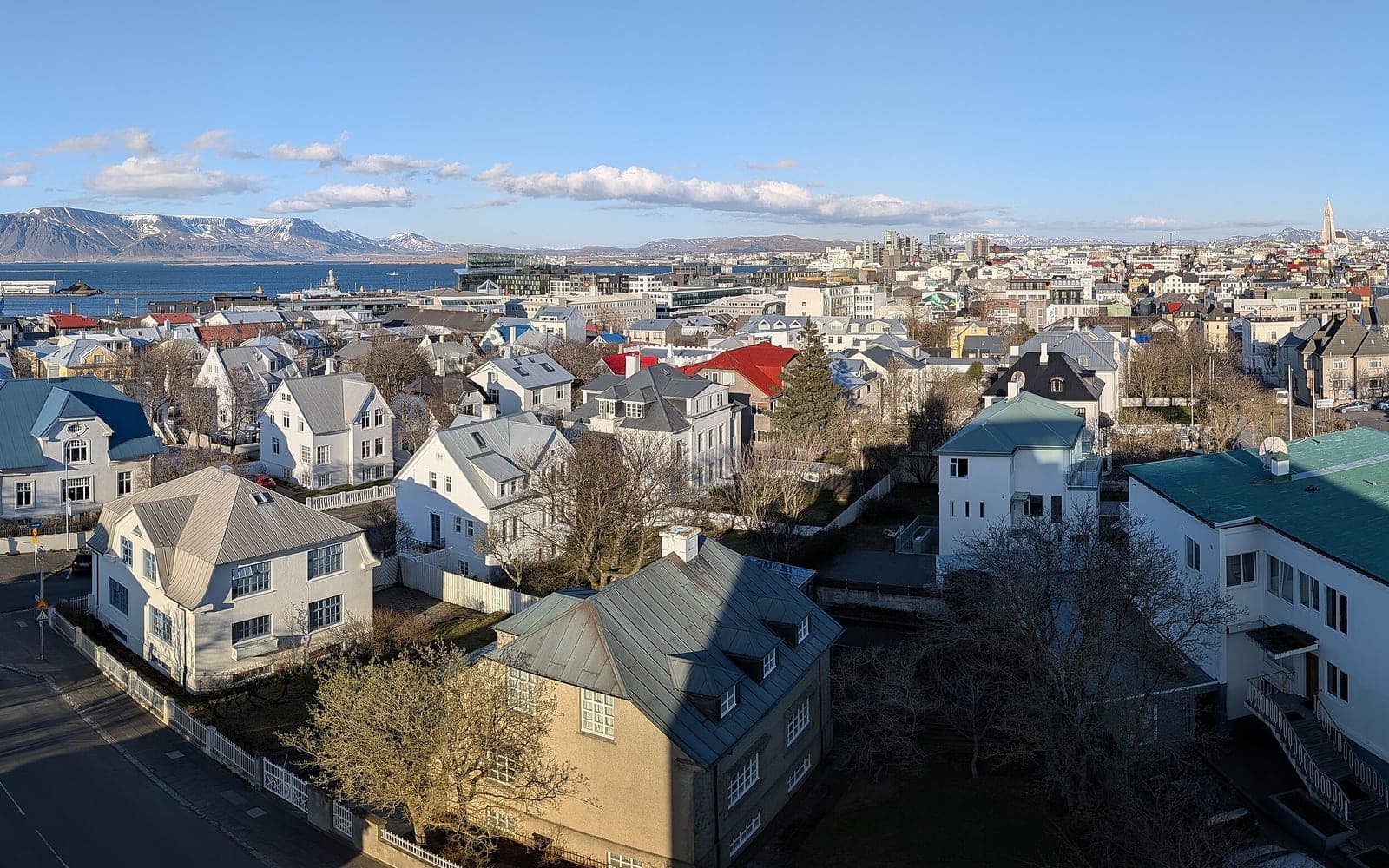
Choose Reykjavík for one or two car-free city days, a short break or a weather buffer—not as the default base for every long day trip.
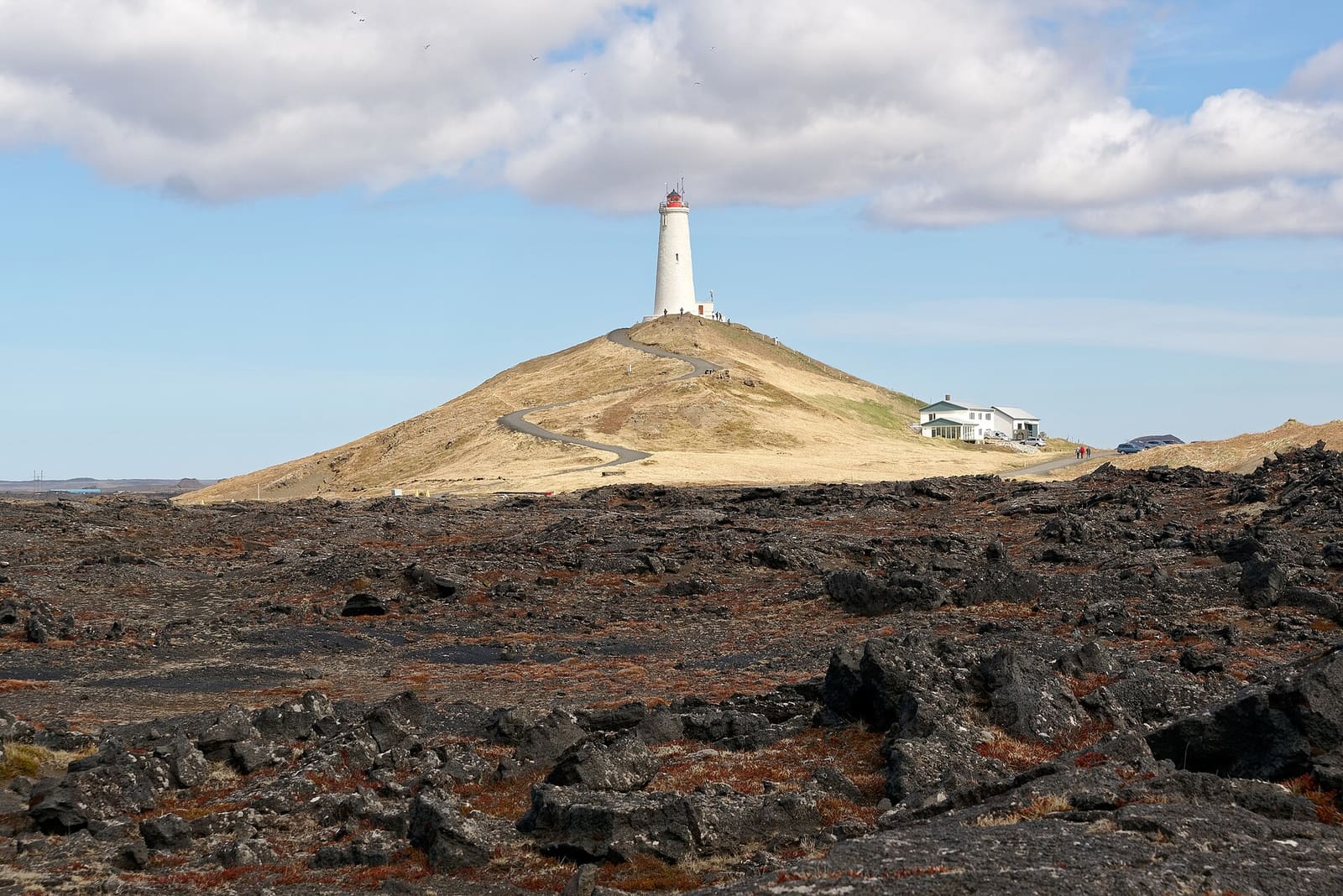
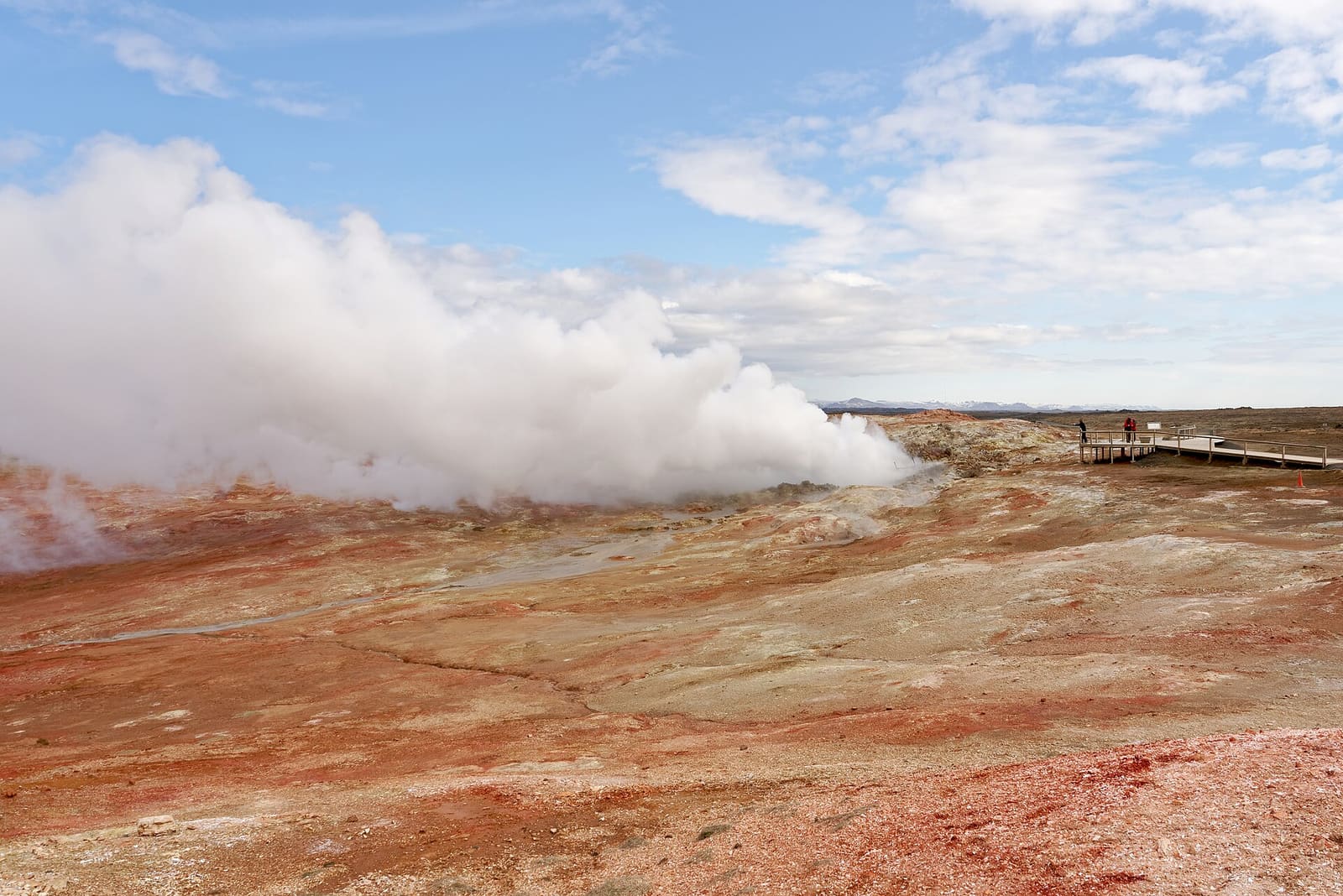
Use this volcanic peninsula for a careful half- or full-day route near KEF, but keep eruption sites, Grindavík and Blue Lagoon plans conditional.
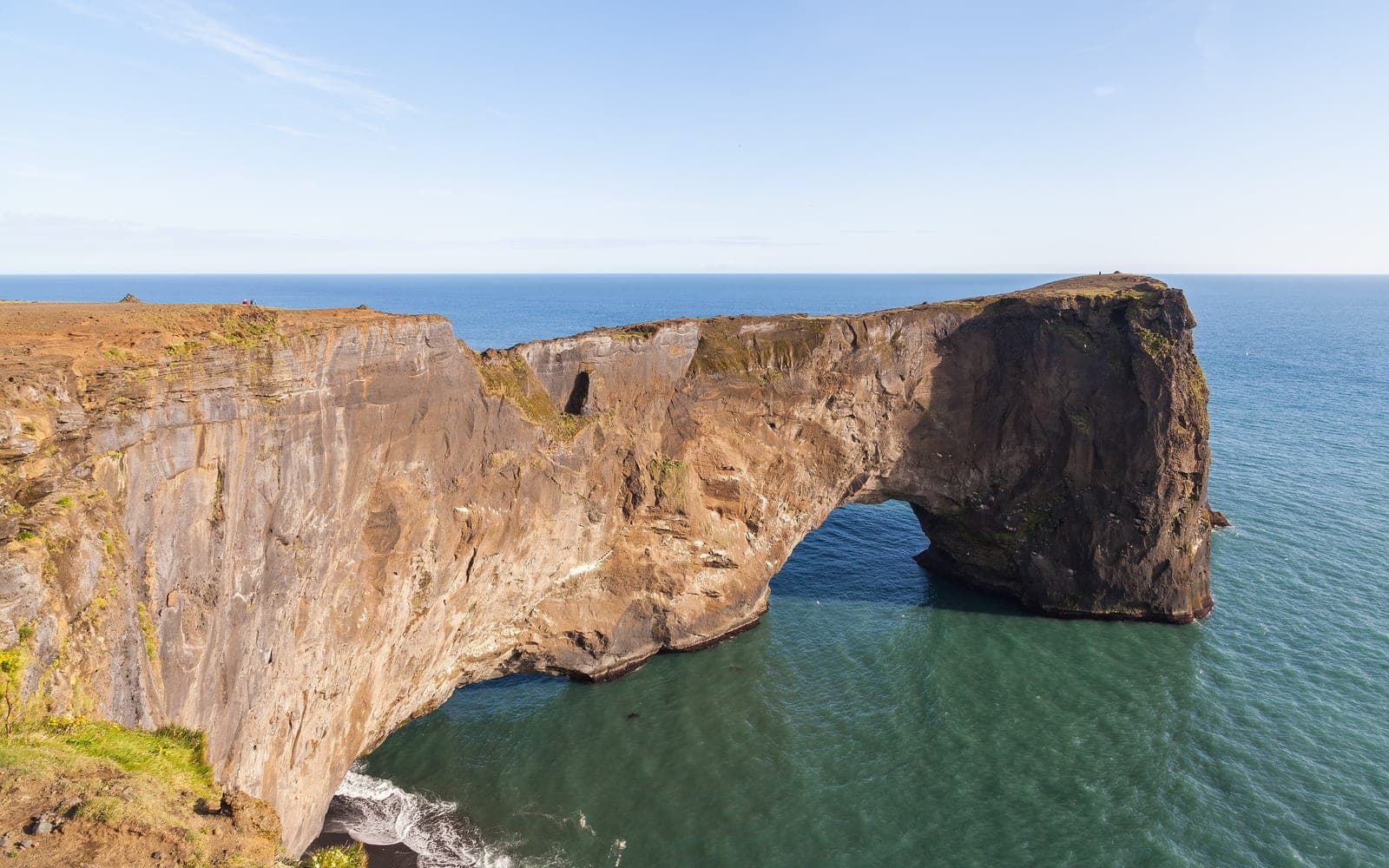
Build a first-trip route around waterfalls, black-sand coast and glacier country, but allow two to four days if Jökulsárlón is part of the plan.
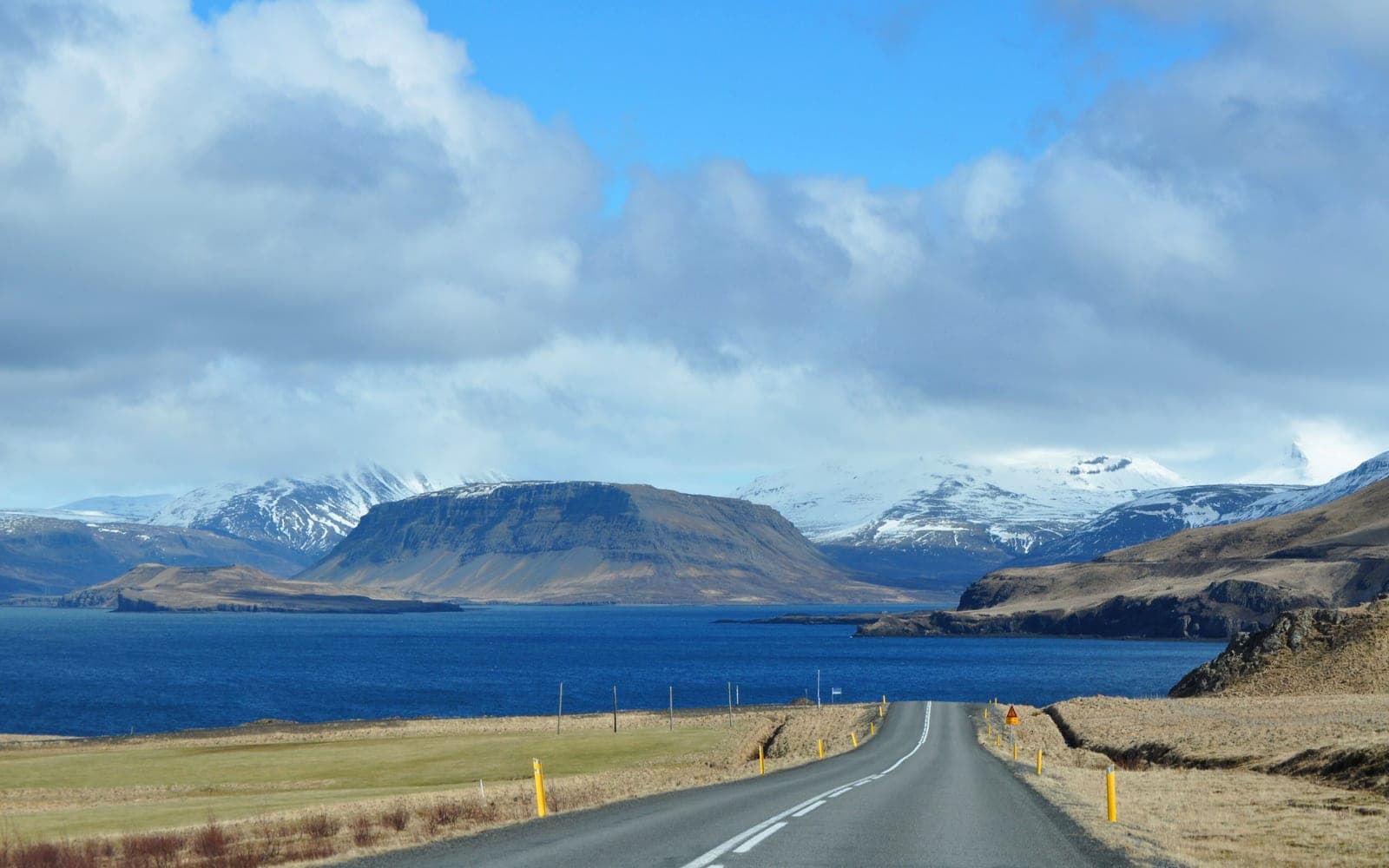
Choose West Iceland for a Borgarnes-based mix of waterfalls, geothermal stops, and caves; skip it if Snæfellsnes already fills your spare westbound day.
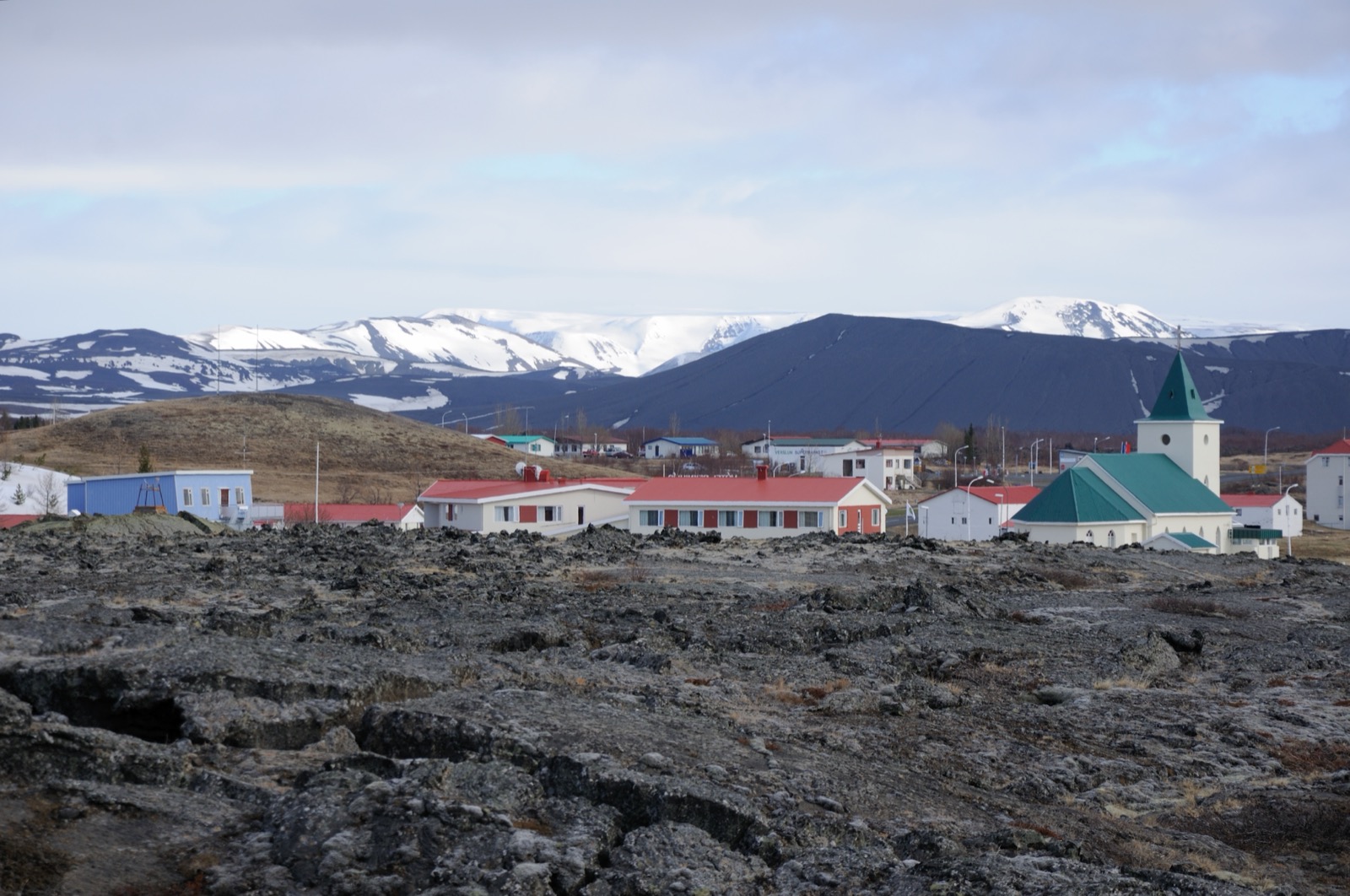
Choose North Iceland when you can spare several days for Akureyri, Mývatn, Húsavík, and canyon country; one rushed overnight barely reaches the region.
More things to do
See other activities that may suit the same day, season, or part of Iceland.
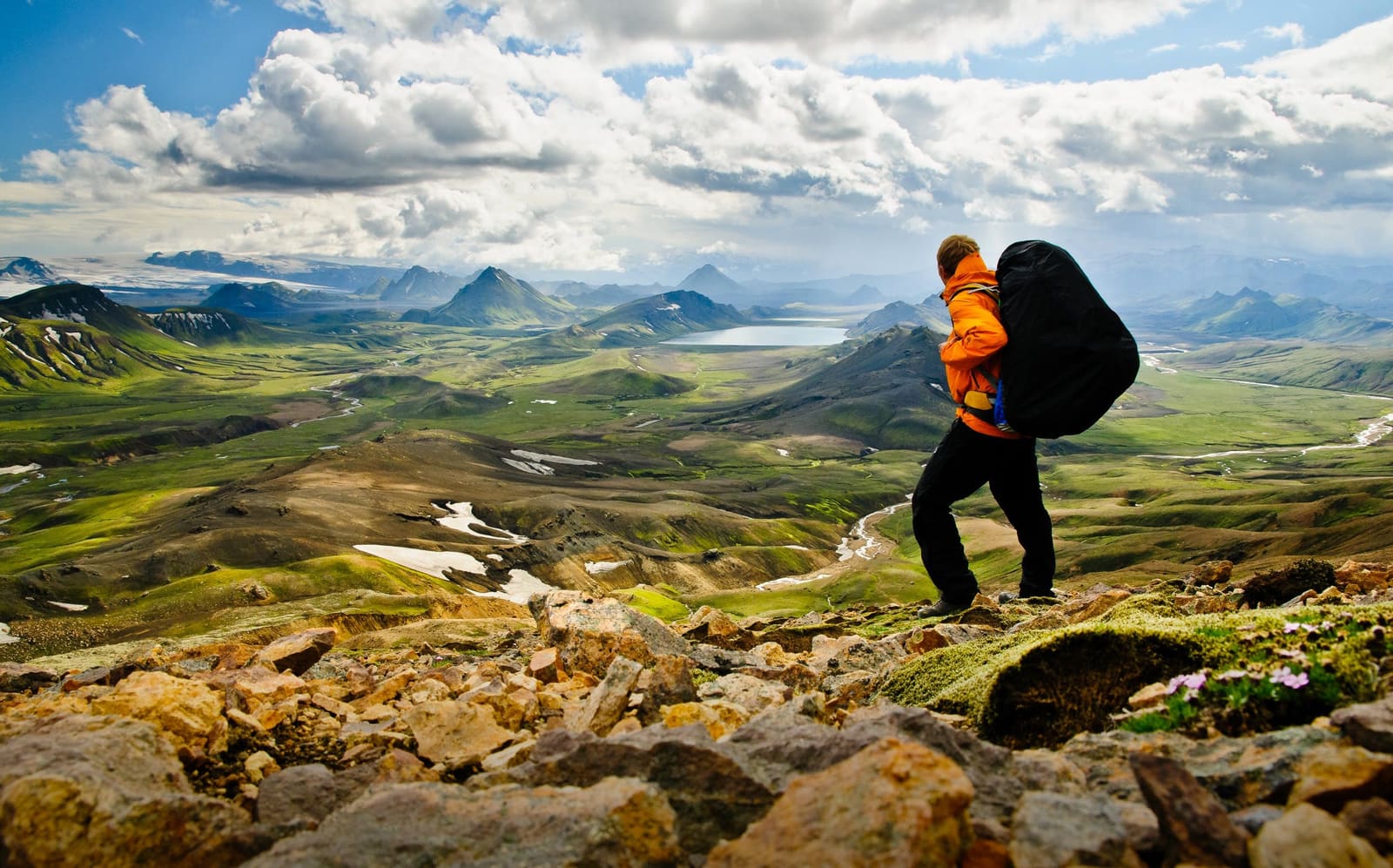
Choose the kind of hiking day before the famous trail name. Compare easy walks, waterfall paths, national-park hikes, Highlands routes, multi-day treks, and guided options by effort, access, season, and weather tolerance.
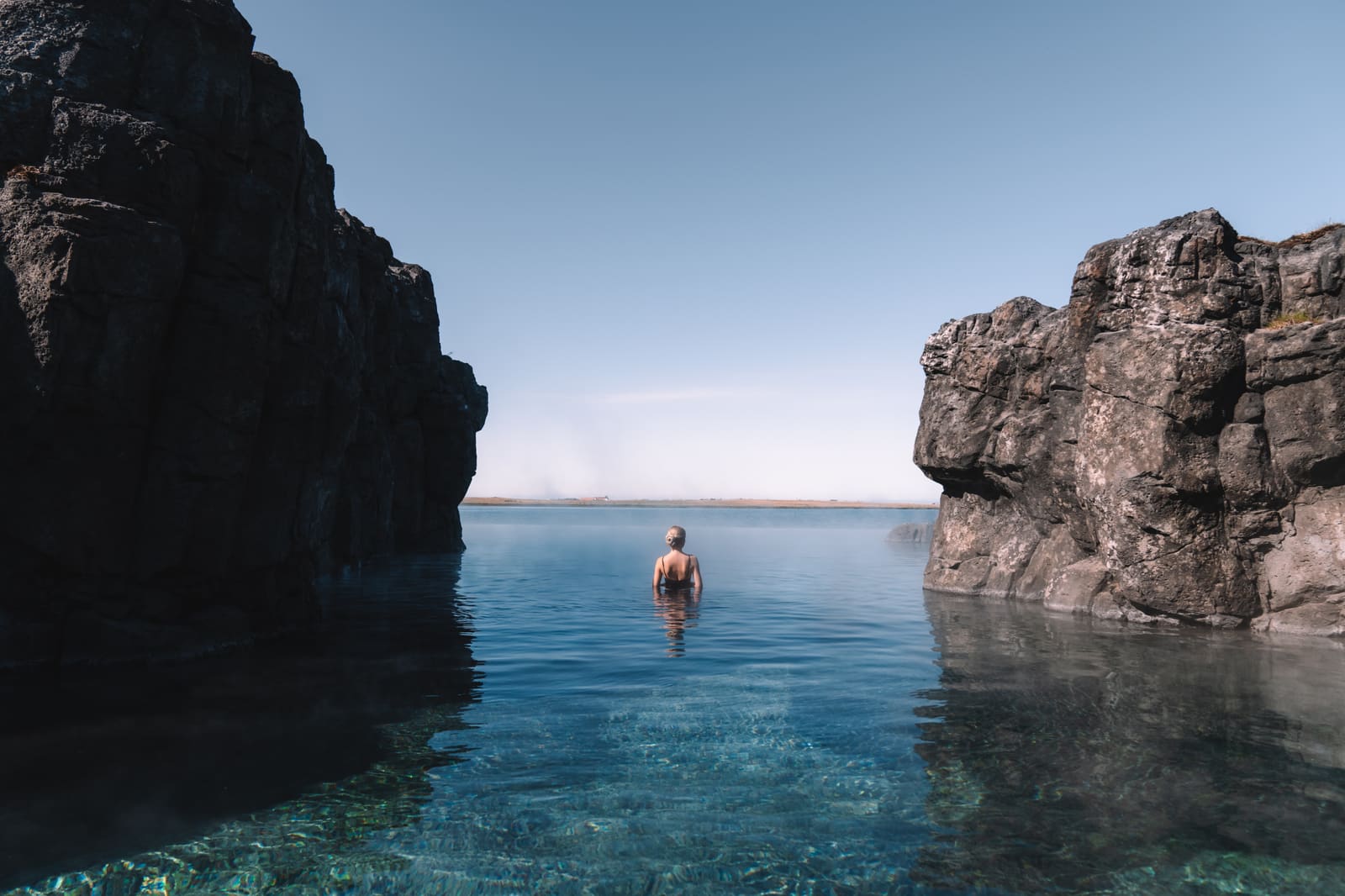
Iceland hot springs work best when you choose the bathing format first: premium lagoon, local public pool, rustic pool, hike-in hot river, remote hot pot, or geothermal area you only admire from the path, then fit it to the day.
Travel advice
Read more about driving, weather, safety, and other details that may affect your trip.
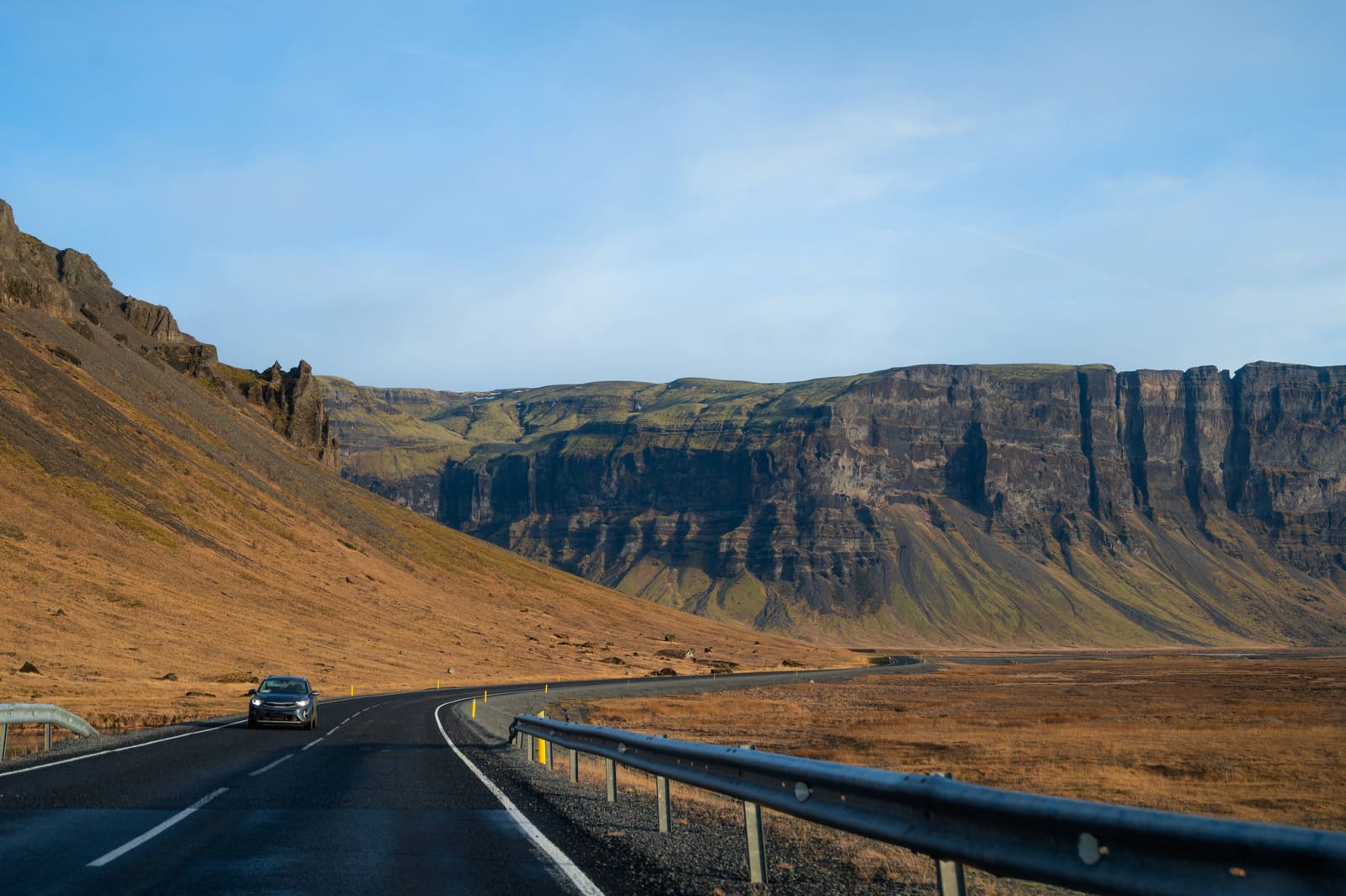
A practical guide to deciding whether to self-drive, matching routes and vehicles, and checking live conditions before every travel day.
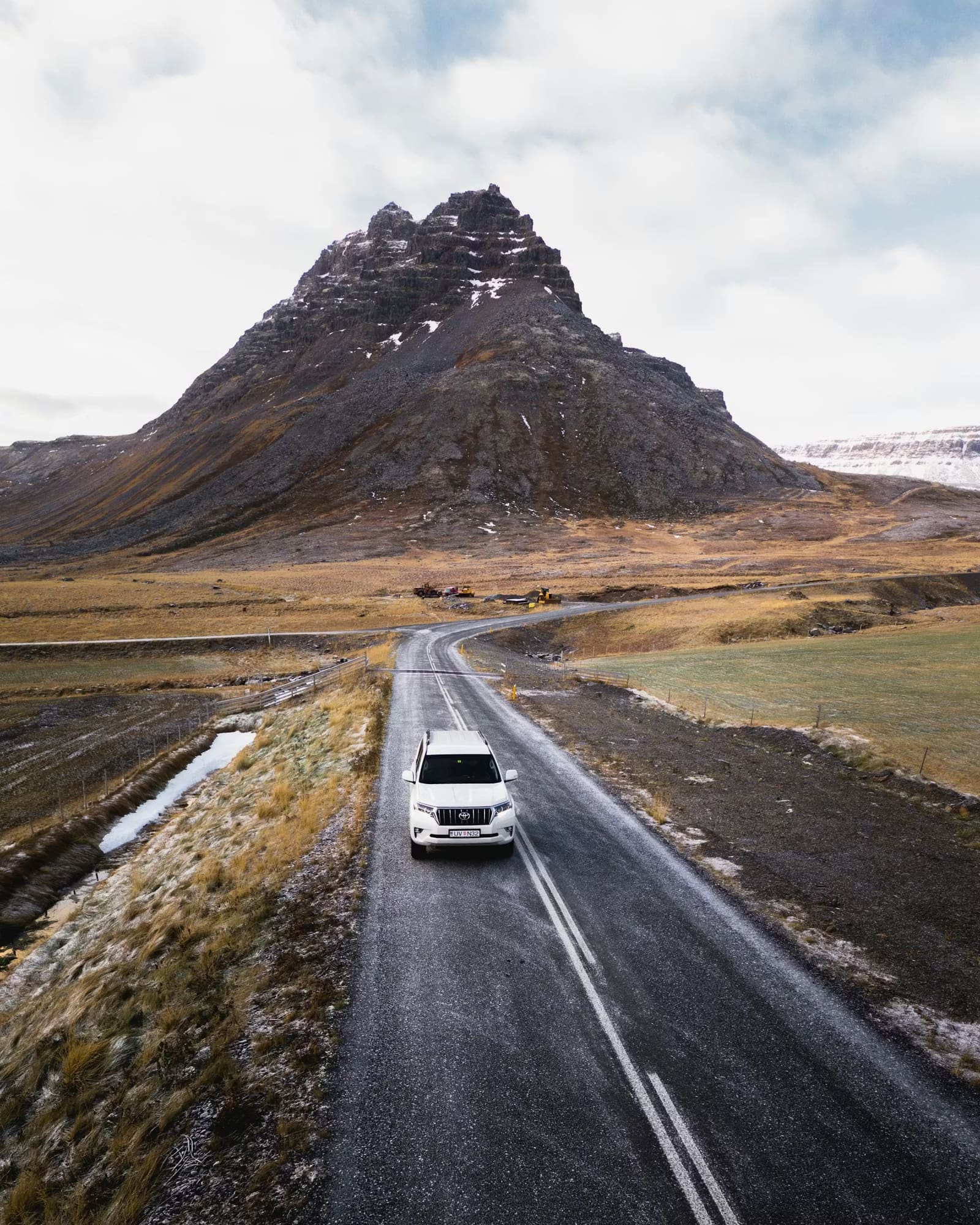
A practical winter self-drive guide for deciding whether to rent a car, which routes to keep realistic, and when weather should change the plan.
Continue with a place or format
Compare underground visits, build a Reykjanes road day, or read about an established crater in North Iceland.