Sundhnúkagígar is a recent Reykjanes crater-row and lava-field area for travelers who want volcanic context, but it only makes sense with flexible timing, official checks, and realistic safety expectations.
Geology snapshot
Type
Recent volcanic crater row, fissure eruptions, and lava-field landscape
Region
Reykjanes Peninsula near Grindavík, Svartsengi, and Fagradalsfjall
Route context
Best as a conditional volcano-focused stop in a flexible Reykjanes day
Time to allow
A longer Reykjanes block if official guidance supports a visit or viewpoint plan
Sundhnúkagígar Craters: when you want to understand the newer Reykjanes eruptions and can let official guidance shape the day
Yes, when you want to understand the newer Reykjanes eruptions and can let official guidance shape the day. Skip it if you need a simple, guaranteed, low-effort stop.
Sundhnúkagígar is not a polished crater viewpoint where the plan stays the same every week. It is a recent crater-row and lava-field area near Grindavík, shaped by eruptions, closures, gas risk, unstable ground, roads, weather, and local authority guidance.
The best reason to add it is context: you see how quickly Reykjanes can change, why Grindavík and Svartsengi matter in the story, and how different this newer volcanic area feels from older, easier stops such as Fagradalsfjall or Geldingadalur.
Add Sundhnúkagígar for flexible self-drive travelers who want recent volcanic landscape and have a backup plan. Skip it for arrival days, family groups who need easy surfaces, or anyone trying to force a live-lava experience.
Photo guide
Sundhnúkagígar Craters in photos
1 / 3
A second eruption angle adds scale without repeating the hero crop.
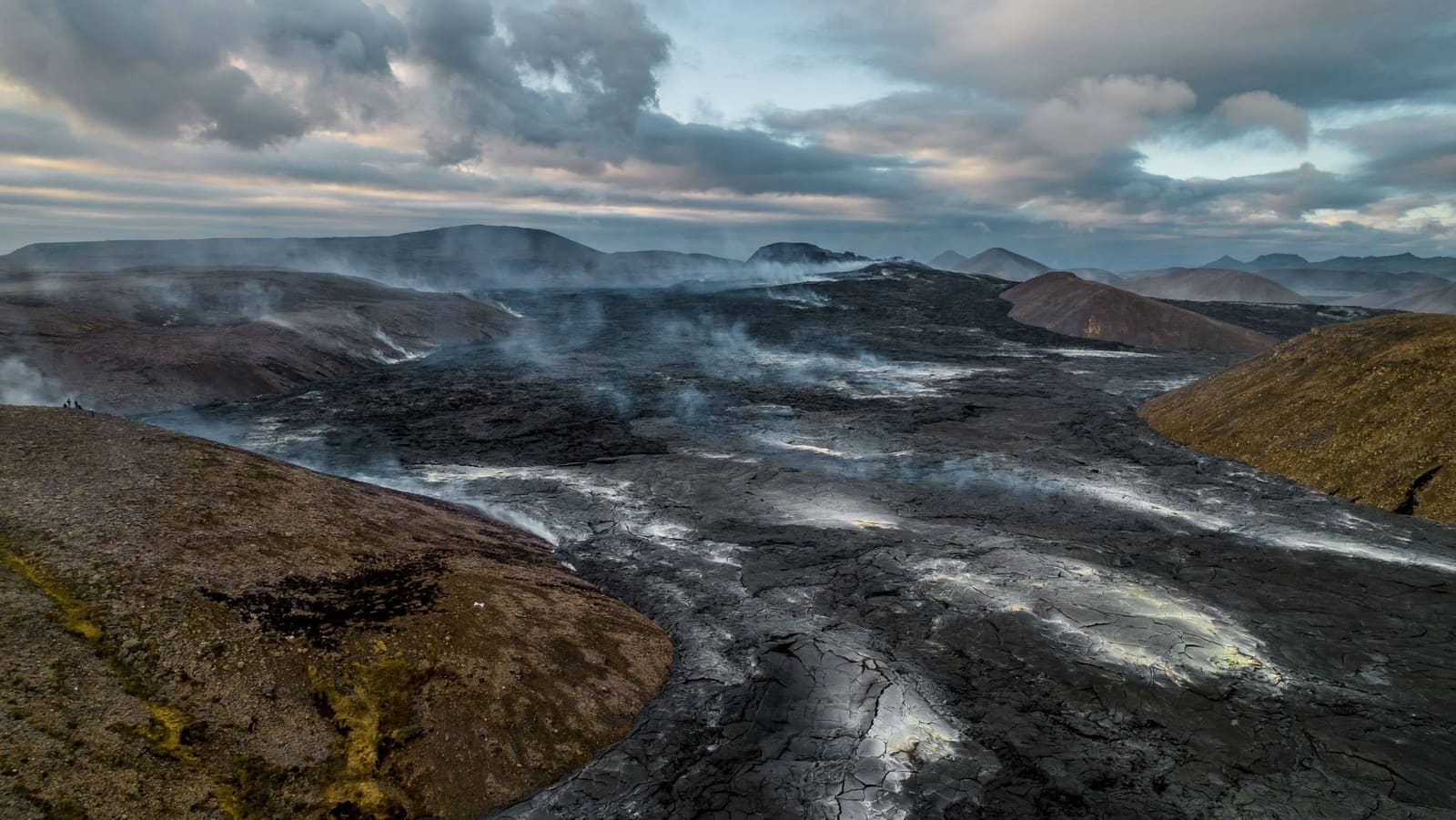
Sundhnúkagígar Craters: expect crater-row context, dark lava fields, broad Reykjanes horizons, and the visual evidence of recent eruptions
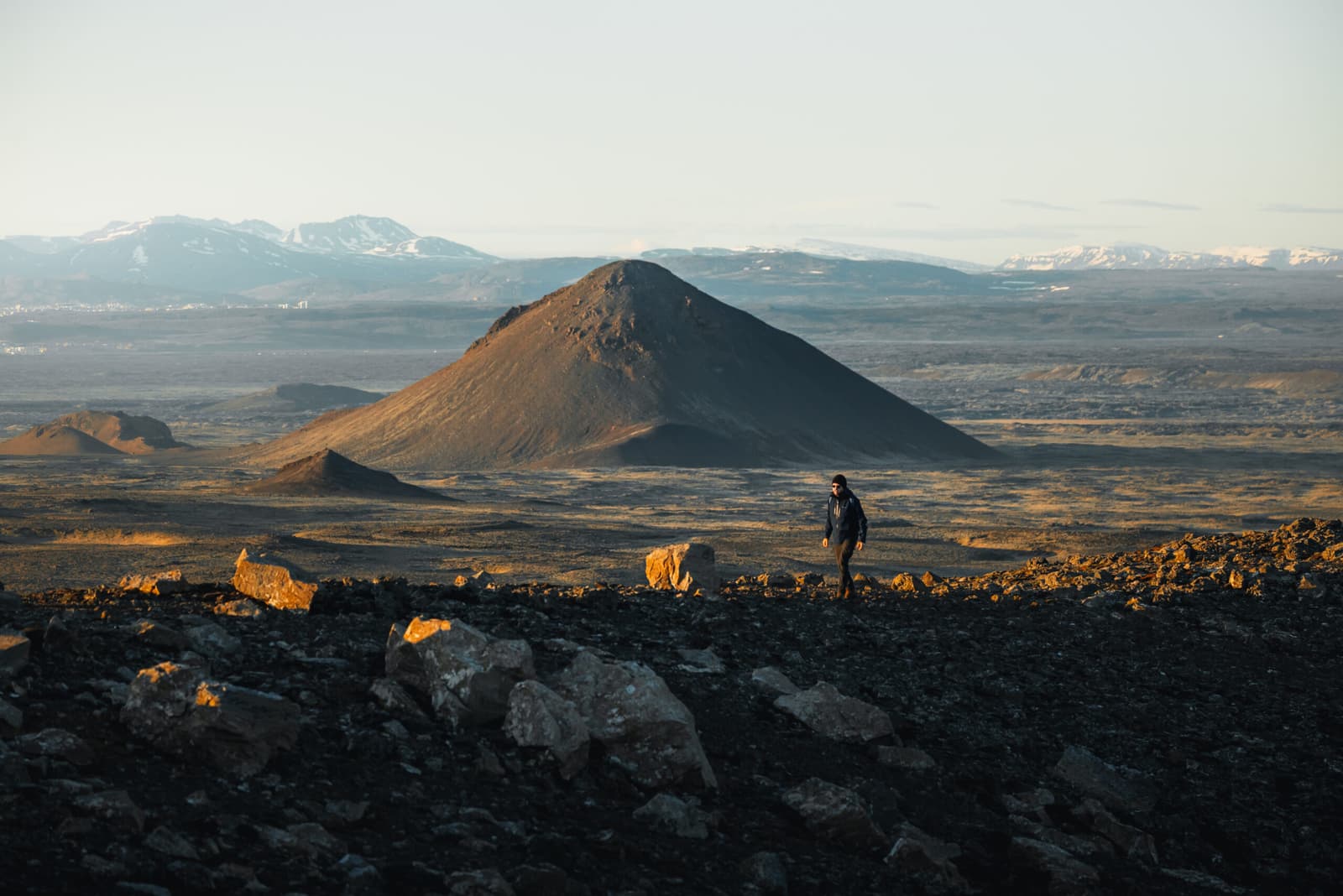
Expect crater-row context, dark lava fields, broad Reykjanes horizons, and the visual evidence of recent eruptions. The visit is about reading a changing landscape, not ticking off a settled landmark.
The area sits in the volcanic belt near Grindavík and Svartsengi, close enough to familiar Reykjanes names that the geography feels concrete. Blue Lagoon, Fagradalsfjall, Geldingadalur, Gunnuhver, Reykjanesviti, and Kleifarvatn all help frame the day, but Sundhnúkagígar has a sharper safety edge than most nearby stops.
In good conditions, the strongest impression is scale: fresh black lava against older Reykjanes ground, low mountains, industrial and town context in the distance, and the sense that this is a working volcanic landscape rather than a museum-like attraction.
The visit is about reading a new volcanic landscape, not assuming there will be active lava.
Sundhnúkagígar Craters: plan it as a longer Reykjanes block if the area is part of your day
Plan it as a longer Reykjanes block if the area is part of your day. Even when a viewpoint or route is possible, conditions can make the stop slower, less scenic, or less sensible than it looked from Reykjavík.
The exact version of the visit depends on official guidance, access routes, and what kind of viewing is appropriate. Do not squeeze Sundhnúkagígar between fixed bookings as if it were a quick photo stop. Give the day enough slack to change direction.
Planning versions for Sundhnúkagígar
Plan type
Use it when
Better alternative
Volcano-focused block
You have time, daylight, weather margin, and official checks are favorable.
Compare with Fagradalsfjall if the group wants older eruption terrain.
Conditional Reykjanes detour
You are already near Grindavík, Blue Lagoon, or Svartsengi and can adjust.
The plan is ruled by flights, spa timing, poor visibility, wind, gas, or road uncertainty.
Keep the day coastal, geothermal, or lake-led instead.
Footing can be uneven around Reykjanes lava landscapes, and newly formed lava is especially risky. Stay on permitted routes, keep distance from restricted zones, and treat the official plan as the attraction boundary.
Older aerial context helps explain why time, distance, and access guidance matter around the crater row.
What should you check before going near Sundhnúkagígar?
Check official sources before you commit. This is the difference between using the area as a serious travel decision and treating it like a static viewpoint.
Official regional visitor information for access, viewing guidance, and local instructions.
SafeTravel for eruption-area safety advice and travel-condition alerts.
The Icelandic Meteorological Office for weather, volcanic, earthquake, wind, and visibility context.
Official road conditions before relying on roads around Grindavík, Svartsengi, or the wider peninsula.
Official air-quality and gas information, especially when wind and low-lying terrain could make conditions unpleasant or unsafe.
Avoid public plans that depend on a fragile detail such as a specific trail, shuttle, viewing point, or business operation. Those details belong in same-day official checks, not in a permanent attraction plan.
Dramatic eruption imagery should lead to official checks, not improvised travel plans.
Sundhnúkagígar Craters: build the day around flexible Reykjanes pairings
Build the day around flexible Reykjanes pairings. The best alternatives are close enough to preserve the day when the volcanic area is not the right call.
Use Blue Lagoon timing carefully: it can pair well with a Reykjanes volcano day, but fixed spa timing can also make Sundhnúkagígar a poor fit. Grindavík gives geographic context, while Fagradalsfjall and Geldingadalur help travelers compare older eruption terrain with the newer crater-row area.
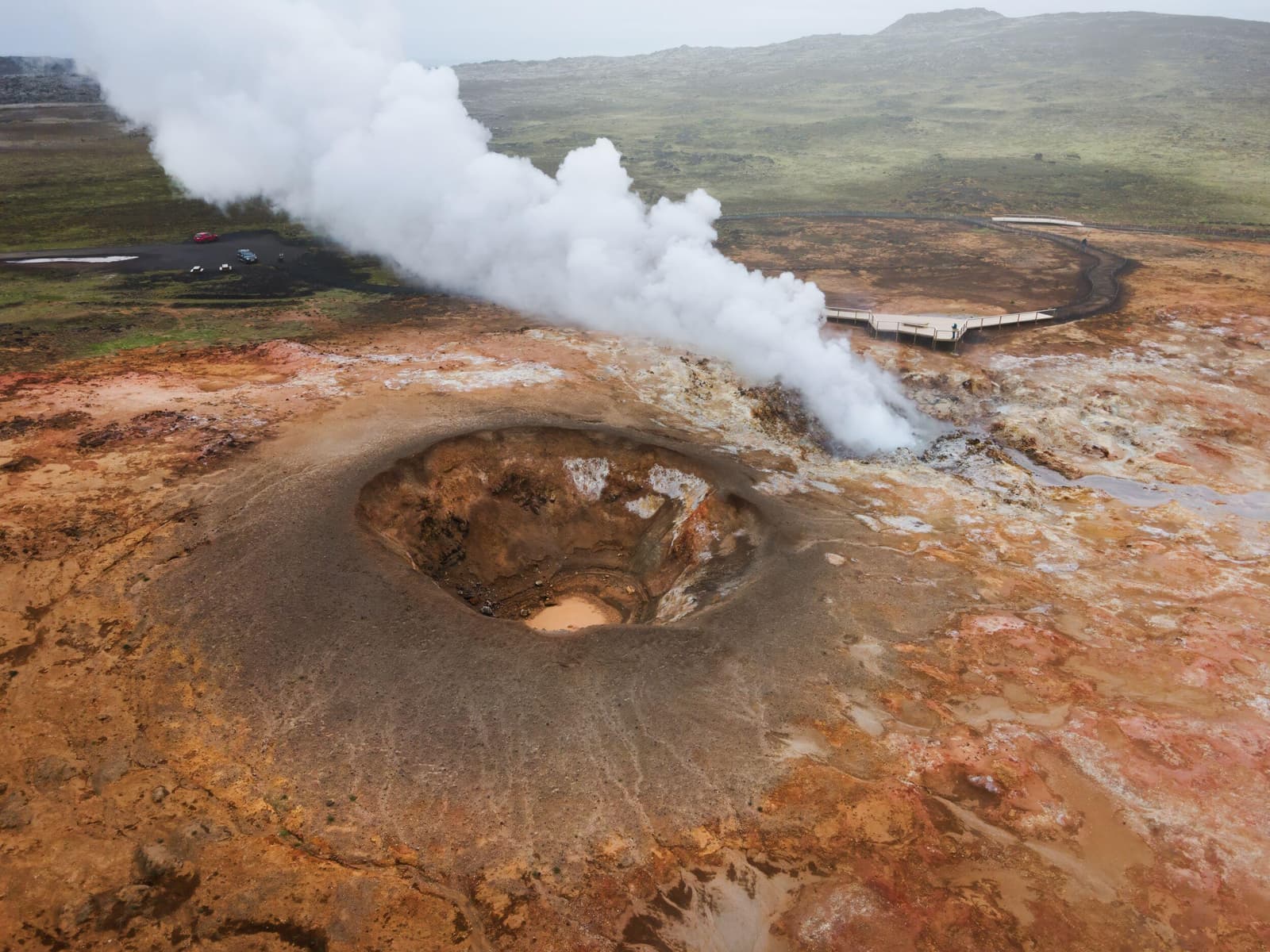
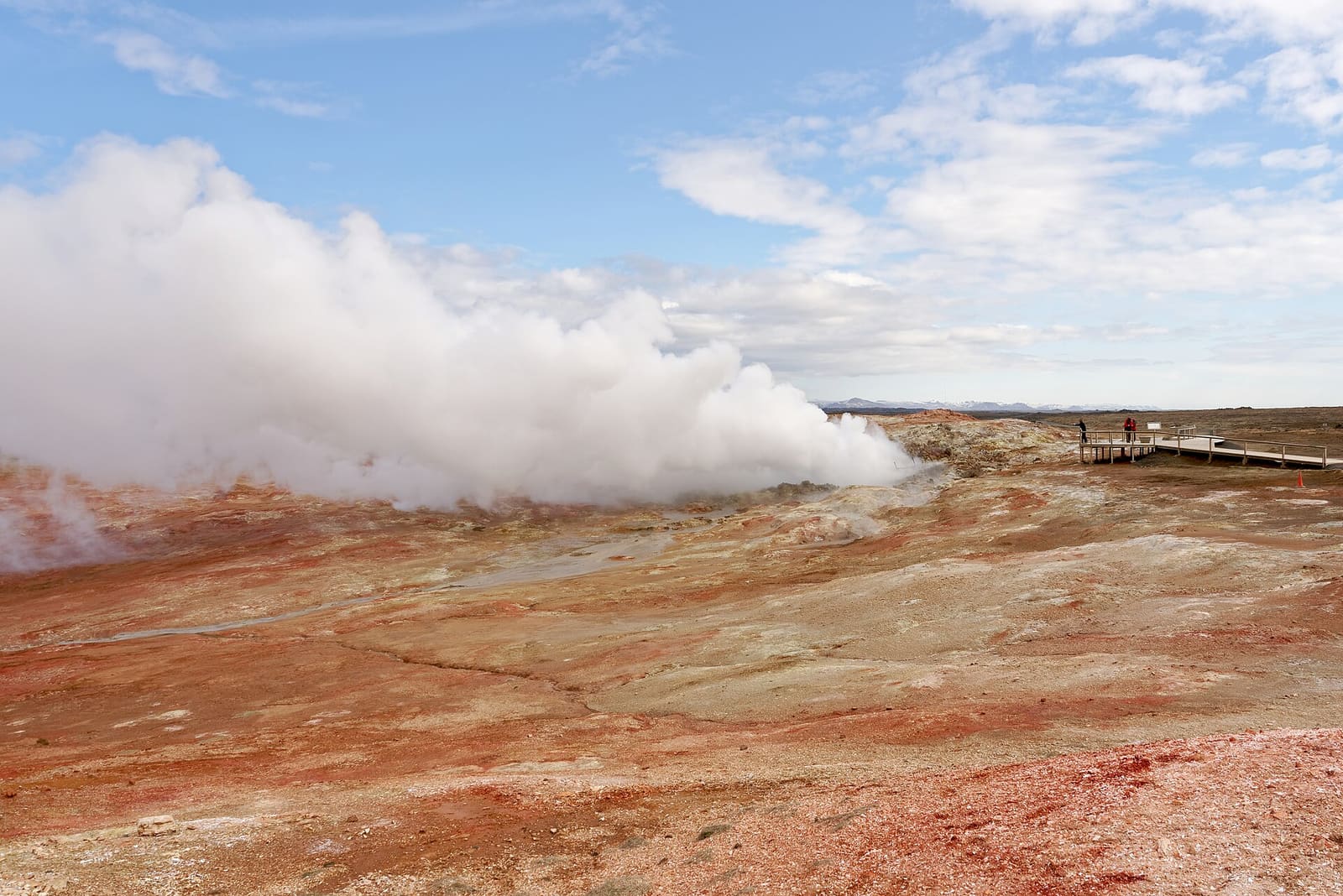
For easier scenic backup stops, Gunnuhver gives geothermal steam and boardwalk context, Reykjanesviti adds coastal lighthouse scenery, and Kleifarvatn works when you want a lake-and-lava landscape without committing the whole day to a hazard-sensitive area.
Best nearby planning roles
Volcano comparison
Fagradalsfjall and Geldingadalur
Geothermal contrast
Gunnuhver and Blue Lagoon
Coastal backup
Reykjanesviti, Hopsnes, and the wider Reykjanes coast
Lower-pressure scenery
Kleifarvatn or Krysuvik when volcanic-area checks make the crater row a poor fit
Nearby Reykjanes stops work best when they remain flexible around volcanic-area guidance.
Sundhnúkagígar Craters: skip it when the visit would make the day more brittle than better
Skip it when the visit would make the day more brittle than better. Reykjanes has enough strong alternatives that you do not need to force a crater-row stop.
The clearest skip signals are tight airport timing, poor visibility, high wind, unclear access guidance, a group that dislikes rough ground, or any plan built around a fixed current-status assumption. This is especially true if the day already includes Blue Lagoon, a long drive, or children who need predictable stops.
Choose Fagradalsfjall when the goal is older eruption hiking context, Gunnuhver when the group wants a shorter geothermal stop, Reykjanesviti when the weather favors the coast, and the Reykjanes Peninsula Road Trip when you need the whole day to make sense as a route.
Infrastructure context is a reminder to skip the stop when official guidance makes the day brittle.
Sundhnúkagígar Craters: use these sources for changeable details
Use these sources for changeable details. Keep this page for durable planning judgement, then let official guidance decide the travel-day version of the stop.
These answers keep the planning decision realistic without replacing official updates.
Is Sundhnúkagígar the same as Fagradalsfjall?
No. They are related Reykjanes volcanic areas in a broader regional eruption story, but Sundhnúkagígar refers to the crater row closer to Grindavík and Svartsengi, while Fagradalsfjall is the better-known earlier eruption area.
Can I plan on seeing active lava at Sundhnúkagígar?
No. Treat active lava as an uncertain natural event, not a travel product. Plan for volcanic landscape context and use official sources to decide what is appropriate when you travel.
Is Sundhnúkagígar a good stop with children?
Usually only for families who can handle flexible timing, strict safety boundaries, and rough volcanic-area judgement. Easier Reykjanes stops are often better for younger children.
Map
See where this stop sits
Use nearby places and useful bases before opening directions.
Region
Reykjanes
Works well with
Reykjanes
Useful base
Keflavík
Interactive planning map for Sundhnúkagígar Craters
Interactive map
Load the map when you need it
Place context and external map links remain available without loading it.
Nearby geology
Compare nearby volcanic and geothermal places
Use nearby places to understand the landscape without turning the day into a loose list of lava, steam, and craters.