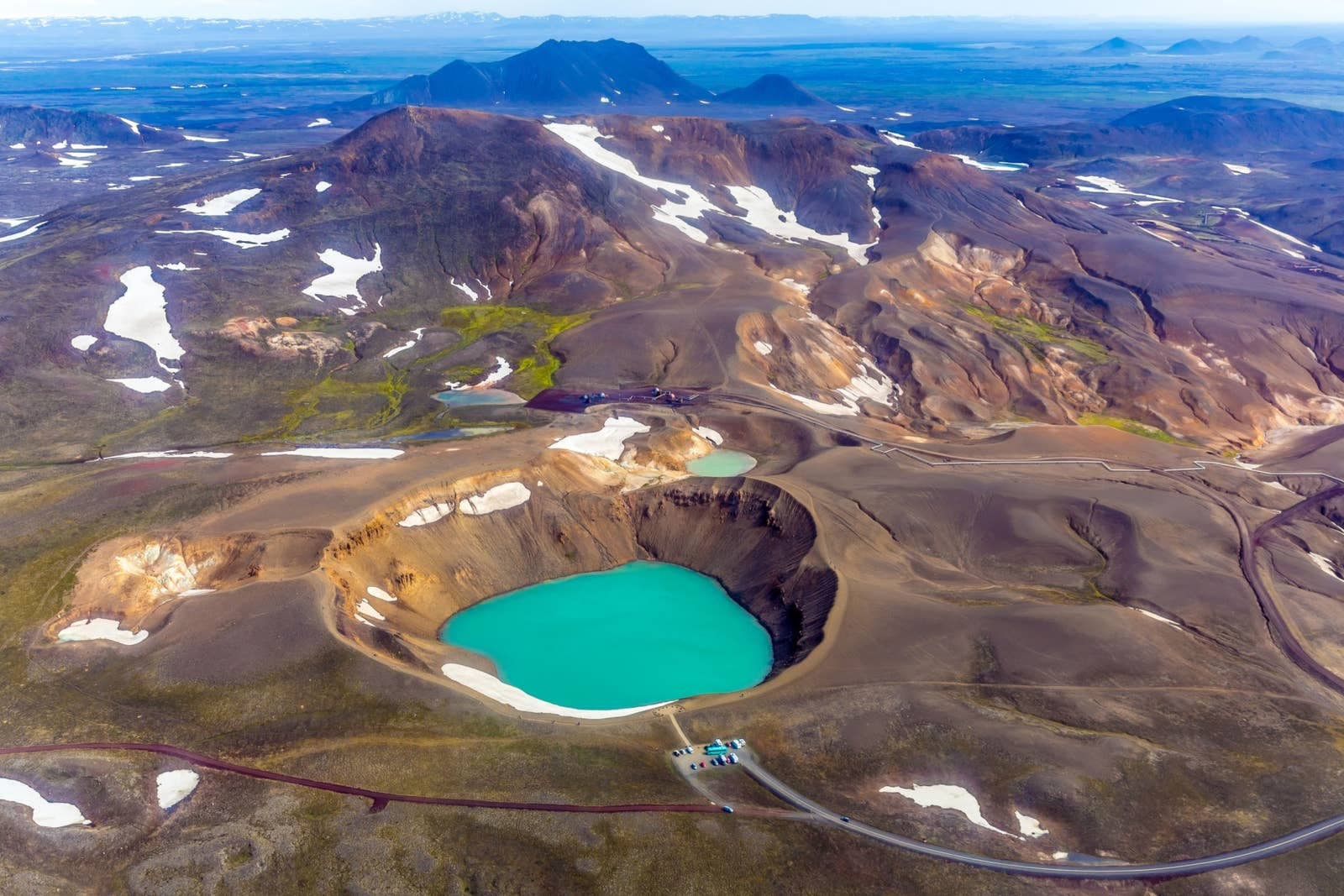
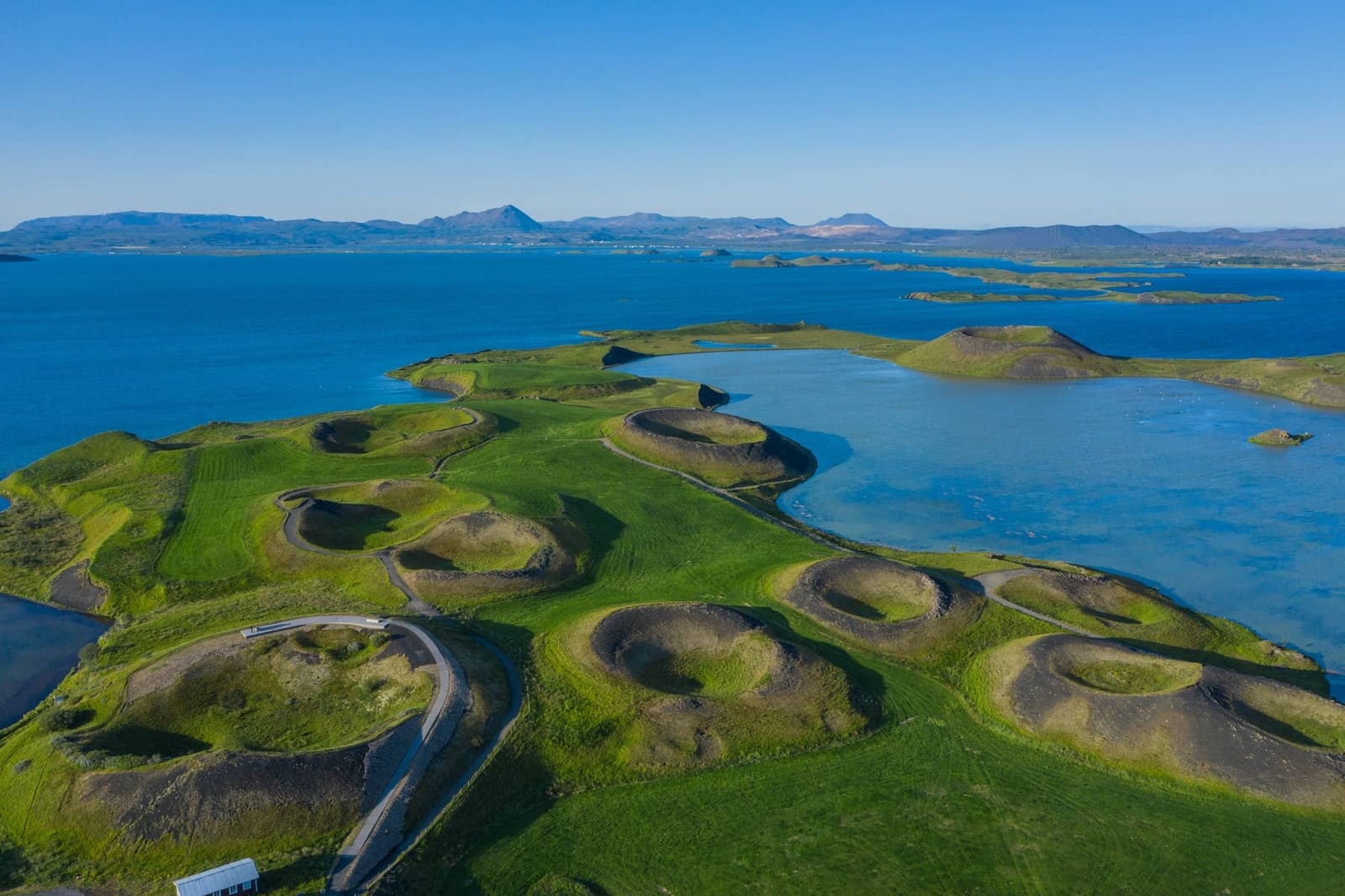
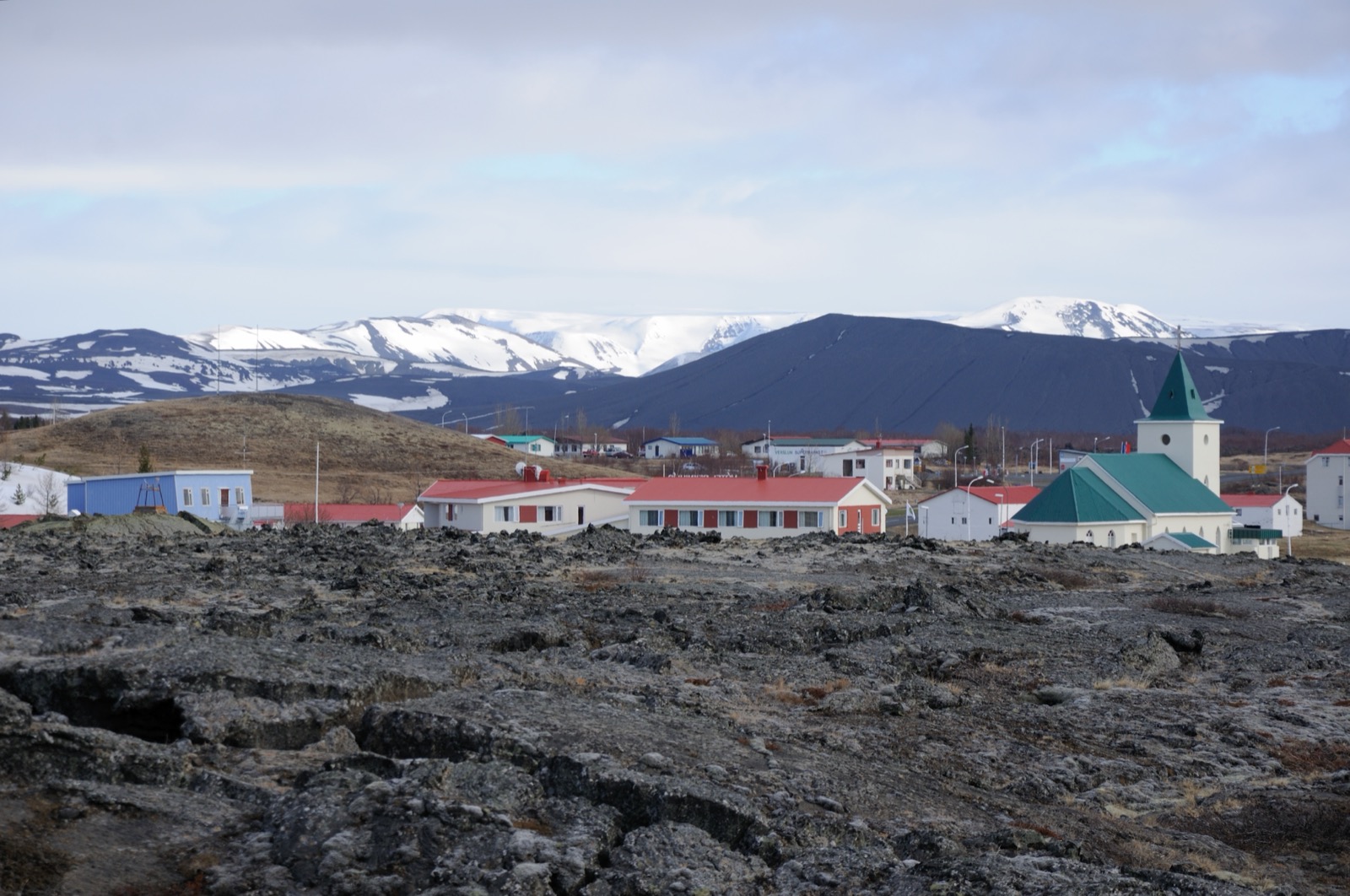
Krafla is a volcanic area north of Lake Mývatn, where Víti crater, Leirhnjúkur lava fields, steam, and a geothermal power station make a strong but condition-sensitive North Iceland stop.
Geology snapshot
Type
Volcanic area with crater lake, lava fields, geothermal steam, and power-station context
Region
North Iceland, north of Lake Mývatn
Route context
Best as a Mývatn and Diamond Circle volcanic cluster, not a lone checklist stop
Time to allow
30-60 minutes for Víti; 1.5-3 hours if you add Leirhnjúkur and slower stops
Best experience
Choose one crater view, one lava-field walk, and one nearby geothermal contrast
In this guide
Is Krafla worth adding near Lake Mývatn?
Yes, Krafla is worth adding when your North Iceland route has real time around Lake Mývatn and you want volcanic variety rather than another single-view scenic stop.
Krafla works best as a small volcanic area with choices: Víti for a crater-lake view, Leirhnjúkur for a rougher lava-field walk, the power-station area for geothermal context, and nearby Hverir for the strongest steam-and-mud contrast. That variety is the point, but it also means the stop needs a clearer plan than a simple roadside pullout.
Add Krafla to a Mývatn-area day when the traveler has already chosen North Iceland for volcanic landscapes and can leave room for road, wind, trail, and visibility checks. Skip it on a rushed Ring Road transit day, when Dettifoss and Goðafoss already use the available time, or when the group wants smooth paths and predictable stops.
Which Krafla stop should you choose first?
Start by choosing the version of Krafla that fits your day: a quick crater view, a balanced crater-and-lava visit, or a slower volcanic-area stop.
How to choose your Krafla visit
Choice
Best when
Main caution
Víti crater
You want the most direct Krafla identity: a crater rim, pale water, and broad volcanic views.
Wind, ice, poor visibility, and crater-edge behavior can make a quick look the better choice.
You have more time and want to walk through young lava, steam, color, and fissure texture.
Footing, weather, path discipline, and geothermal ground matter more than the map distance suggests.
Power-station context
You want to understand why this landscape is also an active geothermal-energy area.
Verify official visitor information before relying on indoor interpretation or services.
Skip or delay
The day is already full with Mývatn, Dettifoss, Goðafoss, or Húsavík.
Krafla loses value when it becomes a late-day conditions gamble.
For many travelers, the best answer is not every Krafla stop. A quick trip may only need Víti before returning to Lake Mývatn. A slower volcanic day can add Leirhnjúkur and Hverir Geothermal Area, then leave Dettifoss or Ásbyrgi for a separate, less crowded day.
Krafla feels exposed, raw, and practical at the same time
Krafla feels exposed, raw, and practical at the same time: crater water, dark lava, steam, bare slopes, service roads, and geothermal infrastructure all sit in the same volcanic system.
The visit is strongest when you accept that mix. This is not a tidy viewpoint sequence where every scene is framed for you. Around Krafla, the volcanic surface can feel broken and recent, the colors shift from black lava to pale minerals, and the power-station context reminds you that the area is not just scenery.
Marked paths near Leirhnjúkur help visitors read the lava field without treating fragile or hot ground as open terrain.
That is why Krafla pairs naturally with Dimmuborgir and Hverir. Dimmuborgir gives darker lava formations with marked walking paths, Hverir gives the close-up geothermal smell and steam, and Krafla connects both ideas into a broader volcanic-area visit.
Krafla is most memorable when you slow down enough to notice lava texture, distance, and scale.
Allow 30-60 minutes for a focused Víti stop, or 1.5-3 hours if Krafla is a real volcanic-area visit with Leirhnjúkur and slower walking
Allow 30-60 minutes for a focused Víti stop, or 1.5-3 hours if Krafla is a real volcanic-area visit with Leirhnjúkur and slower walking.
The mistake is treating Krafla as both quick and complete. If you only want a crater view, keep it simple and protect the rest of the day. If you want the lava-field experience, stop adding distant attractions until road, weather, and group energy still make sense.
Quick version: Víti crater and a short look over the Krafla area.
Balanced version: Víti plus a selected Leirhnjúkur walk when paths and weather make sense.
Slow version: Krafla, Leirhnjúkur, Hverir, and one Lake Mývatn stop, with Dettifoss saved for another route block if the day is tight.
Bad trade: adding Krafla after a full Dettifoss, Ásbyrgi, Hljóðaklettar, and Mývatn day with no buffer.
Boardwalks and marked paths are part of the visit; they are also a reminder not to wander onto geothermal crust.
How does Krafla fit with Mývatn and the Diamond Circle?
Krafla is strongest as the volcanic chapter of a Mývatn-area plan, then as an optional extension within a wider Diamond Circle road trip.
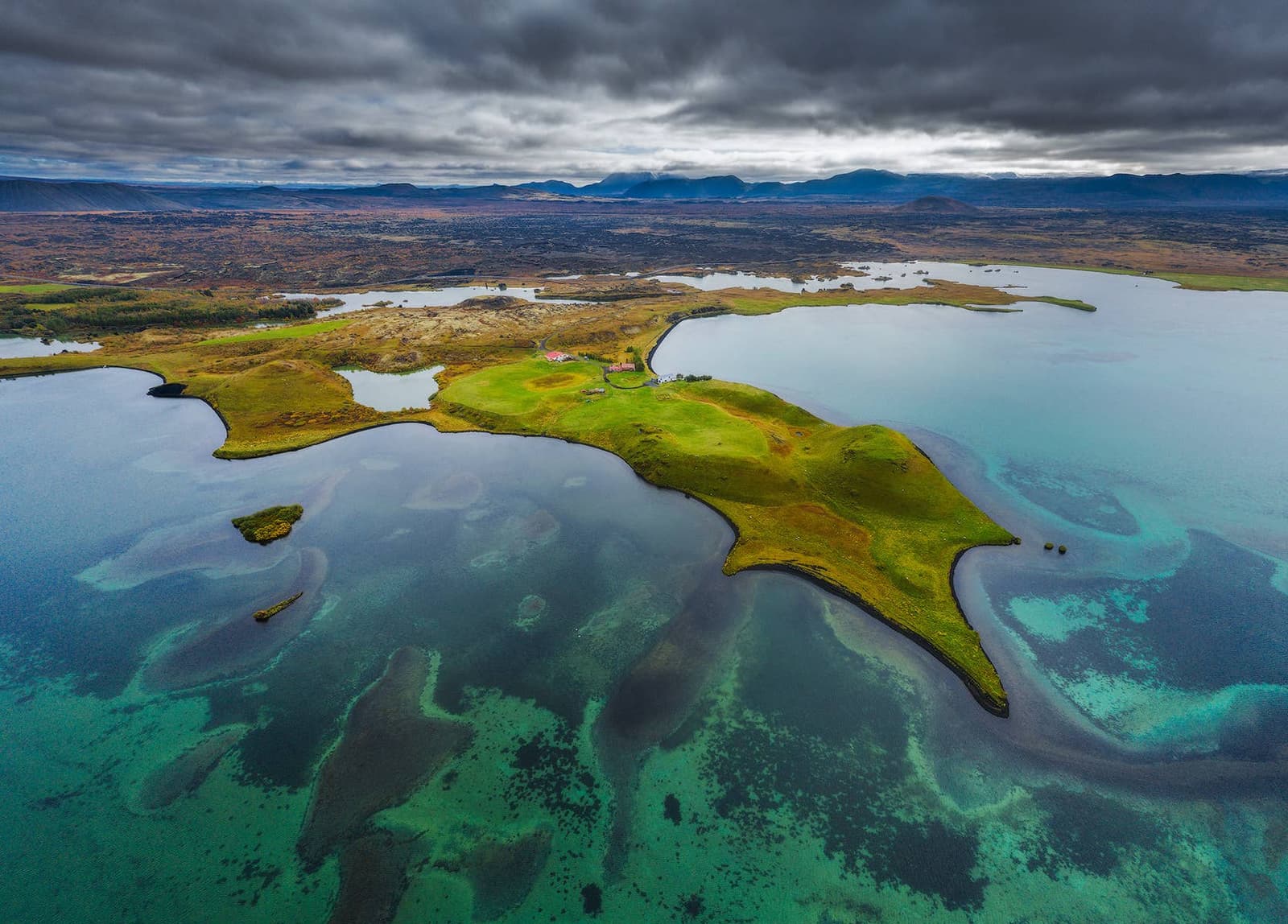
If Lake Mývatn is your base area, Krafla helps turn the day from a lake-and-lava stop list into a clearer volcanic sequence. A practical order might compare Lake Mývatn for the wider district, Dimmuborgir for lava formations, Hverir for active geothermal ground, and Krafla for crater, lava-field, and geothermal-energy context.
If you are building a Diamond Circle road trip, be more selective. Dettifoss, Ásbyrgi, Hljóðaklettar, Goðafoss, Húsavík, and Mývatn can already fill a day. Krafla strengthens that route when you want volcanic texture; it weakens it when it simply adds another stop to an overloaded loop.
The power-station setting makes Krafla different from purely scenic stops around Mývatn.Víti is visually simple to understand, but the wider Krafla decision is about how much volcanic walking your day can support.
Check road conditions, weather, volcanic information, and official visitor details before making Krafla a fixed part of a tight day
Check road conditions, weather, volcanic information, and official visitor details before making Krafla a fixed part of a tight day.
Krafla has several condition-sensitive pieces: exposed crater edges, geothermal ground, rough lava-field walking, winter road decisions, and visitor information tied to the power-station area. None of those should be planned from old opening, access, or route notes alone.
Use before relying on power-station visitor interpretation, services, or indoor access.
Krafla FAQ
These are the practical decisions that usually determine whether Krafla improves a North Iceland route.
Is Krafla a quick stop or a half-day stop?
Krafla can be either, but most travelers should decide before arrival. Víti can work as a quick crater stop, while Leirhnjúkur and nearby geothermal stops turn it into a slower Mývatn-area visit.
Can Krafla fit into the Diamond Circle?
Yes, Krafla can fit into a Diamond Circle plan when you have enough time around Mývatn. It is easiest to skip when the day already includes multiple canyon, waterfall, harbor, and lake stops.
Is Krafla safe to visit?
Krafla is a volcanic and geothermal area, so safety depends on conditions and behavior. Stay on marked paths, respect signs, and use official road, weather, volcanic, and safety guidance before relying on a visit.
Should I choose Krafla or Hverir?
Choose Krafla for crater, lava-field, and broader volcanic-area context. Choose Hverir for a shorter close-up geothermal stop with mud pools, steam, sulfur color, and a stronger sensory hit.