Skjálfandafljót is the North Iceland river behind Goðafoss, Aldeyjarfoss, and upper highland-edge waterfalls, worth planning around when you want to choose the right river stop instead of chasing every cascade.
Waterfall facts
Type
River corridor with major waterfall stops
Region
North Iceland, running from the Vatnajökull highland edge toward Skjálfandi Bay
Route context
Most useful for Goðafoss, Aldeyjarfoss, Diamond Circle, Mývatn, and Bárðardalur planning
Time to allow
30-60 minutes for Goðafoss, 2-3 hours for Aldeyjarfoss from the Goðafoss area, longer for upper-river plans
Best experience
Choose one easy waterfall stop and one deliberate detour instead of trying to follow the whole river
In this guide
Skjálfandafljót: but only if you treat it as a river corridor rather than one compact attraction
Yes, but only if you treat it as a river corridor rather than one compact attraction. The useful decision is whether Goðafoss is enough, or whether Aldeyjarfoss and the upper river deserve extra driving time.
Skjálfandafljót is most valuable to travelers because it explains a cluster of North Iceland waterfall choices. Goðafoss gives the easy Ring Road version of the river. Aldeyjarfoss gives the rougher basalt-and-highland-edge version. Upper river stops add more solitude and more access uncertainty.
Add Skjálfandafljót to a plan when someone is already deciding between Goðafoss, Aldeyjarfoss, Lake Mývatn, and a Diamond Circle day. Do not build a tight itinerary around the river name alone; the individual stops and road conditions should decide the day.
Photo guide
Skjálfandafljót in photos
A wider Skjálfandafljót river view at Aldeyjarfoss.
What is Skjálfandafljót, and where do travelers meet it?
Skjálfandafljót is a North Iceland river that runs from the Vatnajökull highland edge north through Bárðardalur toward Skjálfandi Bay. Most visitors meet it at waterfall stops rather than by tracing the whole river.
The river matters because its character changes as it moves north. In the upper country, it feels tied to highland roads, glacial water, open terrain, and harder access decisions. In the lower country, it becomes much easier to include through Goðafoss, the waterfall many travelers meet between Akureyri and Lake Mývatn.
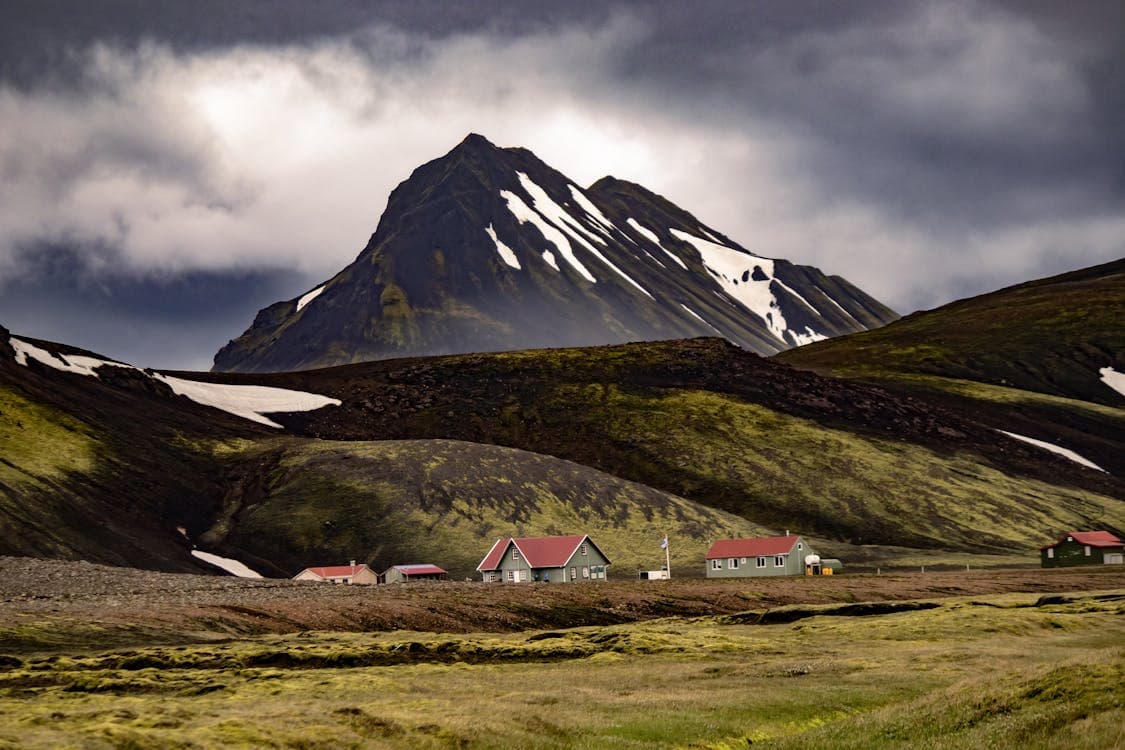
Aldeyjarfoss shows the upper-river side of Skjálfandafljót: basalt, pale water, and a more deliberate detour.
That is why Skjálfandafljót is not a normal quick stop. It is a planning layer for North Iceland: decide how much river scenery you want, then choose the stop that matches your vehicle, season, daylight, and route.
Which Skjálfandafljót stops should you choose?
Choose Goðafoss for the easiest high-value stop, Aldeyjarfoss for a stronger detour, and upper-river waterfalls only when the route has enough margin for access checks.
Skjálfandafljót stop chooser
Stop choice
Best when
Main tradeoff
Goðafoss
You want the river's easiest waterfall stop beside Route 1, with a short visit that still feels scenic.
It is popular and compact, so it gives river context without much solitude.
Aldeyjarfoss
You have extra time, suitable road conditions, and want basalt columns with a rougher North Iceland feel.
The detour adds driving friction and should stay optional when the day is tight.
Upper-river waterfalls
You are already planning a flexible highland-edge day and can verify road, weather, and safety conditions.
The reward is more remote, but the planning risk is much higher.
For most first North Iceland trips, Goðafoss plus Lake Mývatn is the cleanest combination. If the day has more space, Aldeyjarfoss can add a different kind of river scene before or after the Mývatn area. If you are also considering Dettifoss, remember that it belongs to a different river and a bigger canyon day, so it competes for time rather than completing Skjálfandafljót.
Aldeyjarfoss is the strongest Skjálfandafljót detour when road and daylight checks line up.
How long should you give the river stops?
Give Skjálfandafljót time according to the stop, not the river length. A practical plan can be as short as a focused Goðafoss visit or as long as a slower half-day detour toward Aldeyjarfoss.
Time and effort guide for Skjálfandafljót
Plan
Time to allow
Use it when
Quick river version
30-60 minutes
Stop at Goðafoss while crossing North Iceland or moving between Akureyri and Mývatn.
Balanced version
2-3 hours from the Goðafoss area
Add Aldeyjarfoss when the day has spare time, settled conditions, and a vehicle plan that fits the road.
Slow upper-river version
Half day or more
Treat upper waterfalls as a flexible highland-edge objective with backup plans.
The strongest route use is usually simple: place Goðafoss into a Diamond Circle road trip or North Iceland transfer, then decide whether Aldeyjarfoss deserves the extra time. Do not add every river stop just because they share the same watercourse.
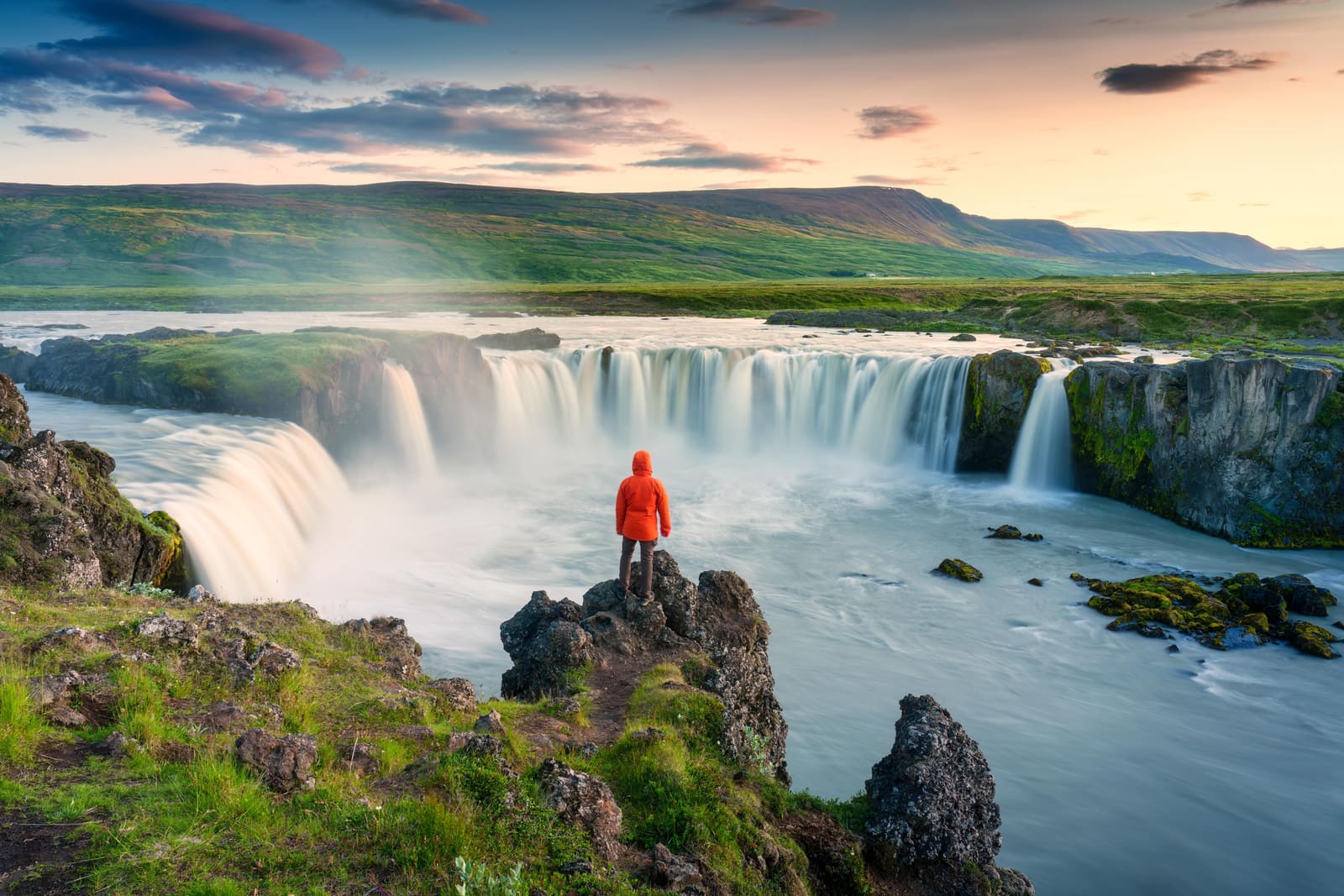
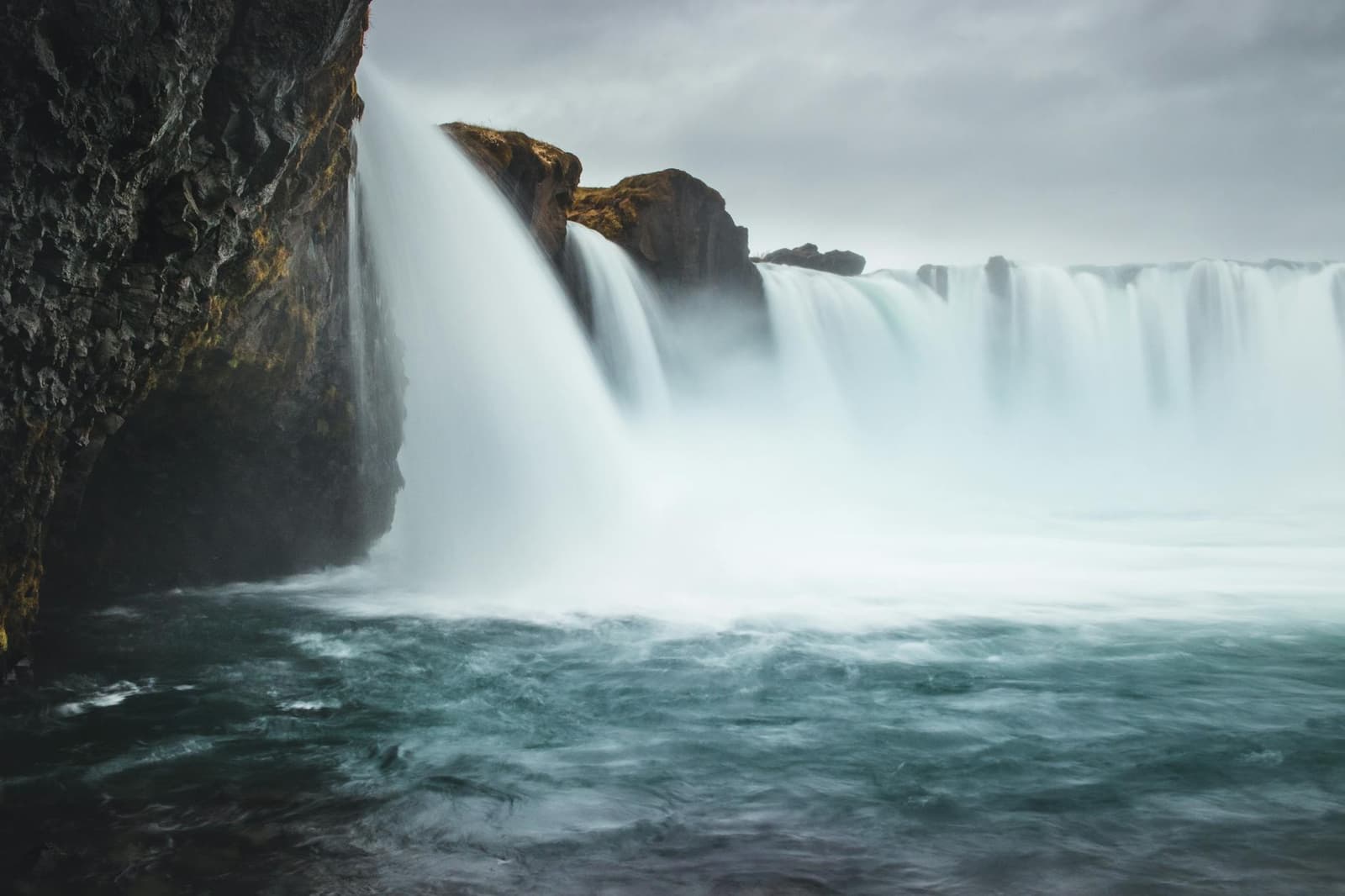
Goðafoss is the short, practical version of a Skjálfandafljót visit.
What changes the plan beyond Goðafoss?
Road conditions, weather, daylight, and vehicle rules change the plan beyond Goðafoss. The farther you push into Bárðardalur and highland-edge terrain, the less useful a fixed schedule becomes.
The lower-river visit is forgiving because Goðafoss sits on a major driving route. Aldeyjarfoss asks for more care: slower roads, a longer out-and-back rhythm, rougher walking context, and a stronger need to check whether the final approach makes sense for your vehicle and conditions.
Even easy river stops can feel wet, windy, or slick when spray and weather line up poorly.
This is especially important on winter, shoulder-season, or highland-edge plans. A Highlands road trip planning page can help frame the vehicle and road logic, while winter driving guidance is the better next step if the trip depends on low daylight, snow, wind, or icy surfaces.
Winter images can be beautiful, but they do not prove that the approach is practical for your travel day.
Skjálfandafljót: use official sources for the details that can change
Use official sources for the details that can change, especially road conditions, weather warnings, travel alerts, and any access decision beyond the easiest waterfall stops.
Travel-condition alerts and safety context before committing to remote or weather-sensitive plans.
Skjálfandafljót FAQ
These questions matter because Skjálfandafljót is easy to misunderstand as one stop, when it is really a chain of river choices.
Is Skjálfandafljót a stop or a route area?
It is best treated as a river corridor. Most travelers experience it through Goðafoss, Aldeyjarfoss, or upper-river waterfalls rather than by trying to follow the whole river.
Should I choose Goðafoss or Aldeyjarfoss?
Choose Goðafoss when you need the easy Ring Road stop, and choose Aldeyjarfoss when you have extra time, suitable conditions, and want a rougher basalt-framed river scene.
Can Skjálfandafljót fit into a Diamond Circle day?
Yes, the lower-river version fits naturally through Goðafoss. Add Aldeyjarfoss only if the day has enough room after Mývatn, Dettifoss, Ásbyrgi, or Hljóðaklettar decisions.
Do I need to verify conditions before visiting?
Yes, verify official road, weather, and safety guidance before relying on upper-river stops. For the easiest version, still check conditions when winter, wind, ice, or long driving days are involved.
Map
See where this stop sits
Use nearby places and useful bases before opening directions.
Region
North Iceland
Works well with
Diamond Circle / Ring Road
Useful base
Akureyri
Interactive planning map for Skjálfandafljót
Interactive map
Load the map when you need it
Place context and external map links remain available without loading it.
Nearby scenery
Compare nearby waterfalls and viewpoints
Use nearby stops to decide whether this waterfall is the main pause or part of a tighter cluster.