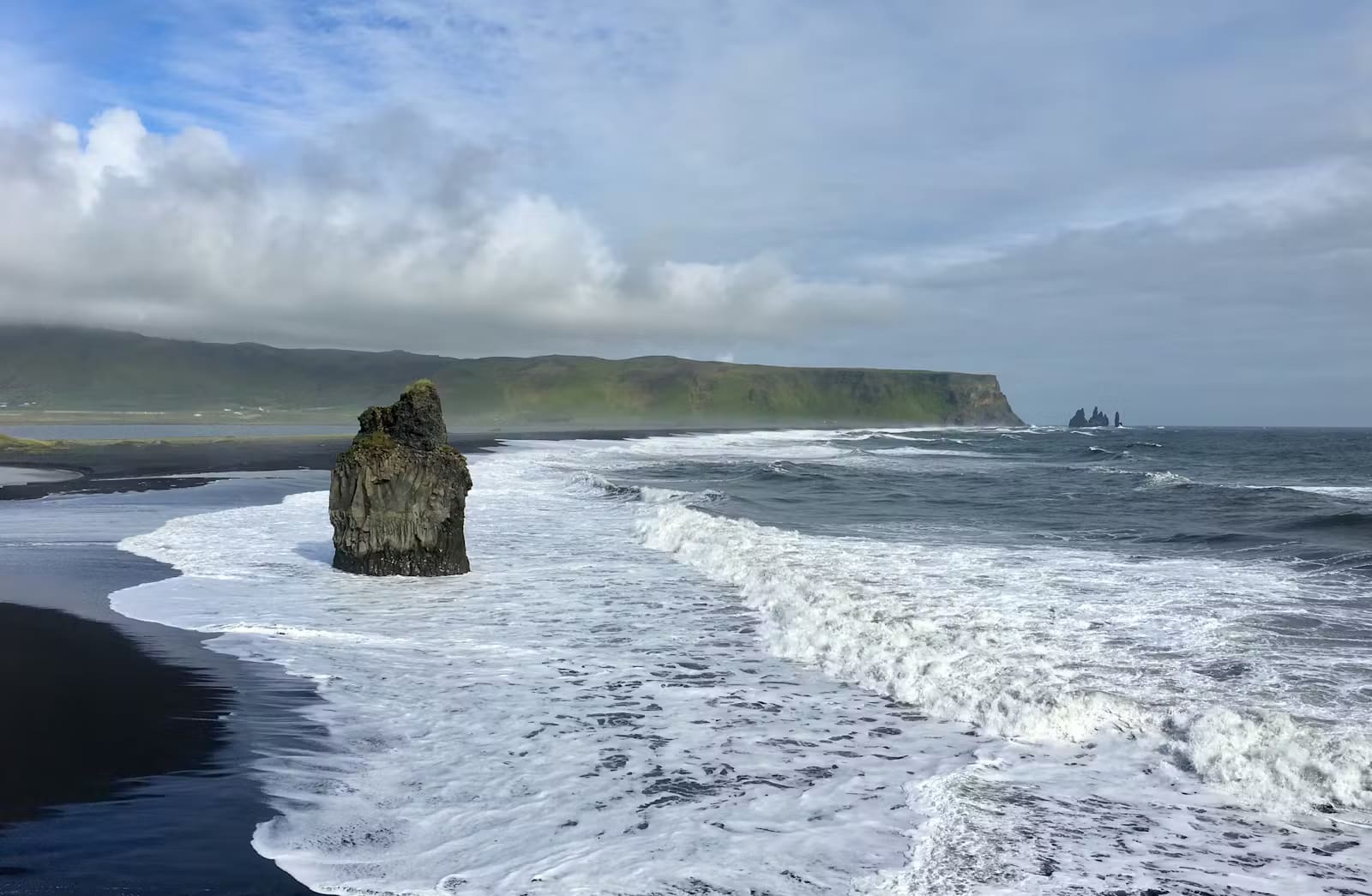
Reynisfjara is a black-sand beach near Vík where basalt columns and offshore sea stacks meet dangerous Atlantic surf. The view is exceptional, but current warnings decide how the beach can be visited.
Coast snapshot
Type
Black sand beach with basalt columns and sea stacks
Region
South Iceland, near Vík
Allow
About 30 to 60 minutes
Current access
Viewpoint only; check SafeTravel and signs on arrival
Safety
Stay well back from the sea and never turn away from it
In this guide
Black sand, basalt and an ocean that sets the rules
Reynisfjara is not a beach-day stop. It is a close view of a volcanic coast where dark sand, geometric cliffs and the Atlantic meet in one compact place.
Black volcanic sand runs beneath hexagonal basalt columns, while the Reynisdrangar sea stacks stand offshore. Wind and white surf sharpen the contrast. The result is one of the clearest expressions of Iceland's south coast, only a short drive from Vík.
The ocean is part of the attraction and the main hazard. Sneaker waves, strong currents, rockfall and a changing shoreline can alter the safe viewing area without much warning. Come to look, not to test the waterline or climb for a photograph.
Photo guide
Reynisfjara in photos
At Reynisfjara, the safe viewing distance matters more than the photo angle.
What you actually see at the black sand beach
Reynisfjara feels less like a beach day and more like standing at the edge of a live volcanic coastline.
The first impression is usually the contrast: dark sand underfoot, white surf rolling in, and the sharp shapes of Reynisdrangar offshore. At one end of the beach, basalt columns rise in geometric stacks below Reynisfjall. On clear days, the view west toward Dyrhólaey gives the whole coastline more shape.
Black sand and pebbles formed from volcanic material.
Reynisdrangar sea stacks standing offshore from the beach.
Basalt columns and cliff textures near the eastern end of the beach.
Powerful surf that can look beautiful and dangerous at the same time.
Views toward Dyrhólaey and the wider Vík-area coastline when visibility is good.
The best photos usually do not require getting close to the sea. Wide views that include the surf line, sea stacks, and basalt give a stronger sense of place than risky waterline shots.
Access, warning lights, and danger zones
SafeTravel and on-site instructions should decide how close you go; when restrictions apply, treat the designated viewpoint as the visit.
Official access guidance matters more than old photos or older itineraries. February 2026 erosion undermined the viewing platform and two safety signs; one zoning-map sign collapsed, and the illuminated warning sign was removed because its foundations had become unsafe. When guidance limits visitors to upper viewpoints, use those views toward the basalt columns and surf rather than trying to walk down to the columns.
Reynisfjara's warning signs are part of the visit. Safety infrastructure and shoreline conditions can change, so lights, barriers, and local instructions always override older photos.
On-site signs, warning lights, ropes, barriers, and staff instructions are the rule on the day you arrive. Do not assume access is safe because other visitors walk down, because the beach looked open in a recent video, or because a map app still shows a path to the basalt columns.
Explains the erosion damage and why access may stop at the upper beach ridge.
The surf at Reynisfjara can reach the basalt cliffs and change the safe visit area quickly.
Read current SafeTravel Black Beach guidance before you go.
Obey on-site lights, barriers, signs, and staff instructions even when other visitors ignore them.
Do not swim, paddle, step into the foam, or walk onto wet sand for a photo.
Stay away from cliff bases, cave mouths, and rockfall-prone areas unless current signs clearly allow access.
In orange conditions, keep at least 25 m from the sea; in red conditions, stay off the beach and use the viewpoint.
Keep children within arm's reach in exposed areas.
Leave immediately if wind, waves, visibility, or crowd behavior makes the stop feel unsafe.
How long Reynisfjara needs near Vík
Most travelers need enough time to look, photograph, adjust to the safety zones, and move on without rushing toward the surf.
A practical stop is often 30 to 60 minutes. The short end works if you simply want the main view and conditions are straightforward. Allow more time if you are pairing Reynisfjara with Dyrhólaey, waiting for better light, traveling with a family, or moving more slowly because wind and surf make the site feel exposed.
How to budget Reynisfjara time
Visit style
Time to allow
Best use
Quick viewpoint stop
30 minutes
See the beach, sea stacks, and surf from safe areas.
Normal South Coast stop
45 to 60 minutes
Take photos, read conditions, and avoid rushing the group.
Vík-area coastal pairing
1.5 to 2.5 hours with Dyrhólaey
Compare ground-level beach drama with the elevated cliff view.
Do not plan the visit by parking-lot distance alone. The beach is physically easy to reach, but the decision-making takes attention.
The same coast looks different from Dyrhólaey
If you have time for one nearby contrast, use the headland rather than turning the page into a checklist of South Coast stops.
The strongest pairing is Dyrhólaey. Reynisfjara gives you the coast at ground level; Dyrhólaey gives you height, cliffs and a broader view over the black-sand shoreline. Its own road, wind and bird-nesting restrictions still need checking.
If Reynisfjara is one part of a longer day, Skógafoss adds a simpler high-impact stop to the west. Choose Sólheimajökull only when glacier scenery is a real priority; it is not necessary simply because it appears on the same map.
What erosion, weather, and season can change
Reynisfjara is open-air, exposed, and actively shaped by the sea, so the safe visit area can change from one day to the next.
The 2026 erosion is the clearest recent example. Regional and government tourism sources describe Reynisfjara as open, but also changed: storms, high sea levels, persistent swell, and wind direction shifted large volumes of black sand, damaged safety infrastructure, and changed what visitors could safely reach.
Recent-condition photos are useful for scale, but Reynisfjara changes quickly; current SafeTravel and on-site restrictions decide where visitors may stand.
Summer gives longer daylight, easier route timing, and a better chance of adding nearby birdwatching around the Vík and Dyrhólaey area. It can also bring heavier crowds and more people making poor decisions near the surf, so do not let other visitors set your safety standard.
Winter can make the beach feel darker, wilder, and more dramatic, but daylight, wind, road conditions, and wave behavior become bigger constraints. Storms and coastal erosion can also change which signs, viewing platforms, paths, or lower-beach areas are usable. Treat the basalt columns, cave area, and waterline as conditional access, not guaranteed stops.
Access is not fixed. Check SafeTravel, weather and local notices on the day you visit, and be ready to see the coast only from the designated viewpoint.