Ásbyrgi is a horseshoe-shaped canyon in North Iceland’s Jökulsárgljúfur area. Botnstjörn is the easiest first walk, Eyjan gives the wider view, and longer trails reward visitors with more time and good conditions.
Area snapshot
Shape
A 3.5 km horseshoe canyon divided by the rock island Eyjan, with cliffs reaching 100 metres
Park setting
Jökulsárgljúfur, Vatnajökull National Park, North Iceland
Easiest walk
Botnstjörn, 1 km and about 30 minutes, with a path suitable for visitors with limited mobility
Wider view
Eyjan, 4.5 km and about 1.5-2 hours, with high cliff edges requiring care
Longer hikes
Klappir is 9 km; the challenging Ásbyrgi-Dettifoss canyon trail is 32 km over two days
In this guide
The canyon floor is the real beginning
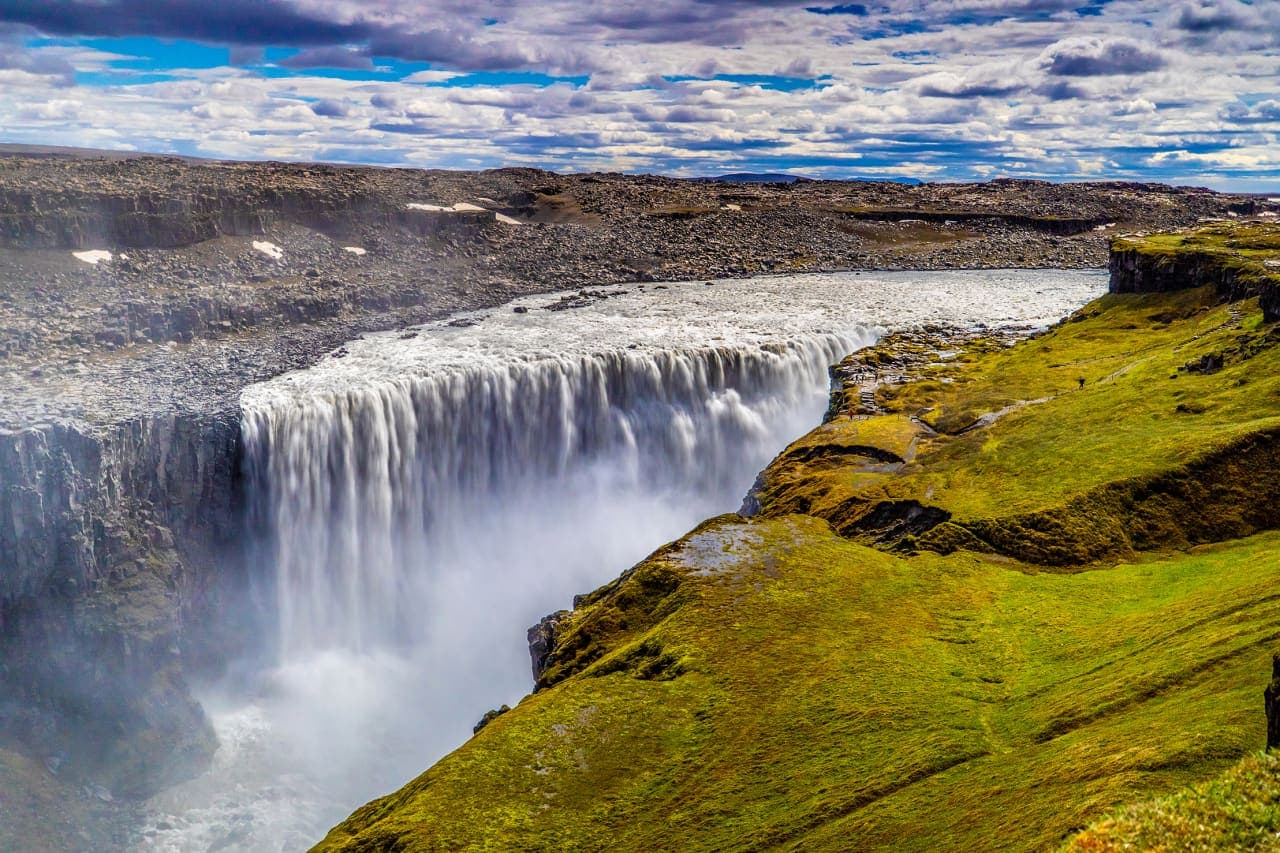
Ásbyrgi deserves more than a quick photo. Its woodland, pond, and enclosing walls give the Diamond Circle a softer but distinctive counterpoint to Dettifoss, Mývatn, and Húsavík.
The appeal is not a single “stand here and shoot” viewpoint. Enter the canyon floor, move through birch and willow, look up at the rock walls, and notice how sheltered the hollow feels compared with the exposed country around it.
It is strongest for travelers already exploring the Diamond Circle around Dettifoss, Húsavík, Mývatn, Dimmuborgir, or Goðafoss. A fast transfer across North Iceland leaves too little time; a few unhurried hours reveal why this landscape feels unlike the south coast.
Woodland changes the scale of the canyon
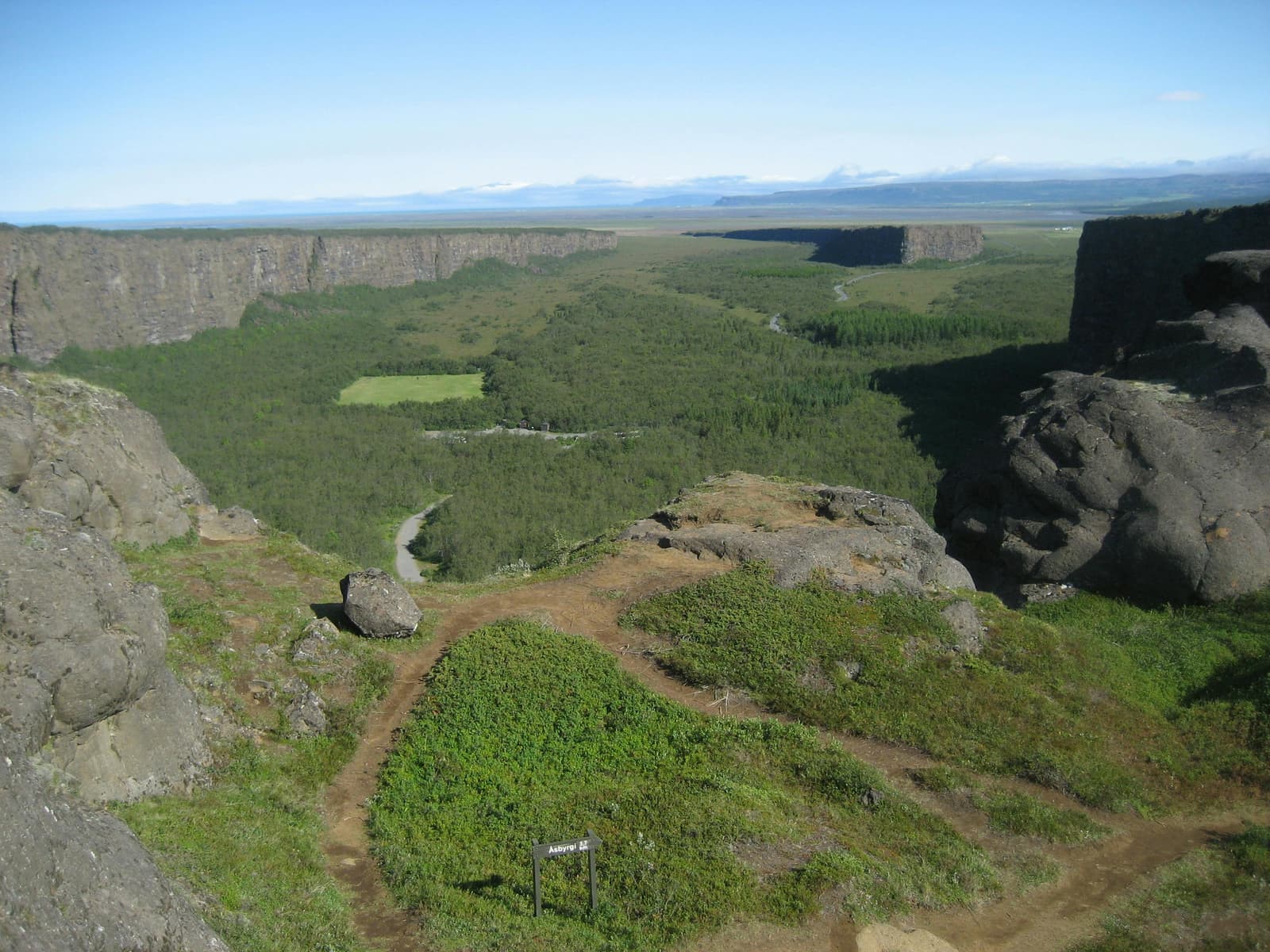
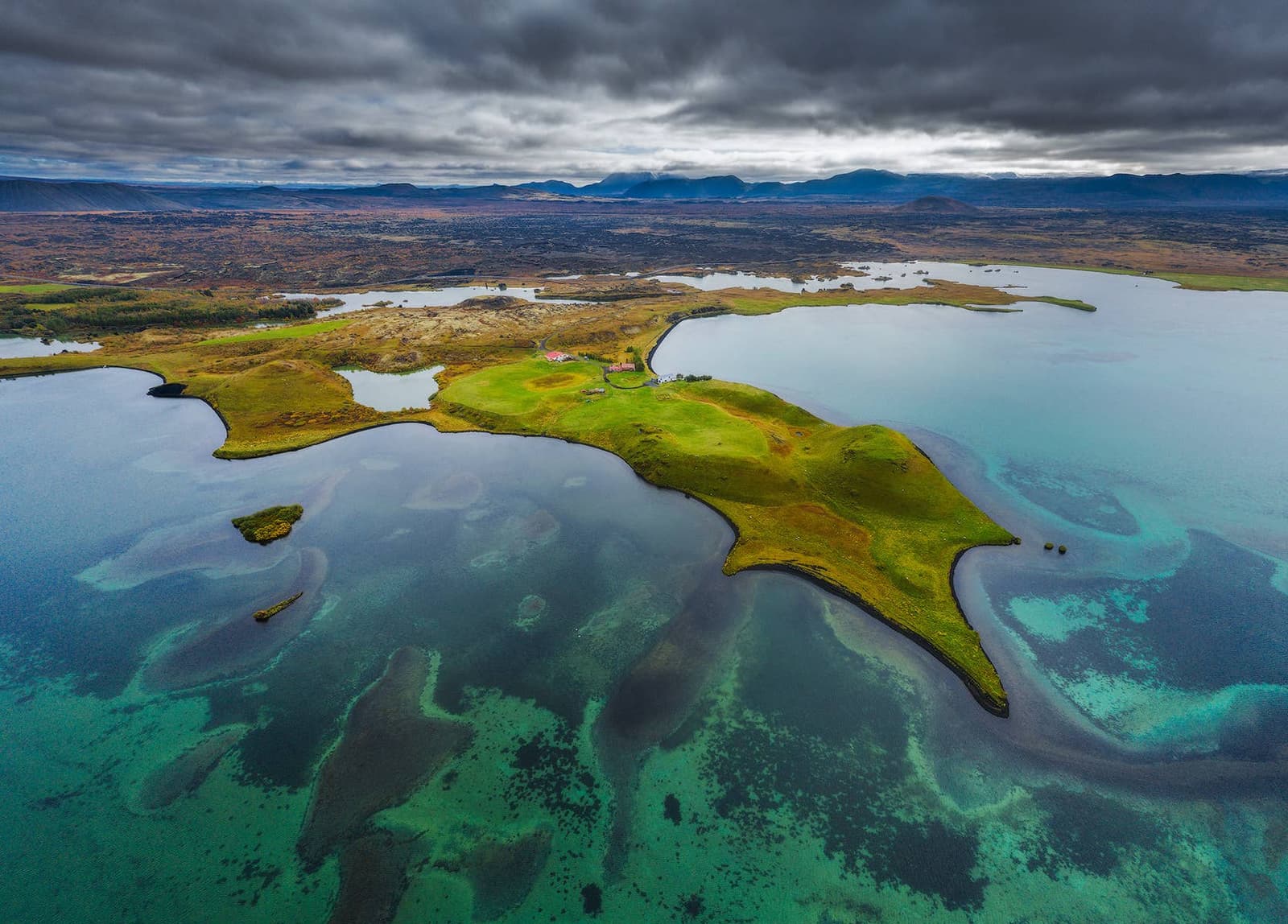
Ásbyrgi feels unusually enclosed for Iceland: a green canyon floor, tall walls, quiet woodland, and a central rock island called Eyjan rather than the exposed, wind-first landscape many travelers expect.
The official park page describes the hollow as about 3.5 km long and roughly 1.1 km wide, with cliffs up to 100 metres high in the innermost section. Those numbers matter less than the contrast on arrival: open North Iceland gives way to trees, cliffs, pond water, birds, and shadow.
The visitor-centre area helps turn Ásbyrgi into a practical walking stop, not only a viewpoint.
Botnstjörn pond gives the easiest close-up version of that mood. It is a short walk into the inner canyon, where still water, birch, seasonal colour, and cliff faces encourage a slower visit.
Botnstjörn, Eyjan, or Klappir?
Choose Botnstjörn for the easiest rewarding visit, Eyjan for a fuller view into the canyon, and Klappir only with more time, good conditions, and confidence around exposed edges.
For most first visits, begin with Botnstjörn before deciding whether to add more. The official trail list gives it as a 1 km walk taking about 30 minutes and suitable for limited mobility, making it the clearest low-friction choice inside the canyon.
Botnstjörn is the easiest way to experience the sheltered inner canyon without committing to a longer trail.
Simple Ásbyrgi walk choice
Walk
Typical time
Use it when
Botnstjörn
About 30 minutes
You want the easiest inside-canyon experience with pond, woodland, and cliffs.
Eyjan
About 1.5-2 hours
You want a wider view over Ásbyrgi and can follow an easy marked trail while respecting the cliff edges.
Underneath Eyjan
About 1-1.5 hours
You want lava-wall texture, woods, and a more complete floor-level walk.
Klappir
About 2.5-3 hours
You want the upper view and can handle a longer, more exposed trail in good conditions.
The useful decision is not whether to complete every trail. It is whether Ásbyrgi will be a compact canyon visit or the main walking experience of the Diamond Circle. Families and mixed-pace groups usually benefit from keeping a first visit focused.
Ásbyrgi belongs to the wider Jökulsárgljúfur story
Ásbyrgi is the calm northern counterpart to the river, basalt formations, and waterfall landscapes farther south in Jökulsárgljúfur.
Visit North Iceland frames the Diamond Circle around five key destinations: Goðafoss, Mývatn, Dettifoss, Ásbyrgi, and Húsavík. They do not need to be forced into one rushed circuit. Ásbyrgi rewards a slower pace, especially if you walk beyond the parking area.
Eyjan makes Ásbyrgi easier to place in the wider Jökulsárgljúfur landscape.
Nearby Hljóðaklettar exposes the basalt architecture of the river canyon, while Jökulsárgljúfur explains the protected landscape connecting Ásbyrgi and Dettifoss. Húsavík adds harbour and whale-watching context to the northern side of the Diamond Circle.
Paths and cliff edges set the limit
Check access, weather, and park information before visiting, especially outside settled summer conditions. Arrival is normally straightforward, but trail surfaces, wind, visibility, and cliff exposure determine what is sensible.
The official Jökulsárgljúfur page describes access from Road 85 in Kelduhverfi or from the Ring Road in Mývatnsöræfi, with seasonal and weather-dependent limitations. Summer access is normally simpler; winter and shoulder-season visitors should verify current conditions before committing to a long circuit.
Marked paths make Ásbyrgi manageable, but cliff edges and uneven footing still shape the choice.
Gljúfrastofa visitor centre is the best local check when it is open. It provides an exhibition, trailheads, park context, and nearby campsite services; restrooms are available while the centre is open. Confirm seasonal availability on the official page rather than relying on an old listing.
Use live park and condition sources
Use official park, access, weather, and safety sources for the final go/no-go decision. Regional tourism pages are useful for wider Diamond Circle context.
Current travel-condition alerts and safety context.
For a normal summer visit, these checks may only confirm what you expected. In winter, spring, late autumn, strong wind, fog, or fresh snow, they determine whether the longer trails remain realistic.
Answers for a first Ásbyrgi visit
These practical choices determine how much of Ásbyrgi a first visit can reasonably include.
How long should I spend at Ásbyrgi?
Allow at least 30-60 minutes for a useful first visit. Add 1.5-2 hours for Eyjan, and more if Ásbyrgi will be your main walk.
Can Ásbyrgi fit into one Diamond Circle circuit?
Yes, if you keep the walk focused and avoid combining every long attraction. It is more rewarding with several unhurried hours or an overnight nearby than as a rushed checklist item.
Is Ásbyrgi good for families?
Yes, Ásbyrgi can be good for families when you choose short marked walks and stay careful around cliffs. Botnstjörn is the easiest first choice for mixed ages and abilities.
Do I need to check access conditions for Ásbyrgi?
Yes, check official road and weather information outside settled summer weather. Snow, ice, wind, or low visibility can change both access and the safe walking choice.
Can I hike from Ásbyrgi to Dettifoss?
Yes. The official park lists the canyon trail between Ásbyrgi and Dettifoss as a challenging 32 km hike over two days. Camping is only permitted at the designated Vesturdalur and Dettifoss campsites, so use the current official trail information and map before setting out.