Diamond Beach is a black-sand shore where ice from Jökulsárlón can wash back from the Atlantic. The contrast is striking, but the amount of ice changes and the surf deserves space.
Coast snapshot
Official name
Fellsfjara; widely known as Diamond Beach
Setting
Black sand at the outlet from Jökulsárlón
Allow
About 20 to 60 minutes
Ice
Amount and size vary with the lagoon, tide and surf
Safety
Stay well back from waves and never climb on shore ice
In this guide
Glacier ice on black Atlantic sand
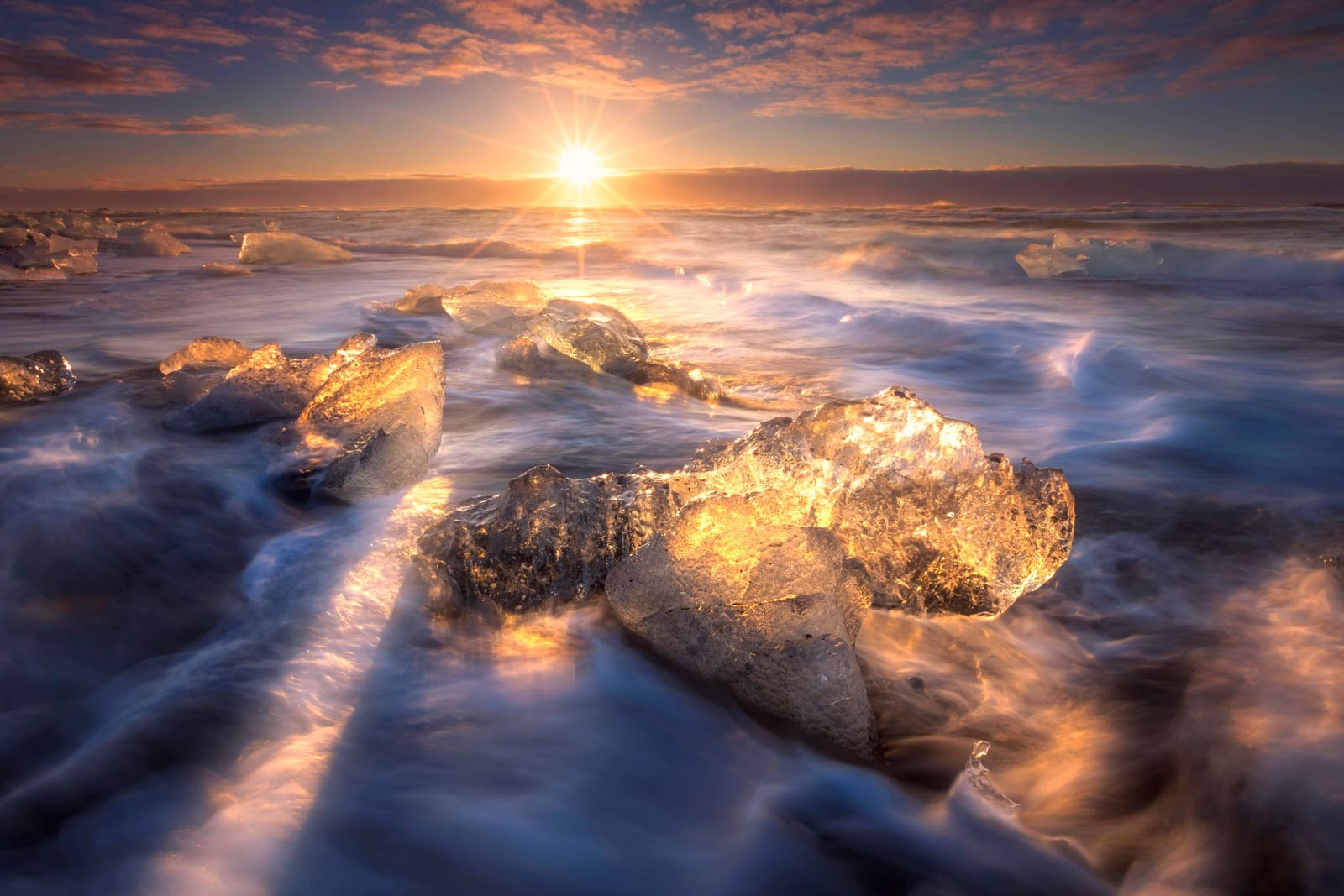
Diamond Beach is where some of the ice leaving Jökulsárlón meets the ocean and washes onto black sand. The beach is officially called Fellsfjara, though its popular name describes the effect that draws most visitors.
Clear, white and blue pieces can sit across the dark shore like polished glass. Some are small enough to hold in one hand; others are much larger. Waves, sand and light keep changing their shape and appearance, so the beach rarely looks the same for long.
The ice comes from Breiðamerkurjökull, moves through Jökulsárlón and passes along the lagoon's short outlet towards the Atlantic. The sea returns some pieces to land. Seeing that full journey makes the beach more than a photograph: it is the ocean end of a visible glacier system.
Photo guide
Diamond Beach in photos
1 / 2
Light changes the beach quickly, so photographers benefit from flexibility.
The amount of ice is never guaranteed
A good visit does not depend on finding the beach covered in large ice blocks. Their number, size and position change with conditions in the lagoon and ocean.
One visit may reveal dozens of bright pieces along the waterline; another may have only a few smaller fragments. Tide, surf, recent weather and the flow from the lagoon all play a part. Old photographs cannot predict what will be there when you arrive.
Ice coverage changes constantly; the black shore and moving Atlantic remain the setting even on quieter days.
Soft light can reveal bubbles, cracks and blue tones within the ice, but there is no need to chase the waterline. A wider view often shows the relationship between ice, sand and surf better than a close-up. Allow about 20 to 60 minutes, then stay longer only if the conditions and photography genuinely reward it.
The surf sets the safe viewing distance
This is an exposed Atlantic shore, not a place to paddle or climb on ice. A wave can move farther up the sand than the previous ones and can shift heavy ice without warning.
Wet sand shows where waves have already reached, but it is not a maximum line. If the sea is rough, wind makes balance difficult or people are crowding the safest area, watch from farther back or leave. Diamond Beach is different from Reynisfjara, but both require alert black-beach behaviour.
Read current guidance about waves, children, warning signs and closures.
Visit the lagoon and shore as one ice story
Jökulsárlón and Diamond Beach sit on opposite sides of Route 1, but each answers a different question: the lagoon shows where the ice gathers, while the beach shows what happens when it reaches the sea.
Parking areas serve both sides. Vatnajökull National Park advises pedestrians moving between eastern Fellsfjara and the lagoon to use the marked way beneath the bridge rather than walking over the bridge itself. Follow the signs you find on site because pedestrian arrangements can change.
The beach and lagoon are close together, but the ocean side needs its own safety judgement.
Official context for the beach, parking and the pedestrian way beneath the bridge.
Choose another glacier view only if it adds something
The strongest addition is usually a quieter glacier setting, not a long list of South Coast sights.
Fjallsárlón offers a smaller lagoon with a more enclosed view towards its glacier tongue. Nearby Breiðárlón and Fjallsjökull belong to the same glacier landscape, but neither needs to become an extra stop unless its setting genuinely adds to your day.
A guided Crystal Ice Cave visit is a separate booked excursion, not an extension of the beach walk. Farther west, Fjaðrárgljúfur offers a canyon rather than another ice view. Choose either for the experience itself instead of adding it simply because it lies along the wider route. In poor weather, the sensible choice may be to keep the entire visit short and continue only when official travel conditions support it.
Check Umferðin and the weather forecast before crossing southeast Iceland, especially in winter. Easy parking beside a famous place does not remove the wind, visibility and surface conditions involved in reaching it.