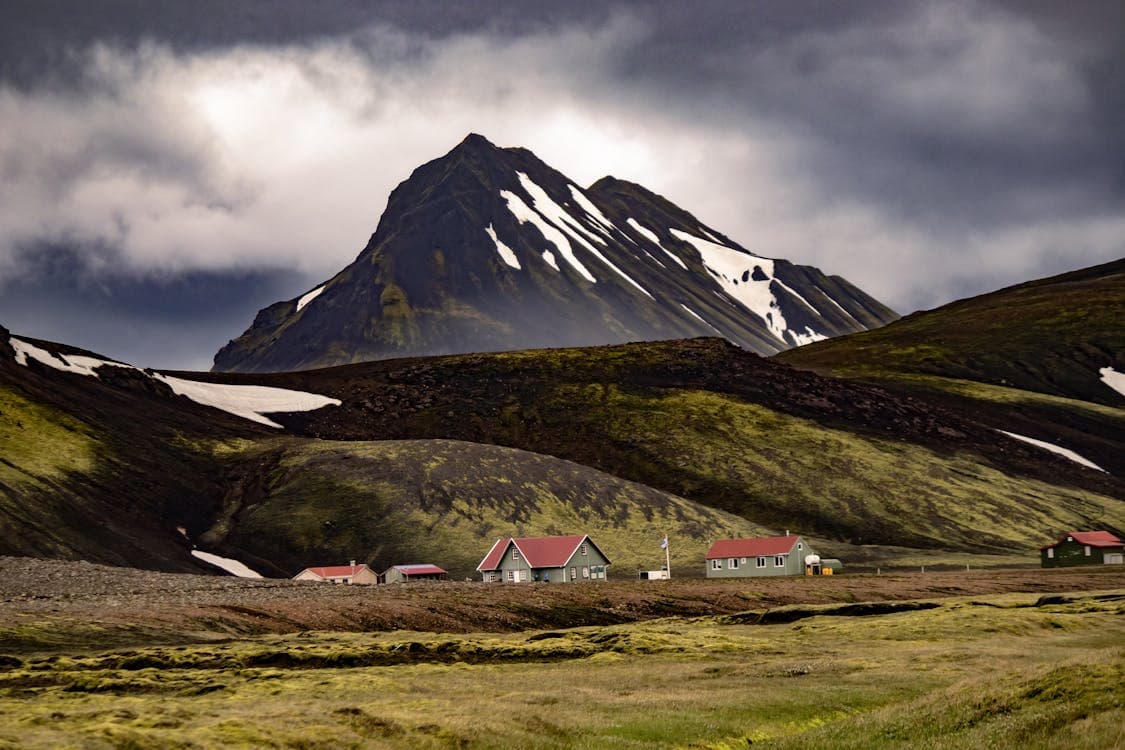
Kverkfjöll is a remote volcanic mountain range on the northern edge of Vatnajökull, best for deliberate Highlands travelers who want fire-and-ice scenery and can handle serious access, weather, and safety checks.
Glacier facts
Type
Remote volcanic mountain range, glacier-edge landscape, and highland hiking area
Region
Highlands, on the northern edge of Vatnajökull
Route context
A Highlands F-road objective, not a casual Ring Road pullout
Typical visit
Usually a slow highland day or part of an overnight interior plan
Effort
Challenging trails, rough terrain, exposed weather, and long access distances
In this guide
Is Kverkfjöll worth the remote detour?
Kverkfjöll is worth considering if your trip is already a serious Highlands plan. It is not an easy add-on; the reward is rare ice-and-volcano scenery, and the cost is access, weather, time, and judgement.
The place has a different rhythm from Iceland’s famous roadside stops. Kverkfjöll sits where dark volcanic ridges, glacier tongues, moraines, snow patches, and geothermal power meet on the northern edge of Vatnajökull. The feeling is broad, exposed, and remote rather than polished or convenient.
Add Kverkfjöll when the Highlands are already the point of the trip. Skip it when you are trying to make a first Iceland route more efficient, because Askja, Landmannalaugar, Kerlingarfjöll, or easier glacier viewpoints will usually give more value for less planning risk.
Photo guide
Kverkfjöll in photos
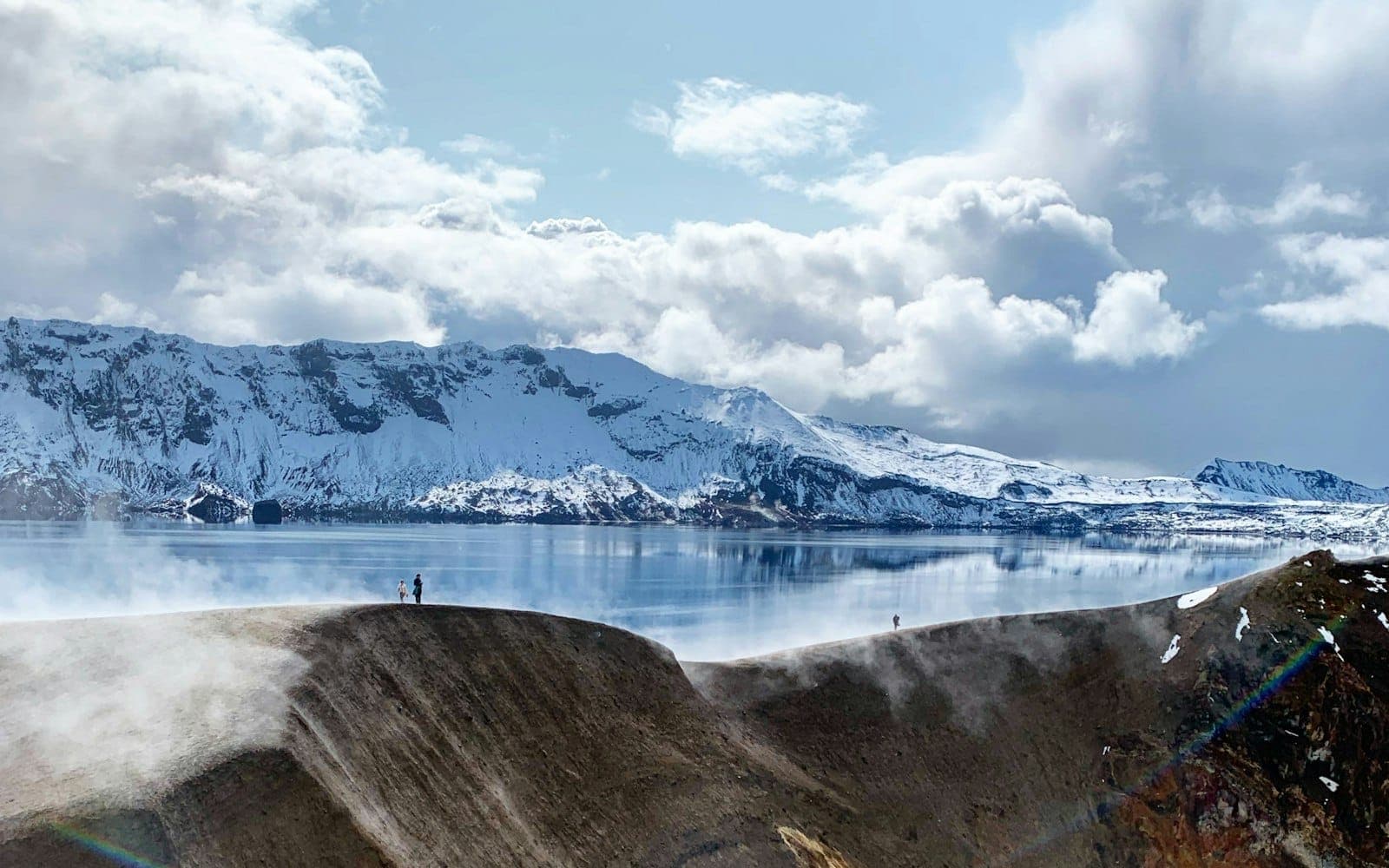
The glacier edge is central to Kverkfjöll, but it should be approached with conservative judgement.
Kverkfjöll: you see a mountain range shaped by a central volcano and pressed against Vatnajökull
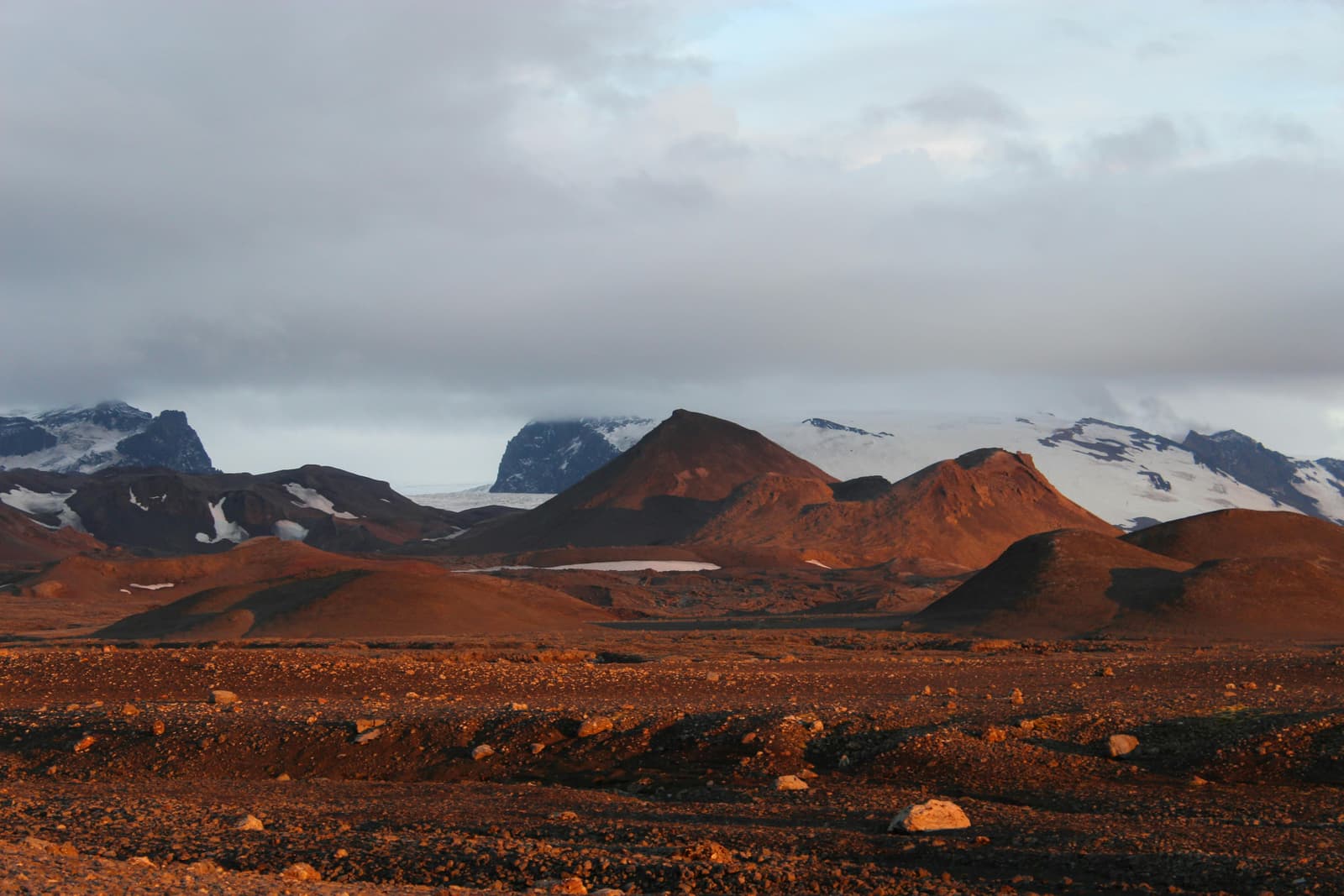
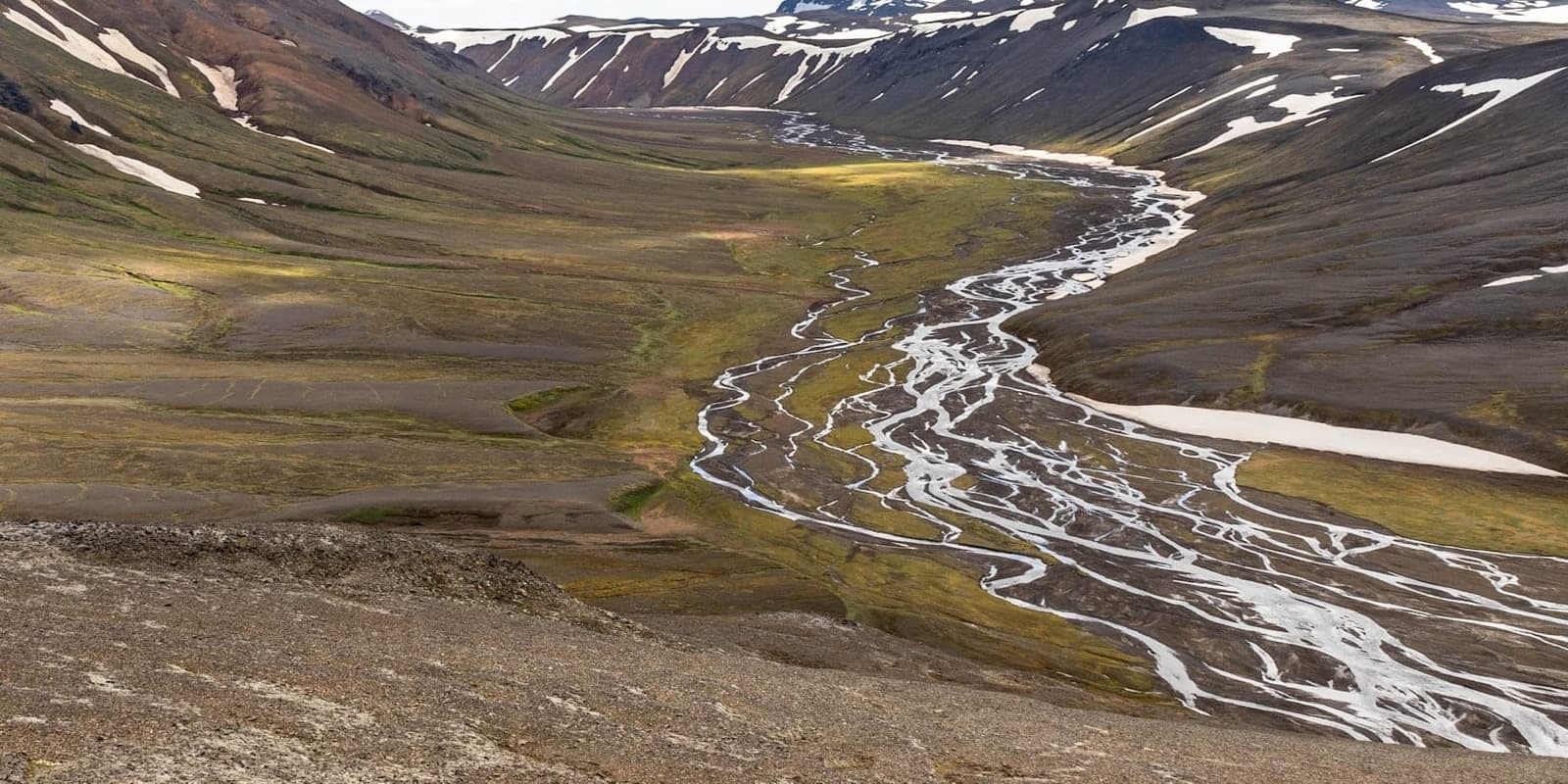
You see a mountain range shaped by a central volcano and pressed against Vatnajökull, with Kverkjökull flowing through a wide pass and huge glacier tongues on either side of the mountains.
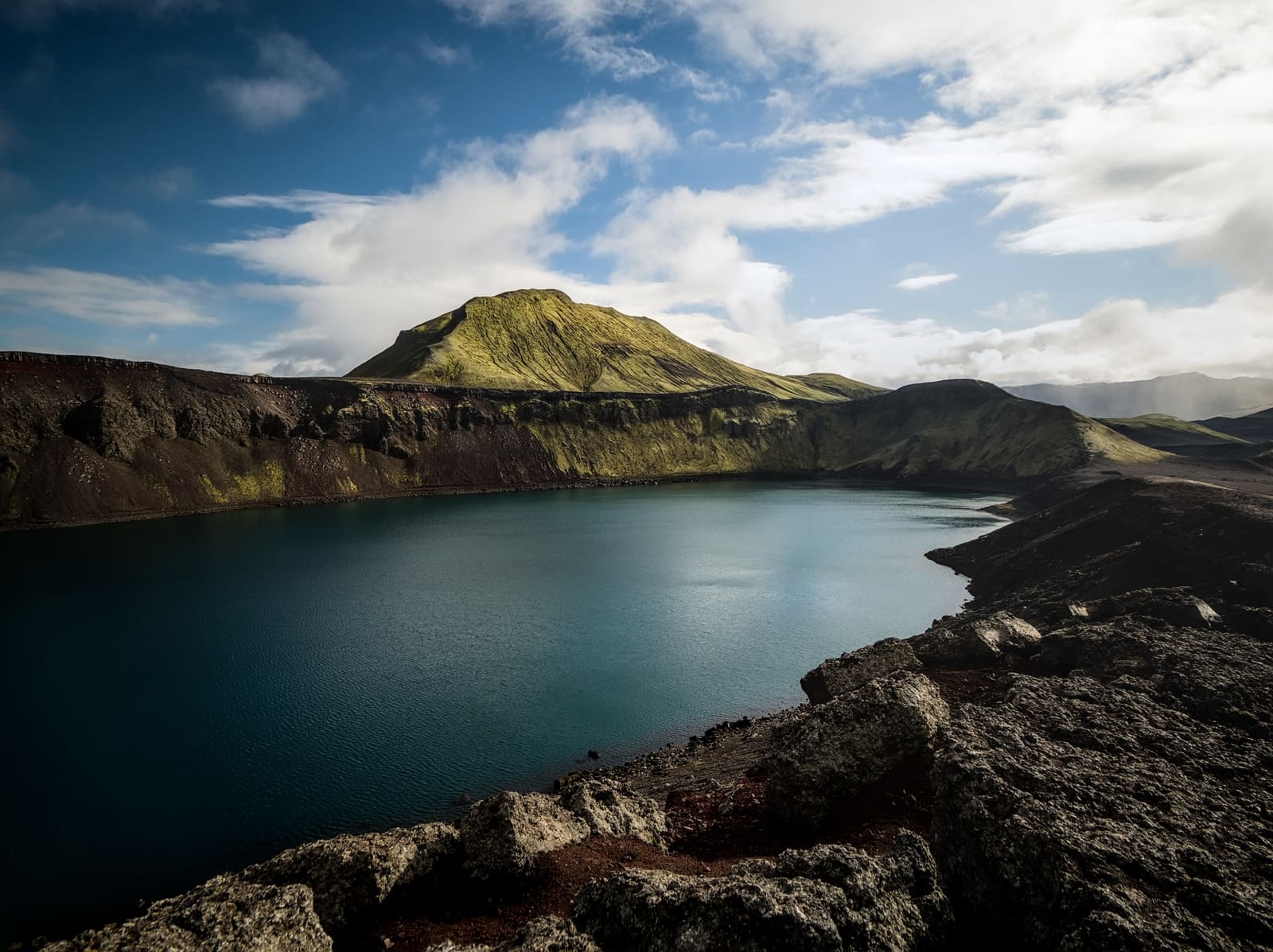
The strongest visual identity is the contrast: black and reddish highland ground, white ice, steep walls around the pass called Kverk, and long views toward Dyngjujökull and Brúarjökull. It feels less like one viewpoint and more like a whole highland system.
Kverkfjöll rewards travelers who want highland scale rather than a quick roadside photo stop.
That scale is also why the old ice-cave idea needs caution. The glacier margin changes, ice can fall, and geothermal terrain adds another layer of risk. Treat the area as a protected, remote landscape first, not as a casual cave destination.
Kverkfjöll needs a generous highland plan
Kverkfjöll needs a generous highland plan. For most travelers, it belongs in a slow summer-style interior route or an overnight highland itinerary, not in a day already crowded with easier stops.
The official National Park hiking descriptions around Sigurðarskáli use challenging trail ratings, and that is the right mental frame. Even shorter walks can involve rough ground, exposure, slow driving before and after the hike, and weather that changes the feel of the day.
The terrain around Kverkfjöll makes effort part of the experience, not a detail to solve after arrival.
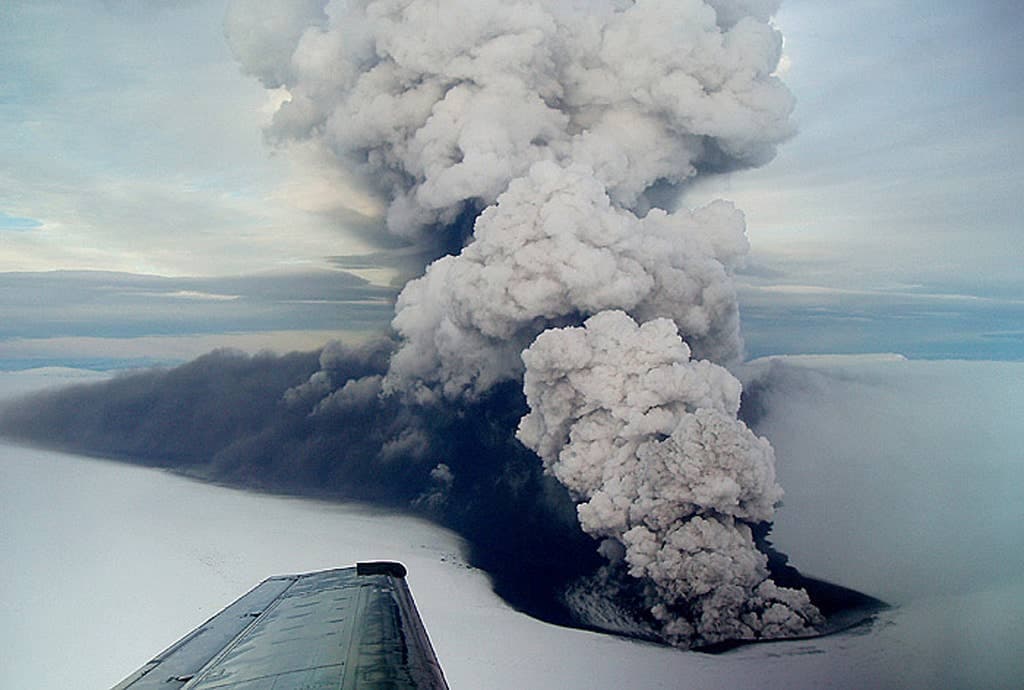
If you are also weighing Holuhraun, Brúarjökull, Bárðarbunga, Grímsvötn, or Víti by Askja, do not treat the names as a checklist. Choose the route shape first, then decide which stops genuinely fit the day, vehicle, conditions, and group.
Check official road, weather, safety, and National Park information before treating Kverkfjöll as fixed
Check official road, weather, safety, and National Park information before treating Kverkfjöll as fixed. Remote highland plans should stay flexible until the practical pieces line up.
Use official road information before relying on any F-road approach.
Use official weather forecasts and warnings because visibility and wind can change how exposed the area feels.
Use SafeTravel for travel-condition and alert checks before remote highland driving or hiking.
Use National Park visitor information and on-site guidance for protected-area rules, trails, and glacier-edge caution.
Keep fuel, food, daylight, communication, and turnaround decisions conservative because help is not close.
Kverkfjöll pairs best with other Highlands F-road decisions, especially Askja, Holuhraun, Brúarjökull, and the wider Highlands region
Kverkfjöll pairs best with other Highlands F-road decisions, especially Askja, Holuhraun, Brúarjökull, and the wider Highlands region. The useful question is not distance alone, but whether the route remains realistic.
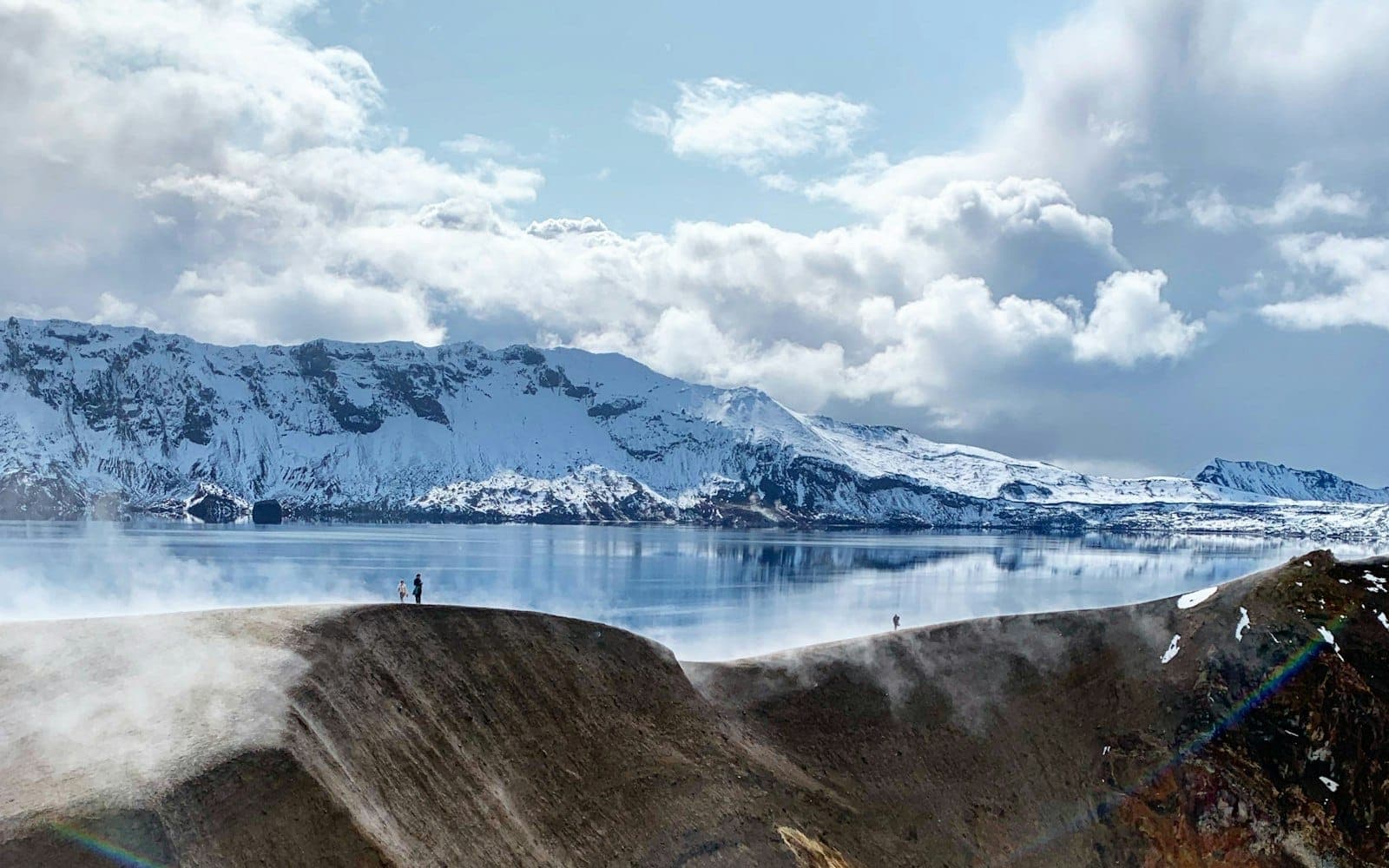
Askja is the clearest comparison because it has a stronger destination identity for many travelers. Kverkfjöll feels more rugged and less packaged, which can be a strength if you want a deeper highland landscape and a weakness if you need a straightforward target.
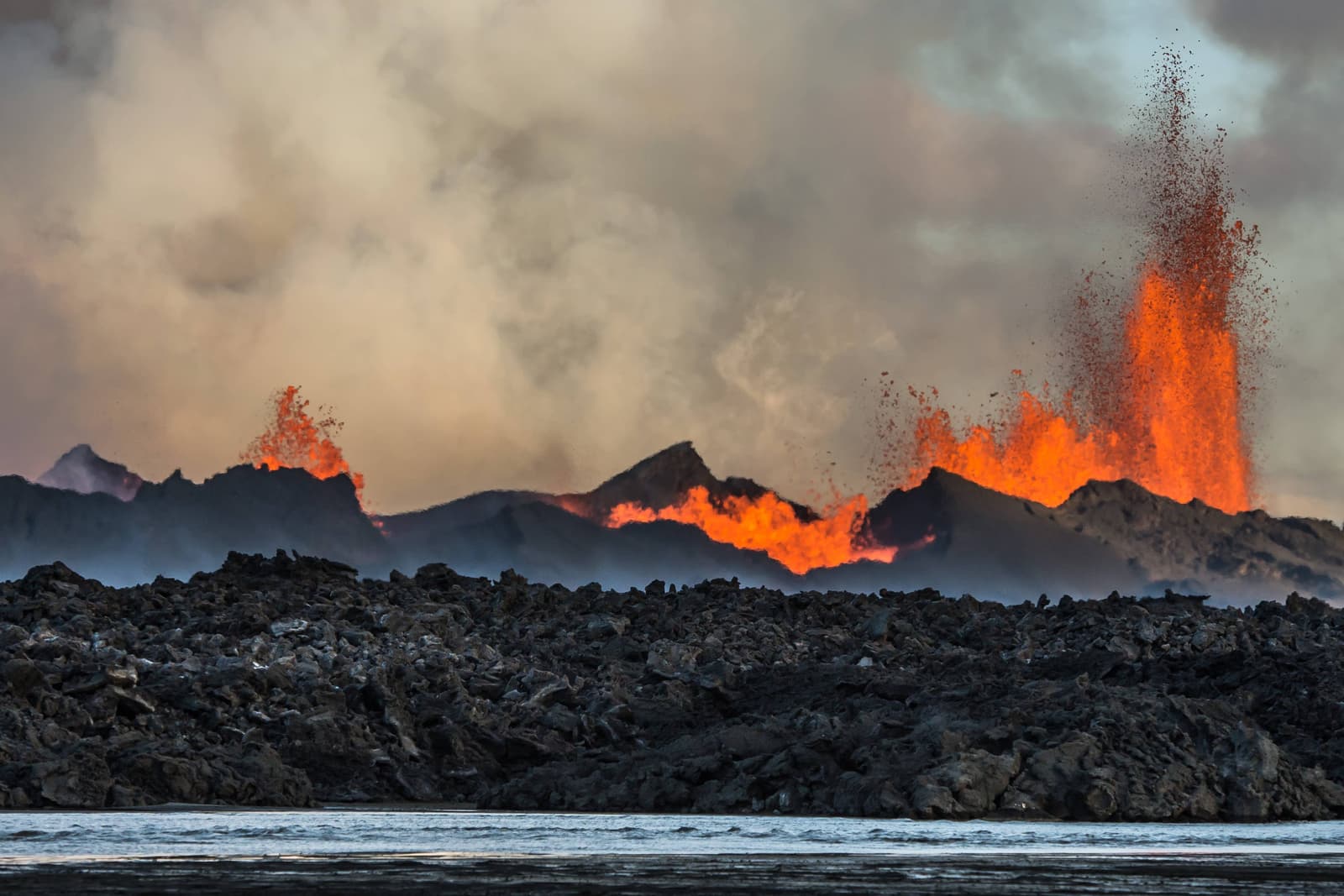
Holuhraun adds recent lava-field context, while Brúarjökull emphasizes the scale of Vatnajökull’s outlet glaciers. The Highlands region page is the better planning handoff if you are still deciding whether this kind of interior travel belongs in your trip at all.
Is Kverkfjöll better than Askja or easier Highlands stops?
Kverkfjöll is better when you want remote glacier-volcano terrain and are comfortable with uncertainty. Askja is often better when you need a more defined volcanic objective, and easier Highlands stops are better when time is tight.
How to choose between Kverkfjöll and other highland ideas
Choice
Best fit
Main tradeoff
Kverkfjöll
Remote fire-and-ice landscapes, challenging trails, and glacier-edge scale
Access, weather, and safety checks carry more of the decision
Askja
A clearer volcanic destination with caldera and crater-lake identity
Still remote and condition-dependent, but easier for many travelers to understand
Colorful highland scenery with more established visitor rhythm
A different landscape mood and often a more popular route choice
That comparison is the honest way to use Kverkfjöll. It should not win because it sounds rarer; it should win because your route, vehicle, conditions, experience, and appetite for remote terrain all point in the same direction.
Kverkfjöll FAQ
Can you visit Kverkfjöll on a normal Ring Road trip?
Usually no, not without changing the character of the trip. Kverkfjöll is a remote Highlands objective, so most efficient Ring Road plans should choose easier glacier or mountain stops.
Are the Kverkfjöll ice caves safe to enter?
Do not treat them as a casual visitor activity. Glacier margins and caves can be unstable, so only consider specialist-guided plans that match conditions and official guidance.
Is Kverkfjöll mainly for hikers?
It is best for travelers comfortable with rough highland landscapes and at least some walking. Even scenic viewpoints and shorter trails need conservative weather, route, and safety judgement.
Should I choose Kverkfjöll or Askja?
Choose Askja if you want a clearer volcanic destination, and choose Kverkfjöll if the appeal is a more remote glacier-volcano landscape. Both require careful highland planning.