Askja is a remote volcanic caldera in the north Highlands, worth planning only when highland access, vehicle choice, weather, and enough spare time all support the long detour.
Access reality
Type
Remote volcanic caldera, crater lake, geothermal crater, and lava landscape
Region
Central Highlands, north of Vatnajökull
Route context
A Highlands F-road destination, not a quick Ring Road pullout
Time to allow
Usually a long day from North Iceland or a slower Highlands overnight plan
Best experience
Walk from the Vikraborgir area toward Öskjuvatn and Víti when roads, weather, and ranger advice line up
In this guide
Is Askja worth the long Highlands drive?
Yes, Askja can be worth the effort if your trip is already built for the Highlands. It is not a simple scenic stop; it is a remote volcanic landscape where the drive, walk, weather, and safety checks are part of the decision.
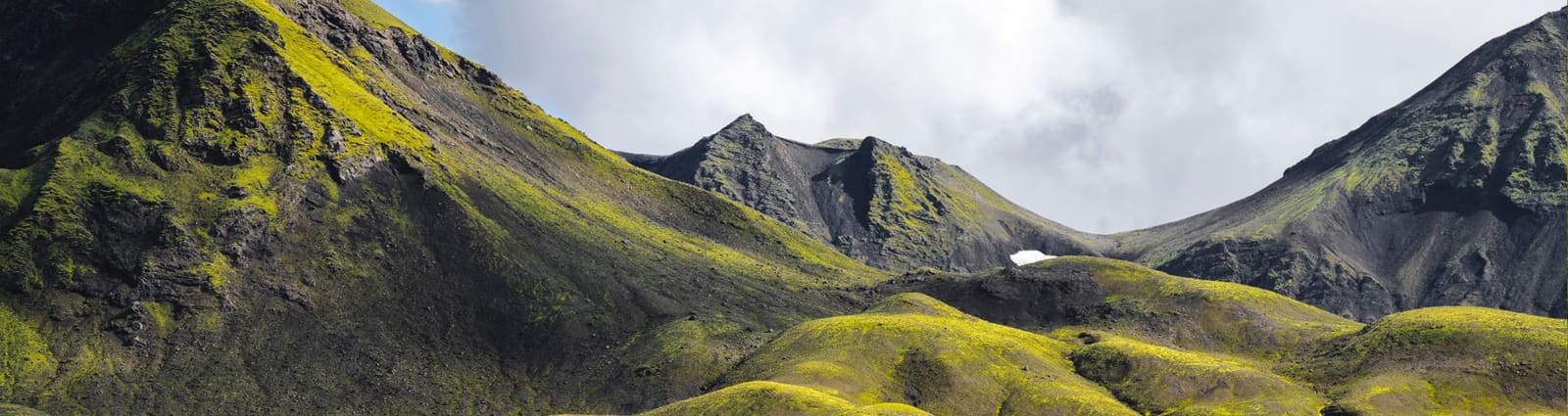
The reward is scale and strangeness: a broad caldera floor, dark lava, the deep water of Öskjuvatn, the pale geothermal crater of Víti, and the feeling of being far from Iceland’s easier sightseeing corridors. The place feels more like a volcanic basin than a single viewpoint.
The cost is friction. Askja belongs in a summer Highlands plan with enough time, fuel, food, road confidence, and a willingness to turn around if conditions are wrong. If your itinerary is mostly South Coast, Golden Circle, or short-break travel, an easier attraction will usually be a better use of the day.
What does the Askja visit feel like once you arrive?
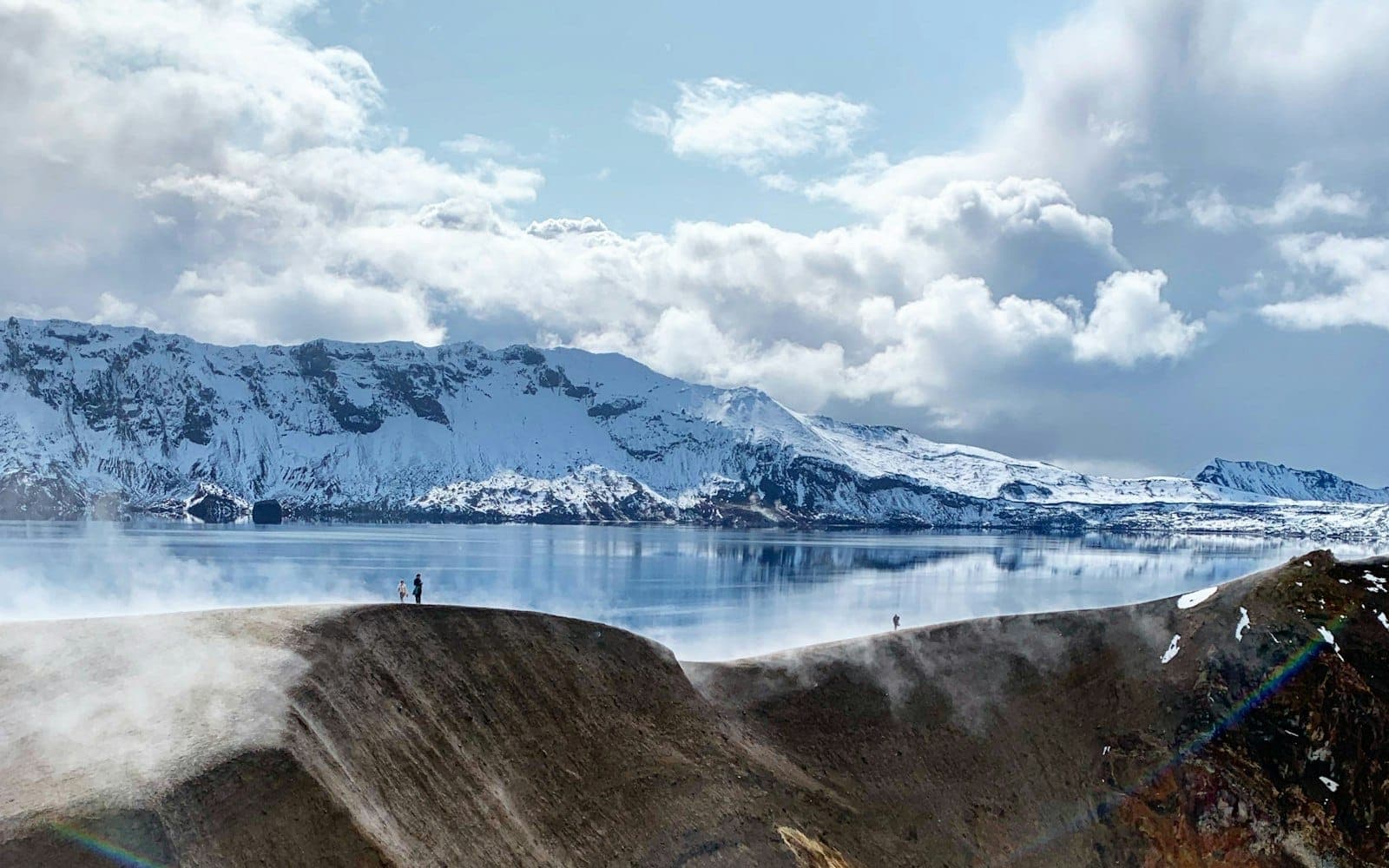
The visit feels open, exposed, and quiet: black lava underfoot, pale ash and snow patches, mountains around the rim, and the huge still surface of Öskjuvatn below the caldera walls.
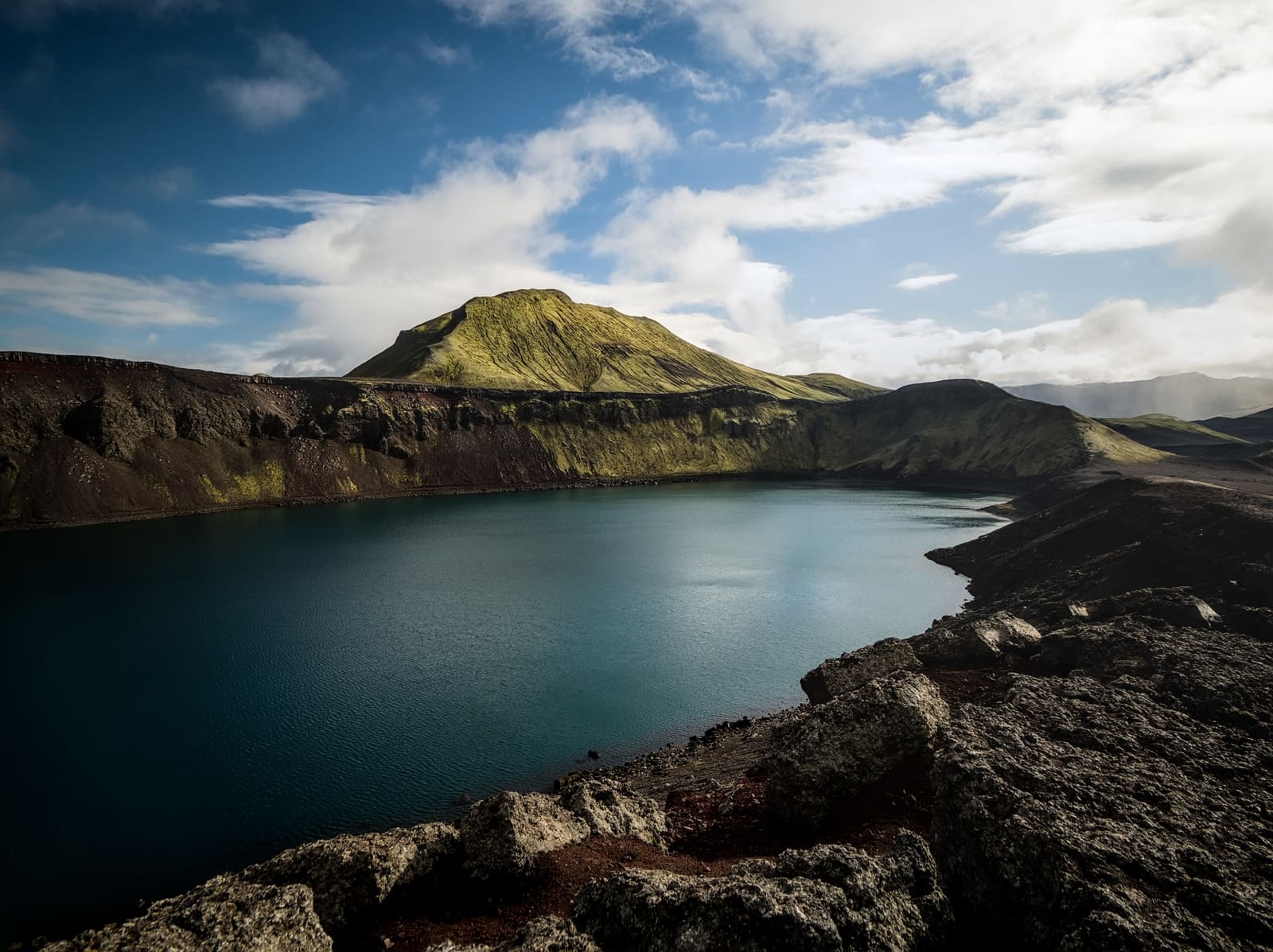
Most people come for the contrast between the crater shapes and the water. Víti is small and vivid beside the much larger Öskjuvatn, while the surrounding Dyngjufjöll mountains make the whole scene feel enclosed and high above normal travel routes.
Öskjuvatn gives Askja its scale: the lake sits inside a stark caldera rather than beside a normal roadside viewpoint.
The mood can change quickly. Bright sun can make the lake and crater look almost unreal, while cloud, wind, and snow patches make the same place feel severe. That is part of the appeal, but it is also why Askja should be planned with margin.
How do the roads and season shape an Askja day?
Roads and season shape the whole Askja decision. You should think of Askja as a summer Highlands F-road objective that needs current checks, not as a fixed stop that always works once it appears on a map.
The final approach uses rough interior roads, and conditions can include loose surfaces, snow or mud remnants, river crossings on some approaches, limited services, and long distances between help. A 4x4 permission line in a rental contract is not the same as a good decision for today’s conditions.
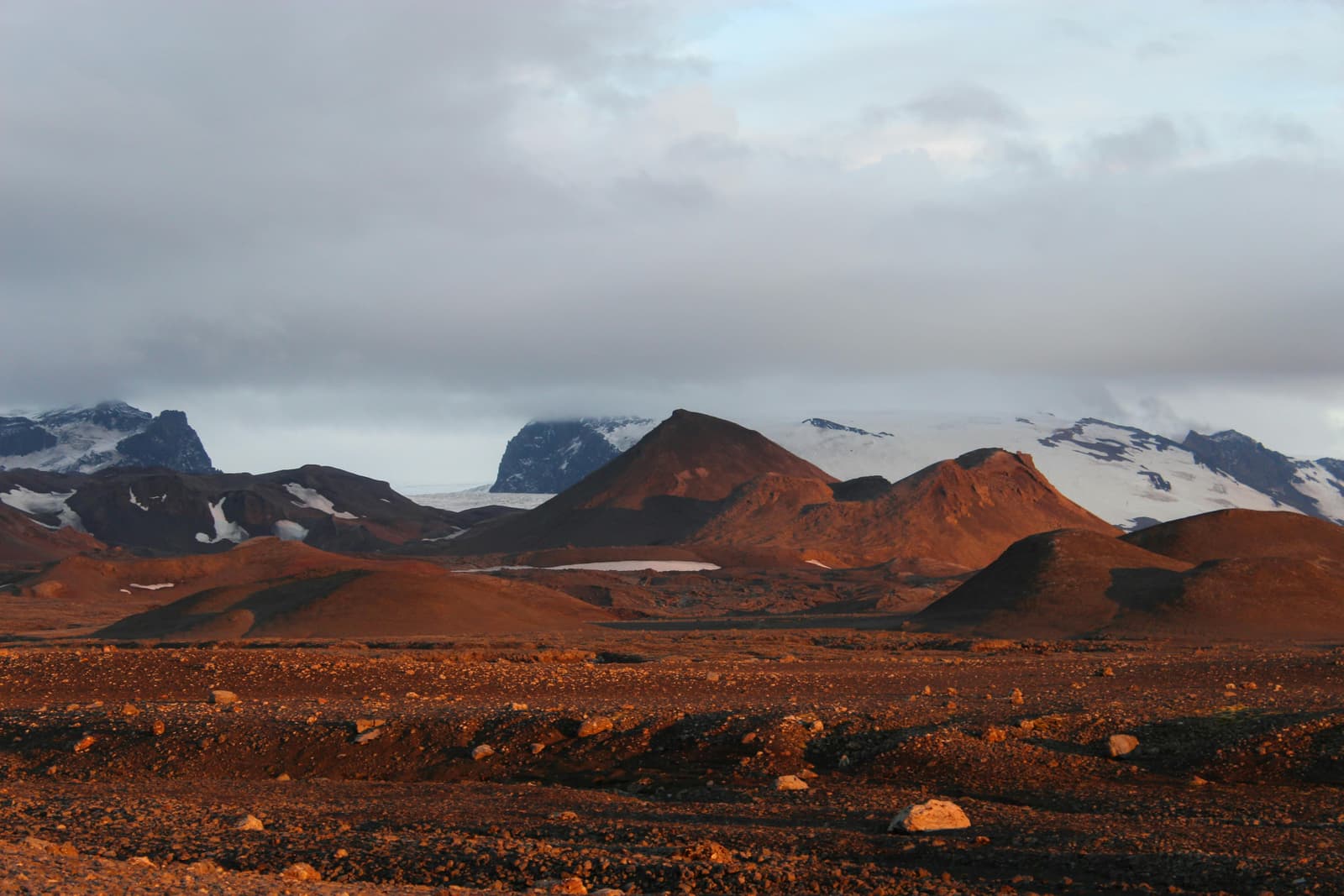
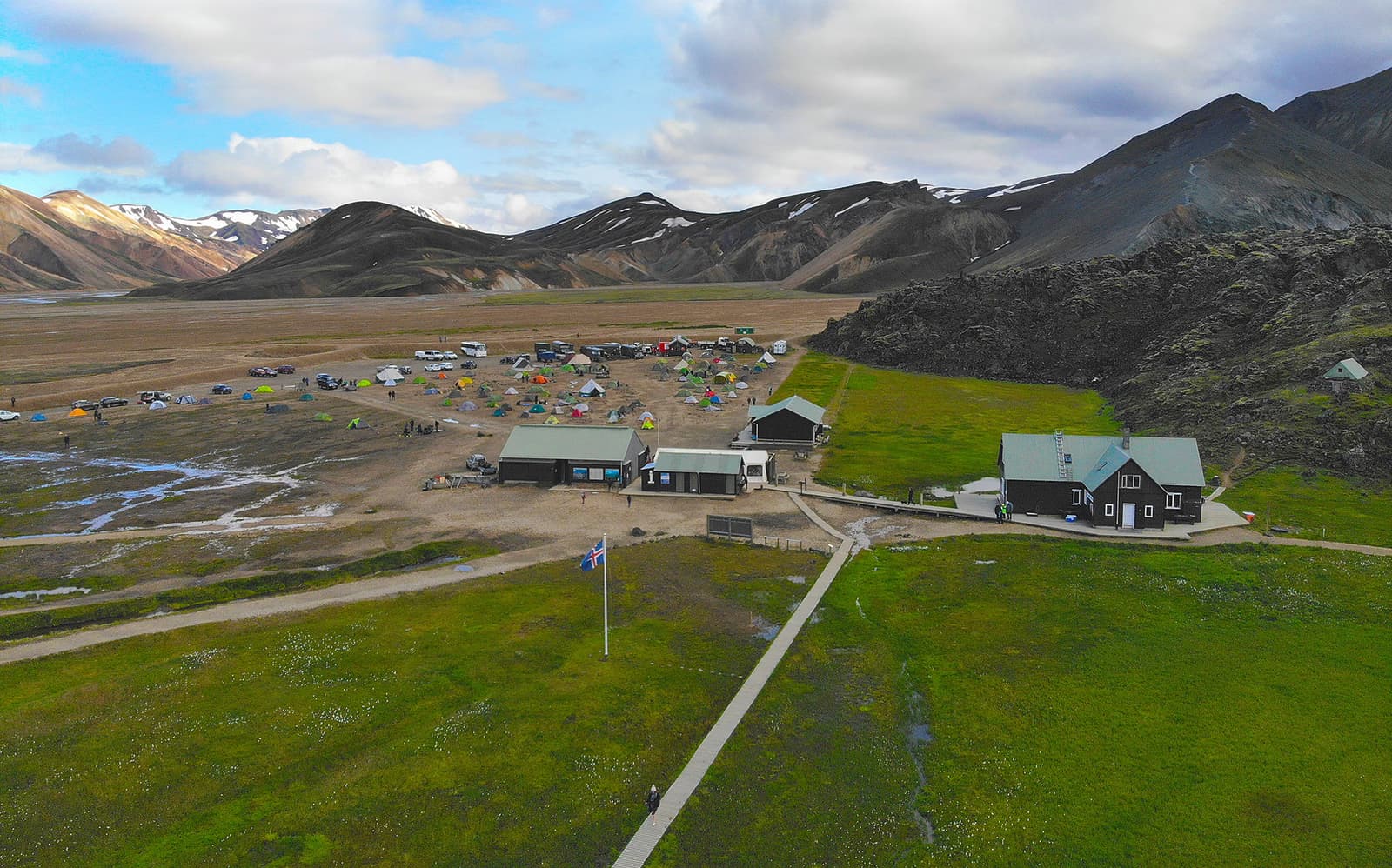
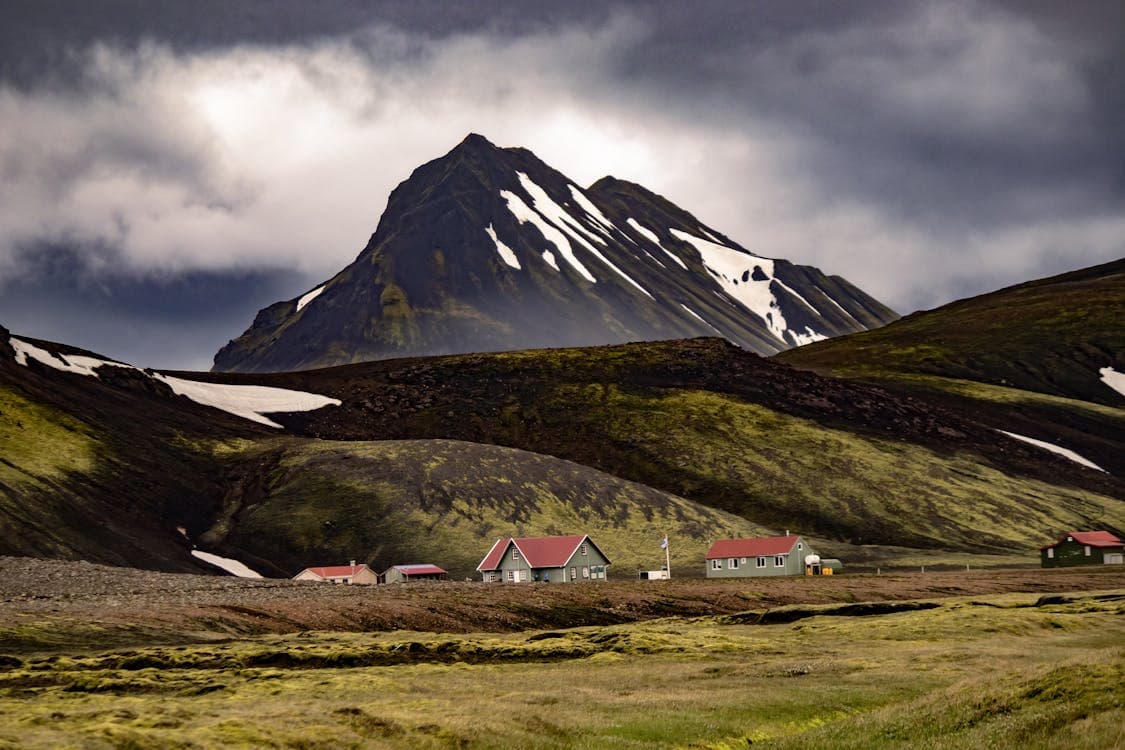
Dreki is the practical gateway near Askja, but the surrounding landscape makes clear how remote the area is.
The most sensible plan is to decide late, based on road status, weather, daylight, vehicle, and local advice. If any of those pieces are weak, Askja is better saved for a guided Highlands day or a future trip.
How much time should you allow for Askja?
Allow most of a day for Askja from North Iceland, and more if you are overnighting in the Highlands or combining it with other interior places. The visit is slow because the drive is slow, the setting deserves time, and the walk is not just a photo stop.
Vatnajökull National Park lists the Vikraborgir to Öskjuvatn route as 2.5 km and about 2 hours, and Dreki to Dyngjufjöll and Víti as an 8 km challenging route. Which route is realistic depends on where you park, road access, ranger advice, weather, and the condition of your group.
Askja planning reality check
Plan
When it makes sense
Main caution
Self-drive day from North Iceland
You have a suitable 4x4, open roads, good weather, and a full day with no tight evening commitment.
The return drive can feel much longer if weather, river levels, or road surface changes.
Overnight near Dreki or Herðubreiðarlindir
You want more margin for weather, hiking, photography, or nearby Highlands places.
Accommodation and camping are seasonal and limited; there are no shops, restaurants, or gas stations in Askja.
Guided Highlands trip
You want Askja without taking on the full F-road driving decision yourself.
Check route, vehicle type, cancellation policy, and whether the operator adapts to current conditions.
What should you check before driving into the Askja area?
Check current road status, weather, SafeTravel alerts, fuel range, food, water, phone coverage expectations, and local ranger information before leaving easy services behind.
Umferðin should be your road source, SafeTravel should be your travel-condition source, and the Icelandic Meteorological Office should be your weather and warning source. Askja is exactly the kind of place where yesterday’s route report can be less useful than today’s official update.
Ranger information at Dreki can matter as much as the map when conditions are changing.
Check roads before departure and again if conditions are marginal.
Do not assume fuel, food, repair help, or shelter will be available near the caldera.
Make a turnaround rule before the drive becomes emotionally hard to abandon.
Tell someone your plan or use official travel-plan tools when conditions warrant it.
How should you handle Víti, Öskjuvatn, and the crater edge?
Handle Víti and Öskjuvatn cautiously. The views are the highlight, but the same crater terrain that makes Askja memorable also creates slippery slopes, hot mud, rockfall exposure, cold water, and fast-changing weather.
Vatnajökull National Park notes that Víti’s water is usually above 20°C, but also warns that the sloping path can be very slippery in wet conditions, mud at the bottom can be hot, especially on the eastern bank, and rocks can fall from the edges. That is not a casual bathing note; it is a real on-site judgment call.
Öskjuvatn is the deeper, colder, larger presence in the caldera. The best experience is usually to keep enough time to look, walk carefully, and respect the marked guidance instead of trying to turn the place into a quick swim or edge photo.
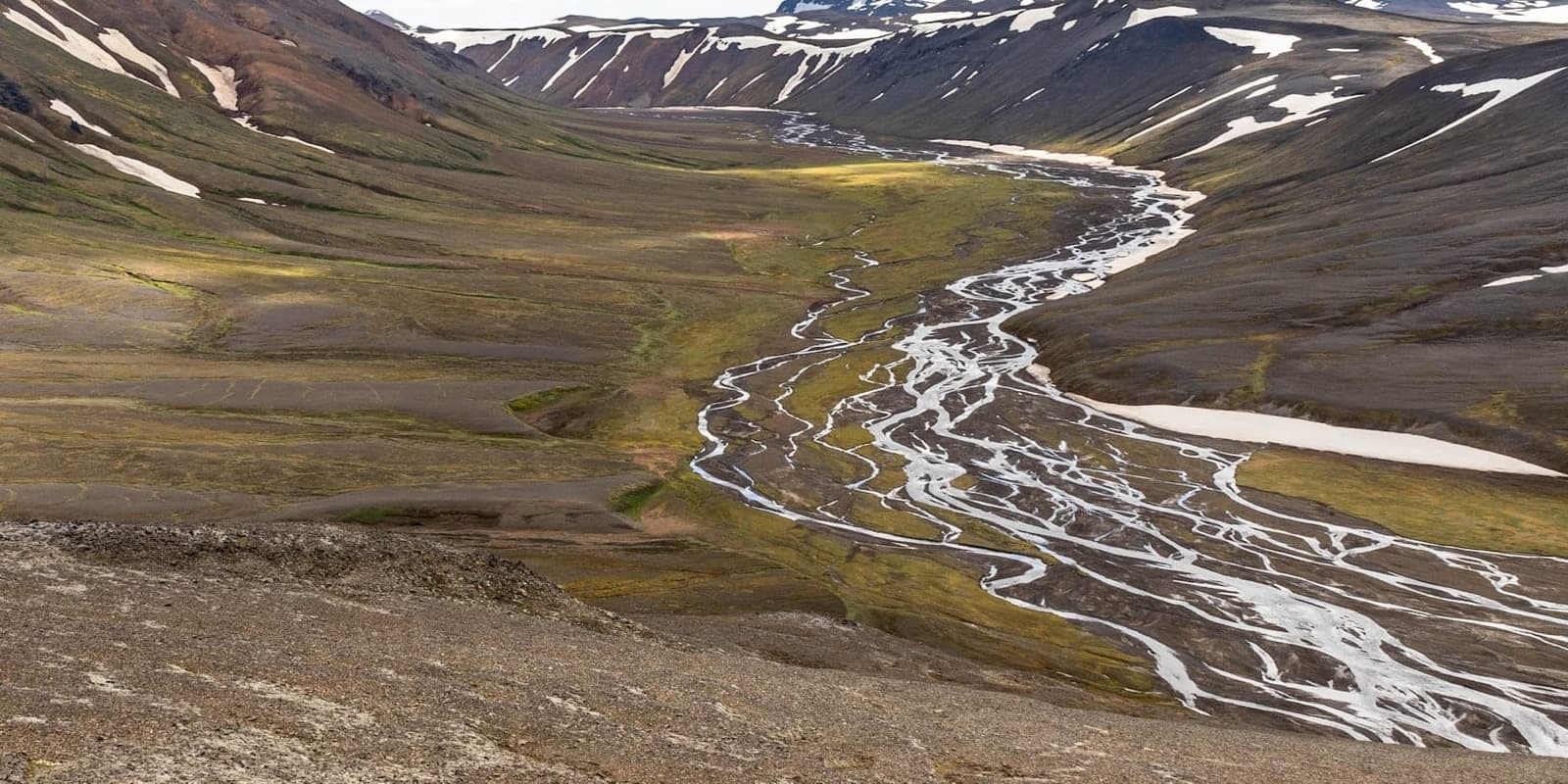
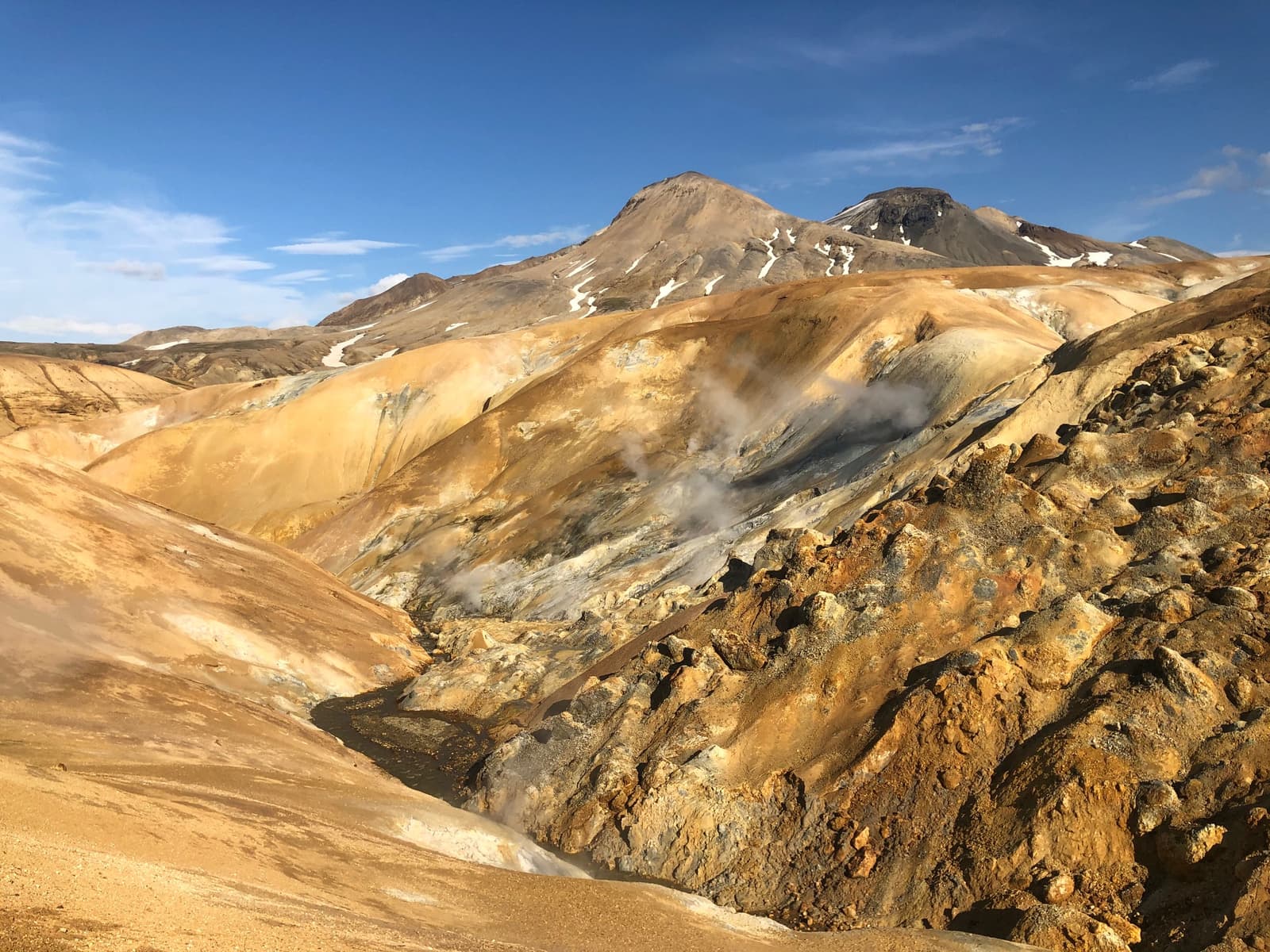
Holuhraun is a reminder that the Askja area is part of an active, powerful volcanic landscape.
Which Highlands places connect naturally with Askja?
Askja connects most naturally with the Highlands F-road cluster: Víti by Askja, Holuhraun, Hvannalindir, Kverkfjöll, Trölladyngja, Nýidalur-Jökuldalur, and the wider Highlands region.
Use those names as future route anchors, not as promises that they all belong in one day. Víti by Askja is effectively part of the same visit for many travelers, while Holuhraun, Hvannalindir, and Kverkfjöll push the plan deeper into remote interior travel.
If your Iceland trip is still mostly built around easier roads, use the Highlands page before adding more interior names. Askja is strongest when the whole plan has the time, vehicle, and tolerance for uncertainty that the interior demands.
Can you visit Askja without a 4x4?
No, you should not plan a self-drive Askja visit without a suitable 4x4 and explicit permission for the relevant F-roads. If you do not have both, use a guided Highlands option or choose an easier attraction.
Is Askja open year-round?
No, Askja is normally a summer Highlands objective for most travelers. Road openings and closures depend on conditions, so check Umferðin, SafeTravel, weather, and local advice before planning the drive.
Can you swim in Víti at Askja?
Sometimes visitors bathe in Víti, but it is not a simple hot-spring stop. The National Park warns about slippery slopes, hot mud, and rockfall, so conditions and personal safety should decide.
Is Askja a good Ring Road detour?
Only for travelers who have a real Highlands day and the right conditions. For most Ring Road schedules, Askja is too remote to add casually.
Use current sources before making the final Askja decision, because access, weather, safety alerts, and volcanic monitoring can change after a page like this is written.