Hafragilsfoss is a powerful Jökulsá á Fjöllum waterfall below Dettifoss in North Iceland, worth adding when you want a quieter canyon view and have room for access and safety checks.
Waterfall facts
Type
Glacial river waterfall, canyon viewpoint, and difficult lower-trail area
Region
Jökulsárgljúfur, Vatnajökull National Park area, North Iceland
Route context
Best as a selective add-on to Dettifoss, Jökulsá á Fjöllum, Ásbyrgi, or a slower Mývatn day
Time to allow
About 30-60 minutes for a viewpoint stop; several hours only if you deliberately choose the difficult lower route
Best experience
A wide canyon view where the glacial river, basalt walls, spray, and quieter setting matter more than getting close to the water
In this guide
Hafragilsfoss is worth adding if your Dettifoss day has spare time, good access, and a group that is comfortable around exposed canyon viewpoints
Yes, Hafragilsfoss is worth adding if your Dettifoss day has spare time, good access, and a group that is comfortable around exposed canyon viewpoints. It is not a stop to force into a rushed north-coast transfer.
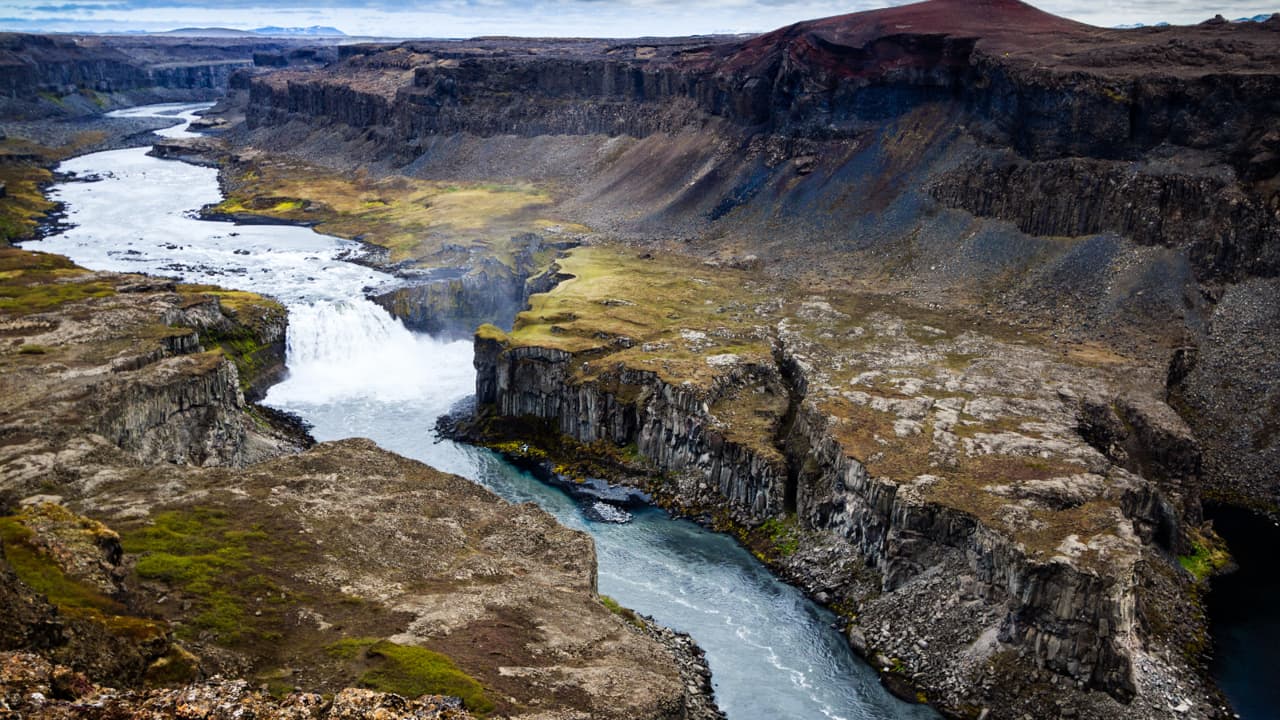
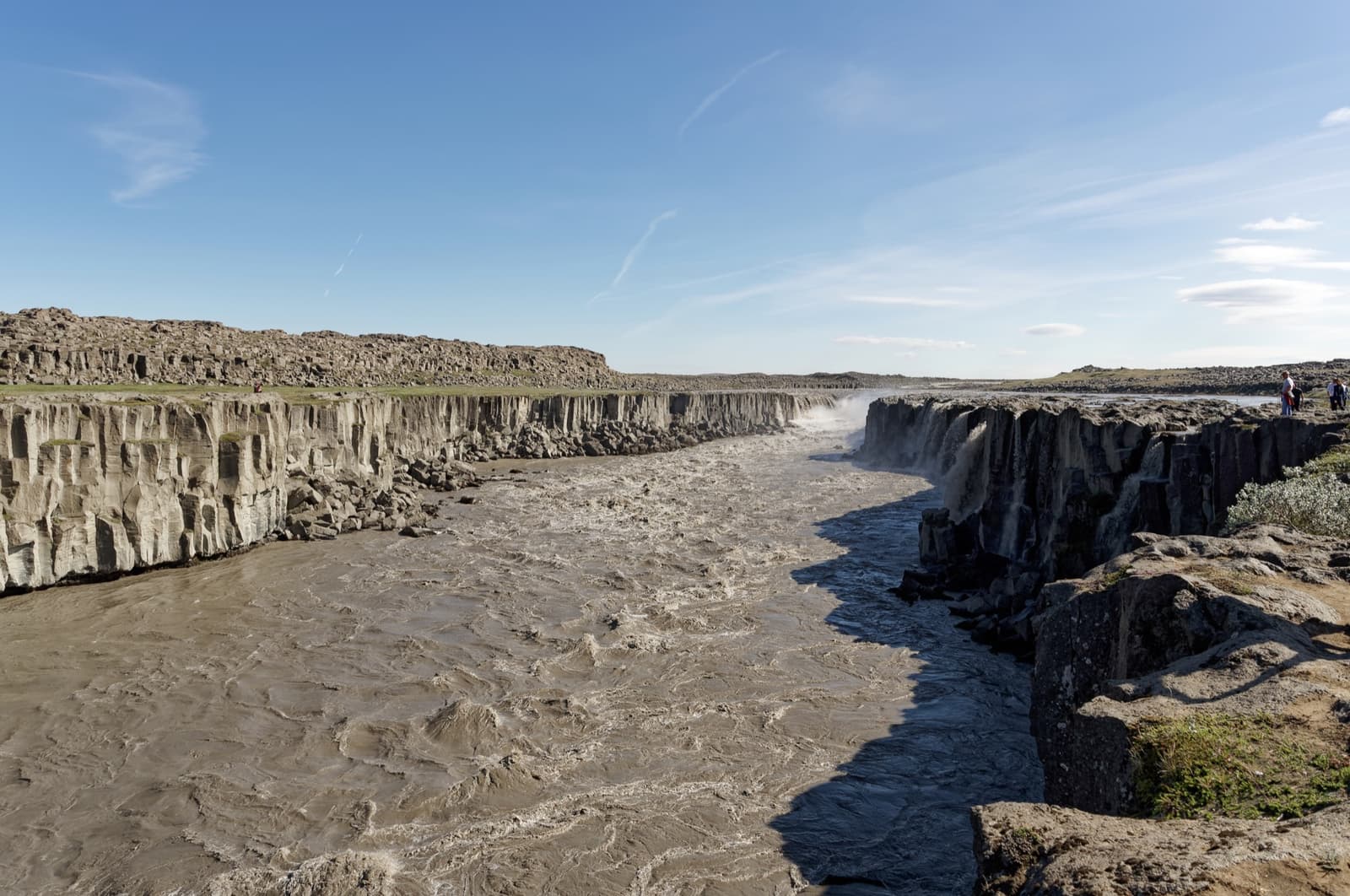
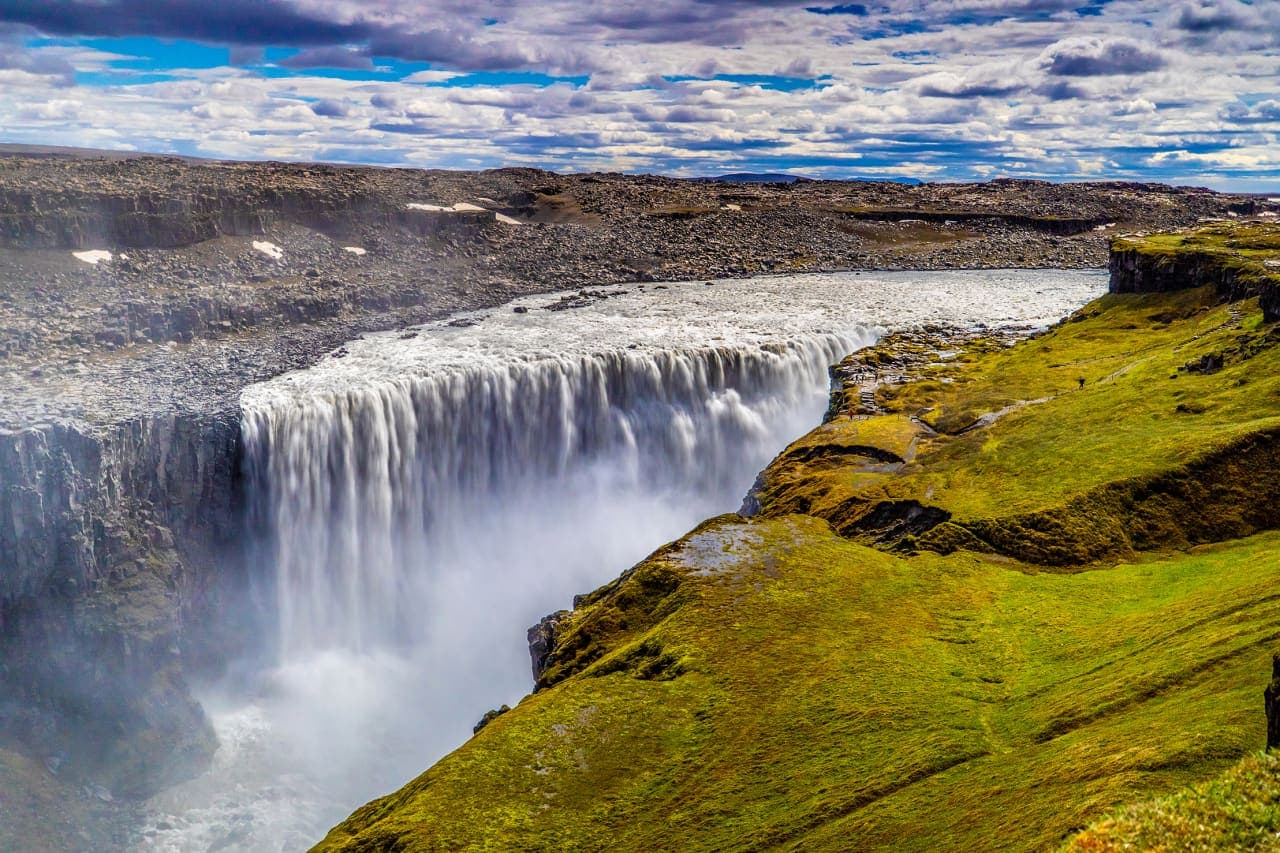
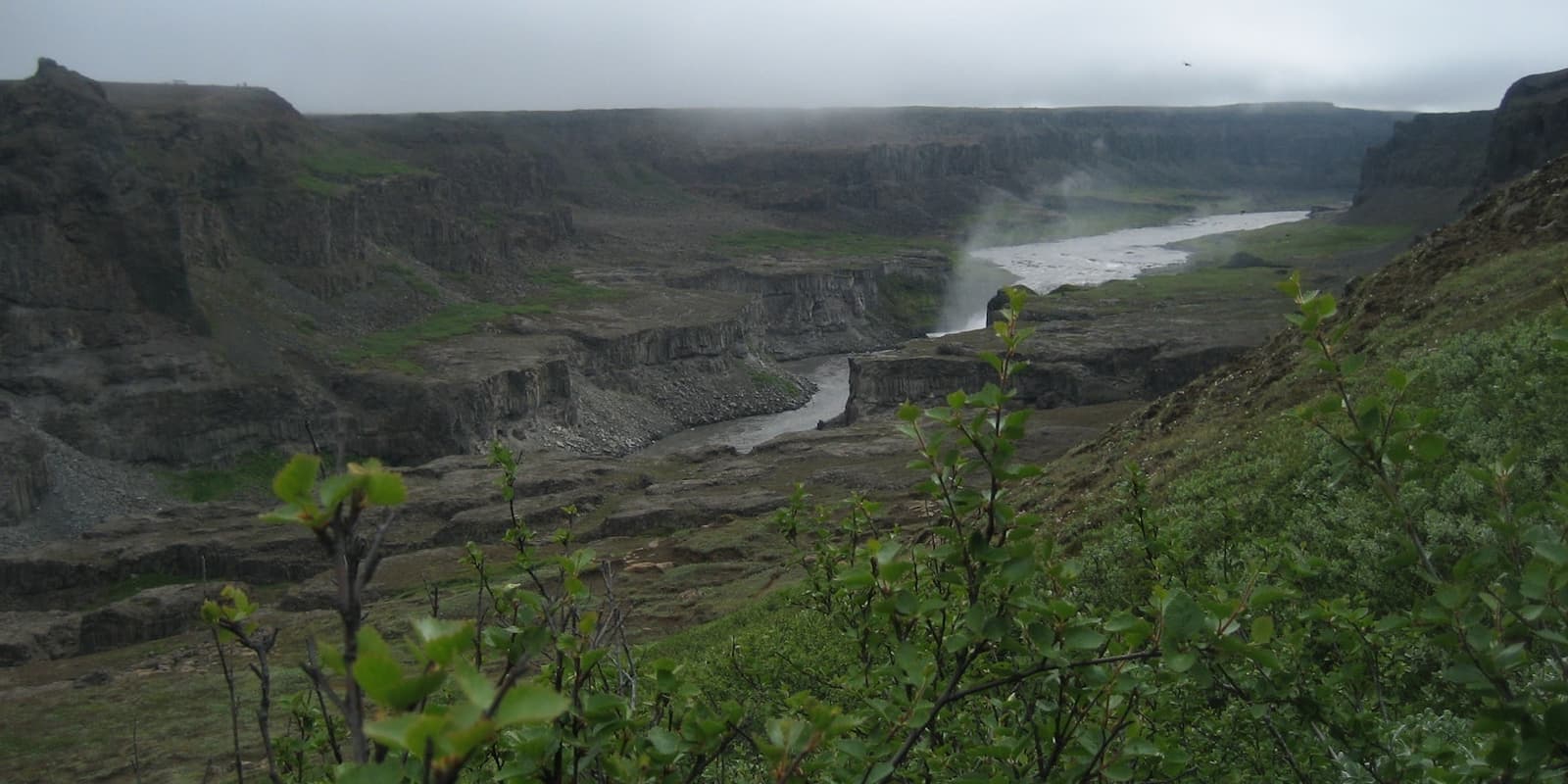
The value is the wider canyon perspective. Dettifoss gives the immediate thunder and spray; Hafragilsfoss shows Jökulsá á Fjöllum moving through a deeper, lonelier section of Jökulsárgljúfur, with the waterfall set below dark cliffs and rough volcanic slopes.
Add Hafragilsfoss when the day already belongs to Dettifoss or Jökulsá á Fjöllum and the group wants a quieter viewpoint that makes the canyon feel larger. Skip it if the route is already trying to cover Ásbyrgi, Hljóðaklettar, Lake Mývatn, Dimmuborgir, Hverir Geothermal Area, and Goðafoss without a weather buffer.
Hafragilsfoss: you see a broad glacial waterfall from above, set inside a raw canyon where the river
You see a broad glacial waterfall from above, set inside a raw canyon where the river, cliffs, spray, and colored slopes do most of the work. The visit feels more like looking into a landscape than standing beside a falls.
The waterfall sits downstream from Dettifoss on the same glacial river. From the viewpoint, the eye follows pale water over the drop, through a narrow channel, and along steep canyon walls rather than focusing on a single tidy viewing platform.
Hafragilsfoss is most useful when you want the wider Jökulsárgljúfur setting, not only another waterfall close-up.
That is why Hafragilsfoss is a better stop for travelers who like rough geological context than for visitors who want easy railings, close spray, or a simple family photo. In poor weather, the scene can feel severe rather than scenic.
Allow about 30-60 minutes if you are treating Hafragilsfoss as a viewpoint add-on
Allow about 30-60 minutes if you are treating Hafragilsfoss as a viewpoint add-on. Only plan several hours if you are deliberately choosing the difficult Hafragil lowland hike and have verified that conditions support it.
Choose the Hafragilsfoss version that matches the day.
Visit style
Best use
Main caution
Quick viewpoint
Add a wider canyon view after Dettifoss when roads, daylight, and group comfort are good.
Still requires edge awareness and road-condition checks.
Balanced waterfall cluster
Use Hafragilsfoss with Dettifoss and one other Jökulsárgljúfur stop instead of chasing every North Iceland sight.
The day can become too spread out if Mývatn and Ásbyrgi are both treated as full stops.
Hafragil lowland route
Choose it only as a real hike for experienced walkers who want the rough lower canyon setting.
The park describes the route as difficult, steep, rocky, and exposed to falling-rock and height risks.
Skip or delay
Use the time for Dettifoss, Ásbyrgi, Hljóðaklettar, or Lake Mývatn when access or weather makes the detour feel forced.
A skipped Hafragilsfoss can be the smarter route decision on a long day.
For most travelers, the viewpoint version is the realistic one. The difficult lower route belongs in a different category: it is a canyon hike with exposure, not a casual extension after taking photos at Dettifoss.
Should you hike down into Hafragil lowland?
Only consider the Hafragil lowland route if you are actively looking for a difficult canyon hike. The official park description includes steep rocky terrain, a fixed rope, falling-rock risk, and sections unsuitable for people afraid of heights.
This is the key distinction on the page. Hafragilsfoss as a viewpoint can be a short, selective add-on. Hafragil lowland is a more serious route through rough terrain below the rim, with the waterfall and Fossvogur area encountered as part of a demanding hike.
The lower Hafragil landscape is beautiful, but it is not the same decision as a short viewpoint stop.
If anyone in the group is tired, uncomfortable with exposure, wearing weak footwear, or already managing a long Diamond Circle day, keep Hafragilsfoss as a viewpoint or skip it. The waterfall is not improved by turning it into a pressured safety decision.
Hafragilsfoss is easiest to justify when it strengthens a Jökulsárgljúfur day, not when it sits alone on a map
Hafragilsfoss is easiest to justify when it strengthens a Jökulsárgljúfur day, not when it sits alone on a map. Pair it with Dettifoss first, then decide whether Ásbyrgi, Hljóðaklettar, or Mývatn should own the rest of the time.
Use Dettifoss as the anchor. If Dettifoss is already in the plan and conditions are good, Hafragilsfoss can add a quieter downstream viewpoint. If Dettifoss itself is already stretching the day, Hafragilsfoss is usually the first extra stop to cut.
The wider canyon view explains why Hafragilsfoss belongs with Jökulsárgljúfur planning, not only waterfall collecting.
Choose Ásbyrgi when you want an easier canyon walk and a calmer contrast after waterfall spray.
Choose Hljóðaklettar when basalt formations and marked walking loops matter more than another waterfall view.
Choose Lake Mývatn, Dimmuborgir, or Hverir Geothermal Area when the day needs volcanic texture instead of more canyon driving.
Choose Goðafoss when your Ring Road day needs an easier waterfall stop with less detour pressure.
For broader planning, the North Iceland region guide is the better next page when you are unsure whether the whole area deserves an overnight stay, a full Diamond Circle day, or only a selective Ring Road pause.
Weather can change how exposed and worthwhile the canyon viewpoint feels.Use Hafragilsfoss as a deliberate canyon-view choice, not as a mandatory box to tick.
Check official road, weather, safety, and national-park information before relying on Hafragilsfoss
Check official road, weather, safety, and national-park information before relying on Hafragilsfoss. The stable plan is to keep it flexible until conditions, signs, and group comfort support the stop.
Hafragilsfoss is not the place to trust an old saved map note. The area sits in a road- and weather-sensitive part of North Iceland, and the lower terrain can change the risk profile quickly. Let official conditions decide whether this is a viewpoint stop, a hike, or a skip.
Use SafeTravel for travel-condition alerts and safety guidance.
Hafragilsfoss FAQ
These are the questions that usually decide whether Hafragilsfoss belongs in a realistic North Iceland day.
Is Hafragilsfoss better than Dettifoss?
No, Hafragilsfoss is usually an add-on rather than a replacement for Dettifoss. Choose it for a quieter, wider canyon view after you have decided that Dettifoss fits the day.
Can you visit Hafragilsfoss as a quick stop?
Yes, many travelers use it as a short viewpoint stop when access and weather are suitable. Keep the plan flexible because roads, trail conditions, and canyon-edge comfort matter here.
Is the Hafragil lowland trail suitable for everyone?
No, the lower route is a difficult hike, not a general sightseeing path. Use the official park page and on-site signs before deciding whether it matches your group.
What should you pair with Hafragilsfoss?
Pair Hafragilsfoss first with Dettifoss or the wider Jökulsá á Fjöllum canyon area. If the day still has room, compare Ásbyrgi, Hljóðaklettar, Lake Mývatn, Dimmuborgir, Hverir, or Goðafoss.