Dimmuborgir is a lava-formation walking area near Mývatn, useful when you want short trails, strange rock shapes, and an easier contrast to nearby geothermal or crater stops, with enough flexibility for conditions and nearby route choices.
Geology snapshot
Type
Protected lava formations, caves, arches, and marked walking paths
Region
Lake Mývatn area, North Iceland
Route context
Useful on Mývatn, Diamond Circle, and slower Ring Road north-coast plans
Time to allow
About 30 minutes for the short loop or around 1 hour for the larger Kirkjan loop
Best experience
Walk slowly through the lava towers and continue to Kirkjan if the path, weather, and timing suit
In this guide
Is Dimmuborgir worth adding to a Mývatn day?
Yes, Dimmuborgir is worth adding when your route already includes Lake Mývatn or the Diamond Circle. It gives you a short, memorable walk through volcanic shapes that feel very different from a waterfall, crater, or geothermal field.
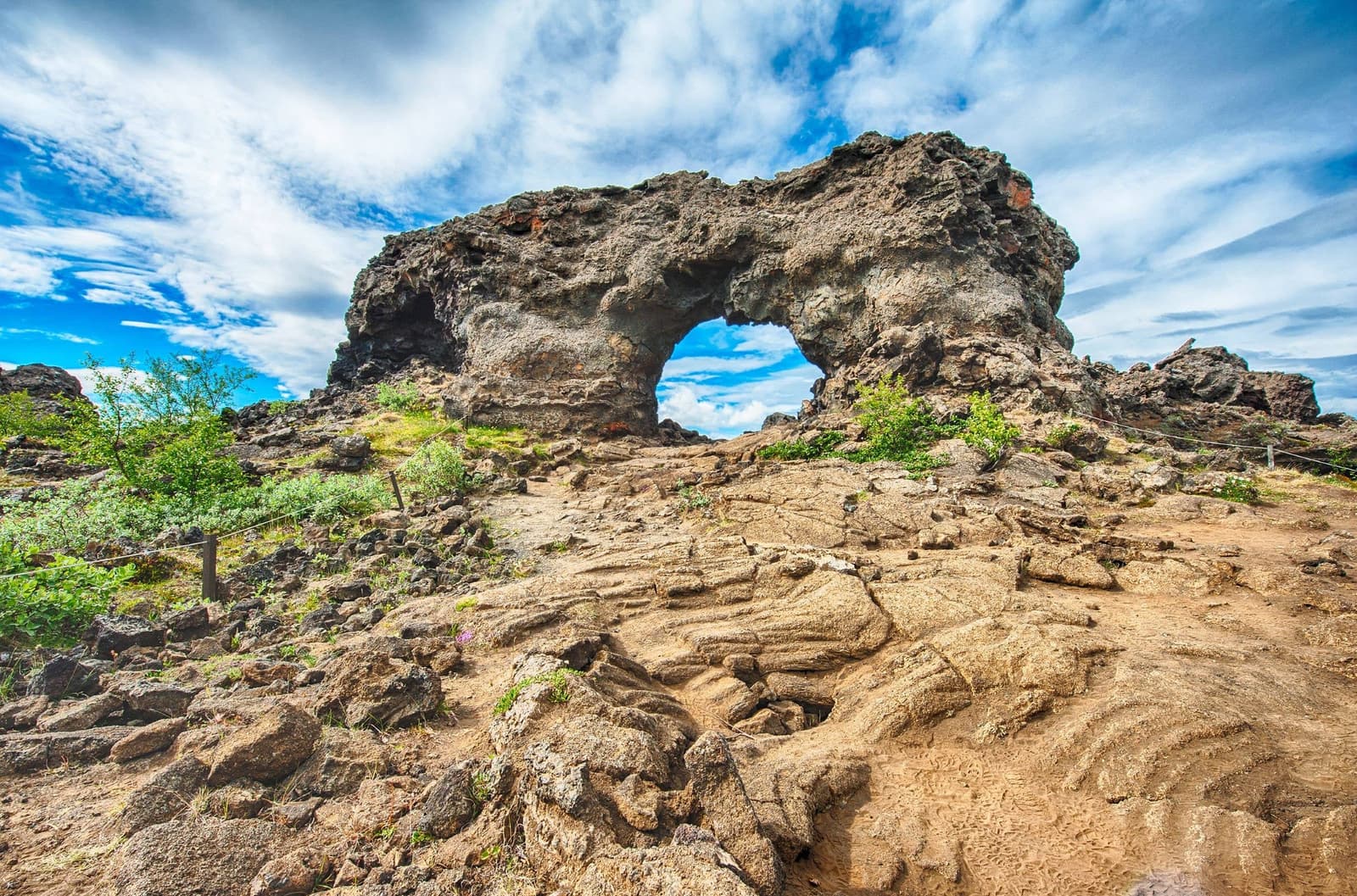
The stop is not about height, distance, or a single viewpoint. The value is the strange closeness of the lava: dark towers beside the path, low arches, small caves, rough rock walls, and the feeling that the landscape has folded inward around you.
It is strongest when paired with Mývatn, Hverfjall, Grjótagjá, or Goðafoss rather than squeezed into a long drive with no time to walk. If you only want a fast photo, it can feel underwhelming; if you give it 30-60 minutes, the place becomes much easier to understand.
Photo guide
Dimmuborgir in photos
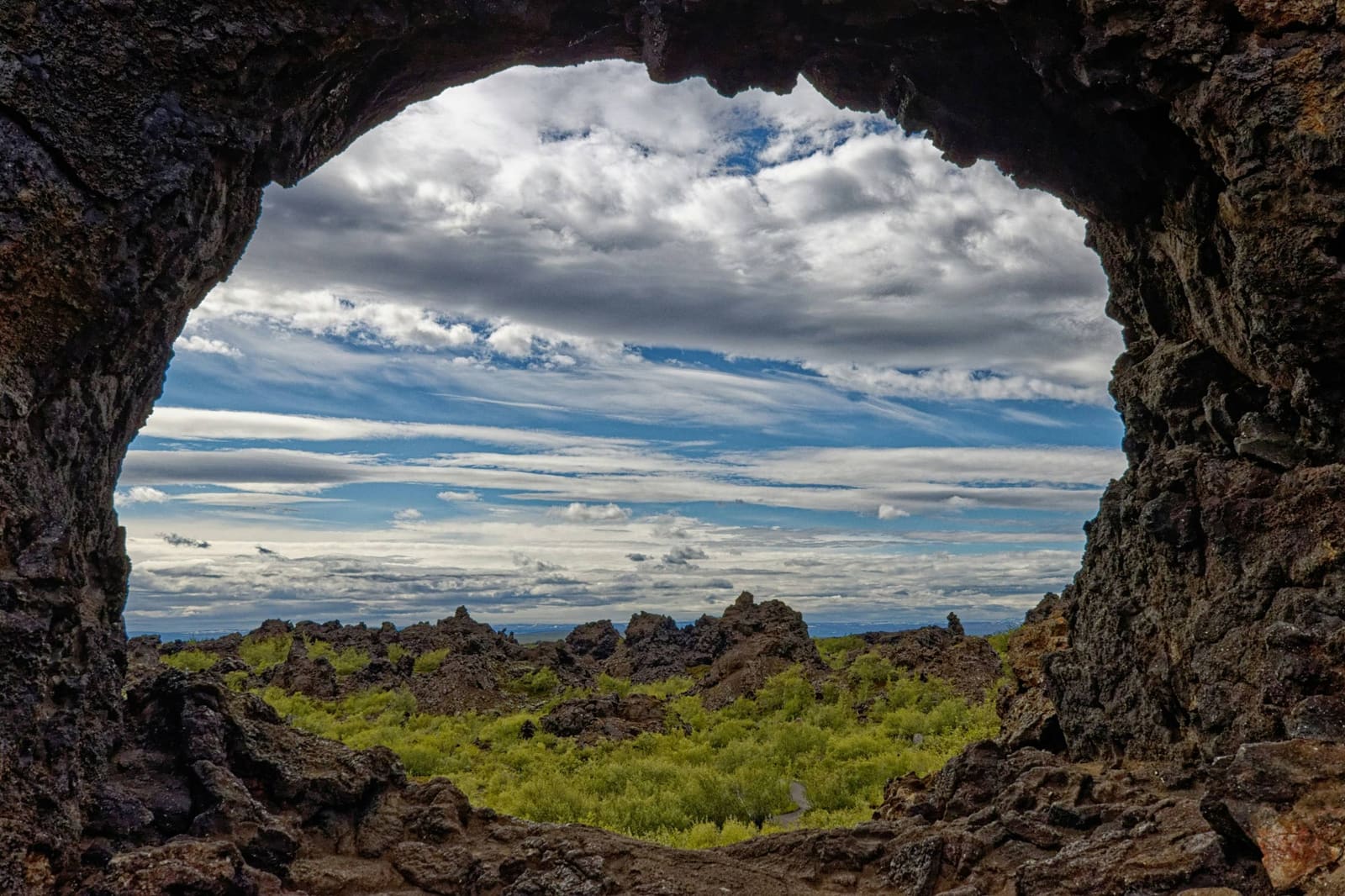
A small cave-like opening shows the variation in Dimmuborgir’s lava shapes.
What does the walk through the lava formations feel like?
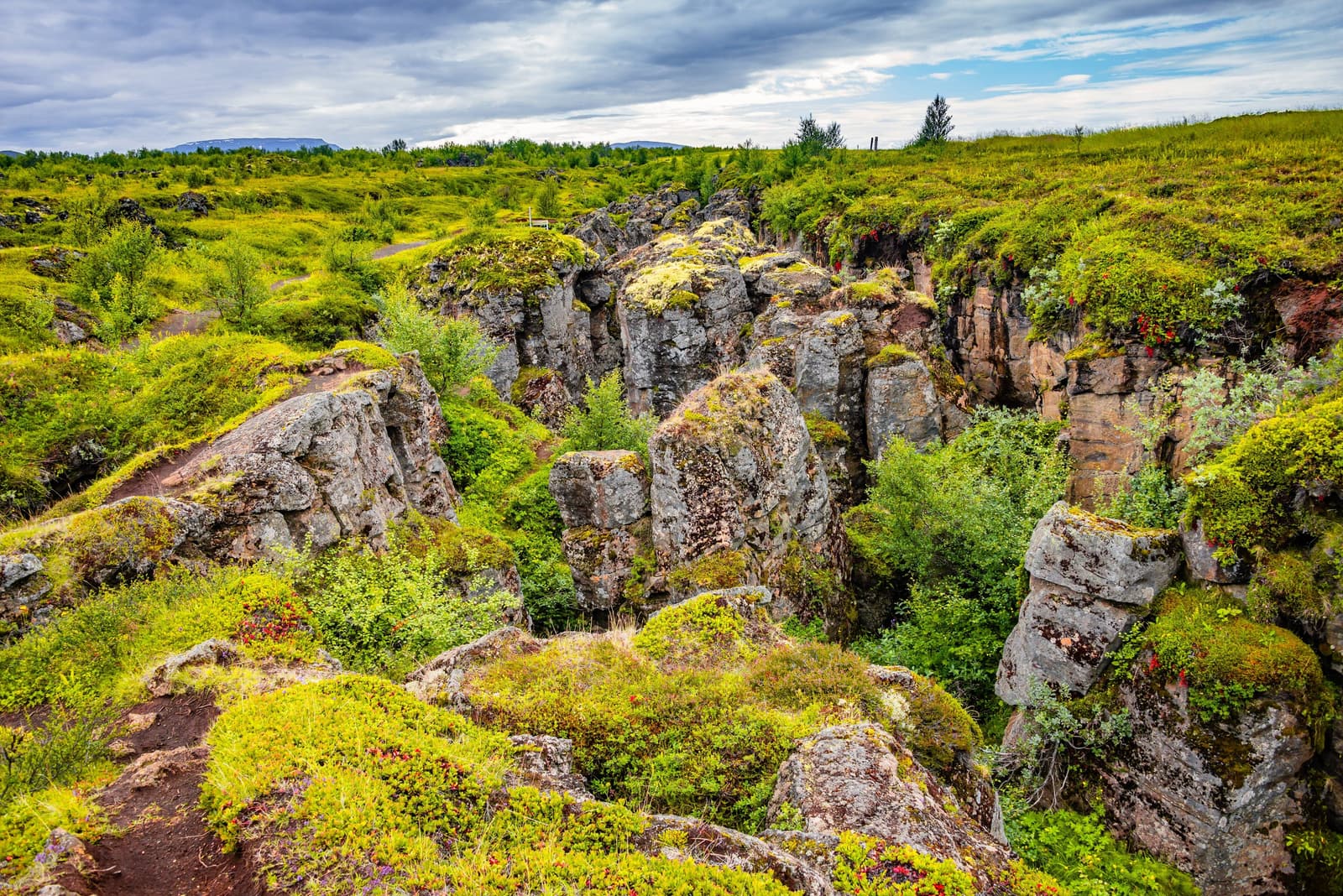
Dimmuborgir feels like walking through a broken lava city: rough walls, windows, arches, narrow gaps, and small clearings set inside low North Iceland vegetation.
The best moments come from moving slowly. A formation that looks like a dark wall from one angle can become an arch or cave opening a few steps later. The rock is rugged and irregular, while the marked paths keep the visit manageable for most travelers in normal conditions.
The easiest way to understand Dimmuborgir is to walk between the lava towers rather than view them from a distance.
This is also why Dimmuborgir works well for families and mixed-pace groups. You can keep the visit short, stay on marked paths, and still see enough lava texture to make the stop feel distinct from the rest of the Mývatn area.
Which route should you choose: short loop or Kirkjan?
Choose the short loop if you need a compact stop; choose the larger Kirkjan loop if you want the famous lava arch and a fuller sense of the site.
Visit Mývatn describes several marked routes through the area. The small circle takes about 30 minutes, while the larger route to the well-known Kirkjan formation takes about 1 hour. That makes the decision simple: match the loop to your day rather than treating every path as mandatory.
Kirkjan is the clearest reason to choose the longer loop when conditions are good.
Simple Dimmuborgir route choice
Visit style
Time to allow
Best when
Short look
About 25-35 minutes
You want lava formations without giving up the rest of a busy Mývatn day.
Better visit
About 45-75 minutes
You want Kirkjan, more side views, and a slower feel for the lava field.
Slow photo walk
75-90 minutes or more
Light, weather, or group pace makes you stop often and inspect the formations.
The longer loop is not a difficult wilderness hike in normal summer conditions, but it still needs real time. If your day already includes Hverfjall, Grjótagjá, Goðafoss, and a long drive, the short route may be the better practical choice.
Where does Dimmuborgir fit with Mývatn and the Diamond Circle?
Dimmuborgir fits best inside a Mývatn-focused day, then secondarily inside a Diamond Circle or Ring Road segment where you are already spending time in North Iceland.
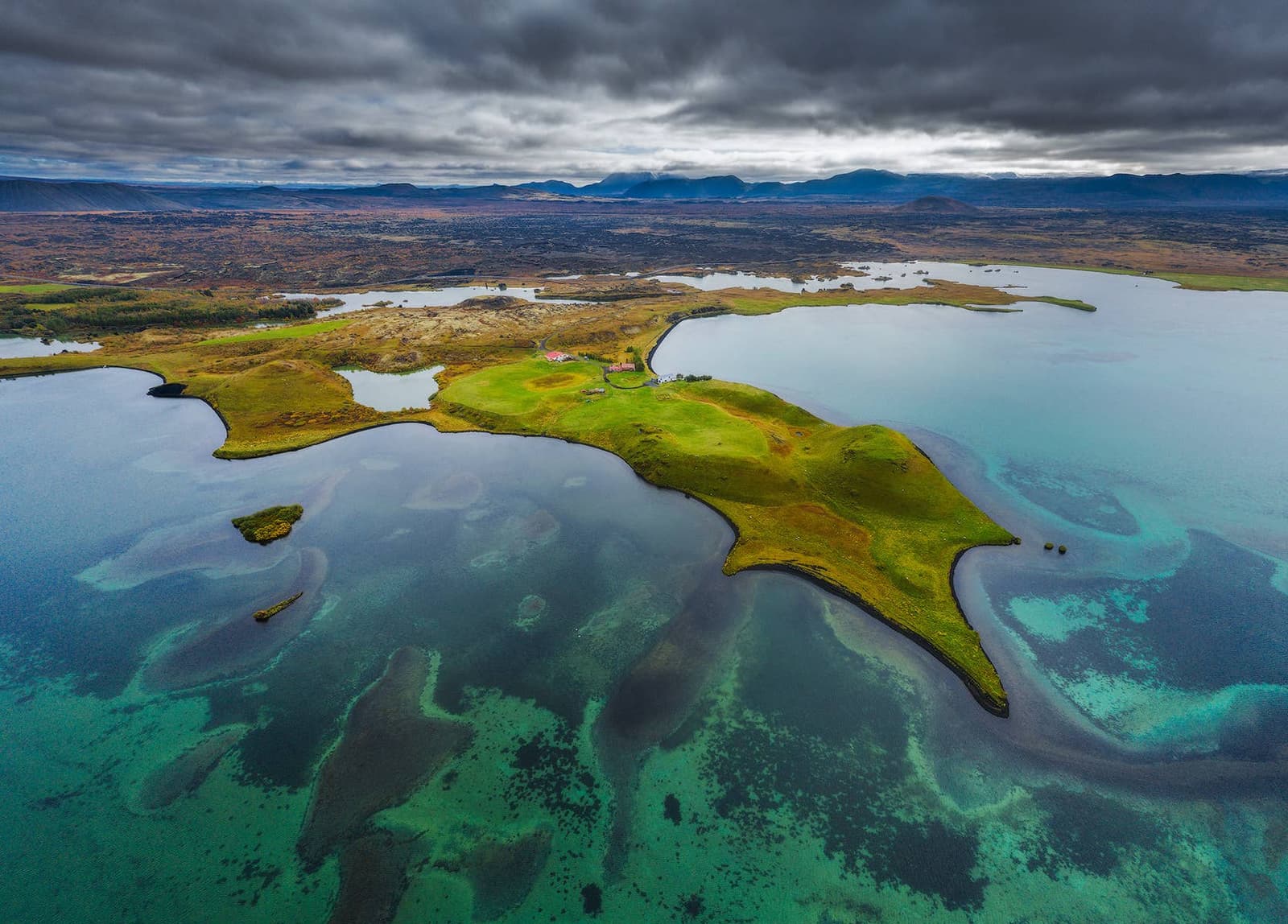
Use it as the lava-walk stop in the Mývatn cluster. Hverfjall gives you crater scale, Grjótagjá gives you a small lava-cave context, Mývatn gives you the wider lake landscape, and Dimmuborgir gives you the close-up maze of collapsed lava.
Dimmuborgir is most useful as close-up lava texture within the larger Mývatn route cluster.
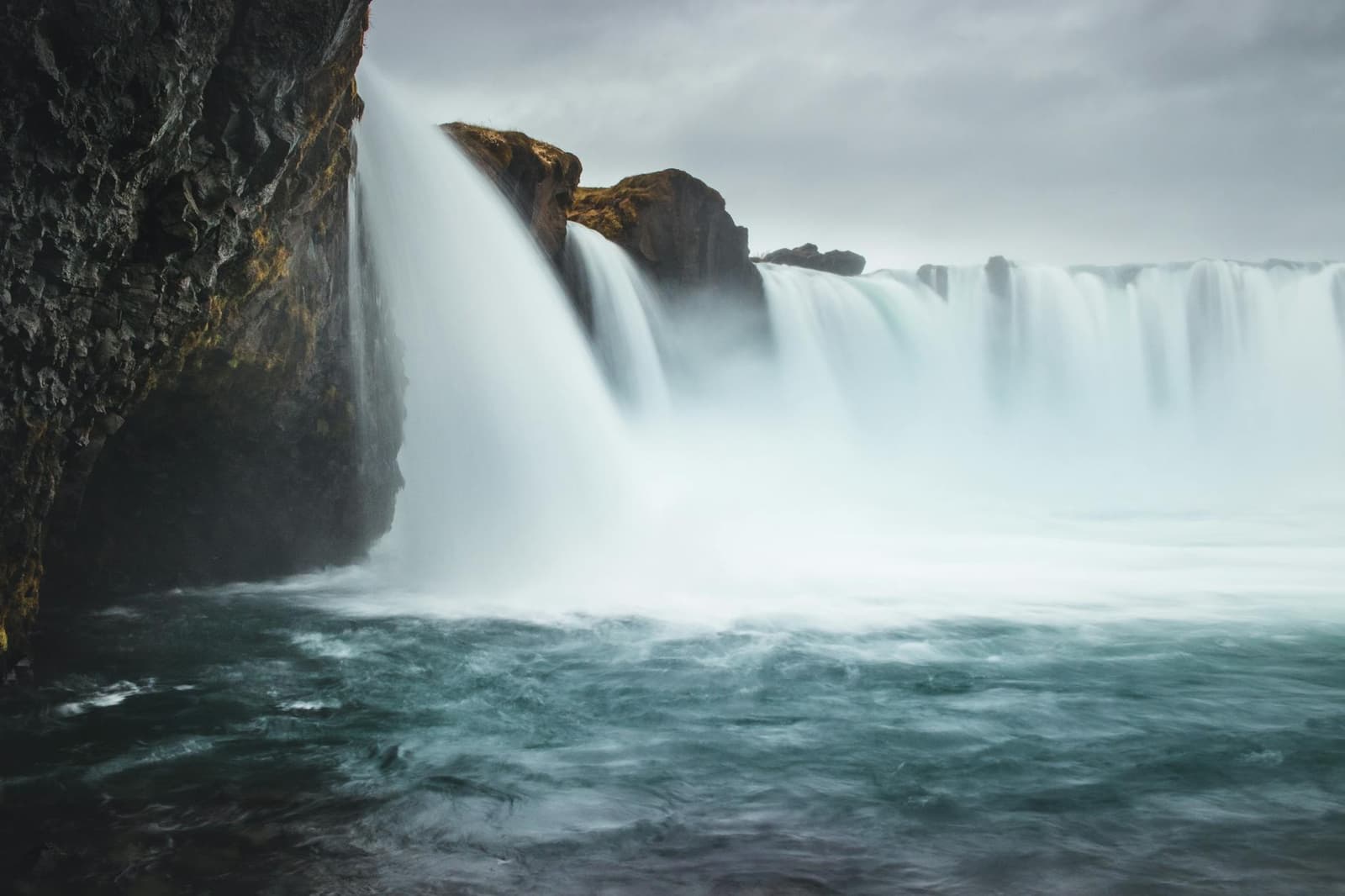
On a broader north route, Goðafoss is the easier waterfall stop, Dettifoss is the more forceful canyon-scale waterfall, Ásbyrgi adds a different kind of canyon landscape, and Húsavík adds harbor-town context. Dimmuborgir belongs when you have enough Mývatn time to walk, not only to tick off another name.
What should you know about protection and staying on paths?
Dimmuborgir is protected because of its unusual lava formations and landscape, so the marked-path experience is part of the point, not a limitation to ignore.
Iceland’s environment agency describes the area as a protected natural monument with high educational and outdoor-recreation value. The formations are fragile in the practical sense that repeated off-path movement can damage vegetation, edges, and visitor routes, even when the lava itself looks hard.
That still leaves plenty to see. The official route system is designed so visitors can experience the lava field without turning the stop into a scramble over sharp rock or a social trail through sensitive ground.
How do weather, winter, and midges affect the visit?
Weather matters because Dimmuborgir is an outdoor walking stop, and winter can change the footing. In warmer months, the wider Mývatn area can also bring midges, so comfort is part of the planning decision.
In summer, the main practical question is usually how long you want to walk and how much of the Mývatn area you are trying to fit into the day. Calm warm days can be excellent, but a head net or insect awareness can make the wider lake area easier for travelers who are bothered by midges.
Marked paths keep Dimmuborgir straightforward in normal conditions, but weather still shapes the visit.
In winter or shoulder seasons, check road and weather conditions before relying on the stop. Snow and ice can hide uneven surfaces, make steps more awkward, and reduce the value of pushing to the longer route if daylight is short.
Official forecasts and warnings for weather-dependent travel decisions.
Common Dimmuborgir questions
These are the practical questions most likely to change how much time you give the stop.
How long do you need at Dimmuborgir?
Most travelers need 30-60 minutes at Dimmuborgir. Use the shorter end for the small loop and closer to an hour if you want the Kirkjan lava arch.
Is Dimmuborgir an easy walk?
Yes, Dimmuborgir is generally an easy marked-path walk in normal conditions. Winter ice, snow cover, low light, or strong wind can make the paths feel less simple.
Should I choose Dimmuborgir or Hverfjall?
Choose Dimmuborgir for a close-up walk among lava formations and choose Hverfjall for crater scale and a more exposed climb. They pair well when you have enough Mývatn time.
Can Dimmuborgir fit into a Diamond Circle day?
Yes, Dimmuborgir can fit into a Diamond Circle day if you are already giving the Mývatn area real time. It becomes weaker when the day is only a long chain of quick stops.
Map
See where this stop sits
Use nearby places and useful bases before opening directions.
Region
North Iceland
Works well with
Diamond Circle / Ring Road
Useful base
Húsavík
Interactive planning map for Dimmuborgir
Interactive map
Load the map when you need it
Place context and external map links remain available without loading it.
Nearby geology
Compare nearby volcanic and geothermal places
Use nearby places to understand the landscape without turning the day into a loose list of lava, steam, and craters.