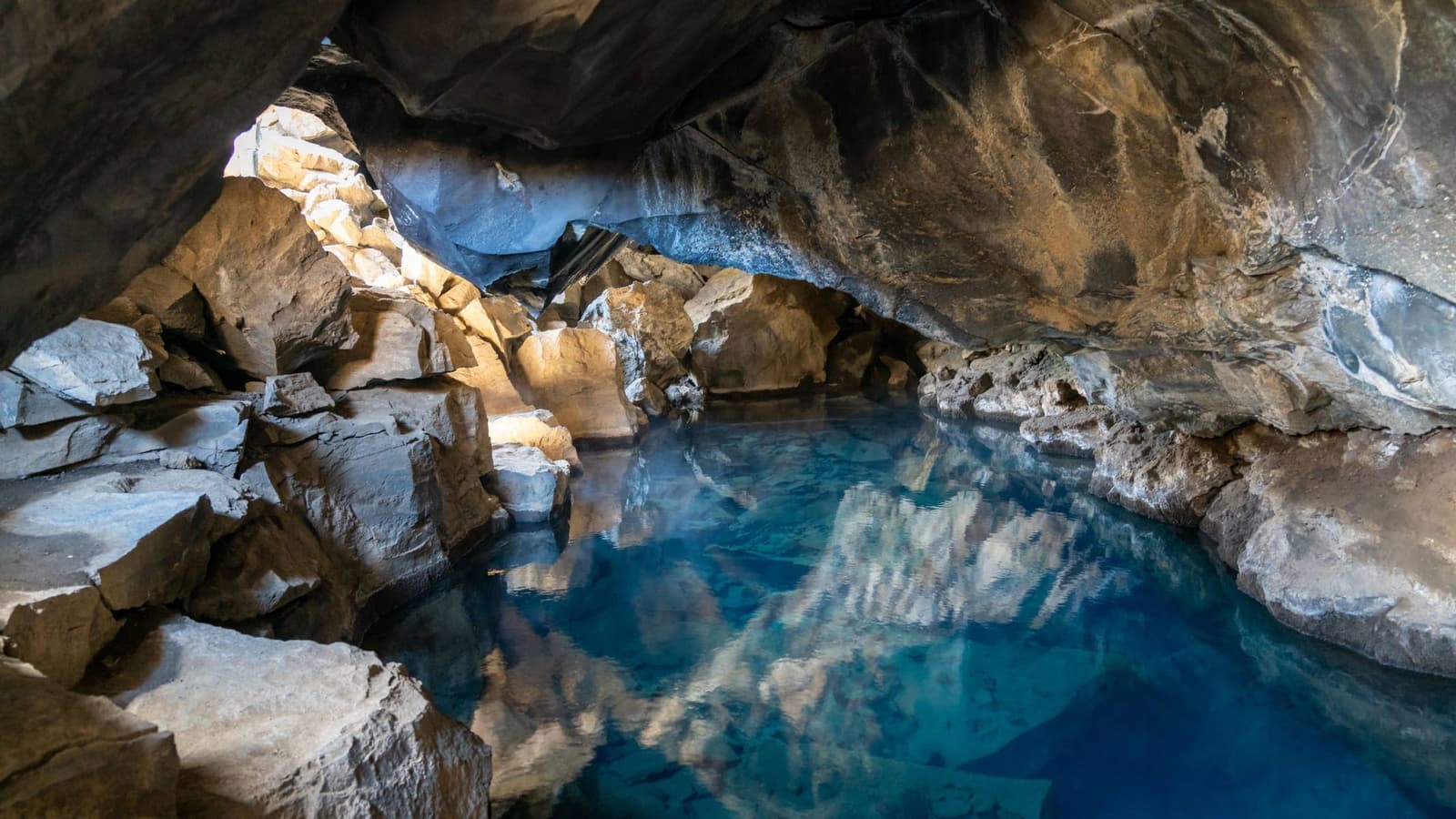
Grjótagjá is a small lava cave with blue geothermal water near Lake Mývatn, best as a short, safety-aware stop when you want cave texture without treating it as a bathing place.
Geology snapshot
Type
Small lava cave with geothermal water
Region
Lake Mývatn area, North Iceland
Route context
Best as a short stop on a Mývatn, Diamond Circle, or slower Ring Road day
Time to allow
20-40 minutes for the cave; longer only if pairing it with nearby walks
Best experience
Look into the cave, enjoy the blue water and lava ceiling, then continue to a larger Mývatn stop
In this guide
Is Grjótagjá worth stopping for near Lake Mývatn?
Yes, Grjótagjá is worth a short stop if you are already building a Mývatn or Diamond Circle day and you understand the main rule: this is a look-in cave visit, not a hot spring soak.
The value is concentrated and specific. You step down into rough lava, see blue geothermal water under a low black ceiling, take in the cave for a few minutes, and then continue to a larger stop such as Lake Mývatn or Dimmuborgir.
Add Grjótagjá when the day already includes Mývatn and the group wants one quick cave stop with strong atmosphere. Skip it when the route is already overloaded, when travelers expect to bathe, or when uneven cave access would make the stop stressful rather than useful.
Quick decision guide for Grjótagjá
Decision
Use this guidance
Go if
You are already near Lake Mývatn and want a brief lava-cave view.
Skip if
You want a managed bathing stop or a long walk.
Check first
Use official visitor information, road conditions, weather, and on-site signs before relying on the stop.
Photo guide
Grjótagjá in photos
The card image keeps the cave-water identity readable in compact hub crops.
What does the cave actually feel like?
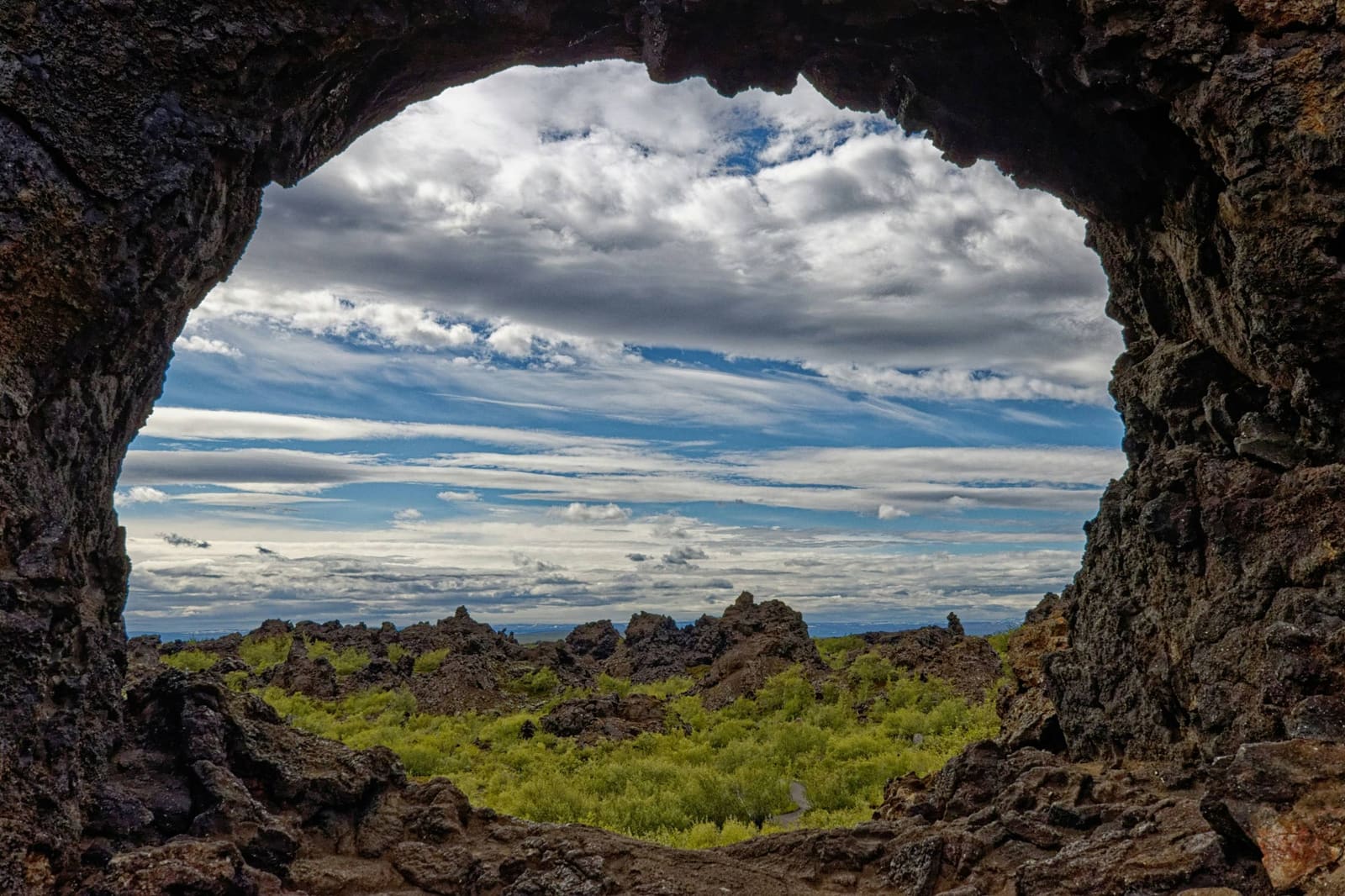
Grjótagjá feels enclosed, dark, and surprisingly delicate: rough lava walls, a low ceiling, reflected blue water, and small patches of daylight from the cave openings.
It is not a grand walking cave. The attraction is the contrast between the small space and the color of the water. From the entrance, the cave can look like a crack in the lava; inside, the water gives the room its focus.
The cave is small, so the visit is about the water, ceiling texture, and careful movement rather than distance.
The Game of Thrones connection can explain why many people have heard of the cave, but it should not drive the plan. The real travel question is whether a short, careful cave look adds enough contrast to your Mývatn day.
How much time and effort does Grjótagjá need?
Most travelers should allow 20-40 minutes for Grjótagjá itself. The stop can be shorter if it is crowded, slippery, or awkward, and longer only if you are walking between nearby Mývatn sights.
The physical effort is low in distance but not completely frictionless. Expect uneven rock, a confined cave entrance, dimmer light than outside, and a visit that rewards patience more than speed.
The cave is close to the road, but the rock surface still makes this more than a step-free viewpoint.
How Grjótagjá fits different Mývatn days
Visit style
Time to allow
Best when
Quick look
20-30 minutes
You are passing between Mývatn stops and only want the cave view.
Balanced stop
30-45 minutes
You want time to enter carefully, wait for space, and take photos without rushing.
Slow Mývatn pairing
1-2 hours including nearby stops
You combine the cave with Dimmuborgir, lake views, or another short volcanic stop.
If the day already includes Dimmuborgir, Hverir Geothermal Area, and a longer drive, keep Grjótagjá optional. It is easy to add on paper and easy to regret if every small stop steals time from the route.
Which nearby Mývatn stops should you pair with Grjótagjá?
Pair Grjótagjá with nearby stops that do a different job. The cave gives you a compact underground moment; the rest of the Mývatn area should provide walking, open landscape, geothermal color, or bigger route context.
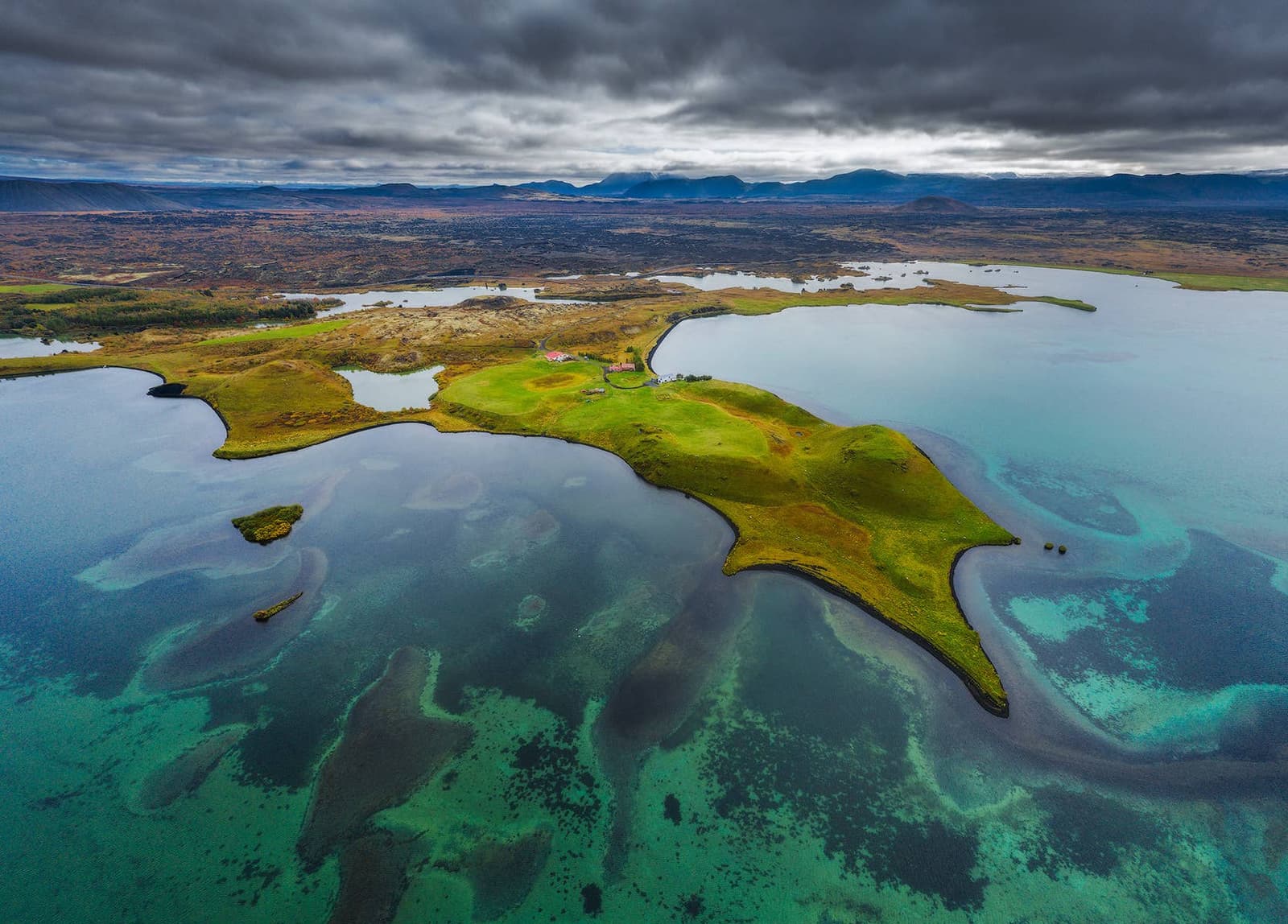
Use Lake Mývatn when you need the wider lake, wetland, and volcanic-district context.
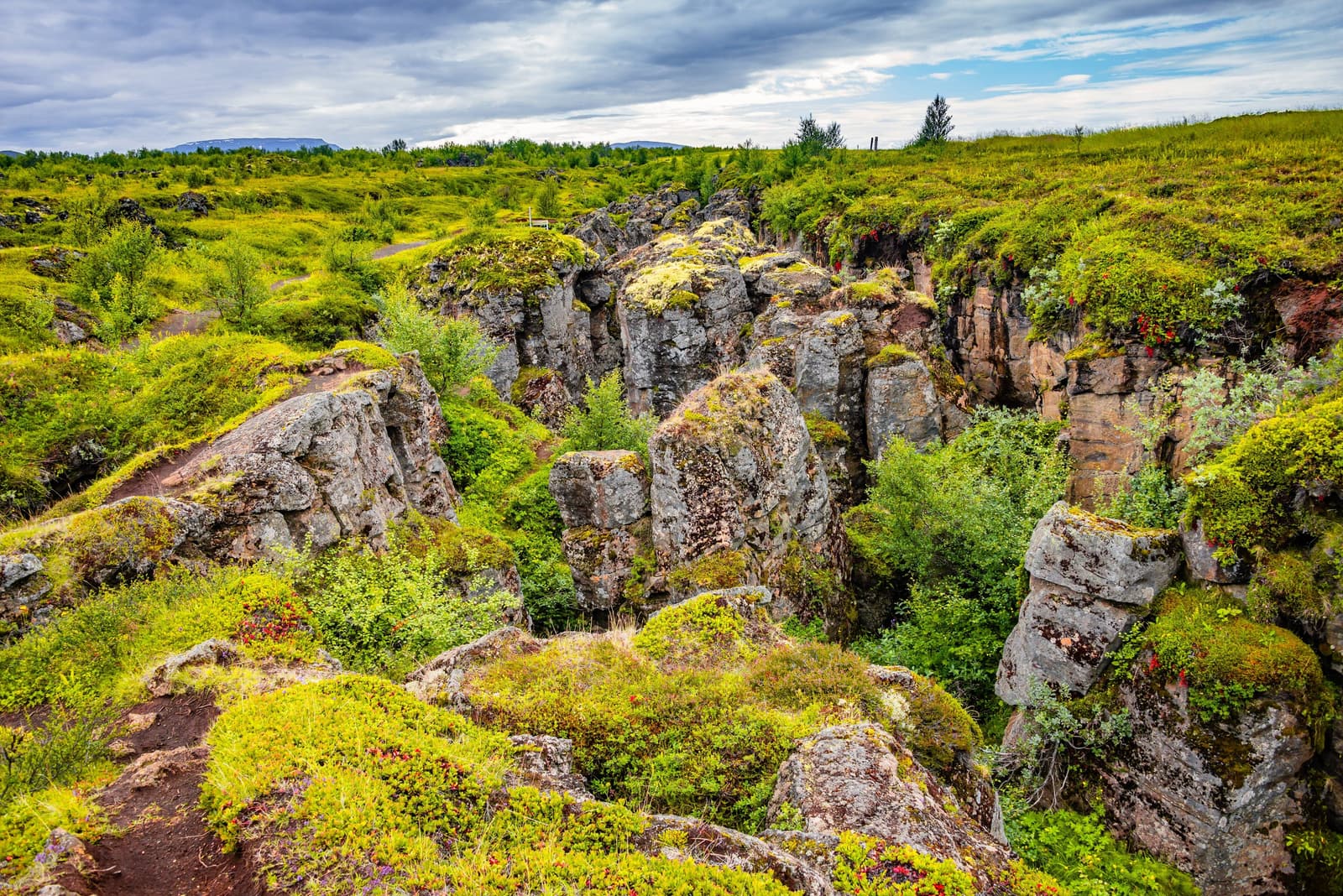
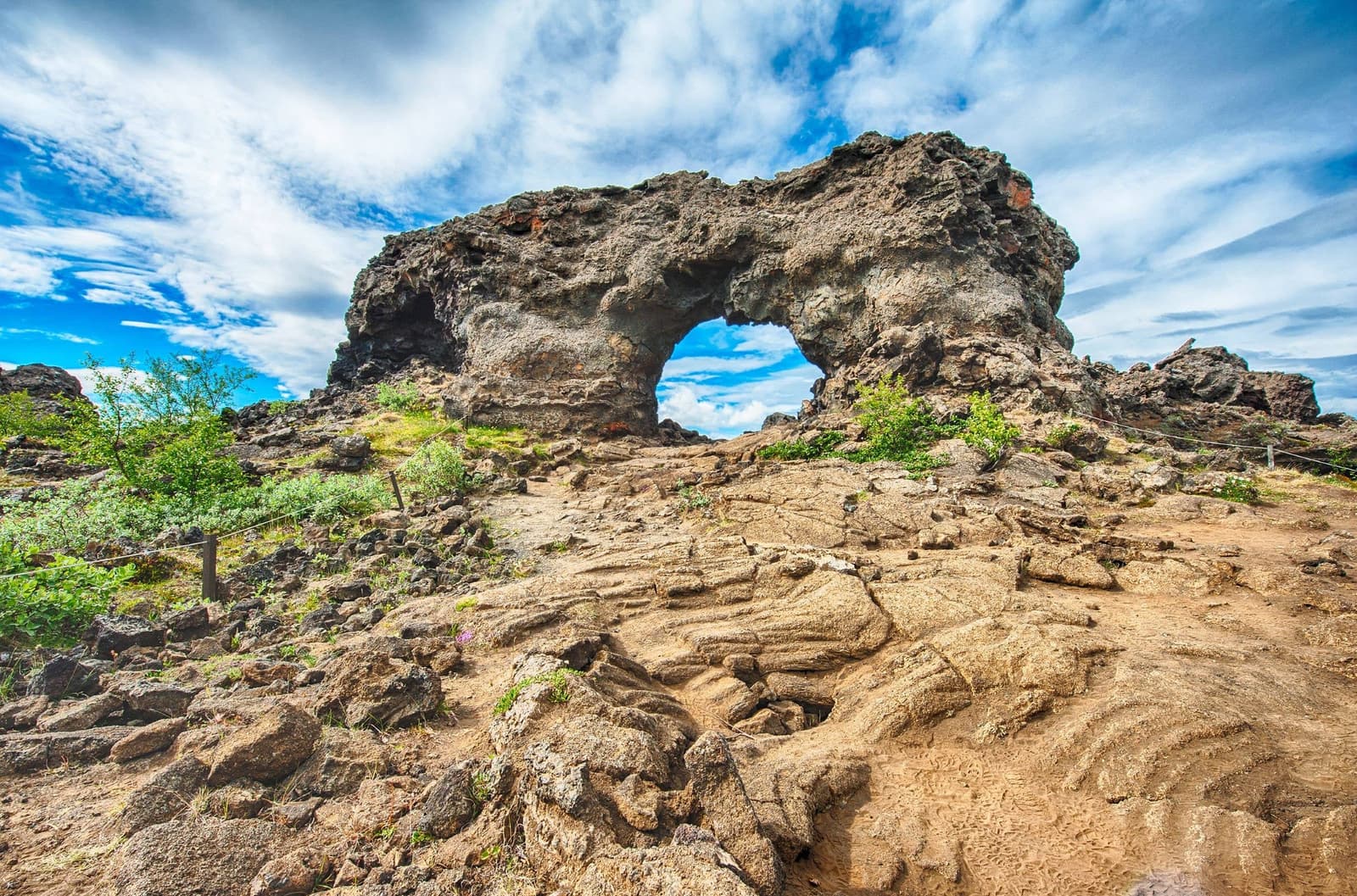
Use Dimmuborgir when you want a longer marked walk through lava formations.
Use Hverir Geothermal Area when steam, mud pots, and strong geothermal surface color matter more than a cave.
Use Goðafoss or Dettifoss when the day needs a waterfall anchor instead of another small Mývatn stop.
Use Ásbyrgi or Hljóðaklettar only when the route has room for a larger canyon and walking decision.
A strong Mývatn day usually has one small curiosity, one proper walk, and one wider landscape stop. Grjótagjá can be the curiosity; Dimmuborgir or Hverir can do the heavier lifting.
For a larger North Iceland plan, use Grjótagjá as a minor texture stop between bigger decisions. The North Iceland region guide and Ring Road versus South Coast road-trip comparison are more useful when you are still deciding whether the north belongs in the trip at all.
What should you check before going?
Check official visitor information, road conditions, weather, and on-site signs before treating Grjótagjá as fixed. This is especially important in winter, rough weather, or any day when your route has little slack.
The cave is small and sensitive to visitor behavior. Regional tourism sources describe it as a former bathing place where geological activity changed the water enough that bathing stopped. Let that history guide the visit: look, photograph carefully, and leave the water alone.
Road and weather checks matter because Grjótagjá is usually one stop among several on a North Iceland driving day. If conditions make the day slower, drop the smallest stop first instead of forcing the whole Mývatn list.
Use for forecasts, wind, warnings, and winter-weather planning.
Grjótagjá FAQ
These are the questions most likely to change whether Grjótagjá belongs in your Mývatn day.
Can you bathe in Grjótagjá?
No, you should not plan to bathe in Grjótagjá. Treat the cave as a viewing stop, follow on-site signs, and choose a managed bathing place if soaking is the goal.
How long do you need at Grjótagjá?
Most travelers need 20-40 minutes at Grjótagjá. That is enough time to enter carefully, see the water, take photos, and continue to a larger Mývatn stop.
Is Grjótagjá good for families?
It can work for families who are comfortable with close supervision around uneven rock and water. If predictable footing or step-free access matters, verify official visitor details before building the stop into a tight day.
Is Grjótagjá a Game of Thrones location?
Yes, Grjótagjá is widely associated with Game of Thrones, but the better reason to visit is the real lava cave and blue geothermal water. Do not let the filming link make the stop larger than it is.
What should you do after Grjótagjá?
Most travelers should continue to Lake Mývatn, Dimmuborgir, or Hverir Geothermal Area. Those stops give the day more walking, landscape, and geothermal context than the cave can provide alone.