Steam vents, bubbling mud pools and mineral-stained slopes make Hverir a striking short stop beside Route 1, east of Mývatn. Parking is paid, and the geothermal field must be explored from the marked paths.
Geology snapshot
Type
High-temperature geothermal field with mud pools, fumaroles, steam vents, and mineral-stained ground
Region
North Iceland, just east of Lake Mývatn below Námafjall
Route context
Directly beside Route 1, useful on Ring Road, Mývatn, and Diamond Circle-style days
Time to allow
About 20-45 minutes for the main field, longer if you add the Námafjall slope
Best experience
Steam, bubbling mud, sulfur colors, bare volcanic slopes, and a strong sense of active ground
In this guide
Hverir is worth a stop if your North Iceland route already passes the Mývatn area
Yes, Hverir is worth a stop if your North Iceland route already passes the Mývatn area. It gives you one of the easiest close views of active geothermal ground in Iceland: mud pools, fumaroles, sulfur colors, bare slopes, and steam rising beside the road.
The visit is short but memorable. You are not coming for a developed museum, bathing pool, or long hiking day; you are coming for the raw feeling of the ground breathing under Námafjall. That makes Hverir especially useful on a self-drive day that also includes Dimmuborgir, Krafla, Leirhnjúkur, Dettifoss, or Goðafoss.
It is less rewarding if you dislike strong sulfur smells, need smooth accessible paths throughout, or want a place where children can roam freely. The best version of the stop is focused, careful, and tied to the rest of the Mývatn route.
Photo guide
Hverir Geothermal Area in photos
1 / 2
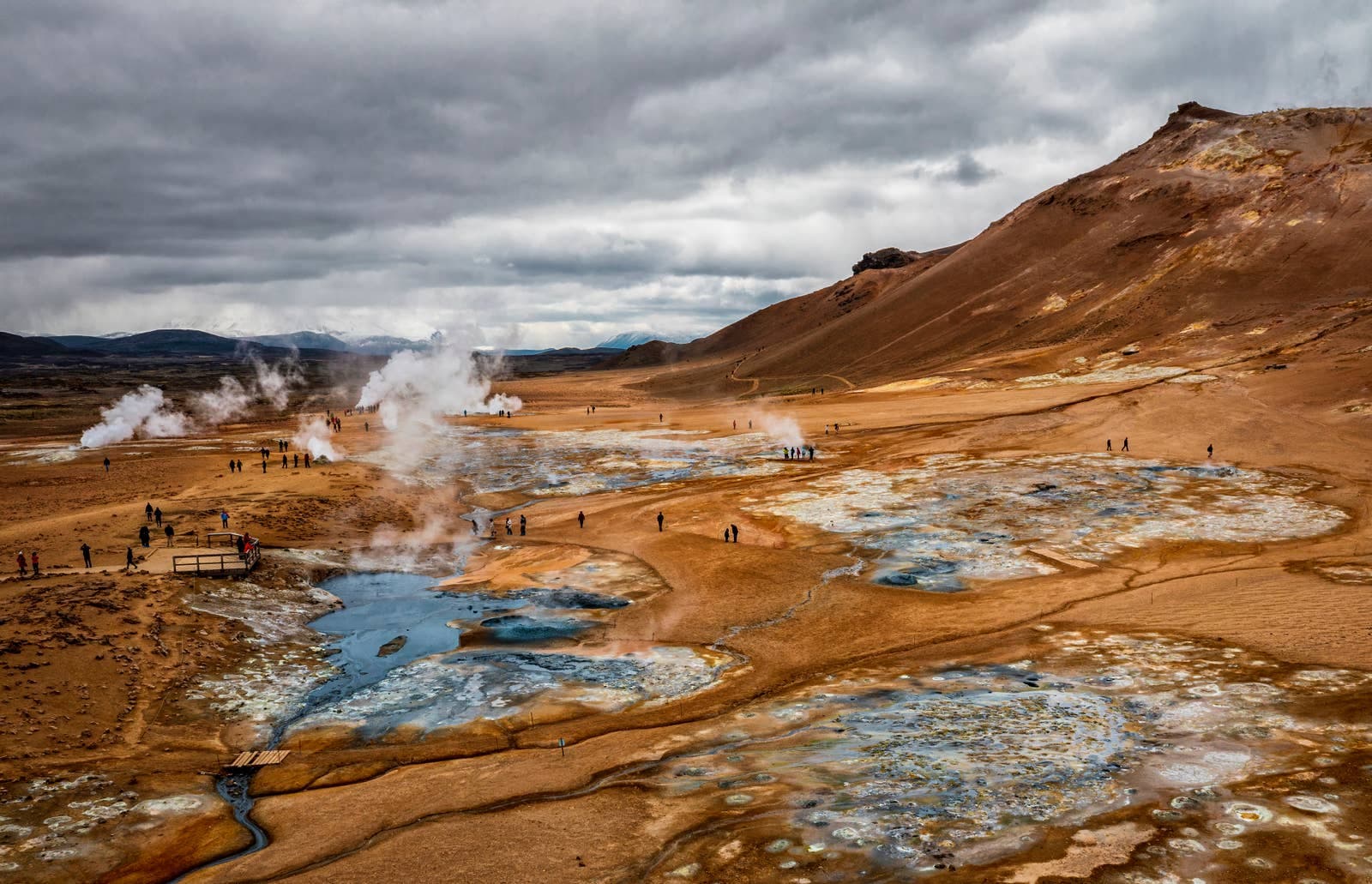
Mud pools and mineral ground give Hverir its short, high-impact visual payoff.
Hverir is a geothermal field, not a geyser show
Hverir is a geothermal field, not a geyser show. The appeal is the whole surface: steaming vents, grey mud pools, orange and yellow mineral stains, pale crust, bare hillside, and changing steam that can hide and reveal the landscape within seconds.
The most distinctive parts are the mud pools and fumaroles. Some pools bubble slowly, some vents hiss or roar, and the steam can drift across the paths when the wind drops. The ground looks close enough to touch, but the marked boundaries matter because geothermal crust can be unstable.
Hverir is compact, but the mud pools and steam vents sit close to the marked walking route.
Photographers get strong textures here even in rough weather: steam columns, mineral color, people for scale, and the dark shape of Námafjall behind the field. Bright sun can make the ground look harsh, while wind can clear or flatten the steam.
Most travelers should allow about 20-45 minutes at Hverir
Most travelers should allow about 20-45 minutes at Hverir. That is enough to walk the main marked area, watch the mud pools, take photos, and decide whether the smell and steam are part of the fun or enough for one stop.
If you are moving through North Iceland on a packed day, Hverir works as a short stop between Mývatn and the Krafla area. If you want a slower geothermal morning, combine it with Krafla and Leirhnjúkur instead of trying to force every Diamond Circle stop into the same day.
Quick stop: 15-25 minutes for the closest mud pools and steam vents.
Normal visit: 30-45 minutes for a slower loop and photos.
Mountain walk: plan Námafjall separately from the short field visit; allow extra time and choose the trail for the day's footing and visibility.
How does Hverir fit with Mývatn, Krafla, and Dettifoss?
Hverir sits in the practical middle of a strong North Iceland cluster. It is easiest to plan with nearby volcanic stops rather than as a standalone detour.
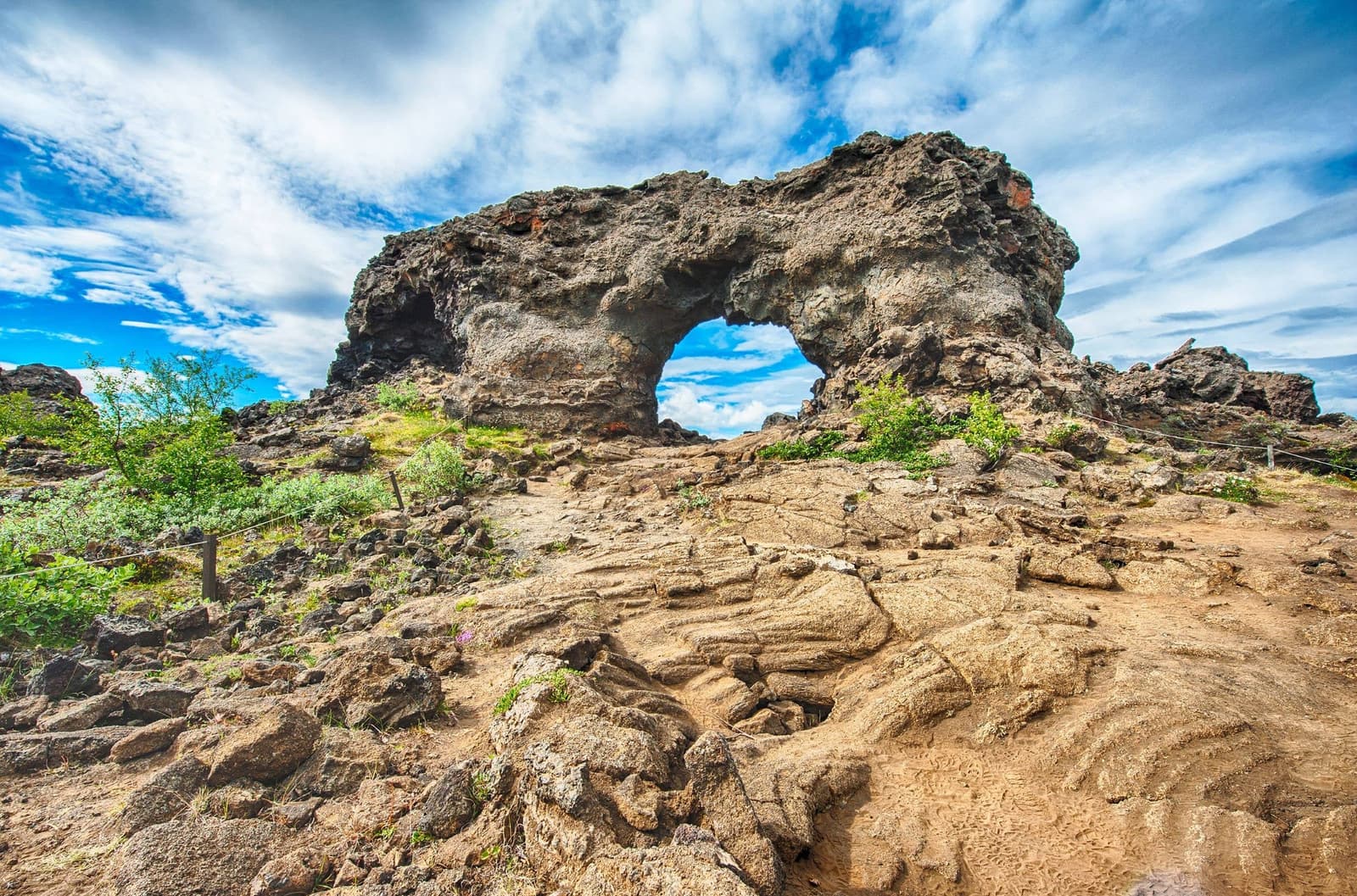
A simple Mývatn-area sequence is Dimmuborgir for lava formations, Hverir for geothermal activity, then Krafla or Leirhnjúkur for a broader volcanic landscape. If your day is larger, Dettifoss adds canyon scale, while Goðafoss works better when you are driving toward Akureyri or the western side of North Iceland.
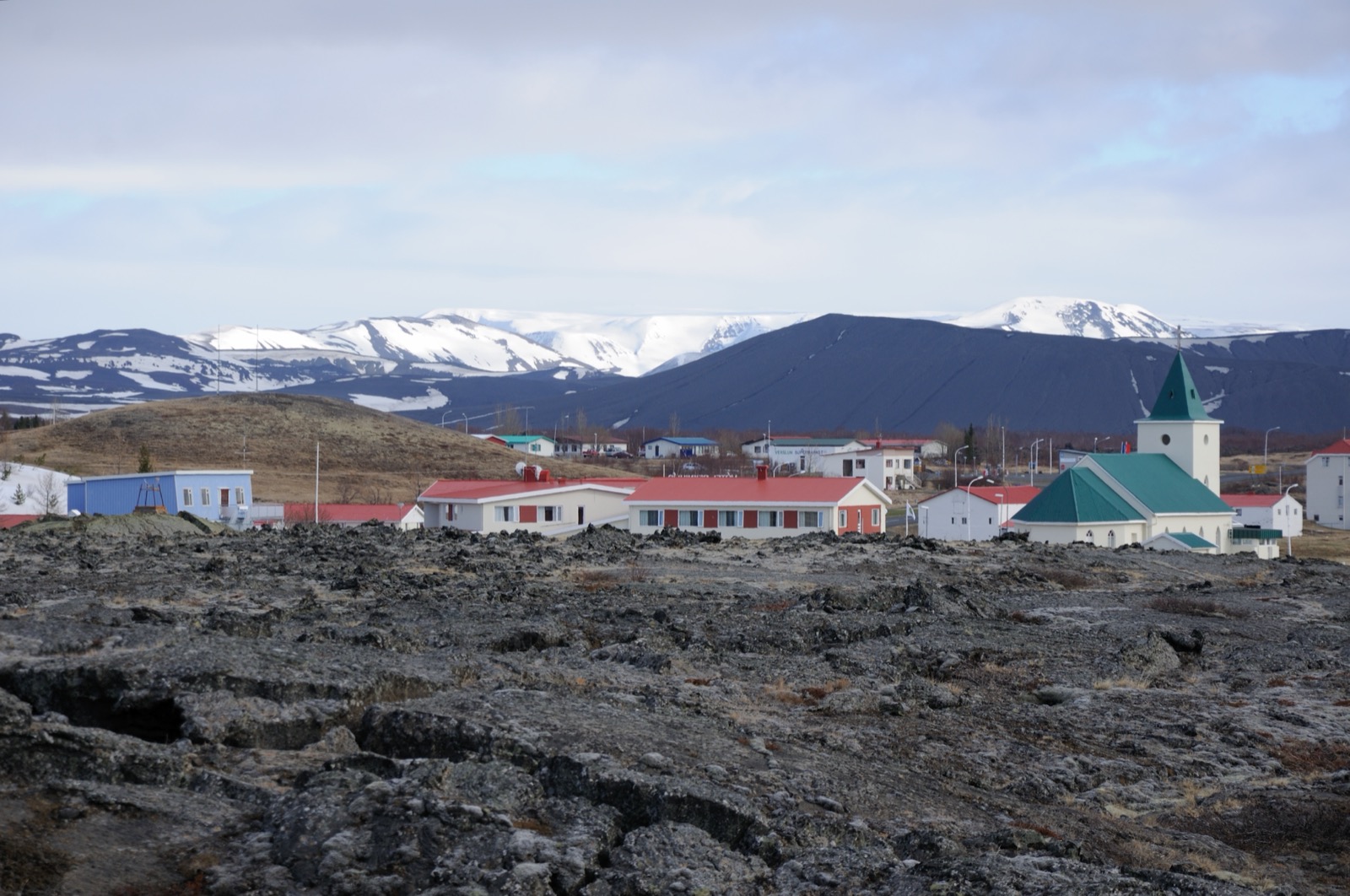
The broad view shows why Hverir works best as part of the Mývatn and Krafla volcanic cluster.
Do not underestimate drive shape. Hverir is easy because it is just off Route 1, but adding Dettifoss, Ásbyrgi, Húsavík, and multiple Mývatn stops can turn a good day into a rushed checklist.
What safety and access checks matter before visiting?
The main safety rule is simple: stay on marked paths and behind ropes. Hverir is visually open, but the active ground is hot, acidic, and unstable in places.
Visit Mývatn specifically warns visitors not to cross trail lines at Hverir because serious burns have happened when people went too close to boiling soil. Treat the ropes and signs as the route, not as suggestions for better photos.
For access, check current road and weather information before winter, shoulder-season, or stormy visits. Route 1 makes the site straightforward in normal conditions, but wind, ice, snow, and poor visibility can change the value of a short stop quickly.
Hverir's parking operator, Sannir Landvættir, charges throughout the day and year. Follow the payment signs for your vehicle and settle the charge the same day. The operator lists EasyPark and a digital payment option; app service fees can be additional. Check the current tariff on arrival rather than assuming a short stop or an evening visit is free.
Hverir is skippable when your day already has too much North Iceland driving
Hverir is skippable when your day already has too much North Iceland driving, when wind or winter conditions make the stop unpleasant, or when someone in your group is likely to struggle with the smell and uneven ground.
If you only have time for one Mývatn-area stop and prefer walking among lava formations, Dimmuborgir may be the better choice. If you want a powerful waterfall day, Dettifoss and Goðafoss may matter more than another geothermal landscape.
The stop is strongest when it adds contrast. Pairing Hverir with lava, water, crater, or canyon scenery makes the geothermal field feel specific instead of becoming one more quick pull-off.
Hverir Geothermal Area FAQ
Is Hverir the same as Námaskarð or Námafjall?
Hverir is the geothermal field at the base of Námafjall, near the Námaskarð pass. Travelers often use the names together because the field, mountain, and pass sit in the same small area.
Do you need a 4x4 to visit Hverir?
No, a 4x4 is not normally needed because Hverir sits beside Route 1. In winter or bad weather, the important question is current road condition, not vehicle type alone.
How long should Hverir take?
Most visitors need about 20-45 minutes for the main geothermal field. Add more time only if you are walking higher on Námafjall or photographing slowly.
Is Hverir safe for children?
Hverir can be safe for children only with close supervision and strict path discipline. The geothermal ground can be dangerously hot and unstable beyond the marked route.
Do you pay for parking at Hverir?
Yes. The operator charges at all hours throughout the year. Check the signed tariff and payment instructions for your vehicle, and pay the same day; an app may add a service fee.