Is Nauthúsagil worth the detour?

Yes, when you want a short South Coast stop that feels more like a small canyon adventure than a viewpoint.

Nauthúsagil is not the easiest waterfall stop near Seljalandsfoss. That is exactly why it can be memorable. The appeal is the narrow ravine, the stream underfoot, moss on dark rock, and the sense that the best view asks for a little judgement before you continue.

A local Iceland travel editor would add Nauthúsagil on a flexible South Coast day for active travelers who already understand that wet stones and changing weather can change the plan. They would skip it without regret when the day is rushed, footwear is weak, or the group would be happier with Seljalandsfoss and Gljúfrabúi as simpler waterfall stops.

Worth the stop?

When this stop makes sense

Good match for

  • South Coast self-drive travelers who want a more physical ravine stop near Seljalandsfoss
  • visitors comfortable with wet stones, shallow stream crossings, and a chain-assisted section
  • photographers who want mossy canyon texture rather than another open roadside waterfall
  • travelers with enough margin to skip the inner section if conditions feel poor

Think twice if

  • rushed first-time trips already trying to fit Seljalandsfoss, Skógafoss, and Reynisfjara into one tight day
  • groups that need dry, even, low-effort sightseeing from a simple viewpoint

Pair it with

South IcelandSeljalandsfossGljúfrabúiSkogafoss

What does the ravine visit feel like?

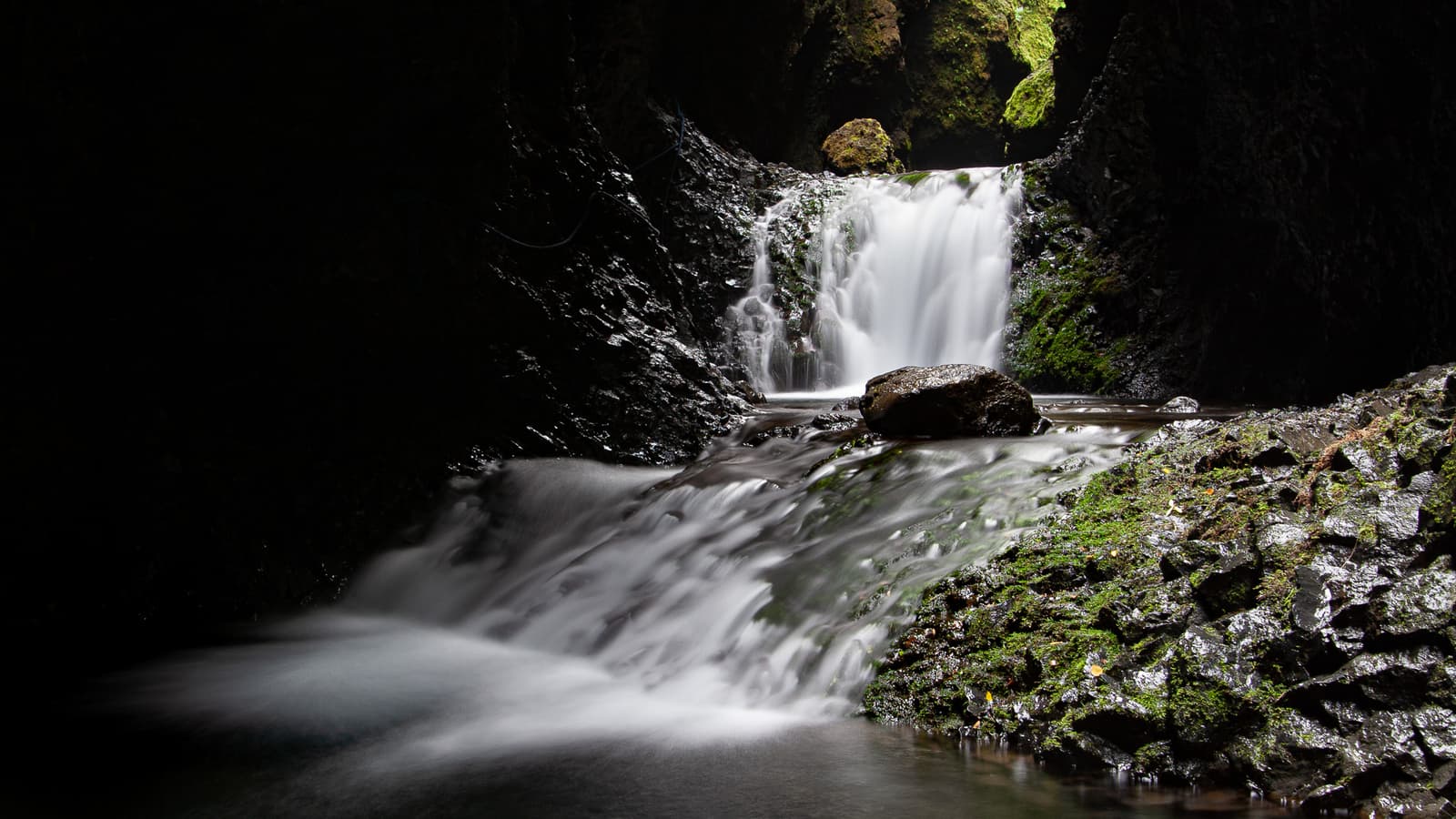
The visit feels enclosed, wet, and close-up, with the stream guiding you into a darker green ravine.

The first impression is smaller than the famous South Coast icons, but more intimate. Nauthúsagil narrows around the water, trees and moss soften the edges, and the sound of the stream becomes the route. It belongs to the same landscape family as Eyjafjallajökull and Gígjökull, but the experience is not a glacier viewpoint; it is a hands-on ravine.

The enclosed waterfall view is the reward only if the wet ravine approach feels sensible.

The deeper version can involve stepping around water, using chains, and moving slowly where rock and spray make easy walking feel less certain. That physical texture is the point for some travelers and the reason others should choose a different stop.

How much time and effort does Nauthúsagil need?

The distance is short, but the effort is higher than the map suggests because wet footing controls the pace.

Many travelers can treat Nauthúsagil as a compact stop, but it should not be squeezed into a day that already has no slack. Allow enough margin to walk in, judge the water and rock, turn back if needed, and still continue toward Skógafoss or your overnight plan without rushing.

Even before the tightest part of the ravine, Nauthúsagil is a stream-and-footing decision.
Use this as a planning comparison, not as a fixed access promise.
Visit styleBest forWhat to decide
Quick lookTravelers who want to see the ravine mouth and keep the South Coast day movingWhether the stop is worth more time once you see the water and footing
Partial ravine walkTravelers with grippy shoes and enough time to move slowlyWhether the wet stones and stream crossings feel comfortable
Deeper waterfall attemptActive travelers who are comfortable with chain-assisted movementWhether weather, water, and group ability make continuing sensible

How should you handle access, weather, and safety?

Treat the ravine as condition-dependent and check official guidance before building it into a tight day.

Nauthúsagil is close to better-known stops, but it is not as controlled-feeling as a broad viewpoint. Wet rocks, stream crossings, narrow space, and fast-changing South Iceland weather are the main planning issues. If the ravine looks swollen, icy, crowded, or uncomfortable for your group, the better travel decision is to turn it into a short look or skip it.

  • Check SafeTravel before relying on a narrow natural site in unsettled weather.
  • Check Umferðin before assuming the Road 249 corridor fits the day.
  • Check the Icelandic Meteorological Office forecast for South Iceland before adding a wet ravine stop.
  • Follow on-site signs and do not treat old trip reports as access guarantees.
  • Keep cameras, phones, and spare layers protected from spray and stream contact.

Official access and safety checks

What should you pair with Nauthúsagil on the South Coast?

Pair Nauthúsagil with nearby waterfall and volcano-context stops only when the day has enough room for slower movement.

The strongest pairing is Seljalandsfoss first, because it is the major South Coast anchor in this area. Gljúfrabúi then gives a shorter enclosed waterfall contrast, while Nauthúsagil adds a more physical ravine version of the same idea. Doing all three can work, but only if you are not racing the rest of the day.

Skógafoss sits farther east in the same route rhythm and usually deserves clearer priority on a first trip. If you are building a 5-day Iceland itinerary, Nauthúsagil should be one of the first things removed when weather, daylight, or fatigue starts pressing the plan.

For a slower area day, Eyjafjallajökull and Gígjökull add volcano and glacier context around the same mountain system. For a wider South Coast Road Trip, keep Nauthúsagil as a flexible active stop before the day shifts toward Reynisfjara and Vík.

Nauthúsagil or Gljúfrabúi?

Choose Gljúfrabúi for the easier enclosed waterfall add-on; choose Nauthúsagil when you want more ravine effort and have more margin.

Gljúfrabúi is the more obvious add-on because it sits right beside Seljalandsfoss and asks for less route commitment. Nauthúsagil is more selective. It can feel wilder and more rewarding, but the stop only improves the day when the group is ready for wet footing and a slower pace.

  • Choose Gljúfrabúi if the day is already full.
  • Choose Nauthúsagil if you actively want a short ravine walk.
  • Choose both only when the weather, footwear, and route plan all support a slower waterfall cluster.
  • Skip Nauthúsagil first if anyone in the group is uncertain around wet rock or narrow stream movement.

Nauthúsagil FAQ

These are the practical questions that usually decide whether Nauthúsagil belongs in a South Coast day.

Is Nauthúsagil good for a first Iceland trip?

Yes, if your first trip has a flexible South Coast day and your group wants a more active ravine stop. It is not essential if your priority is the classic icons, easier viewpoints, or a tight drive toward Vík.

Do you need hiking experience for Nauthúsagil?

Some outdoor confidence helps because the visit can involve wet stones, stream crossings, and chain-assisted movement. If that sounds stressful, treat the ravine mouth as the stop or choose another waterfall.

Can children visit Nauthúsagil?

Only if the adults can judge conditions carefully and are comfortable turning back early. The deeper ravine is not a good place to force nervous walkers, poor footwear, or low supervision.

Should Nauthúsagil replace Seljalandsfoss or Skógafoss?

No, Nauthúsagil is better as an optional side stop. Seljalandsfoss and Skógafoss are stronger first-trip anchors, while Nauthúsagil adds texture when the route has spare time.

What should you check before visiting Nauthúsagil?

Check official safety, road, and weather guidance, then make the final decision at the ravine. Water, ice, wind, crowding, or group comfort can make a short look the smarter choice.