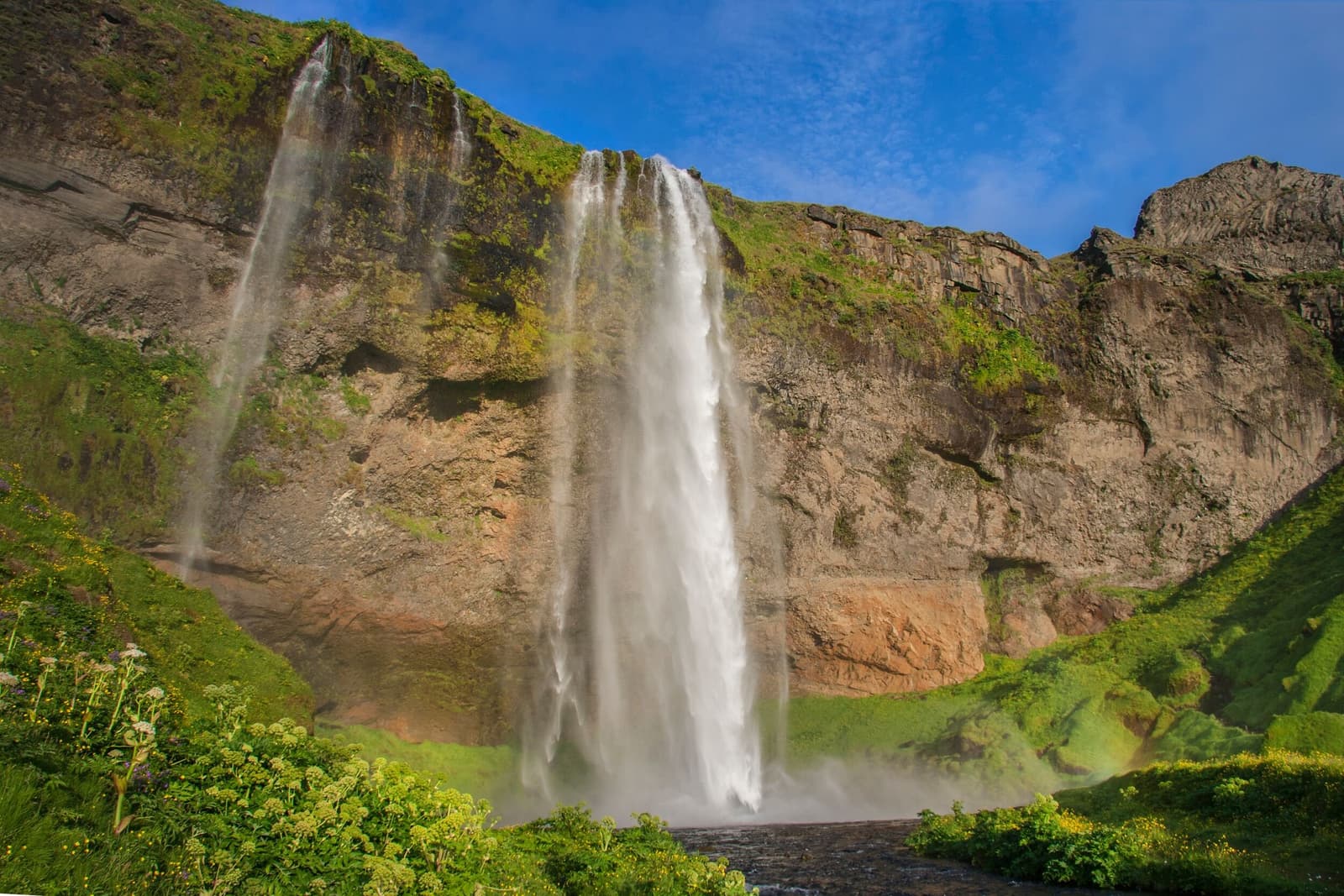
Gljúfrabúi is a narrow canyon waterfall beside Seljalandsfoss on the South Coast, best for travelers who want a wetter, more enclosed stop and can judge footing, spray, and timing before adding it.
Waterfall facts
Type
Canyon waterfall
Region
South Iceland, beside Seljalandsfoss
Route context
South Coast and Ring Road waterfall cluster near Road 249
Typical time
20 to 40 minutes; more if waiting to enter the narrow canyon
Best experience
A short, wet side stop after seeing Seljalandsfoss from the open viewpoint
In this guide
Is Gljúfrabúi worth adding after Seljalandsfoss?
Yes, if you want a short waterfall stop that feels more enclosed, wet, and selective than the main Seljalandsfoss viewpoint.
Gljúfrabúi sits close enough to Seljalandsfoss that the practical question is rarely whether to drive there separately. The real decision is whether the canyon view adds enough value after the open, iconic Seljalandsfoss stop.
It does when your group is comfortable moving slowly around wet stones, spray, and narrow space. It is less useful when the day is already overloaded with Skógafoss, Reynisfjara, and a long push toward Vík. Add Gljúfrabúi on a flexible South Coast day, but skip it without guilt when footing, weather, or daylight would turn it into a forced box-check.
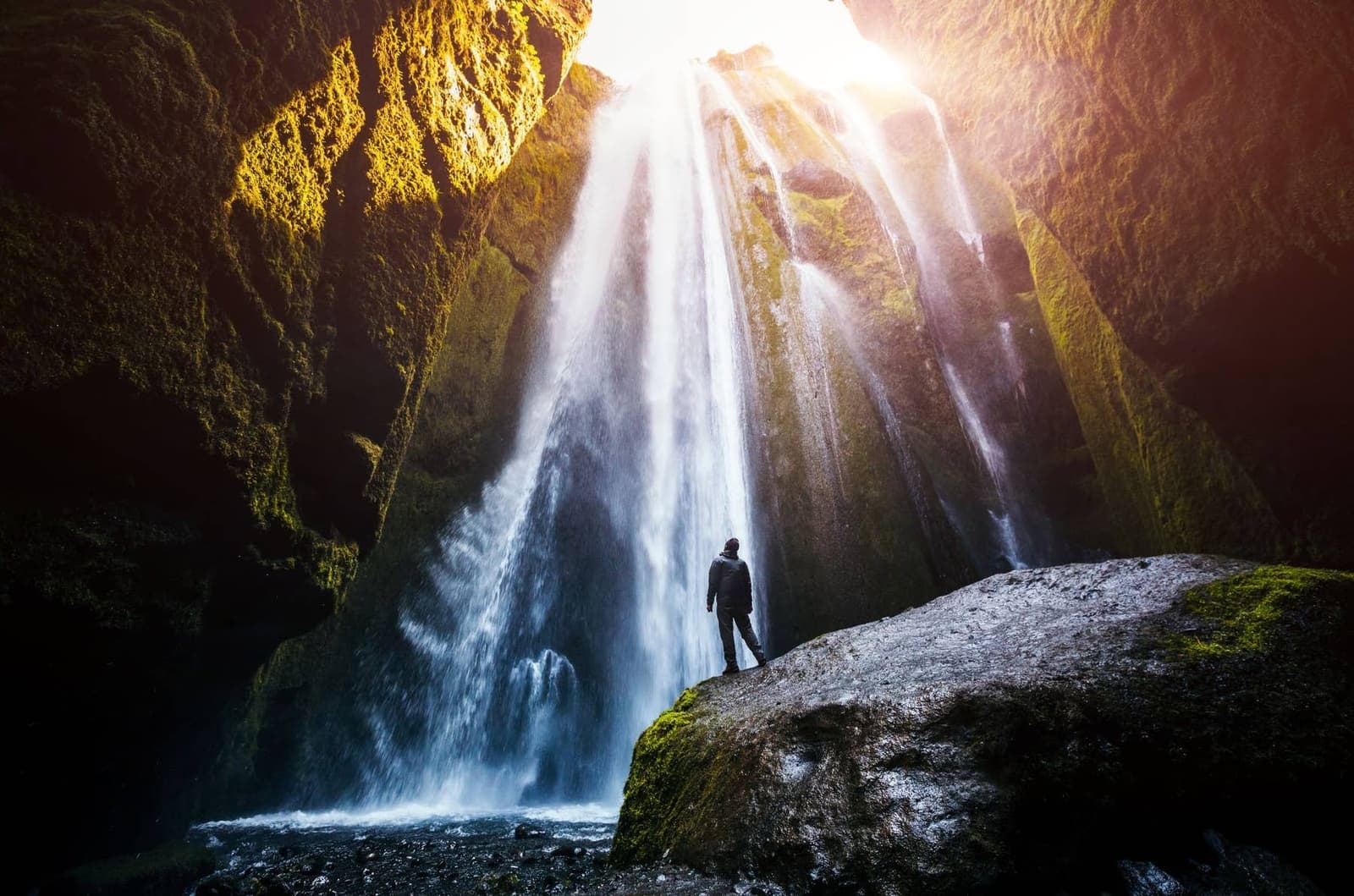
Gljúfrabúi feels less like a broad viewpoint and more like stepping toward a waterfall hidden behind a rock wall
Gljúfrabúi feels less like a broad viewpoint and more like stepping toward a waterfall hidden behind a rock wall.
From outside, the waterfall is partly concealed by the cliff and the large rock in front of the opening. That partial reveal is the point. You hear the water, see mist coming from the gap, and only get the full scene if the close approach feels sensible.
The cleft view is the reason Gljúfrabúi feels different from the open waterfall scene at Seljalandsfoss.
Expect heavier spray than a normal roadside viewpoint.
Move slowly around wet stones and stream-edge footing.
Let people exit before entering the tightest space.
Keep cameras and phones protected from mist.
Gljúfrabúi: plan a compact stop, then add buffer if people are waiting or conditions slow the approach
Plan a compact stop, then add buffer if people are waiting or conditions slow the approach.
Gljúfrabúi itself does not need a long visit. The time usually goes into walking from the Seljalandsfoss area, deciding whether to approach the cleft, waiting for a quieter moment, and drying off afterward.
Gljúfrabúi timing by visit style
Visit style
Time to allow
Best use
Look from outside the cleft
15 to 25 minutes
A quick add-on when footing or crowding makes the close view unattractive.
Canyon view when sensible
25 to 40 minutes
A fuller visit with time to move slowly and manage spray.
Seljalandsfoss plus Gljúfrabúi
75 to 100 minutes
A two-waterfall cluster stop before continuing east.
A short stop can still feel memorable because the waterfall is compressed into a tight canyon setting.
When should you skip the inner canyon?
Skip the inner canyon when warning signs, rockfall risk, ice, heavy spray, crowding, or your own footing make the close view feel questionable.
Visit South Iceland notes that caution is needed in the canyon because falling rocks are a risk. That matters because Gljúfrabúi invites people into a confined space where wet footing and loose-rock exposure feel more immediate than at a wide viewpoint.
Do not enter if signs, barriers, or local guidance indicate a closure or hazard.
Avoid the tightest space if people are bunching up around the stream or rock opening.
Be conservative in freeze-thaw weather, strong wind, or heavy rain.
Use official safety, road, and weather sources before treating a winter visit as simple.
Gljúfrabúi works best as a small contrast stop within the Seljalandsfoss cluster, not as the main waterfall anchor
Gljúfrabúi works best as a small contrast stop within the Seljalandsfoss cluster, not as the main waterfall anchor.
Coming from Reykjavík or Hvolsvöllur, most travelers meet Seljalandsfoss first and then decide whether to add Gljúfrabúi before driving east. That order makes sense because Seljalandsfoss gives the broad, open landmark view while Gljúfrabúi gives the tighter canyon experience.
The route tradeoff is simple: time spent waiting or drying off here reduces slack later around Skógafoss, Reynisfjara, or Vík. If the day already has a beach safety stop, glacier viewpoint, and long return drive, Gljúfrabúi should stay optional.
Best nearby pairings
Closest anchor
Seljalandsfoss, for the open waterfall view before the canyon add-on.
Next classic waterfall
Skógafoss, if you are continuing east on the South Coast.
More adventurous side stop
Nauthúsagil, only when your day has stronger walking interest and extra margin.
Beach continuation
Reynisfjara, when conditions and daylight support continuing toward Vík.
Gljúfrabúi: the route is straightforward, but the close waterfall experience changes quickly with spray, ice, daylight, wind, and stream flow
The route is straightforward, but the close waterfall experience changes quickly with spray, ice, daylight, wind, and stream flow.
In brighter months, Gljúfrabúi is easier to judge because daylight lasts longer and the canyon walls show more detail. That does not make the cleft dry or simple; waterproof layers still matter if you want the close view.
In colder or stormier conditions, the sensible version may be a brief look from outside. Short daylight also changes the route math, especially if you plan to continue toward Skógafoss, Reynisfjara, or a Vík-area overnight.
The best version of the stop depends on light, spray, footing, and how much space the canyon gives you.
Who should keep Gljúfrabúi optional?
Keep it optional if the stop would add stress, wet gear, or timing pressure to an already full South Coast plan.
Families with small children, travelers with mobility concerns, and photographers carrying exposed gear may still enjoy the outside setting, but the inner approach is not the automatic choice. The attraction is strongest when everyone is happy to get wet and move patiently.
If your plan already includes the behind-the-falls path at Seljalandsfoss, the stairs at Skógafoss, and the beach safety decisions at Reynisfjara, Gljúfrabúi is the easiest stop to shorten without weakening the day.
Gljúfrabúi FAQ
Is Gljúfrabúi the same stop as Seljalandsfoss?
It is best planned as part of the same waterfall cluster, but the experience is different because Gljúfrabúi is tighter, wetter, and more enclosed.
Do you need waterproof clothing for Gljúfrabúi?
Waterproof layers are a practical choice if you want the close canyon view, because spray and wet surfaces are part of the experience.
How long do you need at Gljúfrabúi?
Most visitors should allow 20 to 40 minutes for Gljúfrabúi itself, with more time if the narrow access is busy or the group moves slowly.
Is Gljúfrabúi a good winter stop?
It can be a good brief stop, but the inner canyon should stay optional when ice, wind, short daylight, or footing make the close view less sensible.
Gljúfrabúi: use official and regional sources for the details that can change close to your visit
Use official and regional sources for the details that can change close to your visit: safety advice, road conditions, weather, and local visitor guidance.