Hrafnabjargafoss is a remote Skjálfandafljót waterfall above Aldeyjarfoss in North Iceland, worth adding only when road conditions, vehicle choice, daylight, and walking time support a rougher valley detour.
Waterfall facts
Type
Remote waterfall on the Skjálfandafljót river system
Region
North Iceland, in the upper Bárðardalur and Aldeyjarfoss area
Route context
Best as an extension to Aldeyjarfoss, not as a casual Ring Road stop
Time to allow
About 1.5-3 hours from the main valley route, depending on road surface, walking pace, and photo time
Best experience
A slower remote waterfall stop with rough ground, river views, and fewer easy-access comforts
In this guide
Hrafnabjargafoss can be worth the detour if your North Iceland day already reaches the Aldeyjarfoss area and you have the right road
Yes, Hrafnabjargafoss can be worth the detour if your North Iceland day already reaches the Aldeyjarfoss area and you have the right road, weather, daylight, and walking margin. It is a poor add-on for a rushed Ring Road day.
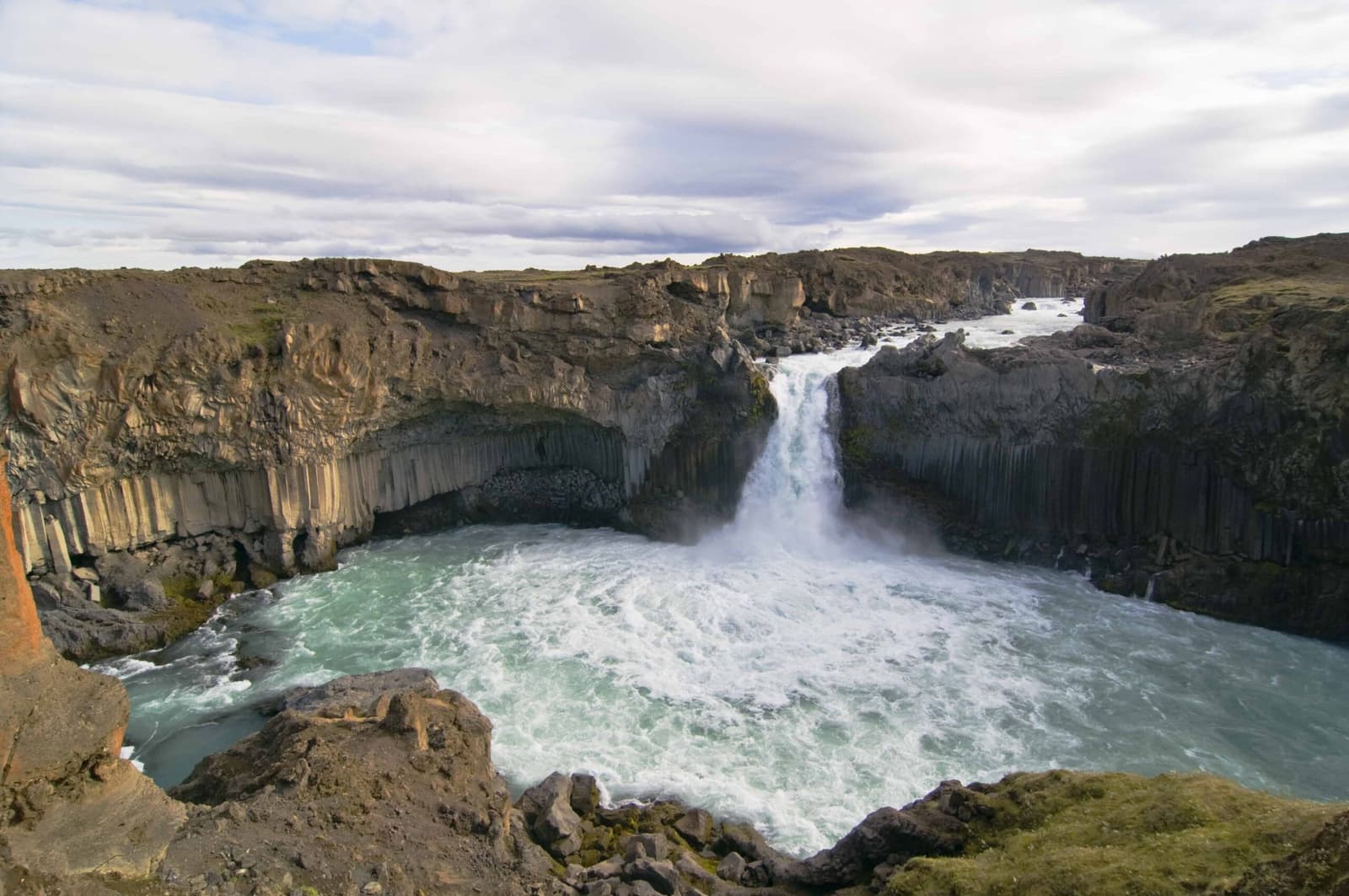
The appeal is not convenience. Hrafnabjargafoss sits in the rougher upper Skjálfandafljót landscape, where the river breaks through dark rock and the visit feels more exposed than the easier waterfall stops closer to Route 1.
Add it when the day is already built around Aldeyjarfoss and the group wants a quieter, more remote waterfall extension. Skip it when Goðafoss, Ullarfoss, or Mývatn would give a cleaner route with less access risk.
Hrafnabjargafoss: allow roughly 1.5-3 hours around the detour decision, including road friction, walking, photos, and the return to your main route
Allow roughly 1.5-3 hours around the detour decision, including road friction, walking, photos, and the return to your main route. The exact feel depends more on conditions than distance on a map.
Use this to decide whether Hrafnabjargafoss fits the day.
Visit style
Time to protect
Best when
Quick look
Around 1.5 hours
The road is straightforward, daylight is generous, and you only want a short look.
Balanced stop
2-3 hours
You want the walk, a careful look at the river, and enough buffer for rough ground.
Slow photo detour
Half day
The waterfall pair with Aldeyjarfoss is a main goal, not an afterthought.
The approach matters: this stop feels more like a rough valley walk than an easy roadside viewpoint.
This is where Hrafnabjargafoss differs from Goðafoss. Goðafoss can break up a North Iceland drive with a compact, high-value stop. Hrafnabjargafoss asks for a more deliberate choice: the road, the walk, and the return all have to make sense.
Hrafnabjargafoss feels raw, low-built, and river-shaped
Hrafnabjargafoss feels raw, low-built, and river-shaped. The waterfall is part of a wider Skjálfandafljót corridor rather than a polished viewpoint experience.
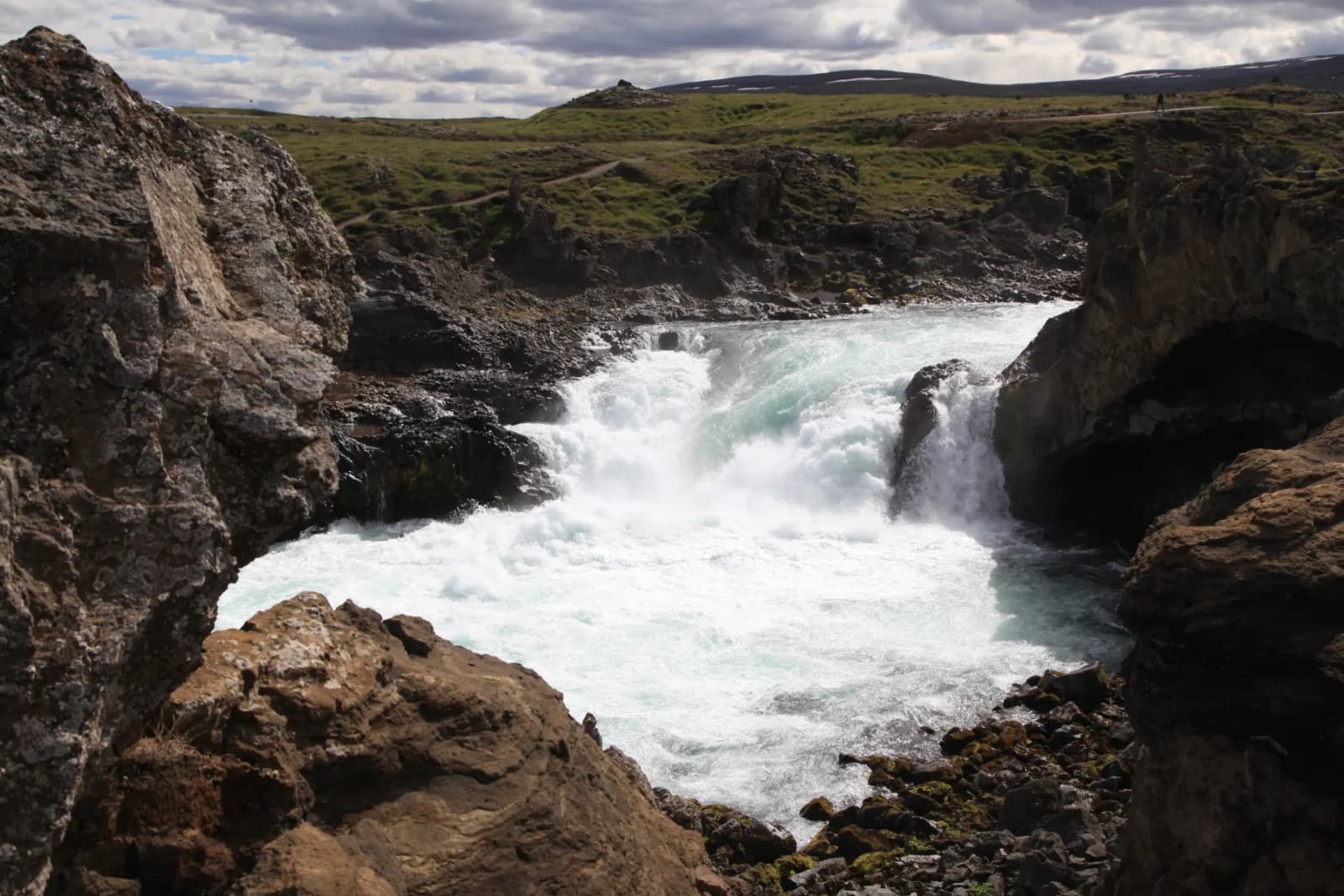
Expect dark rock, white water, uneven ground, and a stronger sense of isolation than at the famous North Iceland stops. The waterfall itself is not only a single drop; the river spreads and breaks through the rock, so the wider setting matters as much as the main curtain of water.
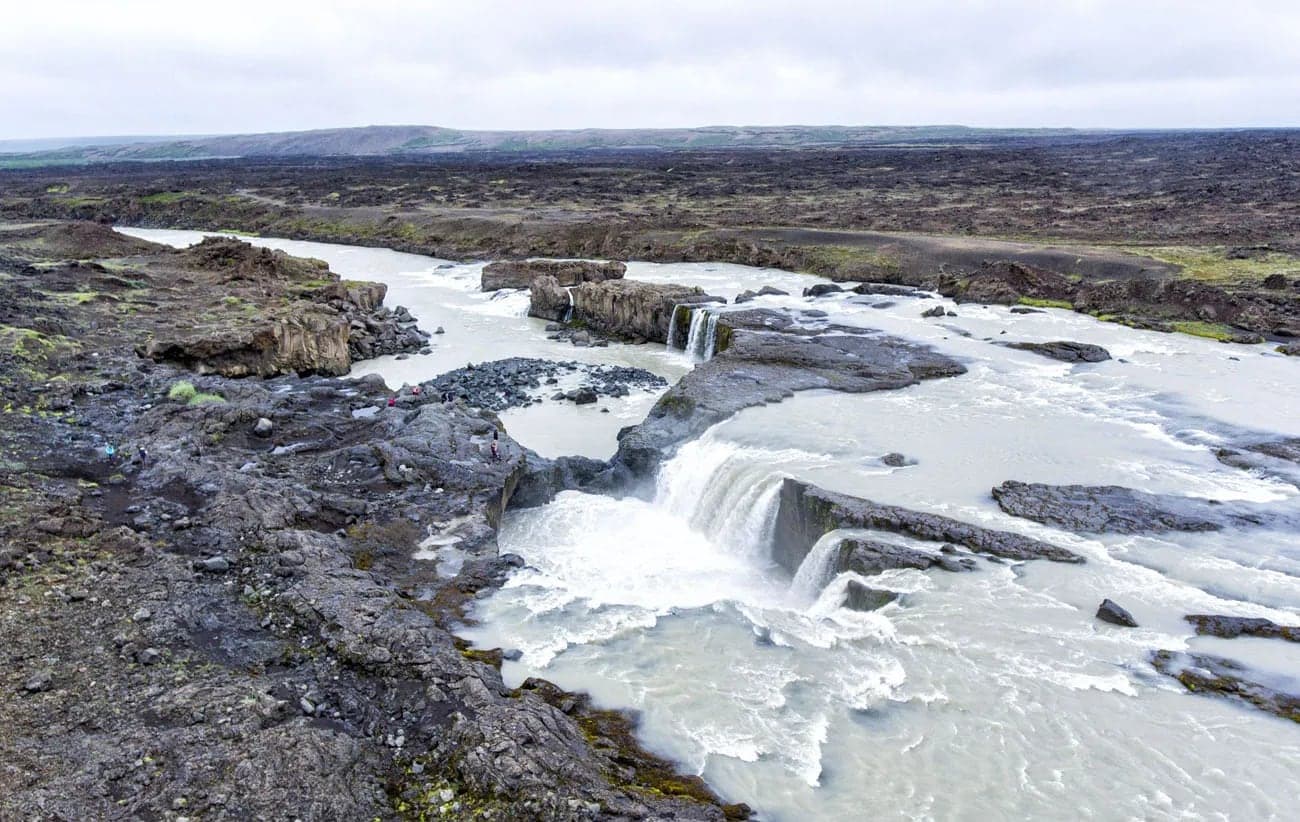
Seen from above, Hrafnabjargafoss reads as part of a rough river corridor rather than a built-up viewpoint stop.
That remote quality is the reason to go. If you mainly want a clean, easy waterfall frame, Aldeyjarfoss and Goðafoss are usually better first choices. If you want the upper valley to feel wilder and less packaged, Hrafnabjargafoss earns the extra thought.
Where does Hrafnabjargafoss fit with Aldeyjarfoss and Goðafoss?
Hrafnabjargafoss fits best after you have already chosen the Skjálfandafljót valley as part of the day. Treat Aldeyjarfoss as the main anchor, then decide whether Hrafnabjargafoss adds enough extra value.
Aldeyjarfoss gives the stronger classic composition: waterfall, basalt, and a clearer destination feel. Hrafnabjargafoss gives the quieter extension. Goðafoss is the easy Route 1 stop, while Ullarfoss can work as a smaller nearby waterfall comparison when the day needs less friction.
For a broader North Iceland trip, do not let this detour steal time from the main decisions. Mývatn and Dettifoss can anchor whole route segments; Hrafnabjargafoss is strongest when it deepens a valley day that already has room.
Choose Hrafnabjargafoss when the route is already slow and waterfall-focused.
Choose Aldeyjarfoss when you want the highest-value stop in the same valley.
Choose Goðafoss when the day needs an easier waterfall near the Ring Road.
Choose Mývatn or Dettifoss when the trip needs a larger North Iceland anchor.
Use official road, weather, and safety sources before relying on Hrafnabjargafoss
Use official road, weather, and safety sources before relying on Hrafnabjargafoss. Use this guide for planning, not live access confirmation.
Start with Umferðin for road conditions, the Icelandic Meteorological Office for weather warnings, and SafeTravel for travel-condition guidance. If signs, local instructions, or conditions on the ground conflict with your plan, let those decide the visit.
Use for nearby Aldeyjarfoss and upper Bárðardalur context.
Hrafnabjargafoss FAQ
These are the questions that usually decide whether the stop belongs in a real North Iceland day.
Is Hrafnabjargafoss an easy Ring Road stop?
No. It is better treated as a remote extension from the Aldeyjarfoss area, while Goðafoss is the easier Ring Road waterfall choice.
Should I visit Hrafnabjargafoss or Aldeyjarfoss first?
Choose Aldeyjarfoss first if you only have time for one upper Skjálfandafljót waterfall. Add Hrafnabjargafoss only when the day has enough spare time and conditions support the extra effort.
Can I rely on Hrafnabjargafoss in winter or rough weather?
Do not rely on it without official road, weather, and safety checks. Remote waterfall plans need backup stops because access, visibility, wind, ice, and daylight can change the decision.