Fimmvörðuháls is the mountain crossing between Skógafoss and Þórsmörk. SafeTravel advises against hiking the trail because of dangerous conditions. Read the dated warning before considering this exposed route, its transport arrangements or an overnight plan.
Waterfall facts
Type
Mountain pass, long hiking route, volcanic landscape, waterfall route, and glacier-view terrain
Region
South Iceland, linking Skógar by Skógafoss with Þórsmörk
Route context
A South Coast hiking objective, not a quick Ring Road stop
Time to allow
FÍ lists 25 km and 1–2 days; the current advisory is not to hike the crossing
Best experience
A dedicated mountain crossing only when official trail advice and conditions support it
In this guide
Is Fimmvörðuháls worth planning?
Do not commit to the crossing while the current SafeTravel advisory applies. The route information below is useful for future planning, but it does not override the official warning.
The joint warning identifies the hazardous section between the two mountain huts. A general route description or hut listing does not confirm reopening.
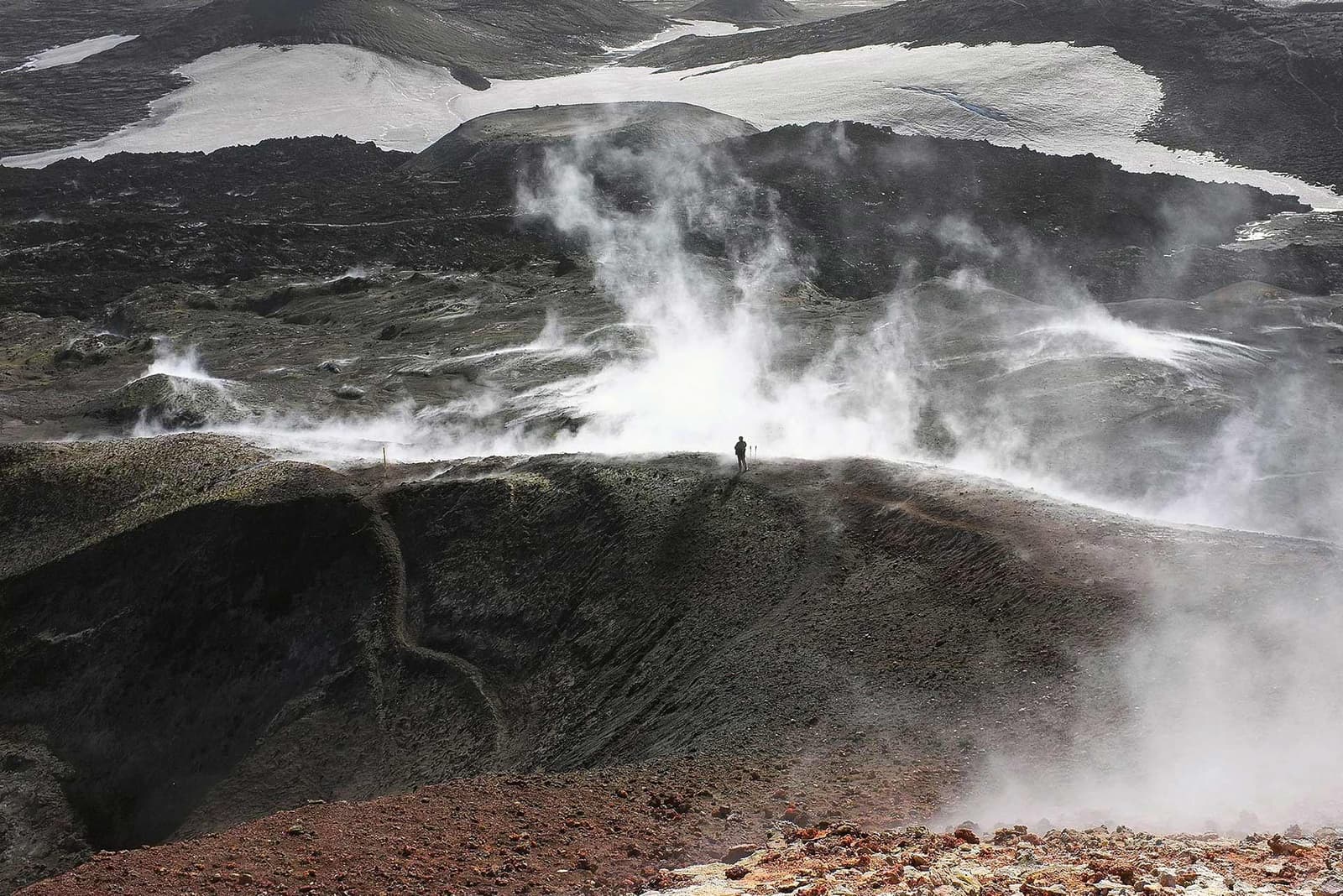
The route links the Skógafoss side of the South Coast with Þórsmörk, passing waterfalls, black volcanic ground, snow-prone high terrain, and the 2010 Móði and Magni crater area between Eyjafjallajökull and Mýrdalsjökull.
Only reconsider Fimmvörðuháls once official advice and conditions support the hike. Even then, keep a dedicated active day, a weather buffer, clear transport and hikers who want the route itself. It is a poor addition to an already packed South Coast sightseeing day.
Reconsider only when: the advisory no longer applies, the hike is the main event and your group can handle a long, exposed mountain route.
Skip if: you only want a quick scenic stop after Skógafoss or need easy return logistics.
Check before committing: official weather, safety, road, hut, and transport sources should decide whether the plan still works.
What does the crossing feel like after Skógafoss?
It starts with the familiar force of Skógafoss, then changes into a long sequence of river waterfalls, open highland ground, snow patches, lava, and glacier-framed views.
The early route above Skógafoss follows the Skógá river, so it can feel tempting to continue after the main waterfall. That first section is beautiful, but it is still only the beginning. The full route keeps climbing until the South Coast feels far below and the terrain becomes more exposed.
The waterfall section above Skógafoss is only the opening act of the Fimmvörðuháls route.
Higher up, the attraction is less about one viewpoint and more about the transition: green river canyon, dark volcanic slopes, snow underfoot, and wide highland sightlines. If that gradual change is what you came for, Fimmvörðuháls can be one of the strongest active days on the South Coast.
Fimmvörðuháls distance, ascent and exposed terrain
For future planning after the advisory changes, FÍ lists the crossing as about 25 km over one to two days. The ascent from Skógar toward Baldvinsskáli is about 1,000 meters.
The full route climbs from the Skógá waterfalls into exposed terrain between Eyjafjallajökull and Mýrdalsjökull. Snow can remain into summer, and the route includes steep slopes and narrow ridges. The no-hike advisory takes priority over these general route details.
Snow and volcanic terrain can be part of the normal visual character of the route, so gear and forecast checks are not optional details.
These route choices require current access and safety checks; the crossing advisory still applies.
Version
Best for
Main check
Short waterfall-section walk
Travelers who want more than Skógafoss but not a mountain crossing.
Check local conditions for that specific section and allow for the return; the crossing advisory does not certify a shorter walk as safe.
Full Skógar-to-Þórsmörk crossing
Experienced hikers making Fimmvörðuháls the main day.
Weather, transport, navigation, food, layers, and finish logistics.
Overnight or hut-based plan
Hikers who want a slower route or a wider Þórsmörk connection.
Official hut, booking, access, and seasonal visitor details.
Compare the hiking guide when choosing an alternative that suits your group’s experience, the weather and the rest of the trip.
How do Skógar and Þórsmörk change the logistics?
Skógar and Þórsmörk are different ends of a mountain crossing. For a future hike, agree on the exact finish and return transport before setting out.
The Skógafoss start leads uphill beside the Skógá. FÍ’s route reaches the Goðaland/Básar area at the Þórsmörk end; Langidalur is about two kilometers farther across a footbridge. Confirm the named finish or pickup area rather than treating every Þórsmörk stop as the same location.
The route sign says what the planning day feels like: Skógar and Þórsmörk are different ends of one serious crossing.
Do not assume the hike ends where your car is waiting. Once official advice supports the crossing again, confirm transport, pickup point, hut area and group pace before choosing an independent, guided or overnight plan. Booking a guide or hut does not override the current trail advisory.
Huts can shape a slower plan, but official visitor details should decide whether you rely on them.
Do not assume drinking water will be available at Baldvinsskáli. FÍ’s hut page explicitly warns that no fresh water is available and tells hikers to bring enough for the walk and stay. Confirm water supplies and hut arrangements directly before any future trip; a hut listing does not override the trail warning.
Which nearby South Coast stops make sense around it?
Fimmvörðuháls pairs best with places that explain the Skógar-to-Þórsmörk landscape, not with a long checklist of unrelated roadside stops.
The cleanest pairings are the two ends: Skógafoss for the start and Þórsmörk for the finish. If you are not doing the full route, nearby high-friction landscape stops such as Stakkholtsgjá, Gígjökull, and Eyjafjallajökull help you understand the volcanic and glacial setting without pretending the hike is easy.
For a more classic sightseeing day, keep Fimmvörðuháls out of the main schedule and use Seljalandsfoss, Kvernufoss, Skógafoss, and Vík-area coast stops instead. The South Coast road trip guide is the better place to decide how much active time your driving day can absorb.
This photograph shows the lower Skógá waterfall section. Check that section’s conditions separately; it is not evidence that the mountain crossing is safe.
What should you check before committing?
Check official safety, weather, road, hut, and operator information before turning Fimmvörðuháls from an idea into a fixed day.
Recheck the active trail warning first. For a future permitted crossing, plan for pass weather, snow, visibility, daylight, drinking water, navigation and the exact Þórsmörk finish. Carry suitable layers, waterproofs, food, a map and navigation equipment; do not rely on a single phone battery or an assumed hut water supply.
Use for forecasts and warnings before committing to the pass.
Common questions about Fimmvörðuháls
These are the questions that most often change whether the route belongs in a real trip plan.
Can you visit Fimmvörðuháls as a quick stop?
The full route is a long mountain crossing, and current official advice is not to hike it. A shorter walk above Skógafoss is a different route decision: check that section’s conditions, stay within your group’s ability and leave time to return.
Is Fimmvörðuháls the same as visiting Skógafoss?
No. Skógafoss is the easy waterfall stop, while Fimmvörðuháls is the mountain route that continues above it toward Þórsmörk.
Do you need transport planning for Fimmvörðuháls?
Yes. Because the route is normally planned as a point-to-point hike, confirm pickup, bus, guide, hut, or return details before treating the day as workable.
Can you hike Fimmvörðuháls outside summer?
13 September 2026 safety update: SafeTravel advises against hiking the trail. Choose another hike while that advice applies. Even after the advisory changes, off-season plans require specialist mountain preparation and current official weather, safety, trail and operator guidance.
What should you do if conditions look poor?
Choose a simpler South Coast day. Skógafoss, Kvernufoss, Seljalandsfoss, and other lower-elevation stops are easier to adapt around weather than a full mountain crossing.
The pin marks the Fimmvörðuháls mountain pass, not a drivable trailhead or parking area. The route is reached on foot, and current official advice is not to hike the crossing. Recheck the trail advisory before making a future Skógar–Þórsmörk plan.
Region
South Iceland
Works well with
South Coast / Ring Road
Useful base
Vík
Interactive planning map for Fimmvörðuháls
Interactive map
Load the map when you need it
Place context and external map links remain available without loading it.
Planning context
Use the wider destination guides
Open the region or practical guide that resolves the next planning decision.