Falljökull is a steep outlet glacier near Skaftafell in southeast Iceland. Plan guided ice access around your operator’s meeting point and schedule; for a marked walk to glacier views, compare the separate Skaftafellsjökull trail.
Glacier facts
Type
Outlet glacier and danger-sensitive natural site
Region
Southeast Iceland, near Skaftafell in South Iceland
Route context
Best as a deliberate South Coast or Ring Road glacier stop, not a casual add-on
Time to allow
Use the full operator schedule for guided visits, including meeting, equipment, transfers, and approach time
Best experience
Use it to understand the scale of Öræfajökull and nearby outlet glaciers before adding more southeast stops
In this guide
Is Falljökull worth visiting if you are not glacier hiking?
Falljökull is most useful to plan around a guided glacier visit. If you want glacier views without an ice activity, compare the marked S1 trail to Skaftafellsjökull from the Skaftafell visitor area. It is a different glacier and a clearer independent walking plan.
Falljökull sits in the Skaftafell area, where the South Coast changes from roadside waterfalls and beaches into Vatnajökull-scale ice. If your route already includes Skaftafell or Virkisjökull, Falljökull can make that glacier landscape feel more specific instead of just distant and white.
Go when a guided Falljökull visit fits your route, ability, and available time.
Skip it if your day is already stretched between Jökulsárlón, Diamond Beach, and a long drive.
Check before committing if weather, road conditions, park guidance, or guided-activity details affect your plan.
Add Falljökull when a guided glacier experience is a main reason for stopping. For a day built around Jökulsárlón and Diamond Beach, allow enough time for the full activity and the drive onward before committing.
Photo guide
Falljökull Glacier in photos
1 / 2
The glacier is visually powerful, but the practical question is how close your plan should get.
What makes Falljökull feel different from nearby glacier viewpoints?
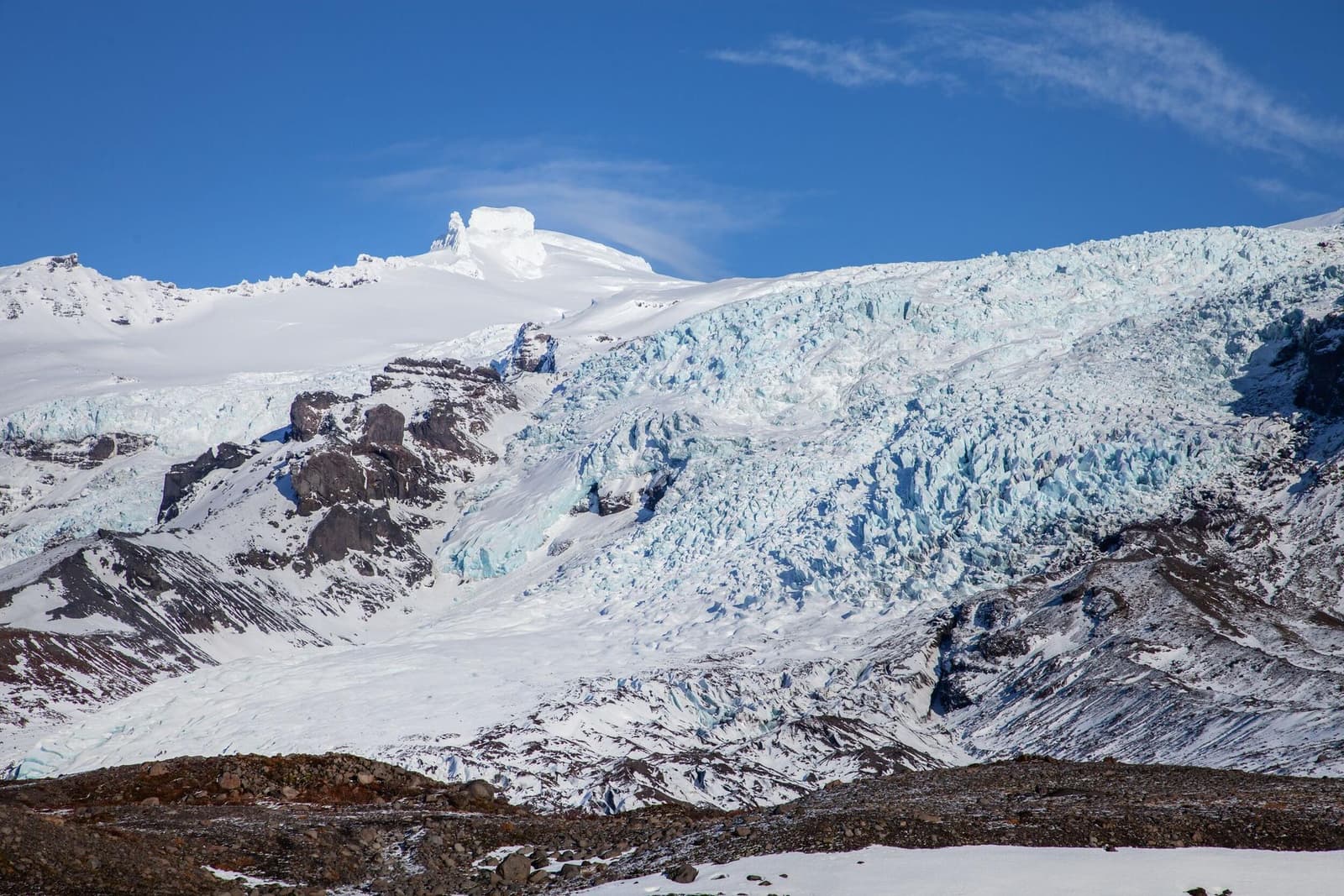
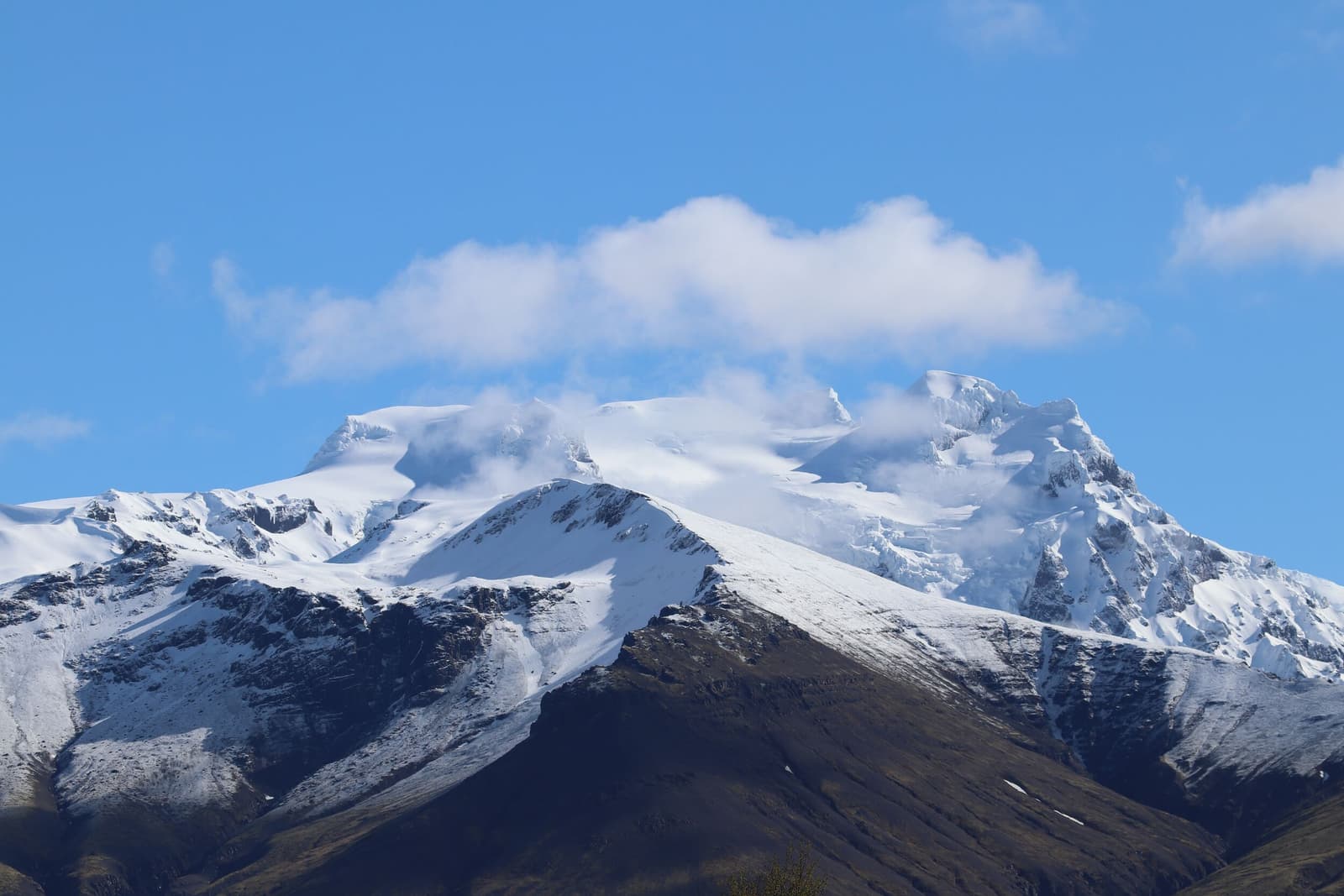
Falljökull is a steep outlet glacier flowing down from Öræfajökull, not just a distant white cap on the horizon. The drama comes from the broken icefall, dark volcanic slopes, moraine ground, and the way Virkisjökull sits beside it.
The official national-park page describes Falljökull as a glacier extending from the caldera of Öræfajökull, with the northern tongue known as Virkisjökull. For a traveler, that matters because you are seeing one part of a larger ice-and-volcano system, not an isolated photo subject.
Compared with the easier trail choices around Skaftafell, Falljökull feels rougher and more serious. The landscape has glacier dirt, meltwater, uneven moraine, and broken blue ice rather than a neat viewpoint platform. That texture is the reason to go, but it is also the reason to keep boundaries clear.
The visitors are on glacier ice with equipment; the photograph does not show a self-guided viewpoint.
Guided Falljökull access or a marked glacier-view walk?
A glacier visit involves more than reaching a map pin. For Falljökull ice access, follow an experienced guide with appropriate equipment. For independent walking, use a named park trail and its current access guidance.
Use this comparison to keep the Falljökull decision clear.
Choice
Best for
Plan around
Guided Falljökull walk
Visitors who want to step onto glacier ice
The operator’s meeting point, equipment requirements, fitness guidance, and full scheduled duration
Skaftafellsjökull S1 trail
Visitors who want glacier views from a marked walking route
Start at the Skaftafell visitor area; follow current park notices and the warning signs at the trail end
Falljökull approach terrain
Visitors considering a closer look before the ice
Confirm current access locally; bare ground near the glacier is not automatically safe
Skip the extra stop
A southeast drive with little spare time
Keep room for the planned Skaftafell, lagoon, or coast stops
Use your operator’s arrival instructions for a guided visit. The Falljökull map pin identifies the glacier, not a verified parking area, public trailhead, or meeting point. Do not drive or walk toward the ice simply because a map offers directions.
The approach terrain is part of the decision; do not plan Falljökull like a paved viewpoint.
Glacier-front terrain, weather, and arrival checks
Check park notices, weather and road conditions before setting out, then follow on-site signs and your guide’s instructions. Conditions at the glacier can change after you plan the trip.
The national park warns that care is needed both in front of glaciers and on the ice. Uneven moraine, meltwater and the glacier edge need local judgement; staying off the ice alone does not establish a safe approach. For glacier walks, use an experienced guide and appropriate safety gear.
Winter and rough-weather days need extra discipline. Before making the southeast section fixed, compare the weather forecast, Iceland road conditions, and your wider plan for daylight and backup stops. If those checks make the day fragile, use winter driving guidance and keep Falljökull optional.
The dashed line marks the 1990 moraine, not a walking route. This August 2023 photograph illustrates glacier change.
What nearby stops make a Falljökull day work?
Falljökull works best with a southeast cluster, not as a lone detour. The cleanest pairings are Skaftafell and Virkisjökull for glacier context, then Fjallsárlón, Jökulsárlón, and Diamond Beach if the route still has breathing room.
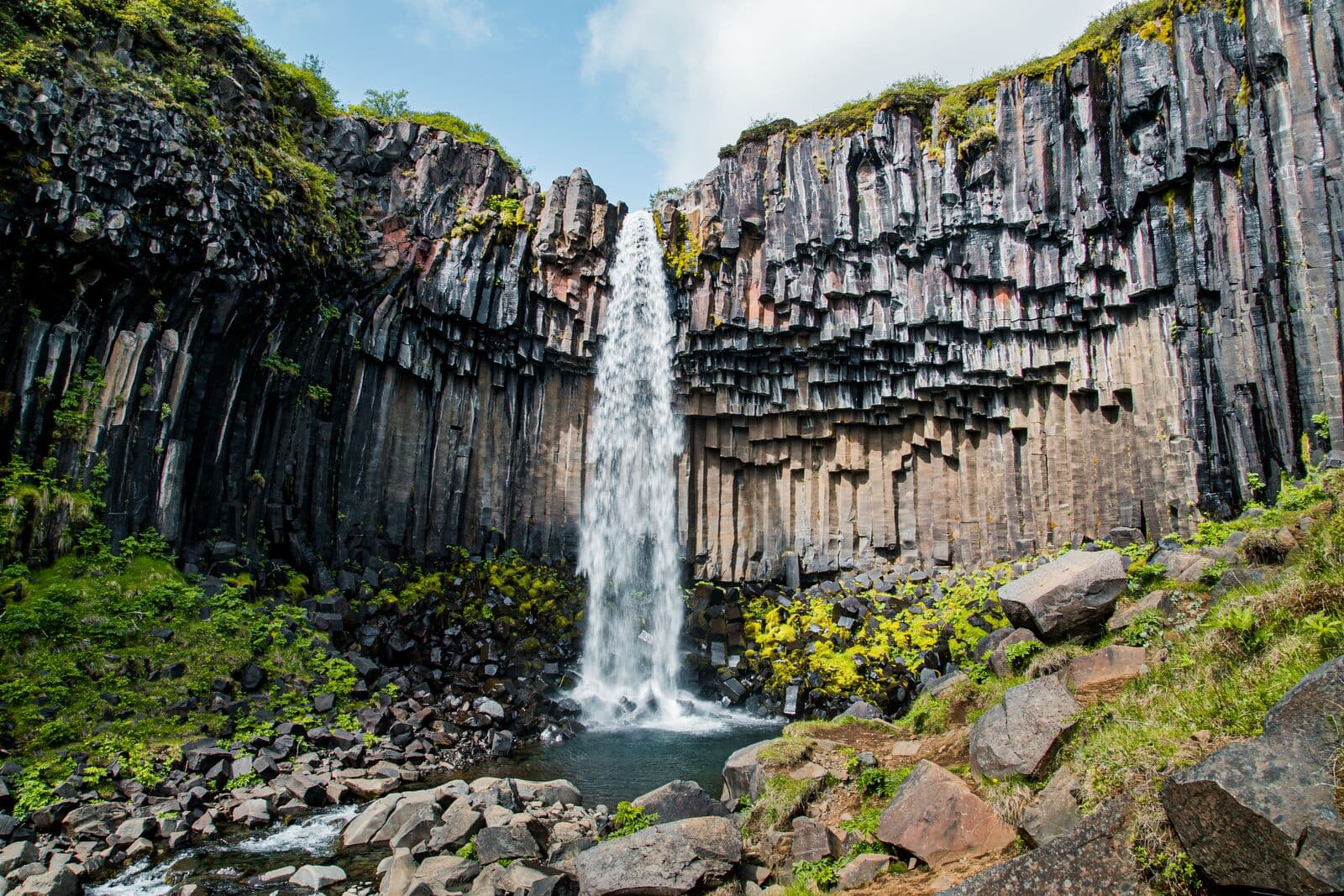
For a marked walk to glacier views, the S1 Glacier trail starts beside the Skaftafell visitor centre and leads toward Skaftafellsjökull. Follow the park’s route description and warning signs at the trail end, and check current trail notices before leaving. Svartifoss is another named walk to compare when you want a waterfall rather than glacier views.
If the day is about the eastern South Coast, compare Falljökull against Fjallsárlón, Jökulsárlón, and Diamond Beach. Those stops are easier to understand as a lagoon-and-coast sequence, while Falljökull asks for more condition awareness and often more time.
For broader planning, use the South Iceland region guide to decide whether the southeast deserves an overnight, then compare Ring Road vs South Coast if adding Falljökull pushes the route farther east than your trip can comfortably support.
Glacier ice fills the foreground; this view does not identify a public approach path.
Falljökull Glacier FAQ
Most Falljökull questions are really about safety, time, and whether the stop competes with Skaftafell or the glacier lagoons.
Can you walk on Falljökull without a guide?
Use an experienced guide and appropriate glacier equipment for walking on Falljökull. The national park also warns about terrain in front of glaciers. For a marked walk to glacier views, compare the separate Skaftafellsjökull S1 trail and follow park notices and signs.
How much time should I allow for Falljökull?
Allow the full duration specified by your operator, including check-in, equipment, transfers and the approach, rather than just time on the ice. There is no verified standard short-stop duration for an independent Falljökull approach in this guide.
Is Falljökull better than Skaftafell?
Falljökull is better for close glacier drama, while Skaftafell is better for marked walking choices and a broader visitor-area plan. Many travelers should choose the one that best matches their day rather than forcing both.
Does Falljökull work in winter?
It can work as part of a winter southeast plan, but only with careful weather, road, daylight, and guided-activity checks. Keep a simpler Skaftafell or lagoon-area alternative ready.
Place Falljökull in the day before adding more stops
Use these pages to decide whether Falljökull belongs in a glacier-focused Skaftafell day, a broader South Coast drive, or a winter route with more backup room.