Virkisjökull is a retreating outlet glacier near Skaftafell in southeast Iceland, worth considering when you want quieter glacier views but only if access, weather, and safety checks fit your South Coast day.
Glacier facts
Type
Outlet glacier and glacier-foreland viewpoint area
Region
Southeast Iceland near Skaftafell and Öræfajökull
Route context
Best as a selective South Coast or Ring Road add-on, not a mandatory first-trip stop
Time to allow
About 30-90 minutes for viewpoint-style planning; longer only with a guided glacier or mountain objective
Best experience
Use it for glacier scale, moraine texture, and quieter southeast scenery after checking access and conditions
In this guide
Is Virkisjökull worth adding near Skaftafell?
Yes, if you specifically want a quieter outlet-glacier stop near Skaftafell and you have enough slack to let weather, visibility, and access decide the visit. Skip it when the day already needs to carry the major southeast highlights.
Virkisjökull sits on the south side of Öræfajökull, close to Skaftafell and the better-known glacier and lagoon stops of southeast Iceland. It is not the easiest South Coast landmark to explain in a single photo, which is part of its appeal and part of its planning problem.
Add it when your route has time for glacier texture, moraine scenery, and a less polished stop between Skaftafell and the Jökulsárlón area. Skip it when you only have room for Skaftafell, Svartifoss, Fjallsárlón, Jökulsárlón, or Diamond Beach and need those stops to feel unhurried.
What kind of glacier stop is Virkisjökull?
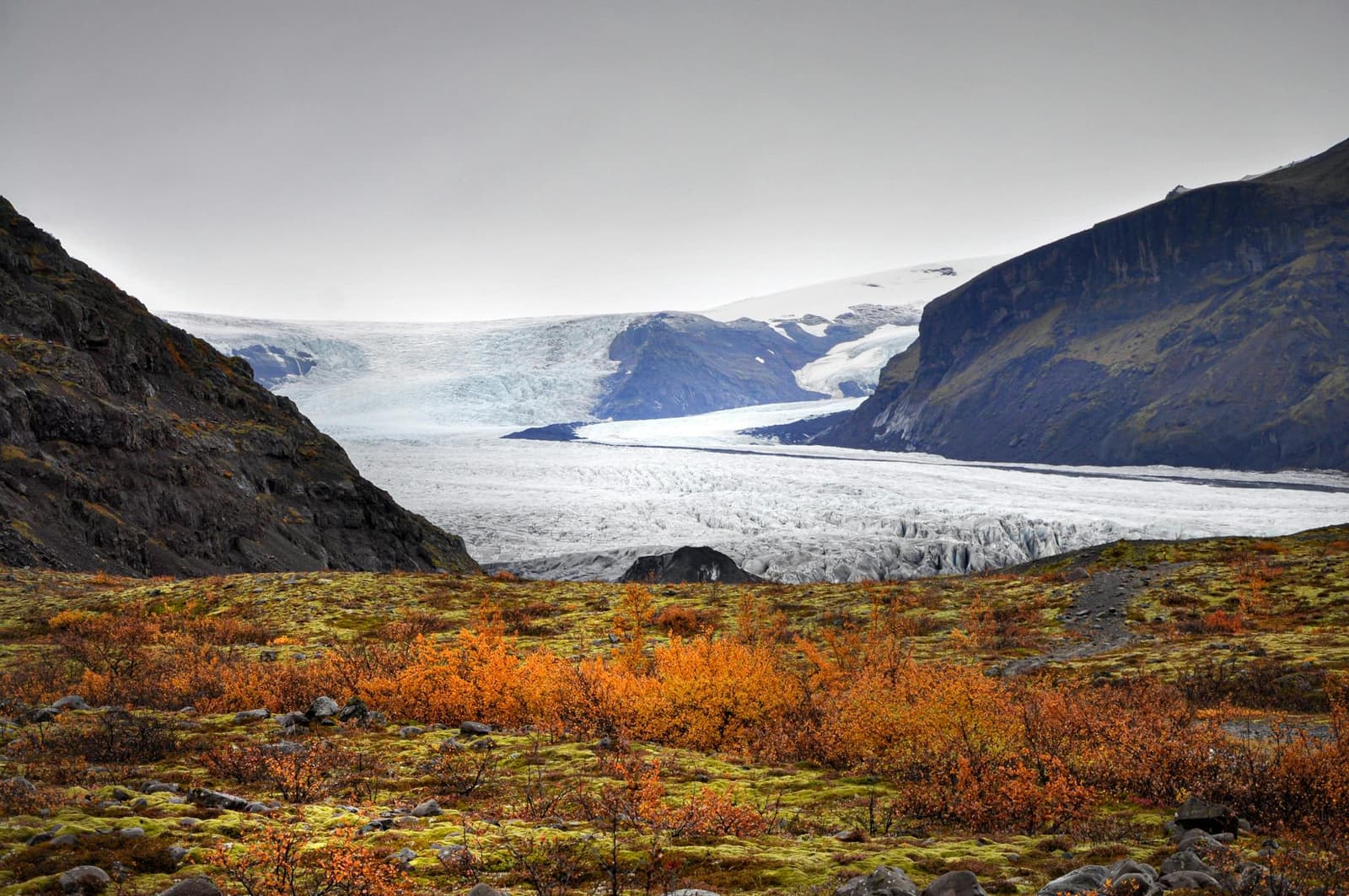
Virkisjökull is an outlet-glacier landscape rather than a serviced attraction. The useful experience is the view into a changing glacier foreland, the nearby Falljökull system, and the scale of Öræfajökull above the valley.
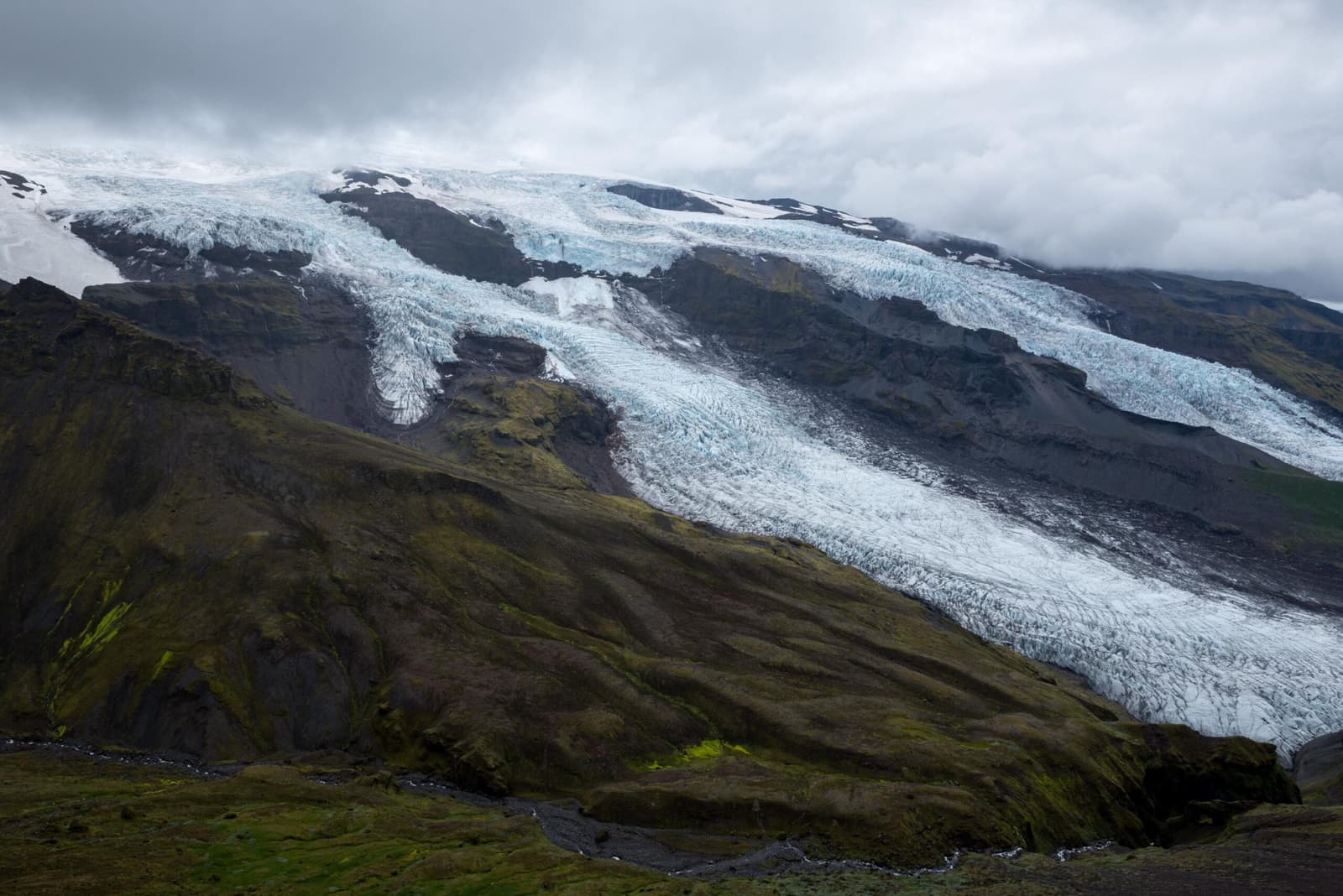
Research sources describe Virkisjökull as a rapidly retreating outlet glacier draining the western side of Öræfajökull. In traveler terms, that means the stop is less about a tidy viewpoint and more about reading a raw glacier landscape: dark moraine, exposed ice, meltwater, steep valley walls, and a margin that changes over time.
The nearby Falljökull and Virkisjökull glacier arms are often discussed together because their lower landscape and access questions overlap. That makes the area useful for travelers who want to understand why southeast Iceland is more than the famous glacier lagoons.
The foreland is part of the story here: rough moraine and meltwater terrain are not the same as a simple roadside viewpoint.
How should you decide between a quick look, a guided glacier plan, and skipping it?
Start with your time and risk tolerance. A quick look can make sense for scenery; anything involving glacier ice belongs in guided, specialist planning; skipping is the right call when conditions or the wider day are already stretched.
Use this comparison before adding Virkisjökull to a southeast Iceland day.
Choice
Best use
What changes the decision
Quick look
A short glacier-foreland or viewpoint-style stop near Skaftafell
Worthwhile only when access, visibility, and the day’s route still have slack
Balanced visit
A slower stop for glacier scale, photos, and comparison with Skaftafell or Falljökull
Works best when you have already limited the number of lagoon and waterfall stops
Guided glacier plan
A specialist ice objective using proper equipment and local judgment
Treat booking, weather, meeting point, and cancellation guidance as separate planning checks
The better choice when daylight, wind, road conditions, or fatigue are already limiting the route
Add Virkisjökull when a traveler has a southeast base, a clear interest in glaciers, and enough time to compare it with Skaftafell without rushing. Skip it on a first South Coast day that is already trying to include Skógafoss, Reynisfjara, Skaftafell, Jökulsárlón, and Diamond Beach.
What does the visit feel like?
Expect a rougher, more geological glacier experience than the clean postcard stops. The reward is scale: ice, rock, moraine, meltwater, and steep walls packed into a relatively small southeast landscape.
The scenery is quieter and more technical-looking than the iceberg lagoons. You are looking at a working glacier margin and the terrain it has left behind, not a place designed around a single viewpoint. That makes the stop more satisfying for travelers who like landscapes with visible process.
It can also feel underwhelming if visibility is poor or if you expected the easy drama of Jökulsárlón. Virkisjökull rewards patience and context; it is weaker as a rushed photo stop.
The appeal is in the contrast between clean ice, debris-covered ice, and the dark slopes above the glacier.
What safety and access checks matter most?
The key rule is simple: glacier margins, moraine ground, meltwater channels, and ice can be unstable. Use official safety guidance, weather forecasts, road conditions, local signs, and qualified guide judgment before relying on the stop.
The main hazards are not abstract: loose moraine, falling rock, changing meltwater, hidden ice, sudden weather, and low visibility can all change what is sensible. If a sign, guide, park source, or safety notice says to stay back, build the day around another southeast stop.
Virkisjökull can look inviting from a distance, but glacier terrain needs specialist judgment.
How does Virkisjökull fit with Skaftafell and the glacier lagoons?
Use Virkisjökull as a selective add-on to a southeast cluster, not as a reason to overload the day. It fits best after you have chosen the main anchor: Skaftafell walking, glacier-lagoon scenery, or a slower regional base.
If Skaftafell is already your walking stop, Virkisjökull can add a quieter glacier-foreland angle. If Jökulsárlón or Fjallsárlón is the emotional highlight of the day, keep Virkisjökull optional so the lagoon stops do not become rushed.
On a South Coast road trip, the strongest sequence is usually one walking or glacier stop plus one or two lagoon/coast stops. Virkisjökull pairs naturally with Skaftafell and Svartifoss, but it competes for time with Fjallsárlón, Jökulsárlón, and Diamond Beach.
The nearby Falljökull system helps explain the same southeast glacier landscape travelers compare from Skaftafell.
What should you check before committing?
Check official visitor information for Vatnajökull National Park and Skaftafell, SafeTravel safety guidance, the Icelandic Met Office forecast, and Icelandic road conditions before making Virkisjökull a fixed part of the day.
Use this guide for planning, not live safety confirmation. If weather, road status, glacier access, guided activity details, or facilities matter to your plan, let official sources and on-site information decide the final call.
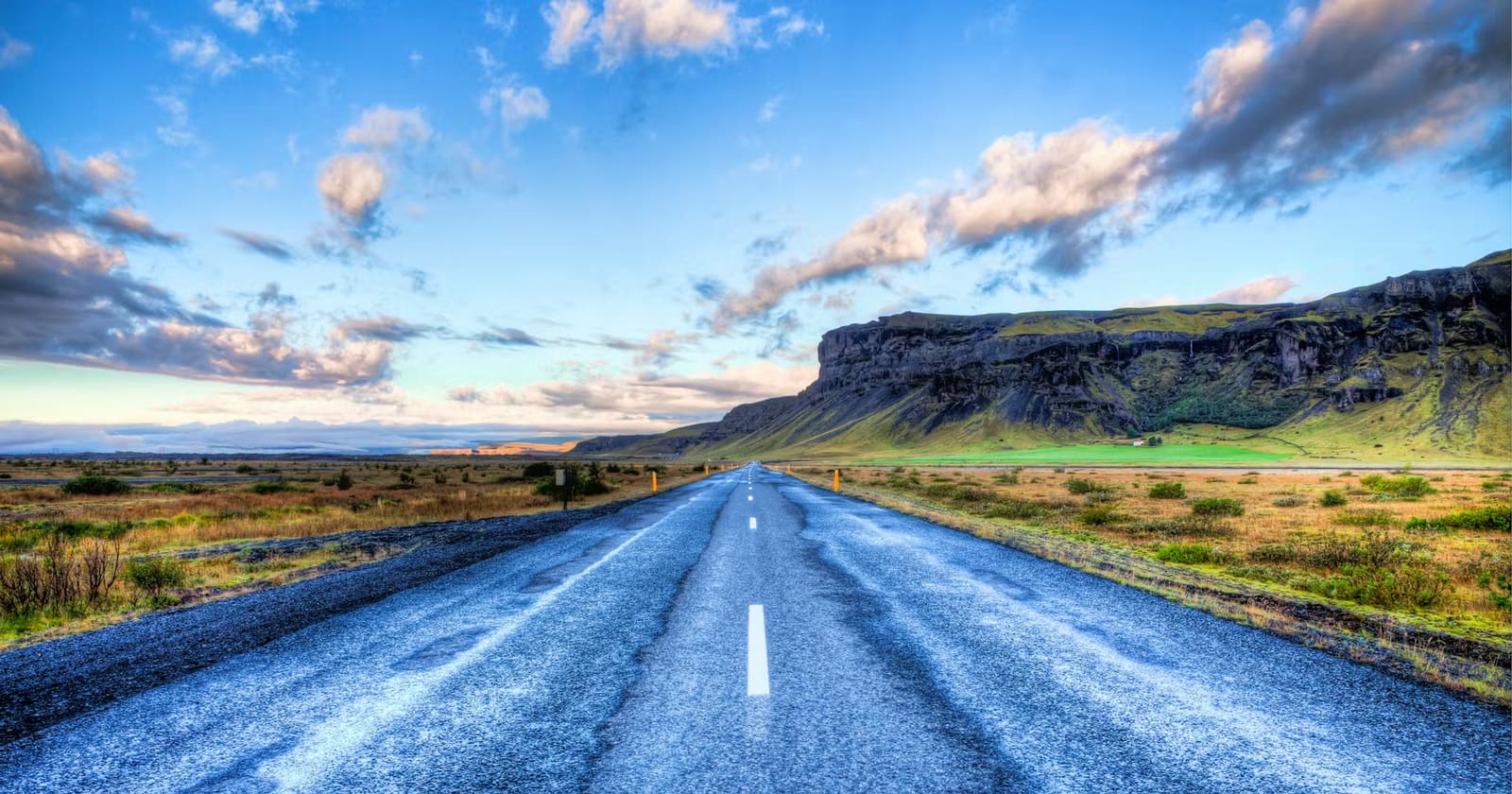
Use before making a southeast detour part of a driving day.
Virkisjökull FAQ
These questions matter because the stop is more condition-dependent than the major roadside sights nearby.
Can you walk on Virkisjökull Glacier by yourself?
No, do not plan to walk onto glacier ice by yourself. Glacier travel needs proper equipment, qualified guide judgment, and suitable conditions.
Is Virkisjökull better than Skaftafell?
Virkisjökull is not a better general stop than Skaftafell; it is a narrower glacier-landscape add-on. Choose Skaftafell for a clearer walking base and Virkisjökull when glacier texture is the point.
How long should I allow for Virkisjökull?
Allow about 30-90 minutes for a cautious viewpoint-style stop. Give it more time only when a guided glacier or mountain plan is the main reason for going.
Can Virkisjökull fit on the same day as Jökulsárlón?
Yes, but only if the day has enough slack. If you also want Skaftafell, Fjallsárlón, Diamond Beach, and long photo stops, Virkisjökull is usually the easiest item to leave optional.
What should I verify before driving there?
Verify weather, road conditions, safety guidance, and official visitor details before relying on the stop. Local signs and access instructions should decide what you actually do on arrival.