Jökulsárlón is not a still lake with a glacier in the background. It is the moving space between Breiðamerkurjökull and the Atlantic, filled with ice that has broken from the glacier.
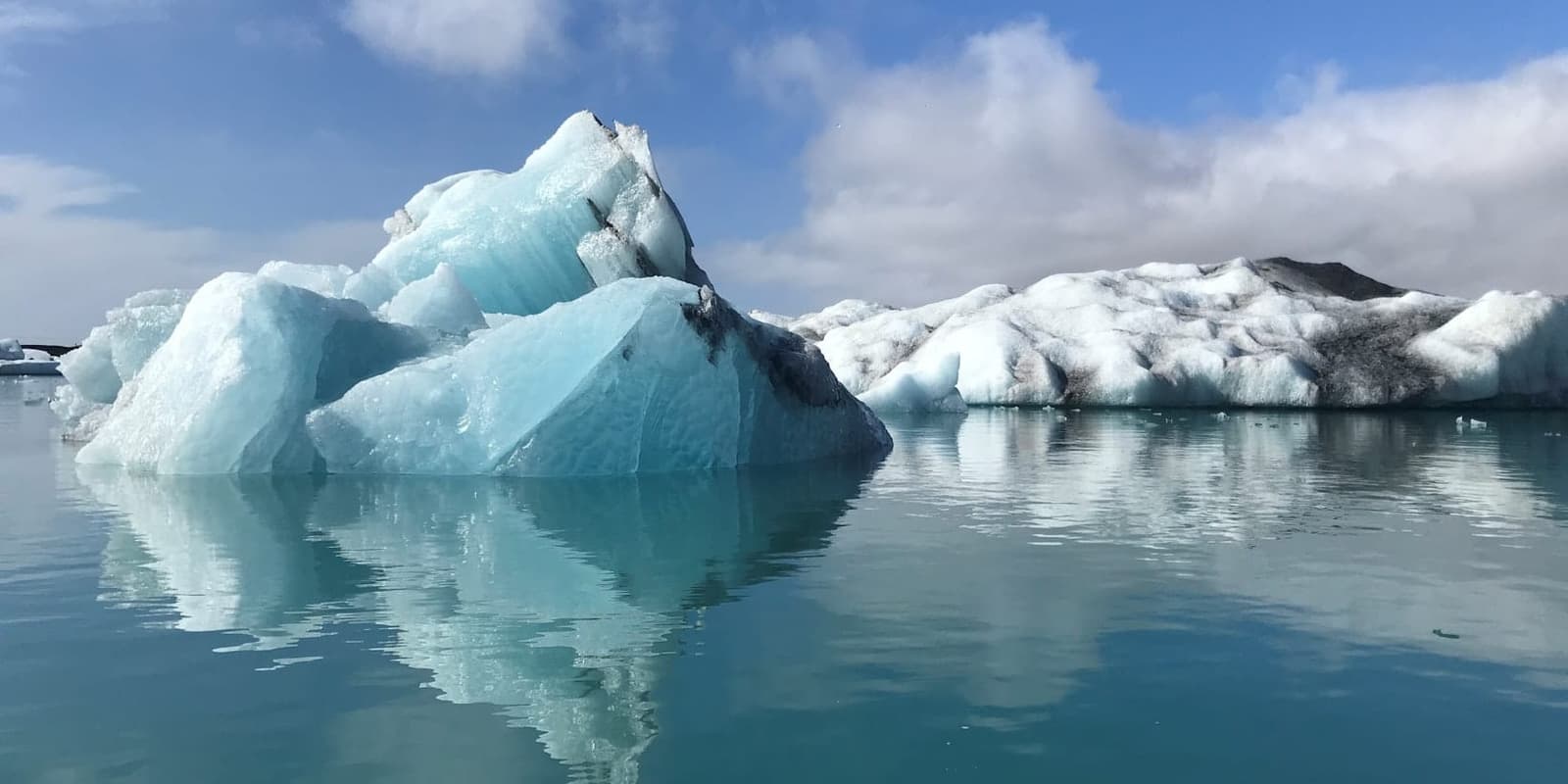
Some icebergs are bright blue, others white or streaked with dark volcanic ash. They turn with wind and current, break into smaller pieces and eventually pass through the lagoon's short outlet to the sea. Seals are sometimes visible among them, but they are a welcome extra rather than something every visit delivers.
That movement is the reason to pause. A quick photograph records the setting, but another ten minutes often reveals an iceberg turning, a seal surfacing or the light changing across the glacier. The shore gives a broad view without needing a tour or a long walk.
The lagoon also makes the scale of a glacier easier to read. Breiðamerkurjökull descends from the Vatnajökull ice cap, but the floating pieces in front of you are no longer attached to it. Their slow passage from glacier to lagoon and then towards the ocean turns a large landscape process into something visible at close range.
Colour changes with the ice itself and with the sky. Dense ice can appear blue because it absorbs more red light, while fresh snow, bubbles and a cloudy surface make other pieces look white. Dark bands may be sediment or volcanic material carried within the glacier. You do not need perfect weather to see those details; flat light can make the textures easier to notice.