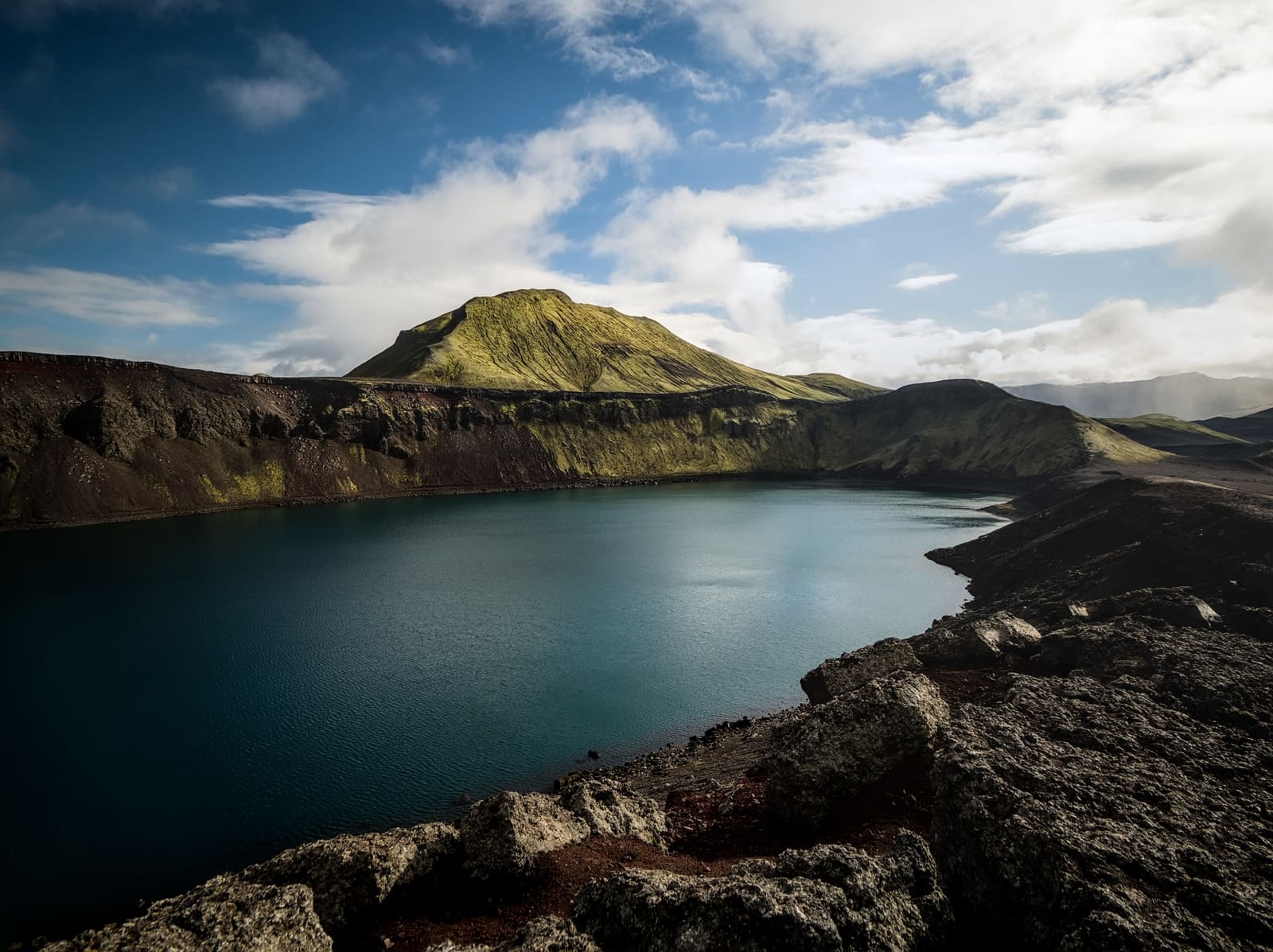
Dyngjufjöll is the remote volcanic mountain range around Askja in North Iceland's Highlands, worth considering only when F-road access, weather, time, and nearby Askja-area stops support the detour.
North Iceland edge of the Central Highlands, inside the Askja area
Route context
A deliberate Highlands F-road objective, not a quick Ring Road stop
Time to allow
Most of a day from North Iceland, or more with a slower interior plan
Best experience
Use the mountains as the setting for Askja, Víti by Askja, Dreki, Herðubreið, and nearby lava landscapes
In this guide
Should you add Dyngjufjöll to a North Iceland trip?
Add Dyngjufjöll only if your day is already built around Askja and you have the vehicle, time, weather margin, and comfort for remote Highlands travel. It is a mountain-range setting, not a simple viewpoint.
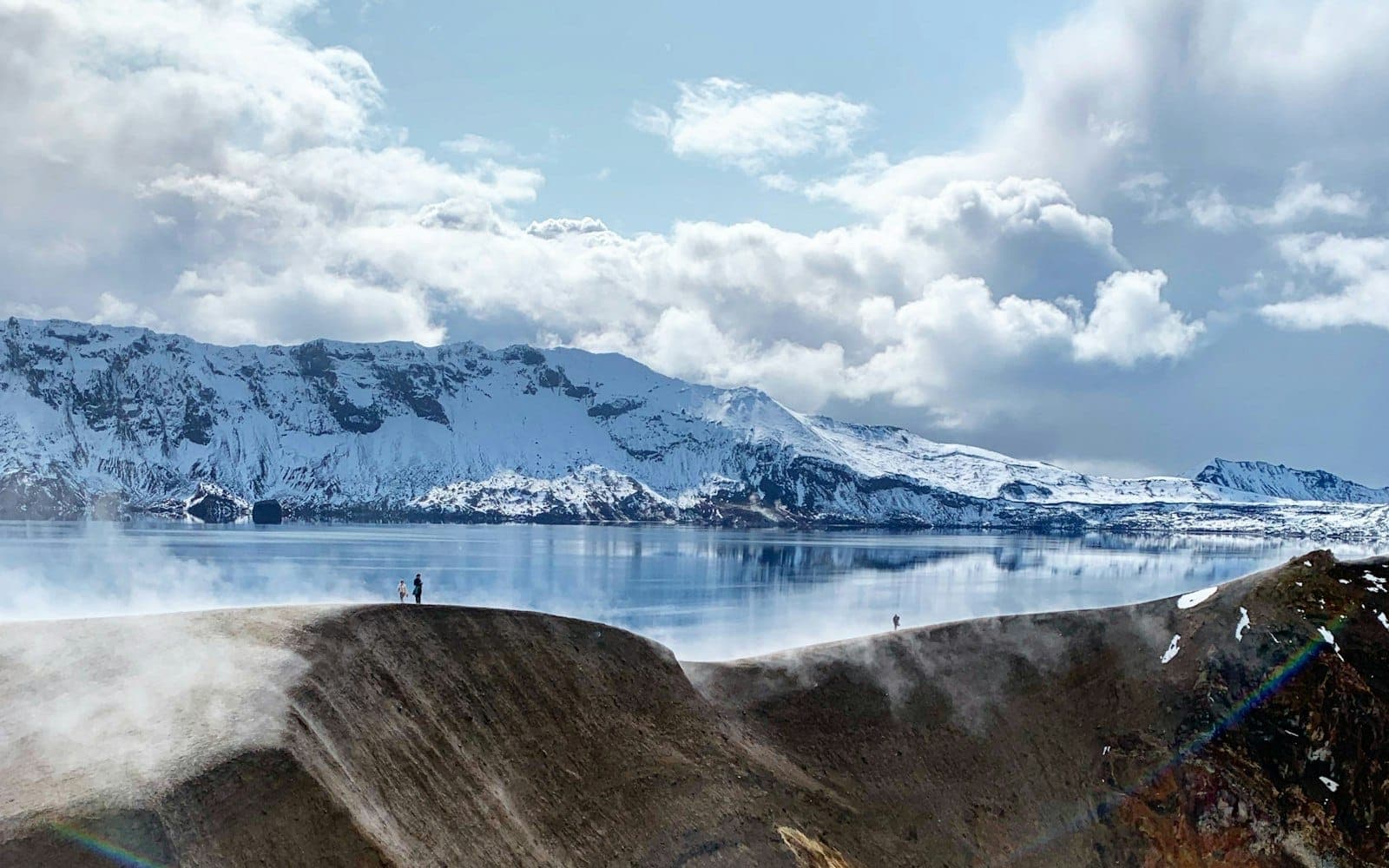
The appeal is the scale around the famous Askja sights: dark volcanic ridges, snow-streaked caldera walls, Öskjuvatn, Víti by Askja, rough lava, and the feeling of being far beyond the easy North Iceland sightseeing loop. Dyngjufjöll helps you understand why Askja feels so remote.
The drawback is that the mountains do not work well as a casual add-on. If your route is already stretched between Lake Mývatn, Goðafoss, Dettifoss, and accommodation changes, Dyngjufjöll can make the day worse rather than better.
Dyngjufjöll feels bare, high, and volcanic
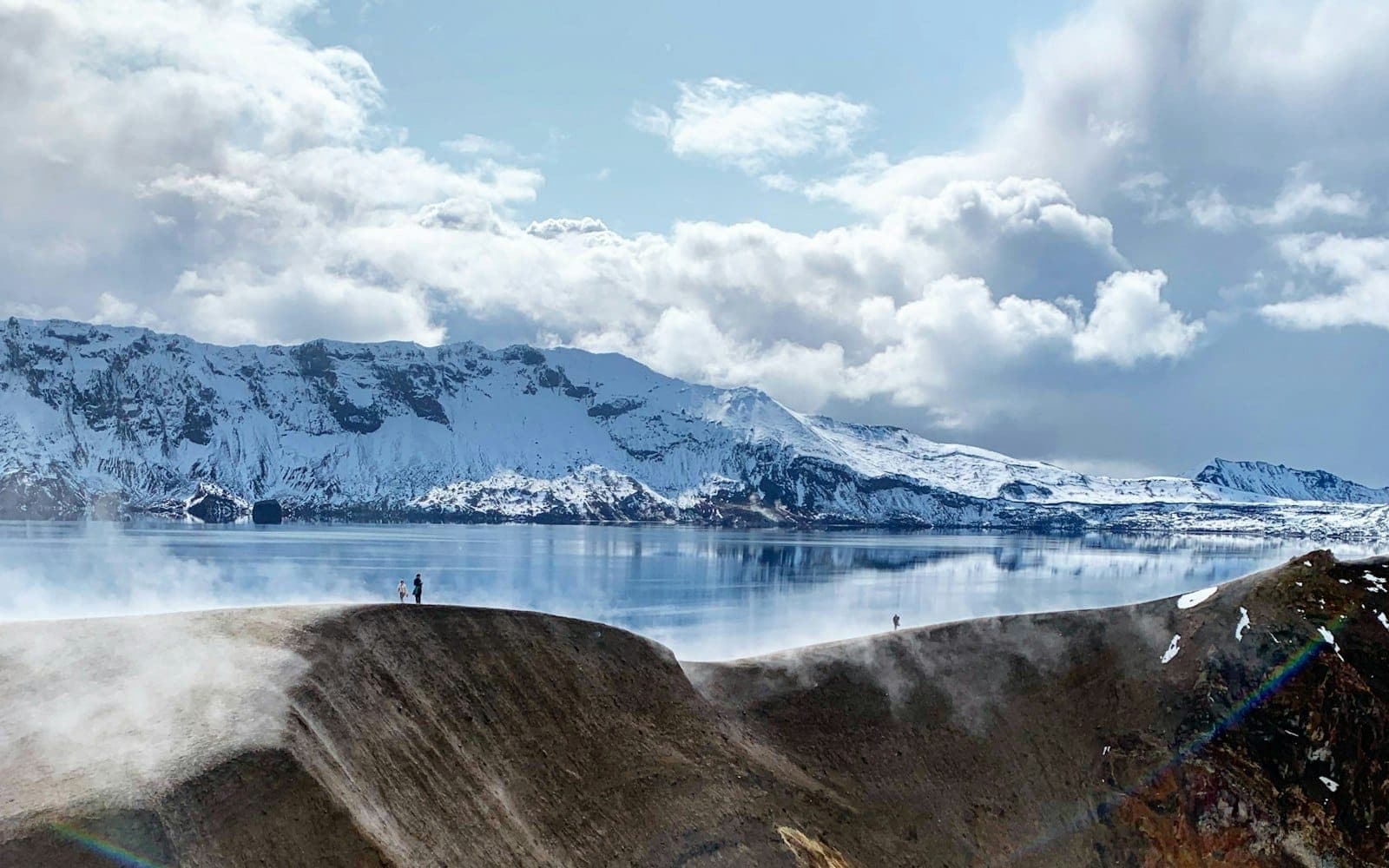
Dyngjufjöll feels bare, high, and volcanic: a hard-edged mountain range rising from lava desert, with Askja and Öskjuvatn giving the area its strongest visitor focus.
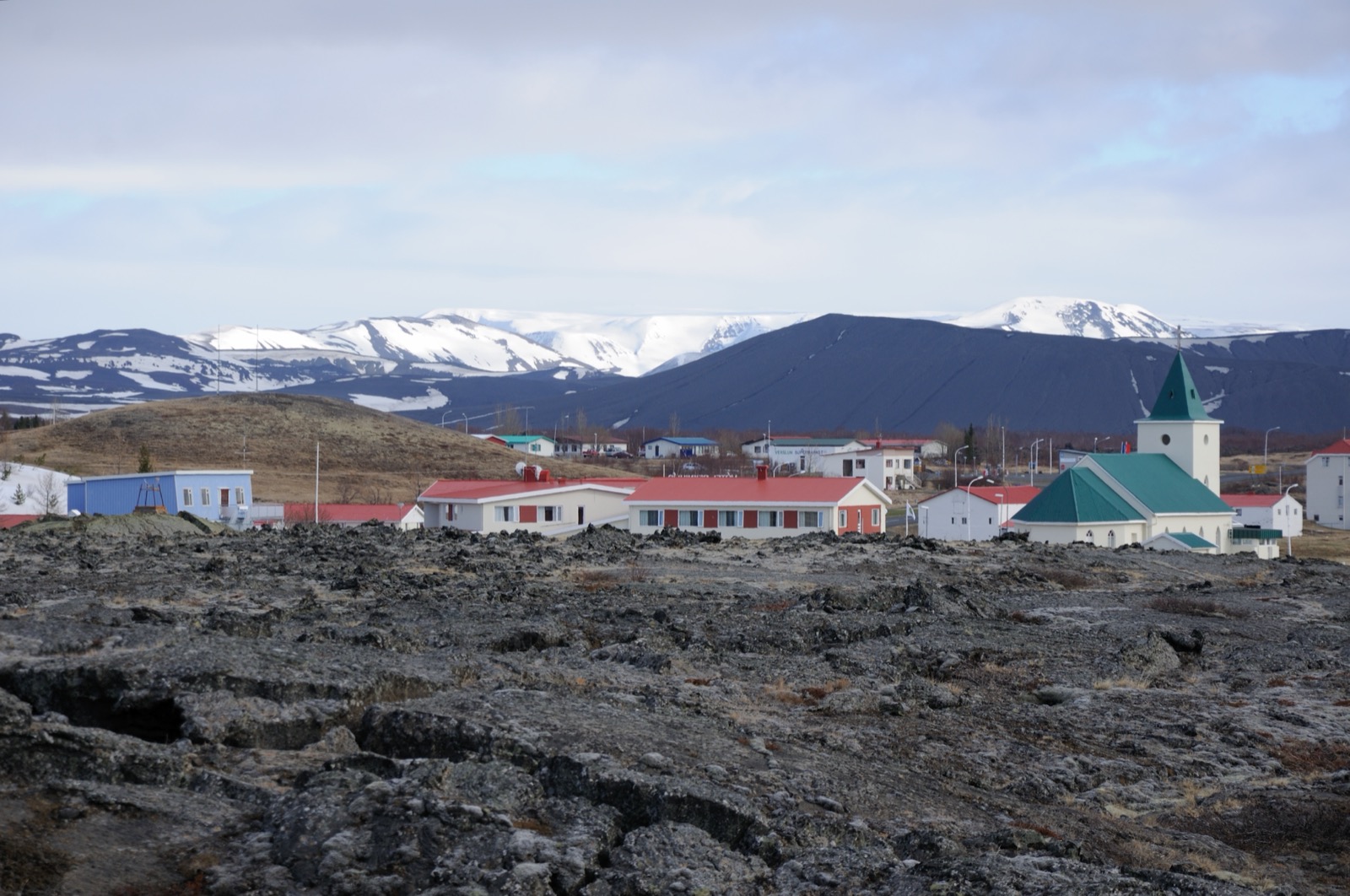
This is not the green, farmed Iceland that many travelers see from the Ring Road. Around Dreki and the approach toward Askja, the land opens into dark lava, ash-colored slopes, pale snow patches, and broad views where the mountains seem to hold the caldera in place.
Öskjuvatn and the caldera walls show why Dyngjufjöll feels like a mountain basin rather than a roadside stop.
The best visit is slower than a photo stop. You notice the range through the approach, the walking context, and the way Askja, Víti by Askja, and the surrounding lava fields sit inside the same volcanic system.
How should you plan the access and effort?
Plan the access first, then decide whether the scenery earns the effort. Dyngjufjöll belongs to rough Highlands travel, so the drive is part of the attraction and part of the risk.
Independent visitors should expect F-road logistics, slow surfaces, exposed weather, long distances from easy services, and a need for a suitable vehicle and confident route judgment. A map pin alone is not enough information for this area.
Dreki gives the visit a practical anchor, but the landscape around it still feels remote and exposed.
Dyngjufjöll decision guide
Choice
Best when
Watch for
Go
You have a suitable 4x4, strong weather, open roads, and a day centered on Askja.
Fatigue on the return drive and changing surface or river conditions.
Go guided
You want the landscape without making the full driving decision yourself.
Route changes, cancellation rules, and how the operator handles rough conditions.
Skip
Your route needs reliable timing, easy stops, or a simple North Iceland day.
Trying to force Dyngjufjöll between too many Mývatn and waterfall stops.
Which nearby places make the detour worthwhile?
Dyngjufjöll makes the most sense when it strengthens a focused Askja-area day, then connects back to North Iceland through Mývatn or Möðrudalur rather than sitting alone.
Use Askja Caldera for the main volcanic objective and Víti by Askja for the crater-specific decision. Herðubreið and Herðubreiðarlindir add mountain and oasis context north of the range, while Möðrudalur can help you understand the East Highland approach.
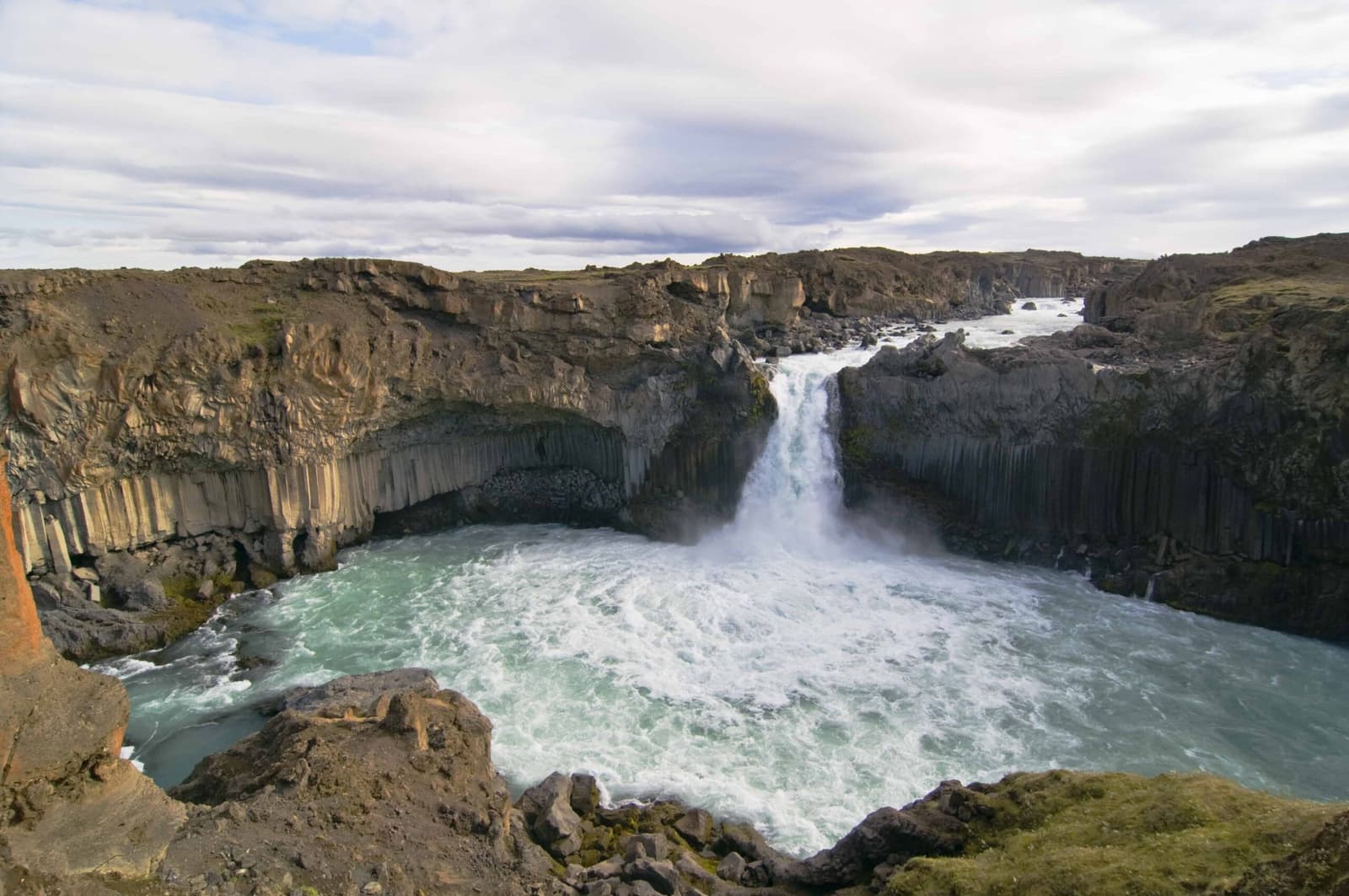
If you are building a gentler North Iceland day, Lake Mývatn, Goðafoss Waterfall, Aldeyjarfoss, and Dettifoss usually give more predictable value. They do not replace Dyngjufjöll's interior atmosphere, but they are easier to fit into a normal route.
Nearby lava landscapes make the area feel like a wider volcanic district, not just one caldera viewpoint.
Add Dyngjufjöll to a route when the traveler is already choosing a serious Highlands day and understands that the approach is part of the experience
Add Dyngjufjöll to a route when the traveler is already choosing a serious Highlands day and understands that the approach is part of the experience.
Add it for a summer self-drive traveler who has already allowed most of a day, is comfortable with F-road planning, and wants the Askja area to be the point of the day. In that case, Dyngjufjöll gives the route a clear volcanic anchor and a sense of interior scale.
Skip it for a first-trip itinerary that is trying to cover too much of North Iceland in one pass. If the traveler still needs Mývatn, Dettifoss, Goðafoss, and an onward drive, the stronger choice is to keep the day simpler.
Official local guidance matters because conditions can change the right decision for the day.
What should you verify before leaving easy services?
Verify official road conditions, weather warnings, SafeTravel guidance, park information, volcanic monitoring, fuel range, food, water, and backup plans before driving toward Dyngjufjöll.
This is the kind of place where stable planning advice matters more than old trip reports. Use Umferðin for road conditions, SafeTravel for travel alerts, the Icelandic Meteorological Office for weather and warnings, and Vatnajökull National Park for Askja-area visitor guidance.
Use for forecasts, warnings, and volcano-related monitoring.
Dyngjufjöll FAQ
These are the questions that usually decide whether Dyngjufjöll belongs in a real itinerary.
Is Dyngjufjöll the same as Askja?
No. Dyngjufjöll is the volcanic mountain range around the Askja caldera, while Askja is the best-known caldera destination within that mountain setting.
Can Dyngjufjöll be a quick stop from the Ring Road?
No, it should not be treated as a quick Ring Road stop. The area belongs to remote Highlands planning with rough access, slow driving, and official condition checks.
How long should I allow for Dyngjufjöll?
Allow most of a day if you are approaching from North Iceland, and more if you are adding hiking, photography, or a slower Askja-area plan.
What should I check before driving toward Dyngjufjöll?
Check official road conditions, weather warnings, SafeTravel guidance, park information, volcanic monitoring, vehicle suitability, fuel range, food, water, and your group's comfort with remote terrain.