Víti by Askja is a pale geothermal crater lake inside the remote Askja caldera in the Highlands, worth adding only when summer F-road access, weather, vehicle choice, and crater safety all line up.
Access reality
Type
Geothermal crater lake, volcanic crater, and remote Highlands viewpoint
Region
Central Highlands, inside Askja Caldera north of Vatnajökull
Route context
A summer Askja add-on reached through Highlands F-road planning, not a normal roadside stop
Time to allow
Usually part of a full Askja day; allow time for slow roads, the walk, crater viewing, and a turnaround decision
Best experience
Clear conditions when Víti, Öskjuvatn, snow-streaked caldera walls, and the marked approach are all visible
In this guide
Is Víti by Askja worth adding to an Askja day?
Yes, Víti is worth adding when Askja is already the day’s main objective and the access conditions are good. It is not worth forcing as a late detour, a casual hot-spring stop, or a reason to push beyond your vehicle or weather margin.
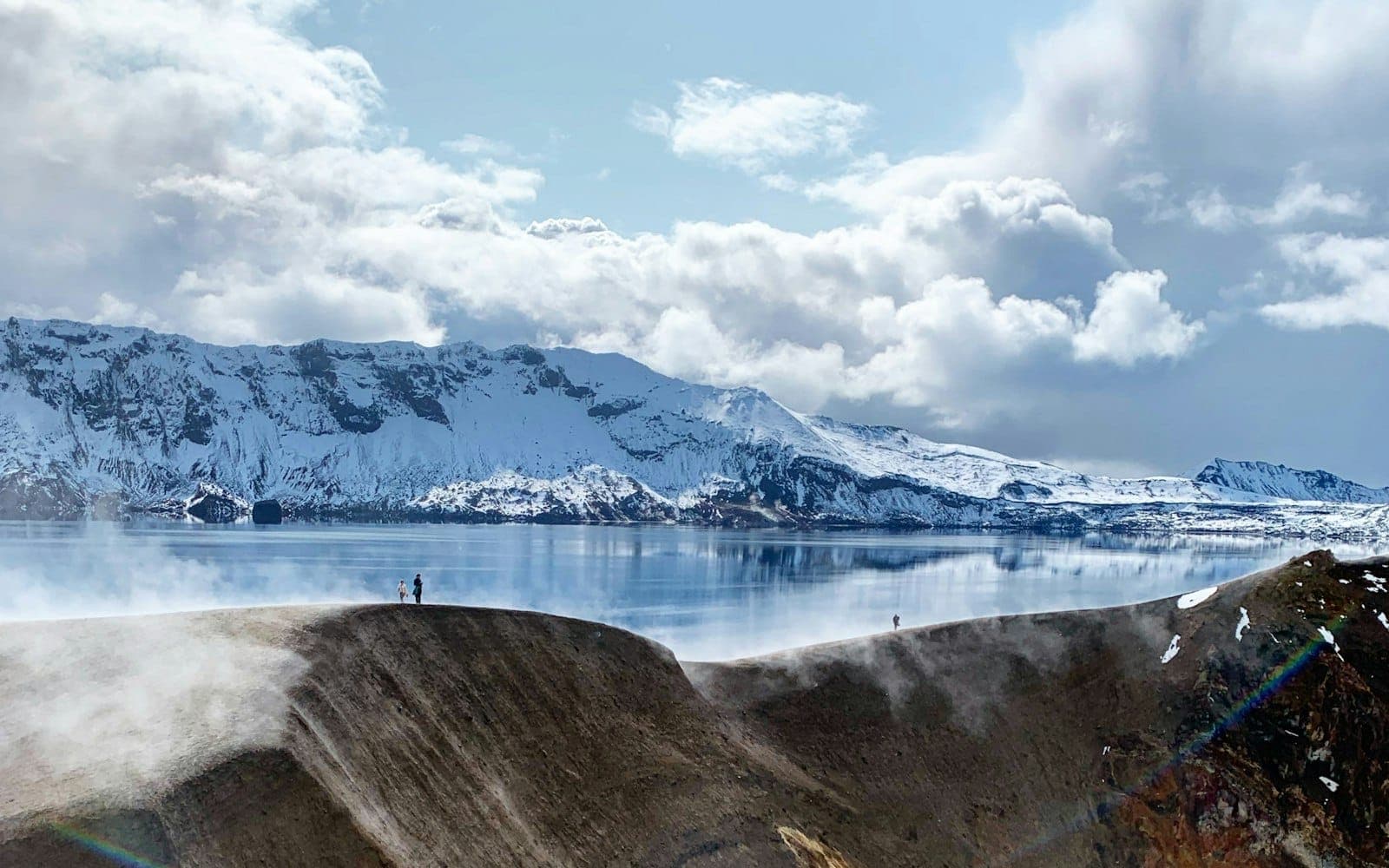
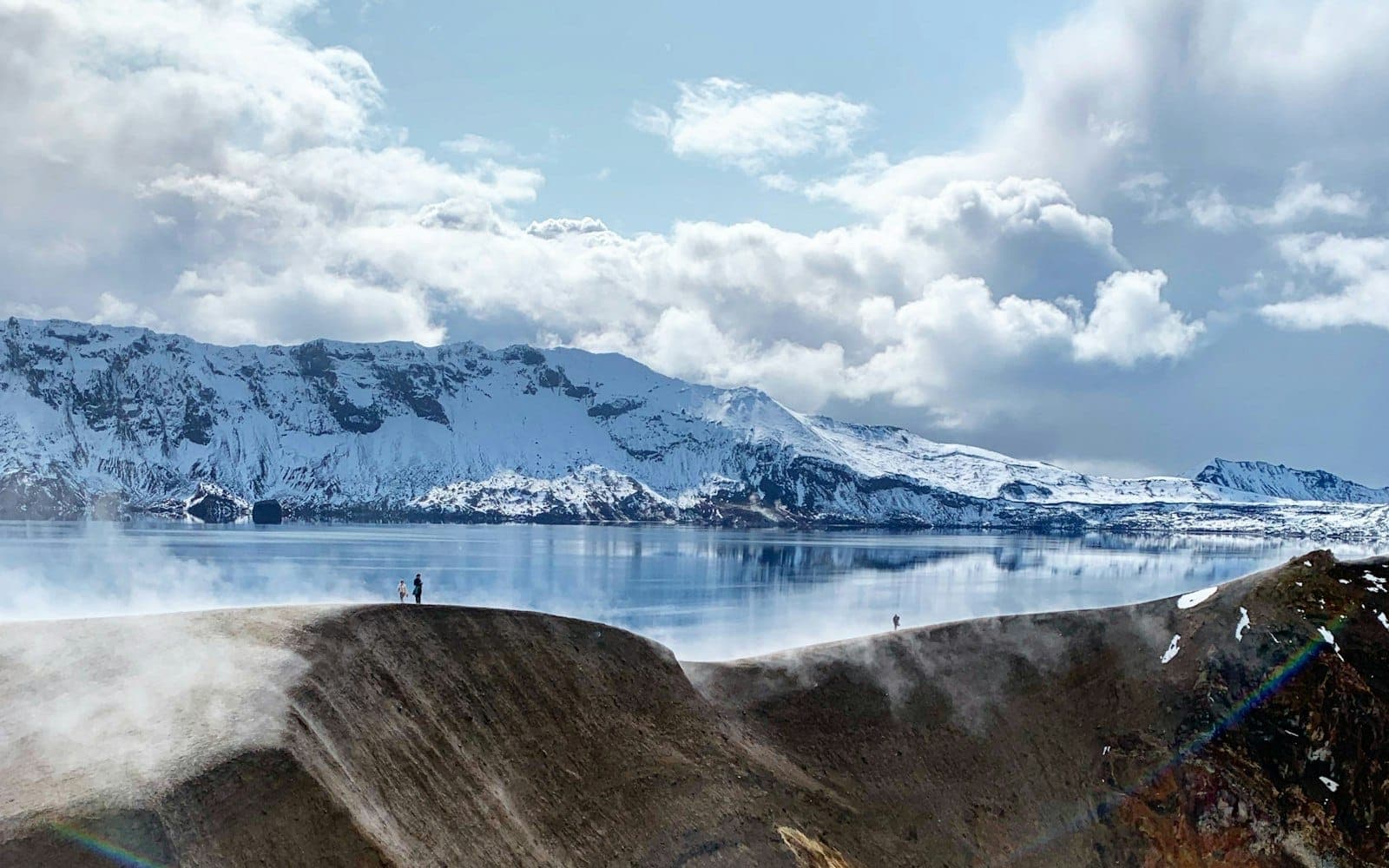
The draw is immediate: a pale crater lake tucked into dark volcanic walls, with Öskjuvatn and the Dyngjufjöll mountains behind it. The scene is small compared with the wider Askja caldera, but it is often the moment that makes the long approach feel worthwhile.
Add Víti when the trip already has a suitable Highlands vehicle, open roads, a full Askja day, and a weather window. Skip it when the plan is a packed Ring Road day, the rental is marginal, or the group is treating old access notes as enough proof that the road is safe today.
What makes Víti different from the wider Askja visit?
Víti is the close, vivid feature inside a much larger volcanic basin. Askja gives you scale; Víti gives you the crater-edge detail that many travelers remember most clearly.
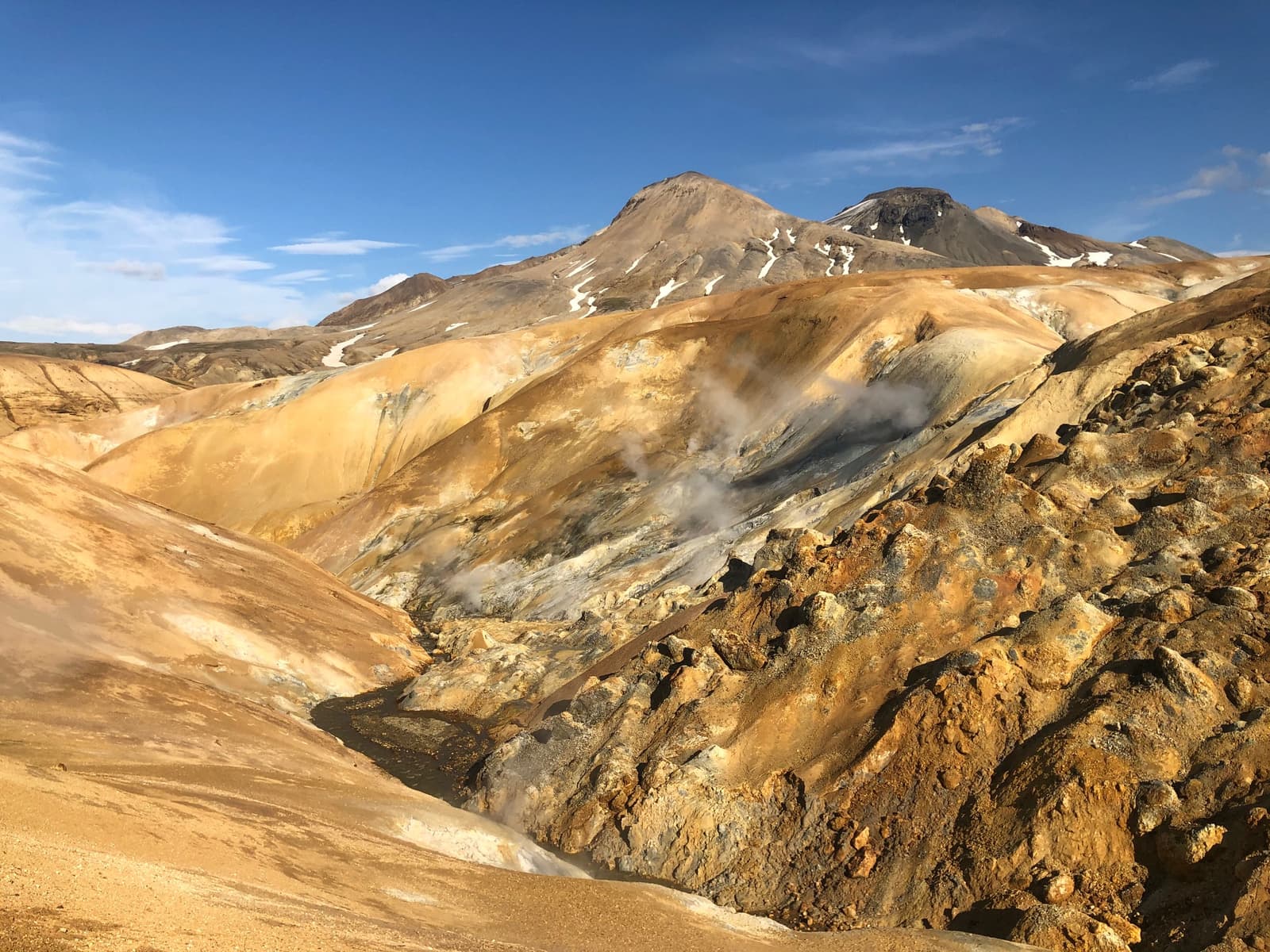
Vatnajökull National Park describes Víti as a maar, an explosive volcanic crater formed at the end of the 1875 eruption. Water has collected inside the crater, and the pale color contrasts sharply with dark lava, snow patches, steam, and the deeper blue-gray presence of Öskjuvatn nearby.
That contrast is why Víti should stay linked to the broader Askja decision. If you only have energy for one viewpoint, the crater gives a strong visual payoff; if you have more time, combine it with Öskjuvatn, Dreki, and the wider caldera story rather than treating it as an isolated photo stop.
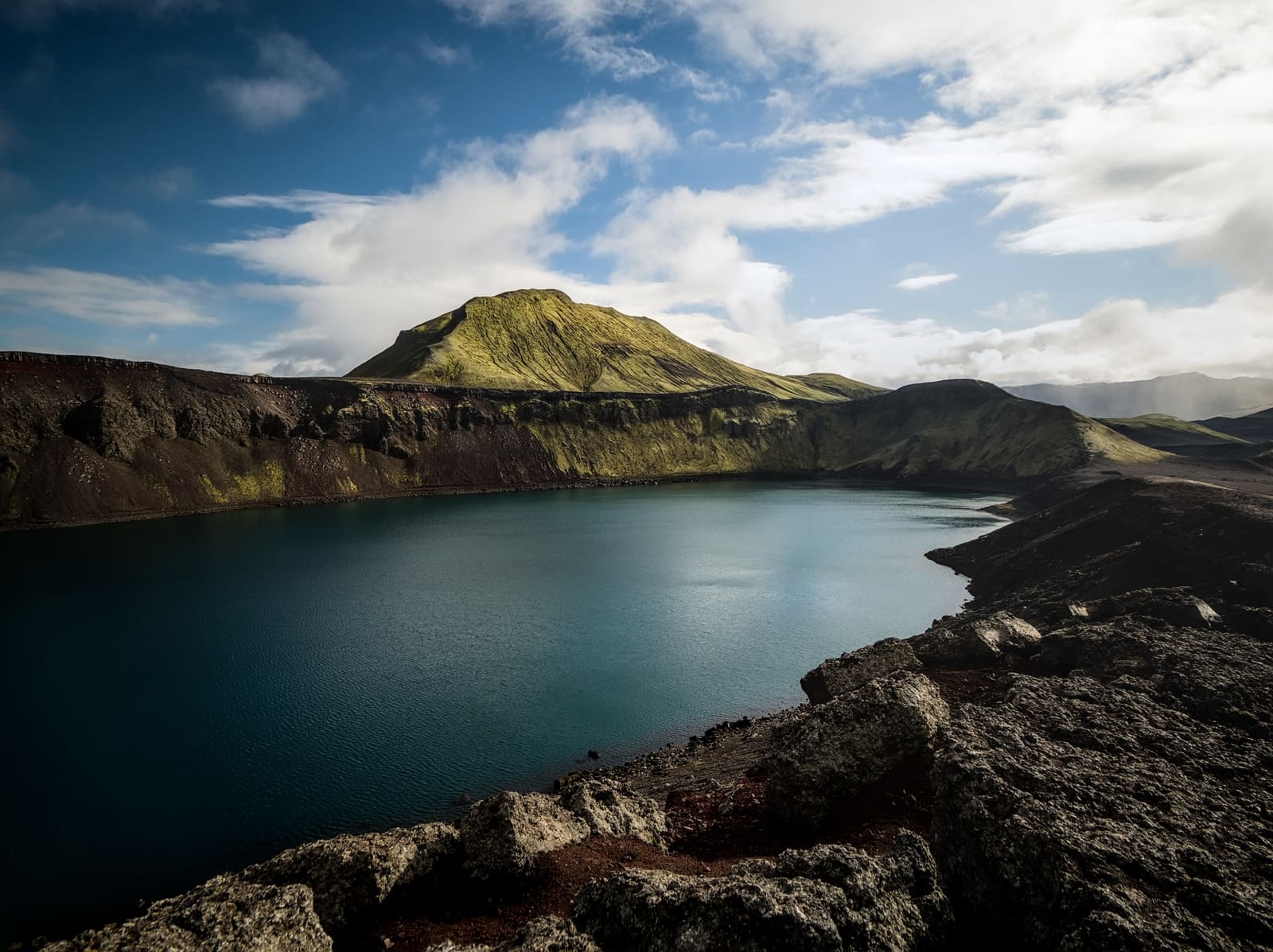
Víti is a compact crater scene inside the much larger Askja landscape, so the visit works best when the whole Askja day makes sense.
How do F-roads, season, and vehicle choice shape the visit?
Access shapes the whole Víti decision. For most independent travelers, this is a summer Highlands stop that depends on open F-roads, a suitable 4x4, weather, daylight, and current local information.
The Askja approach can involve long rough roads, changing surfaces, remote distances, and river or weather complications depending on the route. SafeTravel’s Highlands guidance is blunt: conditions change quickly, roads are rough, unbridged rivers may be involved, and not every 4WD belongs on every F-road.
For Askja and Víti, local ranger, hut, road, weather, and safety information should decide the day more than a saved map pin.
Use the crater as a conditional stop. If Umferðin, SafeTravel, Vedur, park information, or hut/ranger advice makes the route questionable, choose a safer nearby plan or leave Askja for another trip.
Ways to include Víti by Askja
Plan
When it works
Main caution
Self-drive Askja day
Open roads, suitable 4x4, confident driver, good forecast, early start, and enough time to turn around.
Slow roads and changing weather can make the return harder than the outward drive.
Guided Highlands trip
You want Askja and Víti without making the vehicle, river, or route decision alone.
Still depends on operator judgement, road status, weather, and cancellation decisions.
Dreki or Highlands overnight
You are already building a slower Highlands plan and can absorb weather or road delays.
Services are seasonal and limited; food, fuel, and bookings need separate planning.
Quick Ring Road detour
Rarely a good idea unless the day is deliberately built around Askja.
The crater may look close on a map but can consume the whole day.
Can you swim in Víti by Askja?
Sometimes people bathe in Víti, but you should not plan the visit around a guaranteed swim. The crater is a safety decision first and a bathing possibility only when conditions, access, and your group’s ability make it sensible.
Vatnajökull National Park notes that the water is usually above 20°C, but also warns that the sloping path can be very slippery in wet conditions, the mud at the bottom can be hot, especially on the eastern bank, and rocks can fall from the crater edges.
The better framing is simple: go for the crater view, not for a promised soak. If bathing is clearly safe and allowed under current local guidance, it can be a bonus, but it should not be the reason you overrule access or weather concerns.
How much time should you allow around the crater?
Allow Víti to sit inside a full Askja day, not a short stop squeezed between distant sights. The crater itself may be compact, but the road, walk, photos, safety decisions, and return drive need real margin.
Vatnajökull National Park lists the Vikraborgir to Öskjuvatn route as 2.5 km and about 2 hours, and Dreki to Dyngjufjöll and Víti as an 8 km challenging route. Your actual timing depends on where you can park, road status, snow patches, wind, visibility, and group pace.
The crater sits beside a much wider caldera setting, so leaving time for Öskjuvatn makes the visit feel less rushed.
If the day is already tight before you reach the Highlands, cut Víti before you cut safety margin. The crater is memorable, but it is not worth driving back tired on rough roads in deteriorating weather.
What should you pair with Víti nearby?
Pair Víti with Askja first. The crater makes the most sense when it is one part of the Askja and Öskjuvatn visit, with Dreki as the practical access base and nearby Highlands stops considered only if the day still has room.
Use Askja Caldera as the wider planning page for the area. It helps place Víti beside Öskjuvatn, Dreki, road checks, services, and the broader volcanic setting instead of letting the crater become an isolated target.
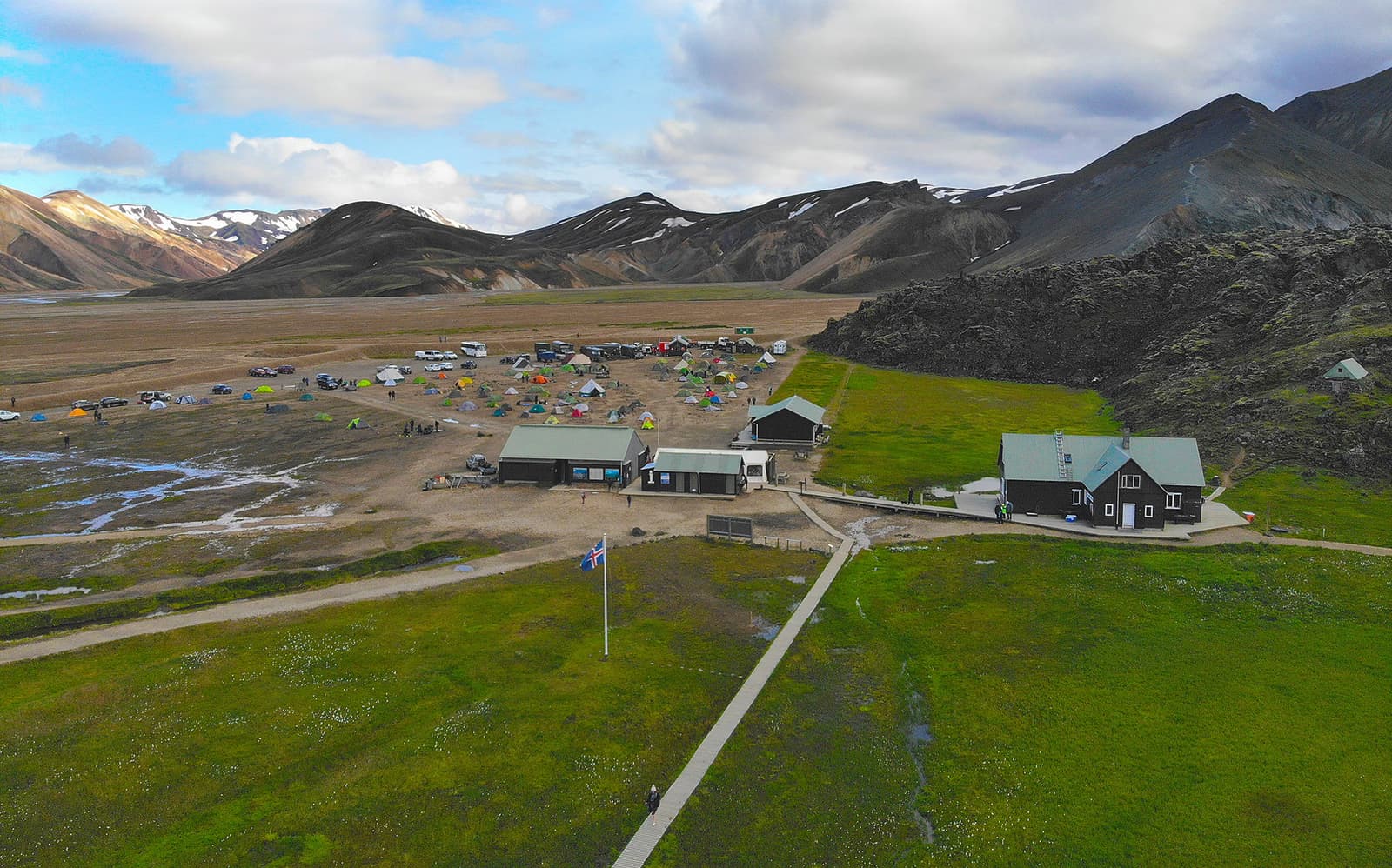
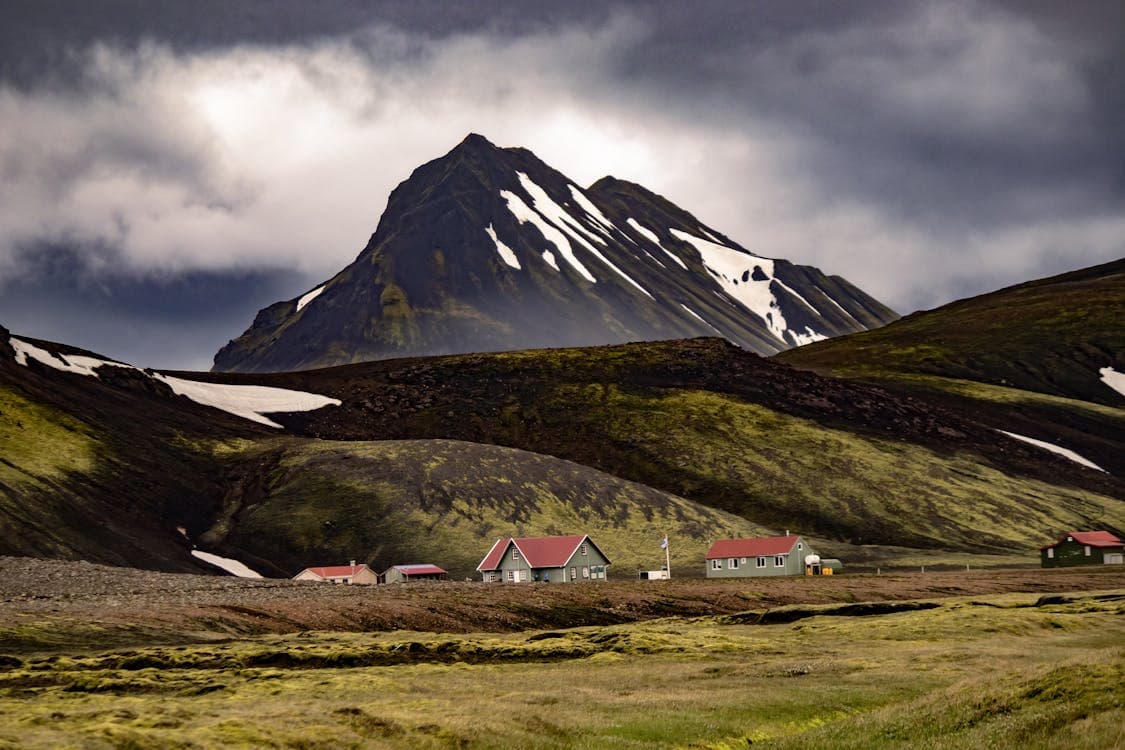
Dreki shows why the Víti visit belongs in a wider Highlands plan rather than a casual roadside sightseeing day.
If conditions and time are strong, nearby Highlands names such as Holuhraun, Hvannalindir, Kverkfjöll, Trölladyngja, and Nýidalur can become part of a larger interior plan. Do not stack them onto the same day unless the route, services, and weather support it.
Which official checks matter before you go?
Use current official sources as the final authority for roads, weather, safety, park access, and volcanic information. This page is planning guidance, not live confirmation that the route or crater is safe today.
Check Umferðin for current road status before entering any Askja F-road approach.
Check SafeTravel for Highlands driving guidance, alerts, and trip-safety context.
Check Vedur for forecasts, warnings, wind, visibility, and relevant earthquake or volcanic updates.
Check Vatnajökull National Park information and local ranger or hut advice for on-site conditions.
Carry enough fuel, food, warm layers, communication margin, and daylight to turn around.
Use for official forecasts, warnings, and monitoring information.
Common questions about Víti by Askja
Is Víti by Askja the same as Krafla Víti?
No. Víti by Askja is inside Askja Caldera in the remote Highlands, while Krafla Víti is near the Krafla geothermal area by Mývatn and is much easier to reach in normal summer travel.
Can a normal rental car reach Víti by Askja?
No. Independent access to Askja requires Highlands road planning and a suitable vehicle allowed on the relevant F-roads, plus current road, weather, and safety checks.
Is Víti by Askja open year-round?
No for normal independent travel. Treat it as a summer Highlands objective and check current road openings, weather, and local information before assuming access is possible.
Should I visit Víti if I only have one spare Ring Road day?
Usually no. Víti works best as part of a deliberate Askja day or Highlands plan, not as a spare detour from the Ring Road.