Use this guide to decide which Iceland volcano experience fits your route, group, weather, and appetite for current safety checks.
Best first choice
Start with the type of volcano experience you actually want: easy lava landscape, crater walk, lava cave, geothermal field, indoor lava, flightseeing, or recent-eruption hike.
Current access
Recent-eruption areas can open, close, or change access quickly, so official safety and local authority pages should decide the day, not an evergreen article.
Guide need
Use a guide for lava caves, inside-volcano style tours, recent-eruption hikes, difficult terrain, and any situation where access rules or hazards are unclear.
Best base
Reykjavik is the easiest base for Reykjanes lava fields, caves, geothermal areas, and indoor lava experiences; longer routes unlock South, West, North, and Highlands volcano landscapes.
Experience fit
Best first choice
Start with the type of volcano experience you actually want: easy lava landscape, crater walk, lava cave, geothermal field, indoor lava, flightseeing, or recent-eruption hike.
Current access
Recent-eruption areas can open, close, or change access quickly, so official safety and local authority pages should decide the day, not an evergreen article.
Guide need
Use a guide for lava caves, inside-volcano style tours, recent-eruption hikes, difficult terrain, and any situation where access rules or hazards are unclear.
Best base
Reykjavik is the easiest base for Reykjanes lava fields, caves, geothermal areas, and indoor lava experiences; longer routes unlock South, West, North, and Highlands volcano landscapes.
Weather backup
If wind, visibility, gas, roads, or closures make the outdoor plan weak, switch to an indoor lava show, museum-style stop, pool, or shorter volcanic viewpoint.
Is a volcano experience worth adding to your Iceland trip?
Yes, if you are clear about what kind of volcano experience you mean. In Iceland, that can be a gentle walk over old lava, a steaming geothermal field, a cave formed by flowing lava, a crater viewpoint, an indoor lava show, a helicopter splurge, or a recent-eruption landscape that needs current safety checks.
The mistake is treating all of those as the same activity. A family with one free afternoon in Reykjavik needs a different answer from a photographer driving the South Coast, a hiker hoping for fresh lava fields, or a geology fan willing to plan around a guided cave.
A good volcano day feels grounded in the rest of the trip. It gives you texture, steam, black lava, crater shapes, and a better sense of why Iceland looks the way it does. A poor one usually starts with the hope of seeing active lava and ignores access, wind, gas, roads, and the group's actual comfort level.
Photo guide
Volcano Experiences in photos
1 / 6
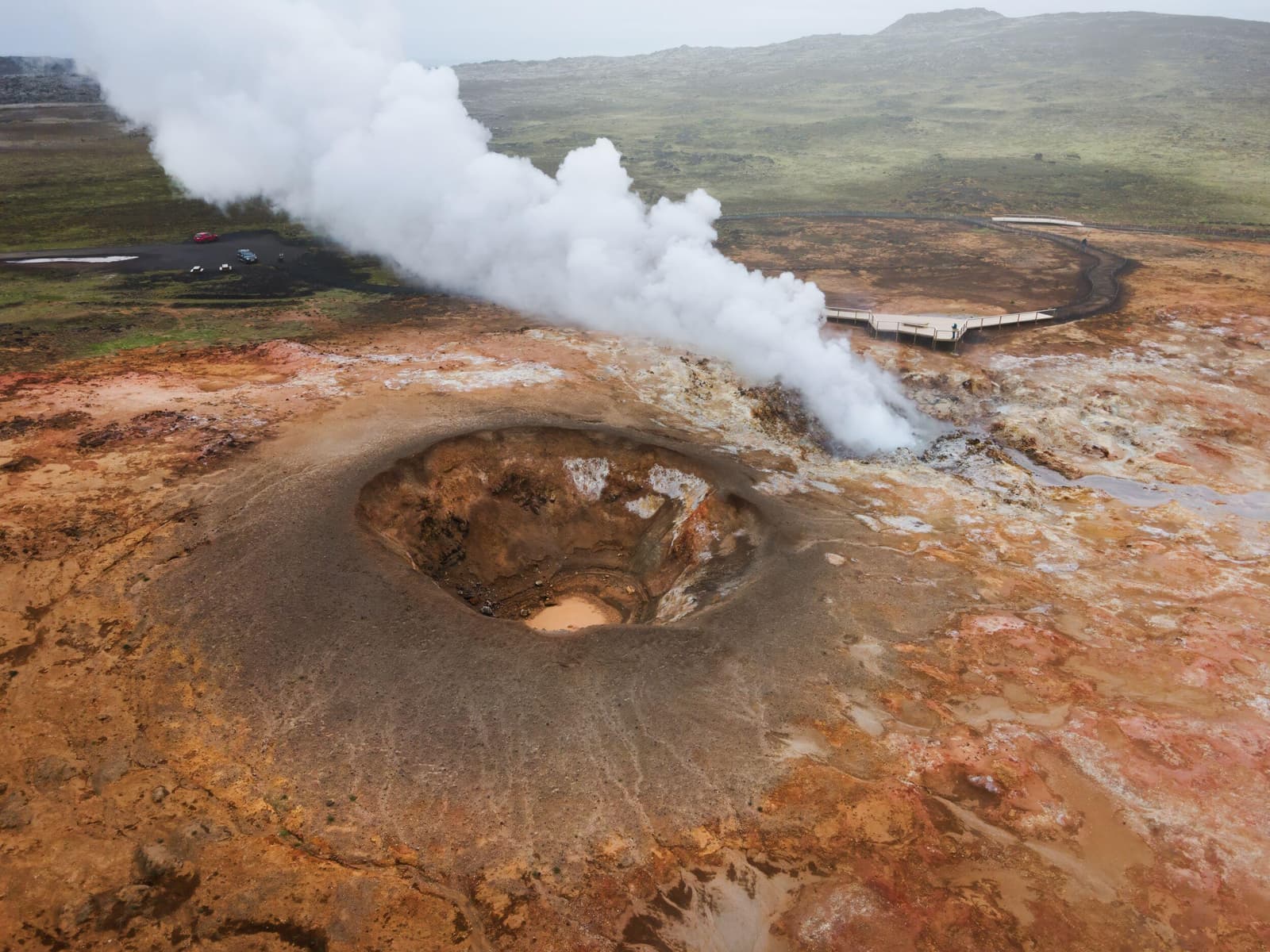
Easy volcano-themed stops often mean steam, hot ground, mineral color, and short marked paths rather than a strenuous crater hike.
Worth adding?
When this fits your plan
Best for
Travelers who want a volcano-themed day without assuming an active eruption will be accessible
Start with activity style, not the most dramatic photo. The same volcano interest can become an easy scenic stop, a guided underground trip, a rough hike, or a weather-proof indoor experience.
How the main volcano experience types differ
Experience type
Best fit
Watch out for
Lava fields and crater viewpoints
Self-drive travelers, photographers, families who want a lighter outdoor stop, and first-timers who want visible volcanic texture
Uneven ground, wind, fragile moss, and the temptation to wander beyond marked paths
Geothermal areas
Travelers who want steam, color, mud pots, sulfur smells, and short marked walks without a hard hike
Hot ground, roped-off areas, sulfur smell, and weather exposure
Lava caves and tunnels
Curious travelers who want to go underground with a guide, helmet, lighting, and a clear route
Darkness, stairs or rough footing, cold interiors, enclosed spaces, and current operator rules
Recent-eruption hikes or viewpoints
Hikers and geology fans who are happy to follow official access guidance and accept that the situation may change
Closures, gas, wind, route changes, rough lava, parking controls, and unrealistic expectations about active lava
Indoor lava or volcano exhibits
Rainy days, short Reykjavik or Vik time, families, and travelers who want interpretation without rough conditions
It is interpretation, not a wild outdoor landscape
Helicopter or flightseeing
Travelers with budget and flexibility who want a broad view of eruption fields or volcanic terrain
Weather cancellations, price, limited seats, and no guarantee that a current eruption will be viewable
For most trips, the easiest win is an old lava field, crater, geothermal area, or cave that already sits near the route. The more current the volcano story becomes, the more the day depends on official updates.
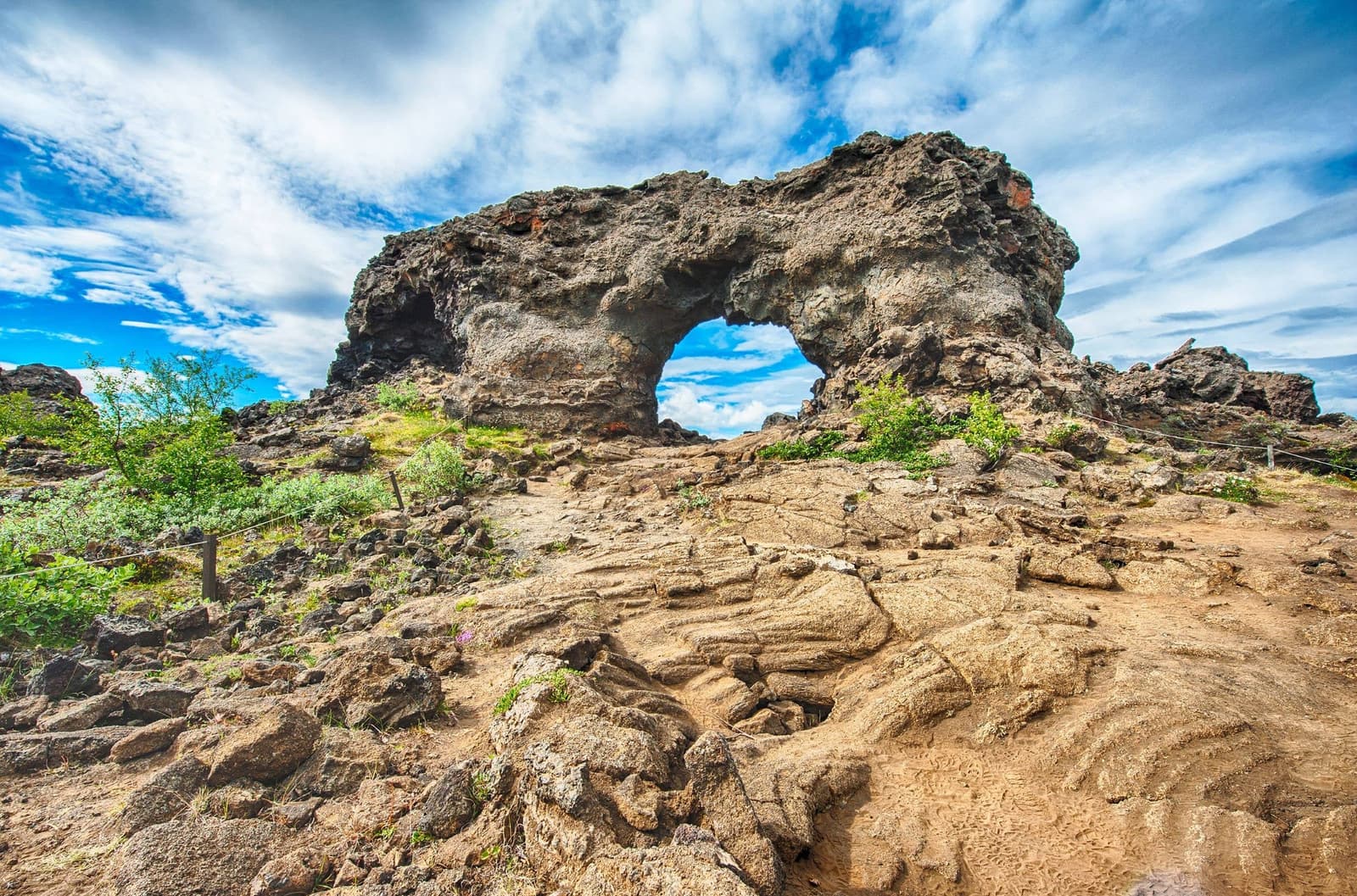
Some volcano experiences are gentle landscape stops rather than hikes to fresh lava or crater rims.
Where should you plan volcano experiences in Iceland?
Reykjavik and Reykjanes are the simplest starting point for many travelers, but volcano landscapes are not limited to the southwest. South Iceland, West Iceland, North Iceland, and the Highlands all give the topic a different shape.
Use Reykjavik when you want the easiest base. Reykjanes gives access to lava fields, geothermal areas such as Krýsuvík and Gunnuhver, recent-eruption context, and some guided cave or lava-themed options without committing to a full Ring Road plan.
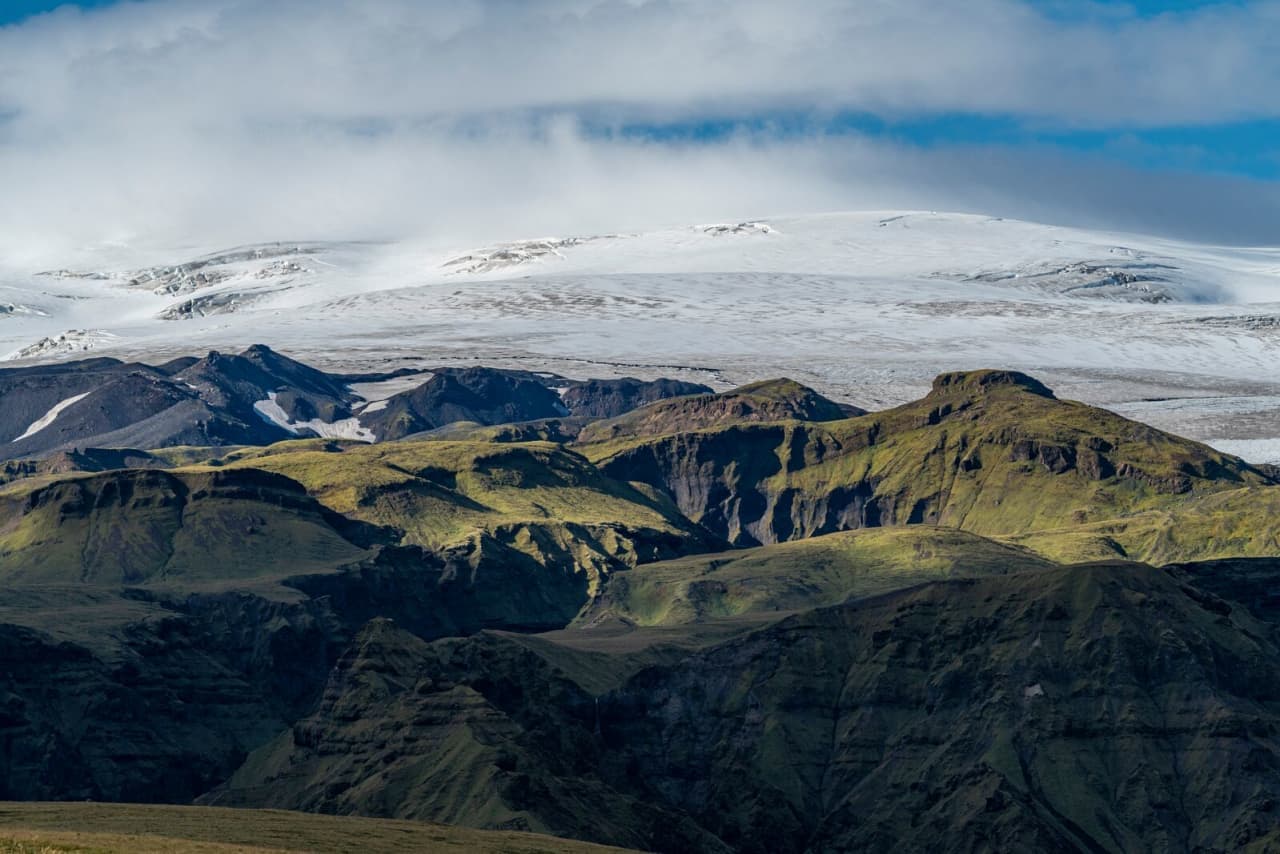
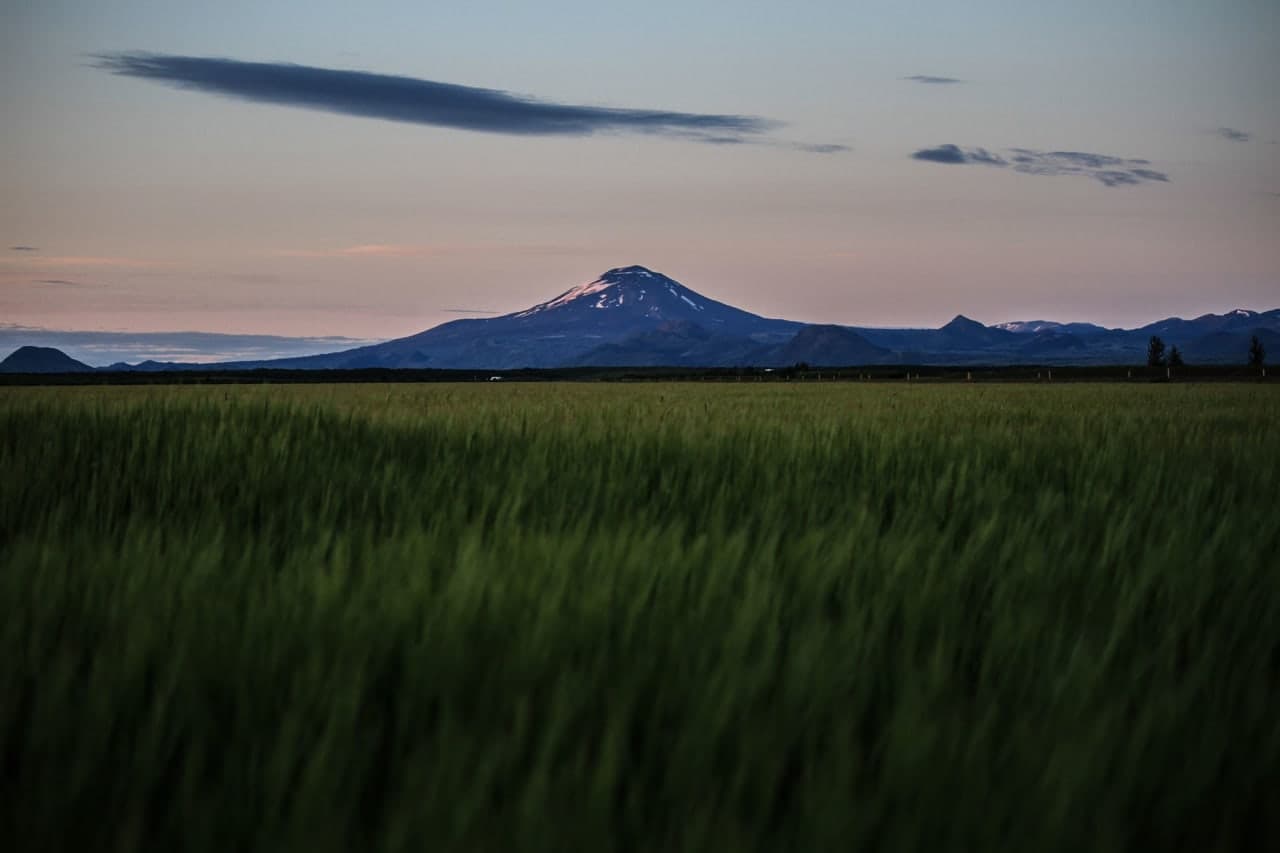
Use South Iceland when the volcano interest is already part of a bigger route. Katla, Hekla, Eyjafjallajökull context, black sand coast, glacier edges, and the Westman Islands can make volcanic landscapes feel woven into the day rather than bolted on.
Use West Iceland and Snæfellsnes for craters, lava fields, lava caves, basalt coast, and slower self-drive scenery. Use North Iceland and Mývatn when steam, lava formations, crater landscapes, and geothermal ground make sense inside a north-coast route. Use the Highlands only when your vehicle, season, road conditions, and route plan are already suitable.
Simple route match
Short Reykjavik trip
Look at Reykjanes, a guided lava tunnel, an indoor lava experience, or a nearby geothermal area.
South Coast trip
Connect volcano context to Katla, Hekla, black sand coast, glacier landscapes, and the South Coast road trip.
West or Snæfellsnes trip
Use craters, old lava fields, lava caves, and basalt coast as part of the slower road-trip rhythm.
North or Highlands trip
Choose this only when the region is already in the plan; the volcanic landscapes are excellent but not a quick Reykjavik add-on.
Easy volcano-themed stops often mean steam, hot ground, mineral color, and short marked paths rather than a strenuous crater hike.
Can you see an active eruption?
Sometimes, but it should never be promised by a planning article. Active-eruption access in Iceland changes with police instructions, gas, lava flow, wind, roads, parking, search-and-rescue workload, and land protection rules.
The practical answer is to check official sources close to the day and follow the instructions you find there. If access is closed, closed means closed. Do not try to improvise a viewpoint, walk onto new lava, copy old hiking directions, or assume a tour photo reflects today's situation.
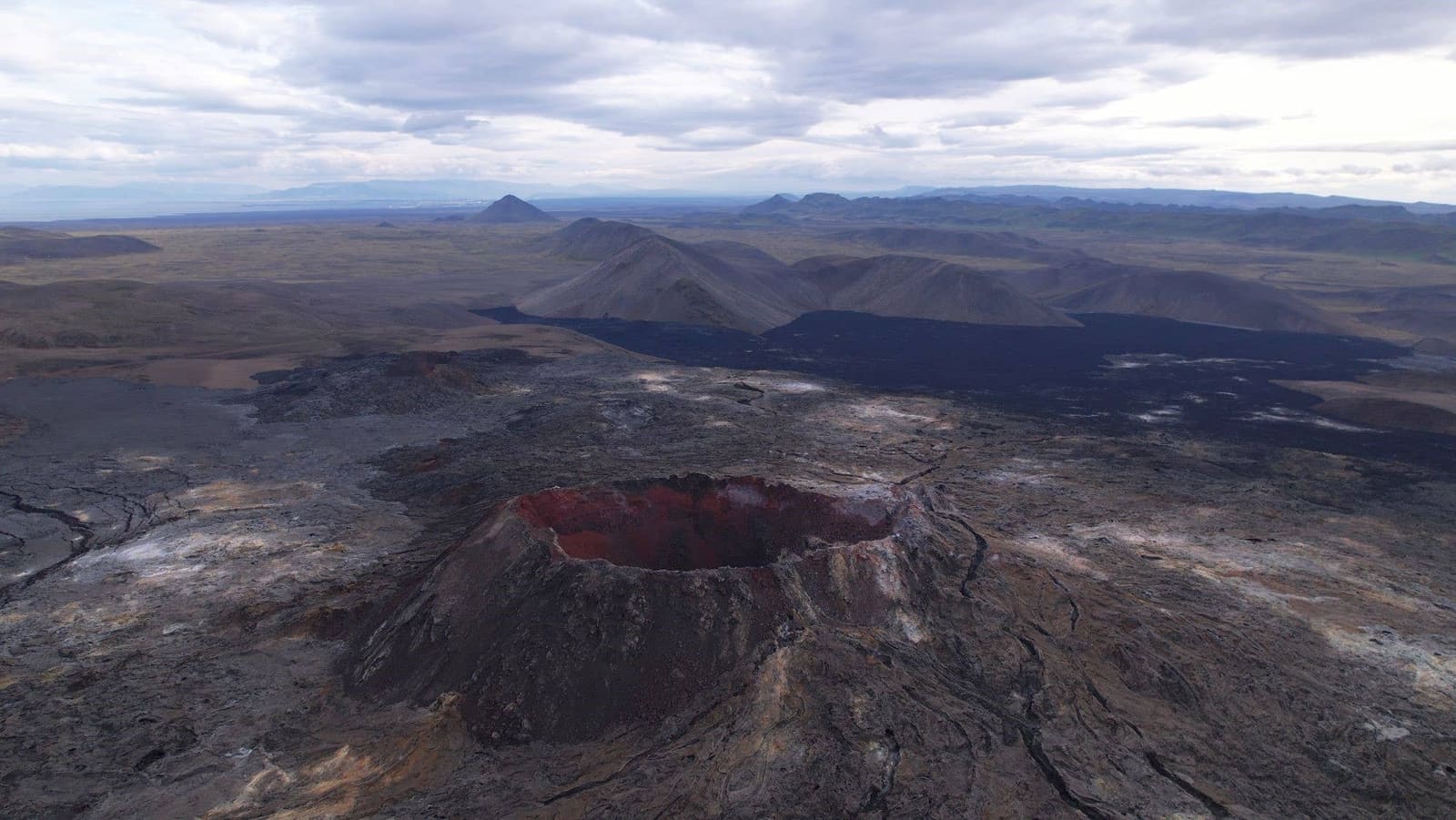
A recent-eruption landscape can still be fascinating after the lava cools. You may see new black lava, crater rows, steaming ground, and a landscape that looks unfinished. That is very different from standing near active lava, and it is often the safer, more realistic version for travelers.
Volcano hikes are shaped by terrain, access rules, weather exposure, and whether the area is officially open.
Do you need a guide for volcano activities?
You do not need a guide for every volcanic landscape, but a guide is the right call when the activity involves caves, technical access, recent-eruption terrain, hard-to-read hazards, or a group that would benefit from local judgment.
Self-guided volcano stops work best at established viewpoints, marked paths, visitor areas, and easy scenic landscapes. Stay on paths, protect moss and young lava, and do not treat a quiet-looking volcanic field as a playground.
Guided formats become more useful underground, near fresh lava, on rough terrain, in winter conditions, or when the story matters. A good guide can explain what you are seeing, adjust to conditions, and stop the group from turning a memorable day into a bad idea.
Use a guide for lava caves, magma-chamber style tours, and any activity with required helmets, lights, ropes, lifts, or operator access.
Use a guide for recent-eruption hikes when official access allows visits but terrain, gas, or route finding still needs judgment.
Go self-guided for established crater viewpoints, geothermal boardwalks, and short marked lava-field walks when conditions are normal.
Choose an indoor lava show or museum-style stop when the group wants volcano context without wind, closures, or rough ground.
Lava caves are underground volcano experiences, but they feel different from descending into a magma chamber.
Which volcano experience fits your group?
The best choice is often the least dramatic one that everyone can enjoy. Volcano days can be brilliant, but they ask different things from children, older travelers, photographers, nervous drivers, and people who dislike enclosed spaces.
Match the volcano idea to the traveler
Traveler
Good match
Probably skip
Families with younger children
Indoor lava show, easy geothermal area, short crater viewpoint, or established lava-field stop
Long recent-eruption hikes, rough lava, caves with age limits, or plans that depend on perfect weather
Short Reykjavik break
Reykjanes day trip, lava tunnel, indoor lava, or nearby geothermal area
Highlands detours or distant volcano routes
Photographers
Crater shapes, fresh lava texture, steam, black sand, geothermal color, and sunrise/sunset-friendly viewpoints
Crowded tour stops where there is no time to wait safely
Active hikers
Recent-eruption terrain when open, crater hikes, Highlands volcanic areas, and guided specialist routes
Any trail where official access, gas, or road conditions are poor
Bad-weather day
Indoor lava, museums, pools, cafes, short geothermal stops, or a flexible Reykjavik day
Exposed volcanic hikes, flightseeing, or cave plans that operators advise against
If the group is mixed, choose the version with the fewest fragile assumptions. A short volcanic viewpoint plus a warm pool or indoor stop can beat a famous hike that half the group quietly dreads.
Recent-eruption interest needs current access checks because active lava, closed trails, gas risk, and safe viewpoints change quickly.
What should you check before you go?
Volcano plans need more current checking than ordinary sightseeing. The details that matter most are access, wind, gas, roads, trail status, operator rules, age or mobility limits, and whether the activity still makes sense if conditions change.
Check SafeTravel for current safety alerts, closures, and travel advice.
Check Visit Reykjanes before relying on recent-eruption or Fagradalsfjall-area access.
Check the Icelandic Meteorological Office for weather and volcanic gas information when relevant.
Check road conditions before driving to exposed peninsulas, mountain roads, or winter volcanic stops.
Check the operator directly for cave, indoor lava, flightseeing, or guided-hike requirements that can change.
Avoid fixed plans that only work if every variable behaves. Put outdoor volcano activities earlier in the trip if they are important, keep an indoor backup, and resist adding a long drive after a demanding hike.
Indoor volcano exhibits are useful backups when wind, access, or rough conditions make the outdoor plan weaker.
Volcano experiences FAQ
These are the questions travelers usually need answered before they decide whether to add a volcano day.
Can I visit an active volcano in Iceland?
Only when official sources say access is open and safe. Active-eruption areas can close quickly because of gas, lava, roads, weather, or police instructions, so check SafeTravel and local authority updates before planning around one.
Are volcano experiences still worth it when there is no eruption?
Yes, if you are interested in lava fields, craters, geothermal areas, caves, black sand, and Iceland's changing landscape. Many of the easiest and safest volcano experiences do not require active lava.
Is a lava cave the same as going inside a volcano?
No. A lava cave or tunnel was formed by flowing lava, while an inside-volcano style tour enters a specific dormant volcanic chamber; both can be excellent, but they feel very different.
Are volcano activities suitable for children?
Some are, especially indoor lava experiences, easy viewpoints, and short marked geothermal stops. Check age, height, mobility, helmet, cave, and operator rules before promising a guided activity to children.
What should I do if the volcano plan is cancelled by weather or access?
Switch to an indoor lava show, museum-style stop, geothermal pool, shorter marked viewpoint, or a simpler Reykjavik day. Do not replace a cancelled volcano plan with an improvised closed-area hike.
Official sources for current volcano checks
Use these sources for details that can change. They are more important than old blog posts, social videos, or tour photos when recent-eruption access is involved.