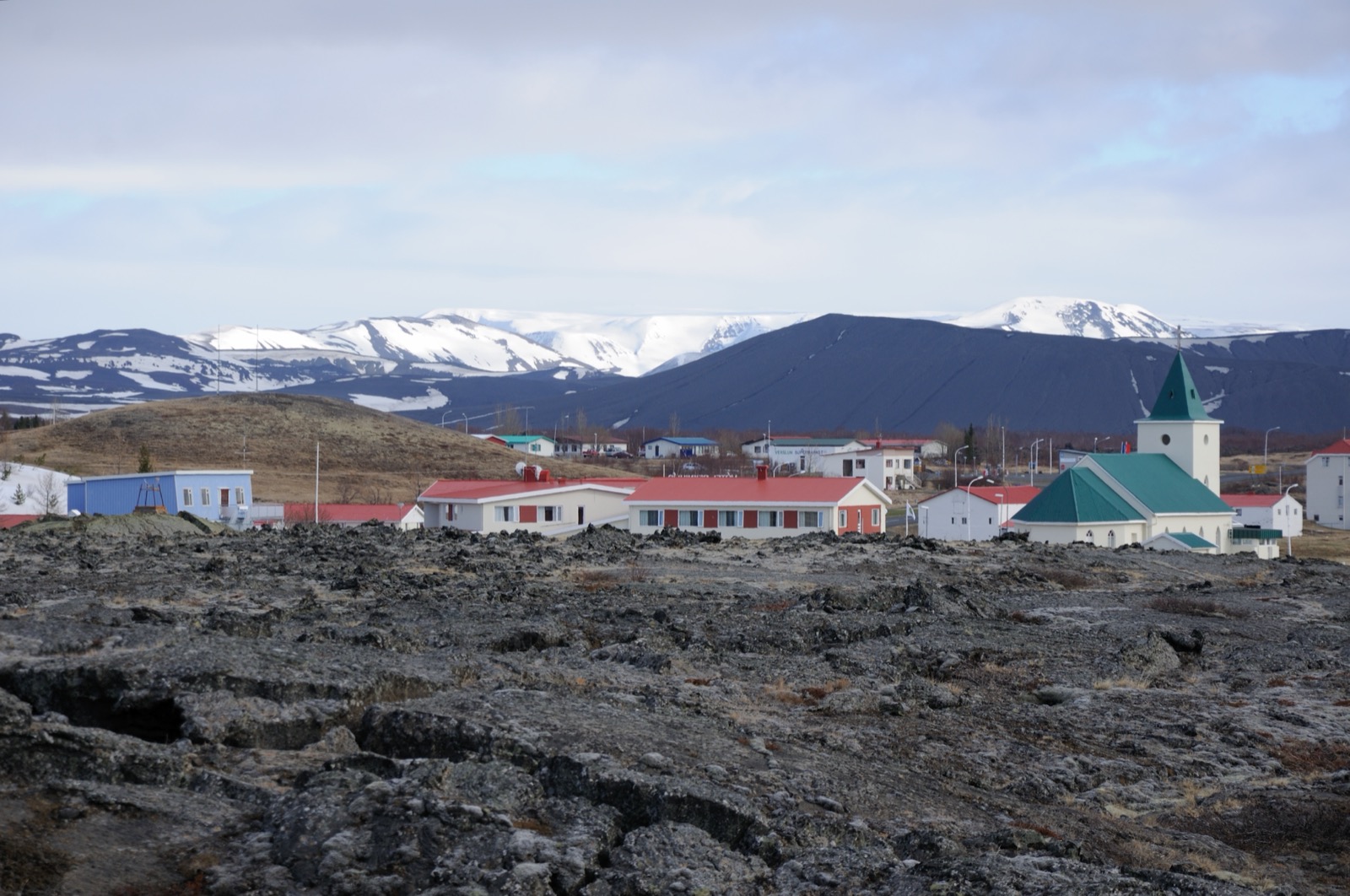
Námaskarð is the geothermal pass by Námafjall near Lake Mývatn, worth a short stop for steam, sulfur colors, and route context when you treat Hverir and safety boundaries as the main decision.
Geology snapshot
Type
Geothermal pass and field-edge stop beside Námafjall, closely tied to Hverir and Hverarönd
Region
North Iceland, just east of Lake Mývatn
Route context
A Route 1 stop that fits Ring Road, Mývatn, and Diamond Circle-style planning
Time to allow
About 20-45 minutes for a careful look, more only if you add nearby walking in good conditions
Best experience
Steam vents, bubbling mud, sulfur-colored ground, bare slopes, and the exposed feeling of an active pass
In this guide
Námaskarð is worth a stop if you are already moving through the Mývatn area and want a fast, vivid look at active geothermal ground
Yes, Námaskarð is worth a stop if you are already moving through the Mývatn area and want a fast, vivid look at active geothermal ground. It is not a destination that needs a half day by itself.
The best reason to stop is contrast. In a few minutes you move from normal North Iceland driving into steam, sulfur-stained soil, bare slopes, and mud pools that make the ground feel alive. That makes Námaskarð useful before or after Hverir Geothermal Area, Lake Mývatn, Krafla, or Leirhnjúkur.
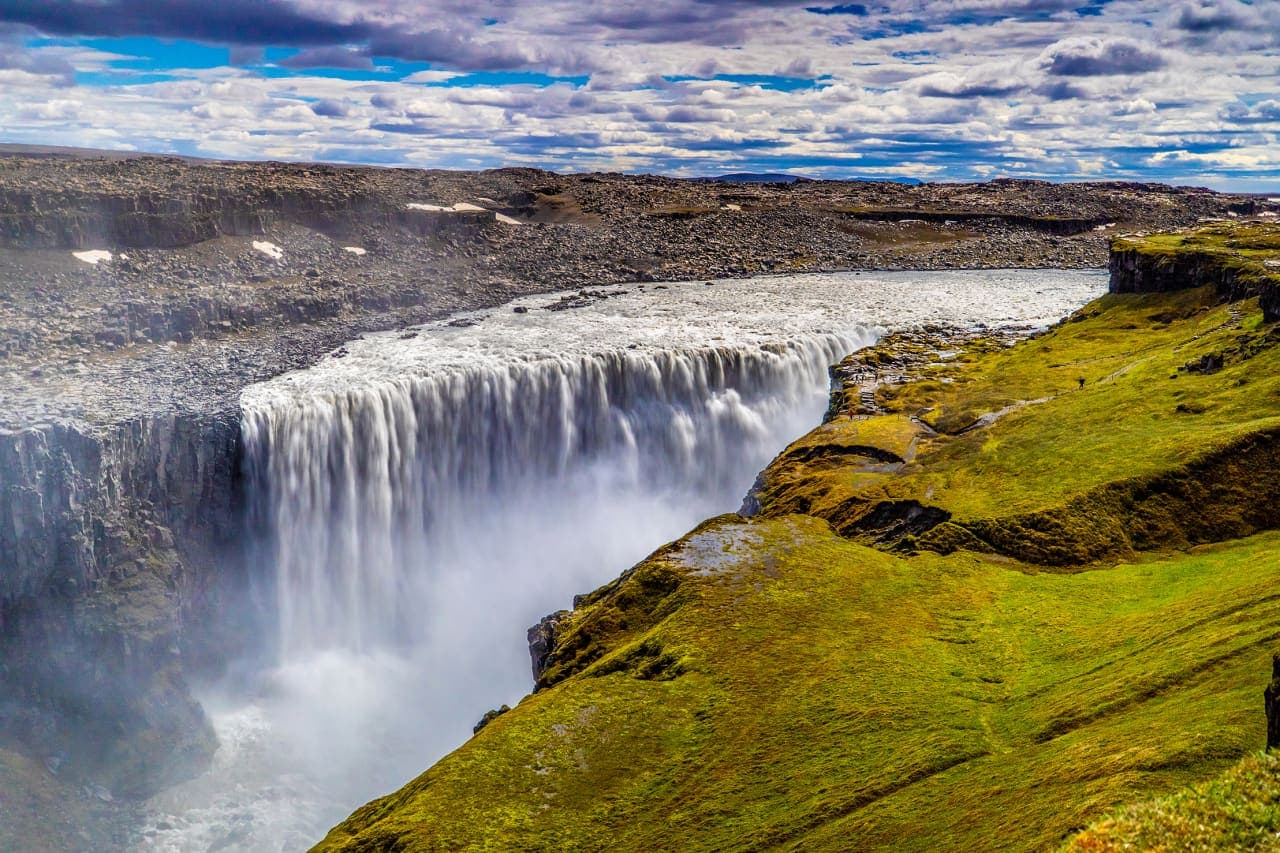
Skip it if your day is already crowded with Dettifoss, Dimmuborgir, Grjótagjá, and several Mývatn-area stops. Námaskarð is strongest when it adds one sharp geothermal moment, not when it becomes another rushed pull-off.
Photo guide
Námaskarð Pass in photos
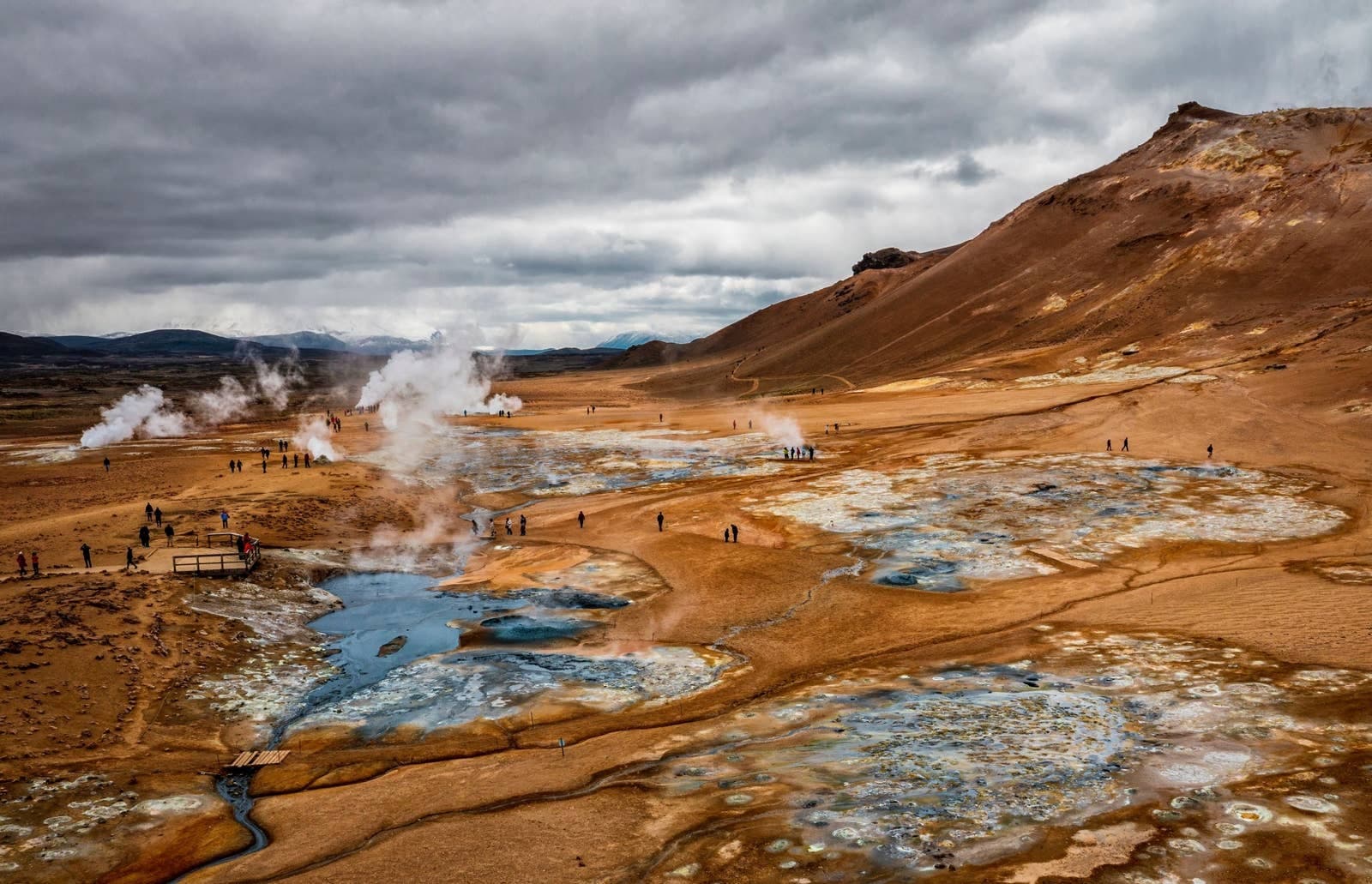
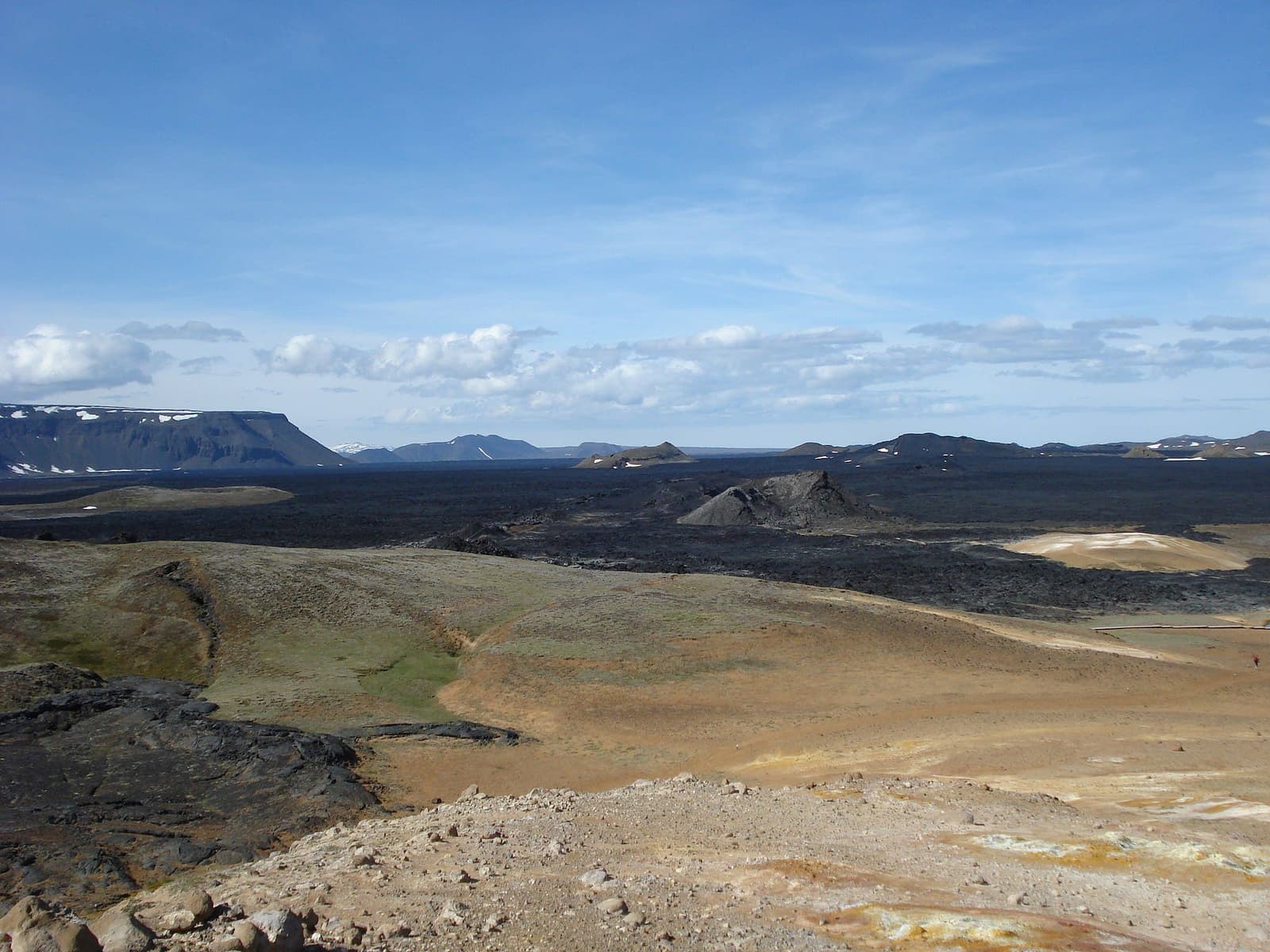
The regional visitor image shows why marked routes matter around the Námaskarð geothermal ground.
Is Námaskarð the same as Hverir or Námafjall?
Travelers often use the names together, but they point to slightly different pieces of the same small area. Námaskarð is the pass, Námafjall is the mountain, and Hverir or Hverarönd is the geothermal field at the base.
For planning, the distinction is simple: use Námaskarð when you mean the pass and roadside setting, and use Hverir Geothermal Area when you mean the close mud pools, fumaroles, and marked walking area. Most visitors experience them as one compact stop.
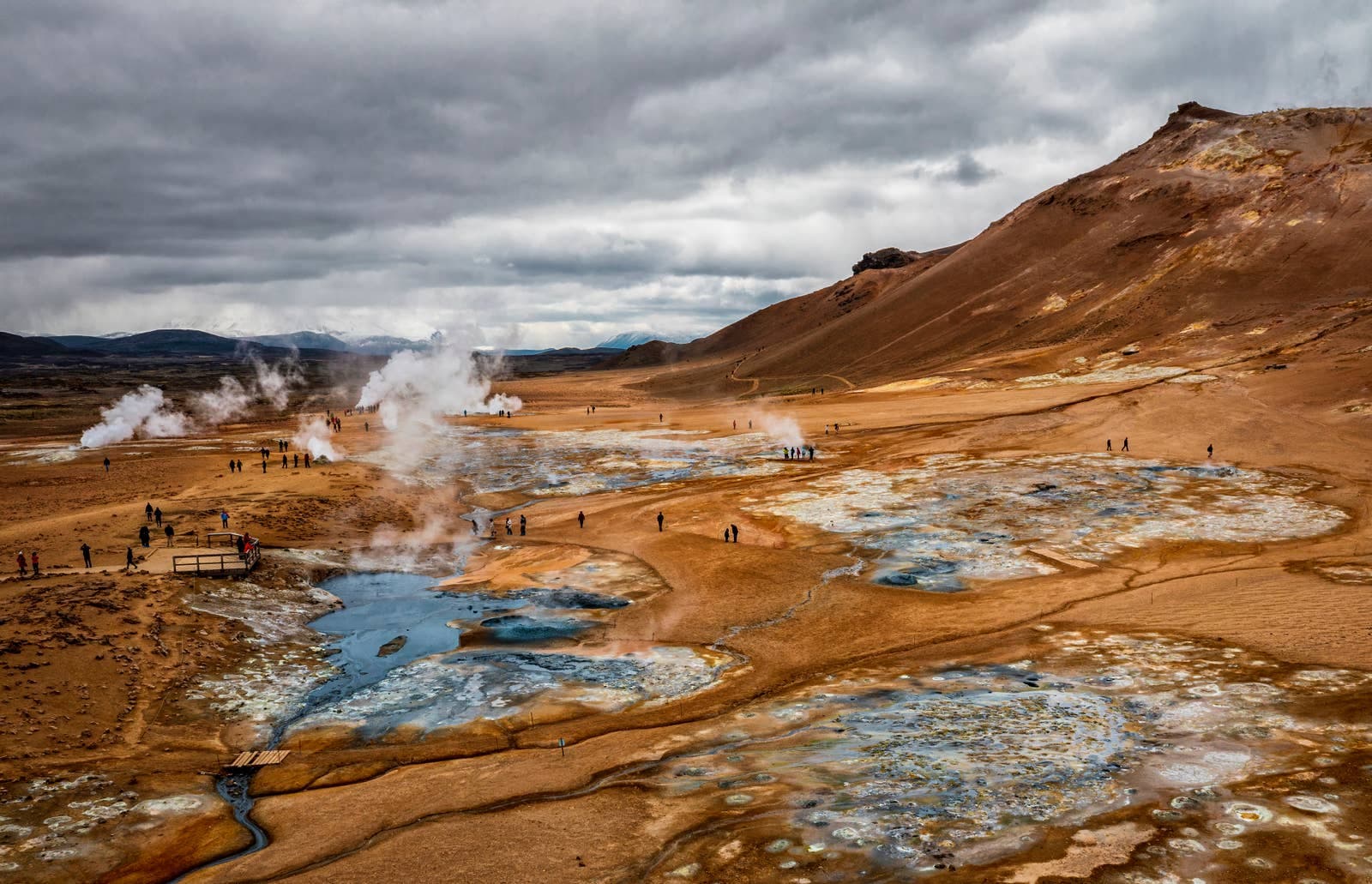
Námaskarð and Hverir overlap in practice: the pass, field, steam, and marked visitor routes sit tightly together.
This matters because a separate Námaskarð stop should not duplicate a full Hverir visit. If you already plan to walk the main Hverir field slowly, Námaskarð is the setting and route context rather than a second major attraction.
Námaskarð feels exposed, mineral, windy, and slightly harsh
Námaskarð feels exposed, mineral, windy, and slightly harsh. The appeal is not comfort; it is the sudden sense that the surface around you is active.
Expect pale crust, orange and yellow mineral stains, grey mud, drifting steam, and the dark shoulder of Námafjall nearby. The sulfur smell can be strong, and wind can either clear the steam for wide views or push it across the walking area.
Photographers get strong scale here because people, ropes, steam vents, and bare slopes sit in the same frame. The scene is less polished than a waterfall viewpoint, but that roughness is exactly why the stop works.
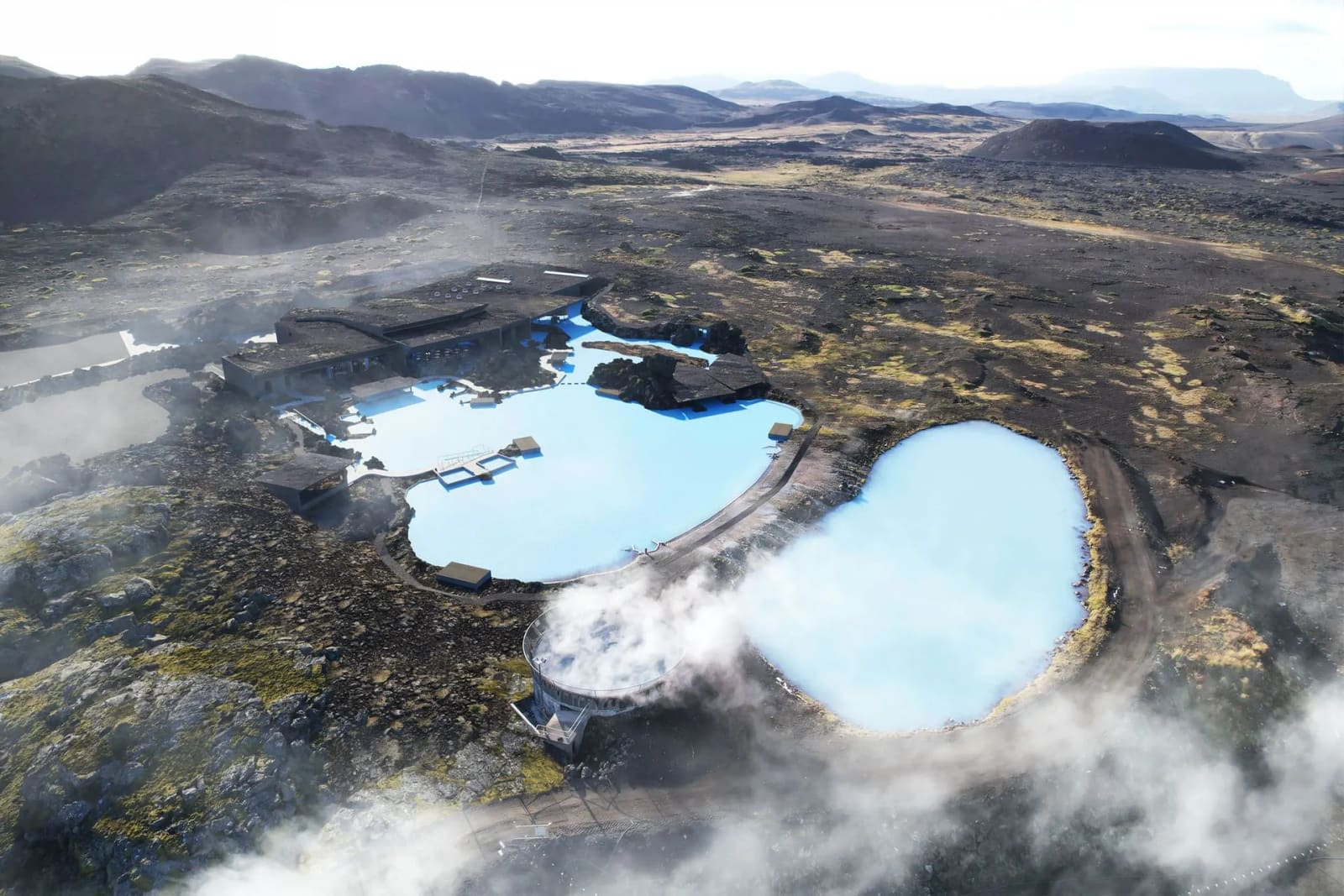
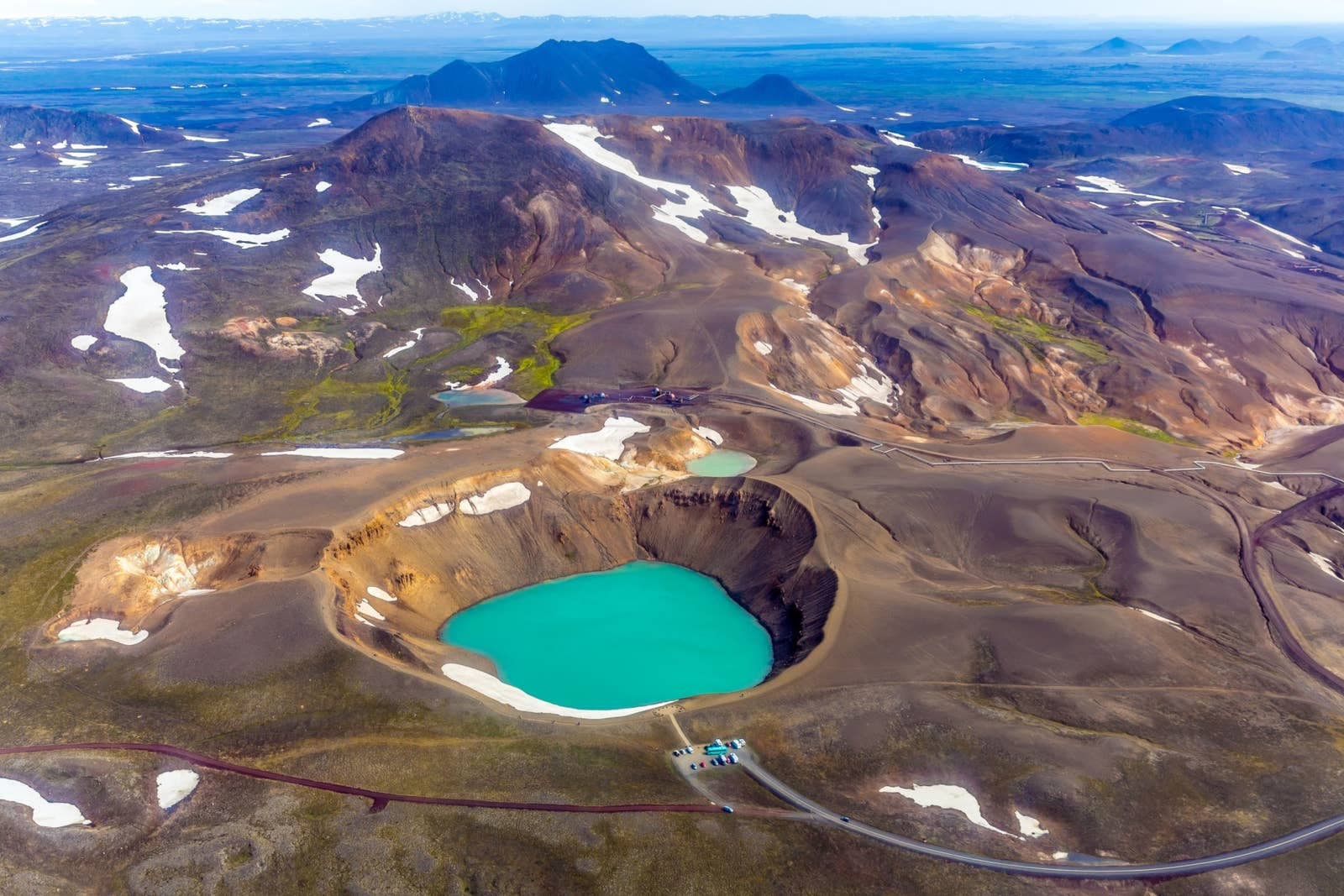
From above, the Námaskarð area reads as active ground rather than a conventional scenic viewpoint.
Námaskarð Pass: most travelers should allow about 20-45 minutes
Most travelers should allow about 20-45 minutes. That is enough for the main geothermal area, photos, and a careful look without turning the stop into a long detour.
The effort is usually low in distance but higher in attention. Watch footing, stay with marked routes, and keep children close. If wind, ice, fumes, or poor visibility make the stop unpleasant, a shorter visit can still give you the main impression.
Use this as a flexible time guide, not a schedule.
Visit style
What it suits
What to watch
Quick look
A few photos and a sense of the geothermal field
Do not step past ropes for a closer angle
Normal stop
A slower walk around the marked areas and nearby views
Wind and fumes can change comfort quickly
Longer stop
Adding nearby Námafjall walking only when conditions feel sensible
Do not let a short stop overload the rest of the Mývatn day
Build Námaskarð into a Mývatn volcanic cluster rather than treating it as an isolated attraction
Build Námaskarð into a Mývatn volcanic cluster rather than treating it as an isolated attraction. Its best pairings add a different texture: lava, crater, lake, bathing, or canyon scale.
A compact Mývatn day might combine Námaskarð with Dimmuborgir, Grjótagjá, Hverfell, and Lake Mývatn. A more volcanic day can push toward Krafla and Leirhnjúkur. A larger North Iceland day might add Dettifoss, but only if the driving shape still leaves breathing room.
The useful rule is to choose one geothermal focus and one or two contrasts. Námaskarð plus Hverir gives close geothermal intensity; Krafla and Leirhnjúkur add broader volcanic terrain; Dimmuborgir and Hverfell change the day from steam to lava and crater shape.
What safety and access checks matter?
The key rule is to stay on marked visitor routes and respect ropes and signs. Geothermal crust can be hot, acidic, and unstable even when it looks dry or walkable.
Visit Mývatn warns visitors not to cross the trail lines near Hverir and Námafjall because people have sustained serious burns near boiling soil. Treat the marked route as the attraction, not as a barrier between you and a better photo.
When should you choose Hverir, Krafla, or Mývatn instead?
Choose Hverir when you want the clearest close-up geothermal field. Choose Krafla or Leirhnjúkur when you want a bigger volcanic landscape. Choose Lake Mývatn when the day needs calmer scenery and broader area context.
Námaskarð is most skippable when it repeats what you already got at Hverir or when the group needs easier footing and less sulfur exposure. It is also a weak add-on if the day already stretches from Mývatn to Dettifoss and back with too many small stops.
Add Námaskarð for a first Mývatn pass-through, a geothermal photography stop, or a route that needs one quick high-impact landscape. Cut it from an overloaded Diamond Circle day before cutting a stronger anchor like Dettifoss or Krafla.
Námaskarð Pass FAQ
Is Námaskarð different from Hverir?
Yes, but the visit overlaps. Námaskarð is the pass by Námafjall, while Hverir or Hverarönd is the geothermal field most visitors walk around in the same area.
How long should Námaskarð take?
Most travelers need about 20-45 minutes. Add more only if you are walking nearby in good conditions or photographing the area slowly.
Is Námaskarð safe for children?
It can work for children only with close supervision. The geothermal ground beyond marked visitor routes can be dangerously hot or unstable.
Do you need a 4x4 for Námaskarð?
A 4x4 is not the usual planning issue because the pass sits by Route 1. Road, weather, wind, and visibility checks matter more.