Hveravellir is a 534-hectare protected geothermal area on the Kjölur route: use it as a 15-30 minute boardwalk stop, a pool-and-rest break, or a hiking base only when highland checks support that exact plan.
Bathing details
Type
Highland geothermal area, marked walking stop, and natural hot-pool setting
Region
Central Highlands on the Kjölur route between Langjökull and Hofsjökull
Route context
Best planned as part of a Road 35 highland day, not as a quick Golden Circle add-on
Time to allow
30-60 minutes for the geothermal paths; 1.5-3 hours if you add the pool, breaks, or nearby walks
Best experience
A slow summer highland stop with time for steam vents, mineral colors, and a careful soak if visitor details fit
In this guide
Is Hveravellir worth the highland drive?
Yes, Hveravellir is worth adding when Road 35 is already part of your highland plan; it is a weak detour when you only want a quick soak or a shortcut between north and south.
The draw is the combination: a protected geothermal field, steam rising over pale mineral crusts, wide Kjölur emptiness, and a hot-pool setting that feels far from the lowland sightseeing loop. It has more practical value than a random roadside stop because it can turn a long Highlands crossing into a memorable pause.
The cost is also real. Hveravellir sits deep enough in the Highlands that road condition, vehicle suitability, daylight, wind, and group confidence should decide the day before scenery does. If those pieces are not solid, Kerlingarfjöll, Landmannalaugar, Askja Caldera, or Þórsmörk may belong in a different trip rather than being stacked into one ambitious plan.
Go if Road 35 is a deliberate part of your summer Highlands route and you want geothermal scenery with time to slow down.
Skip if you are trying to stretch a short Golden Circle, Reykjavik, or South Coast itinerary beyond its natural limit.
Check before committing: official road conditions, Highlands weather, SafeTravel guidance, protected-area rules, and operator visitor details.
Photo guide
Hveravellir in photos
Hveravellir is strongest when the stop is planned around the field, not only the pool.
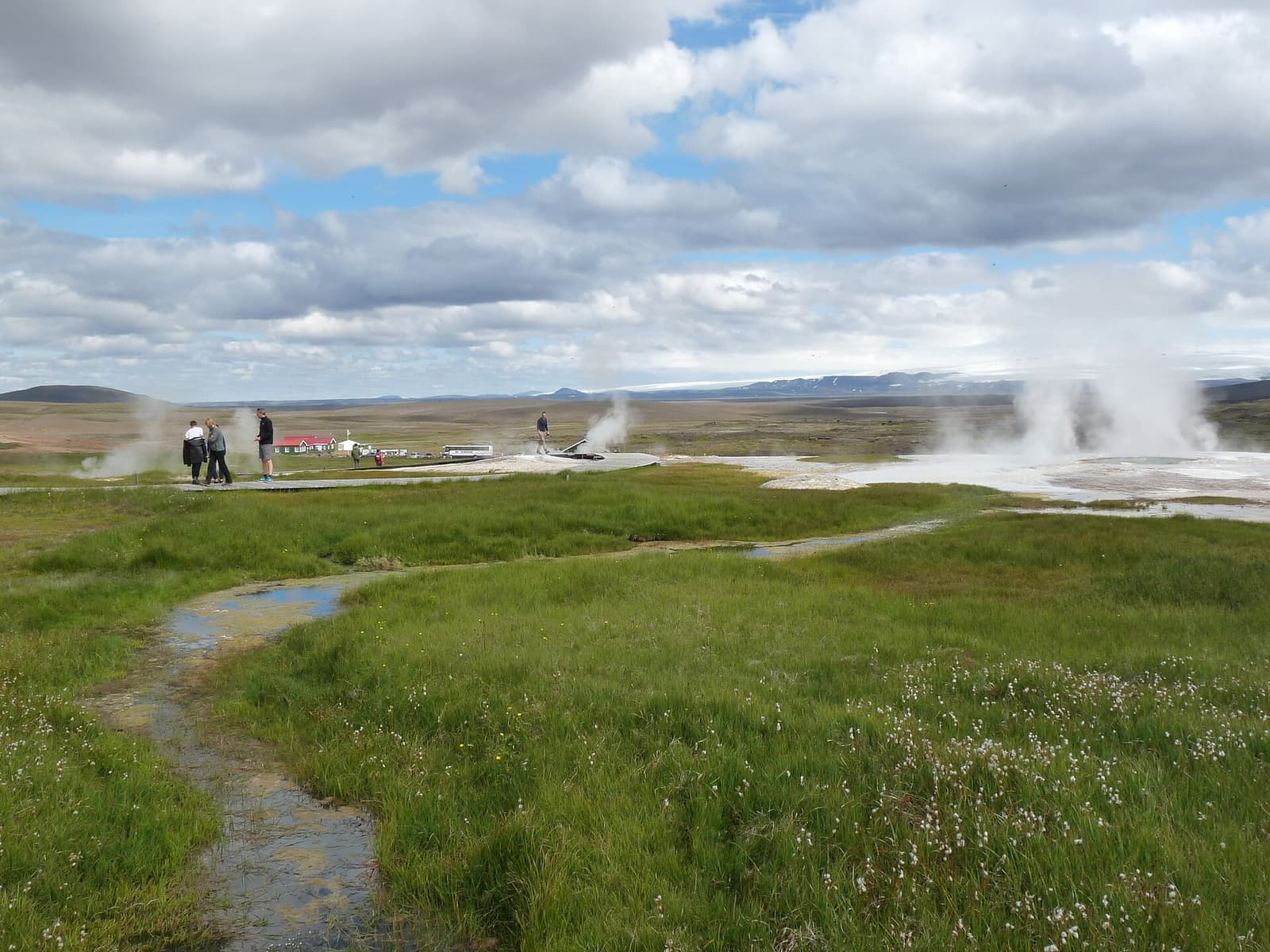
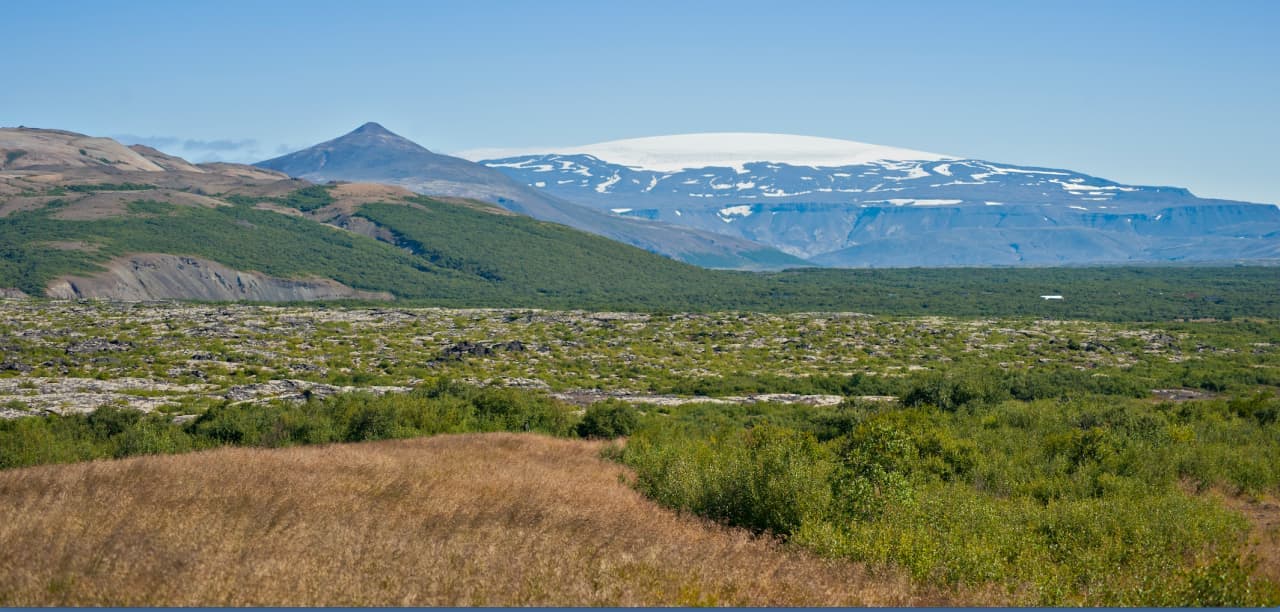
Hveravellir feels like a compact geothermal island in a huge highland plain
Hveravellir feels like a compact geothermal island in a huge highland plain: steam, silica-white ground, low boardwalks, hot water, and long views toward glacier country.
The protected geothermal area is the first reason to linger. The Environment Agency says Hveravellir was protected in 1960, its protection was reviewed in 1975, and the natural monument covers 534 hectares. The public experience is concentrated on a much smaller wooden-footpath circuit through vents, pools, mineral edges, and warm ground, so the scale of the reserve should not be confused with permission to roam across fragile geothermal surfaces.
The hot pool is part of the appeal, but the geothermal field and highland setting are what make Hveravellir distinctive.
The hot pool can be the emotional payoff, especially after a dusty or windy drive. Still, treat bathing details as something to verify before you build the day around it. If the pool, services, or access matter to your plan, use the official visitor information rather than assuming the details will match an old trip report.
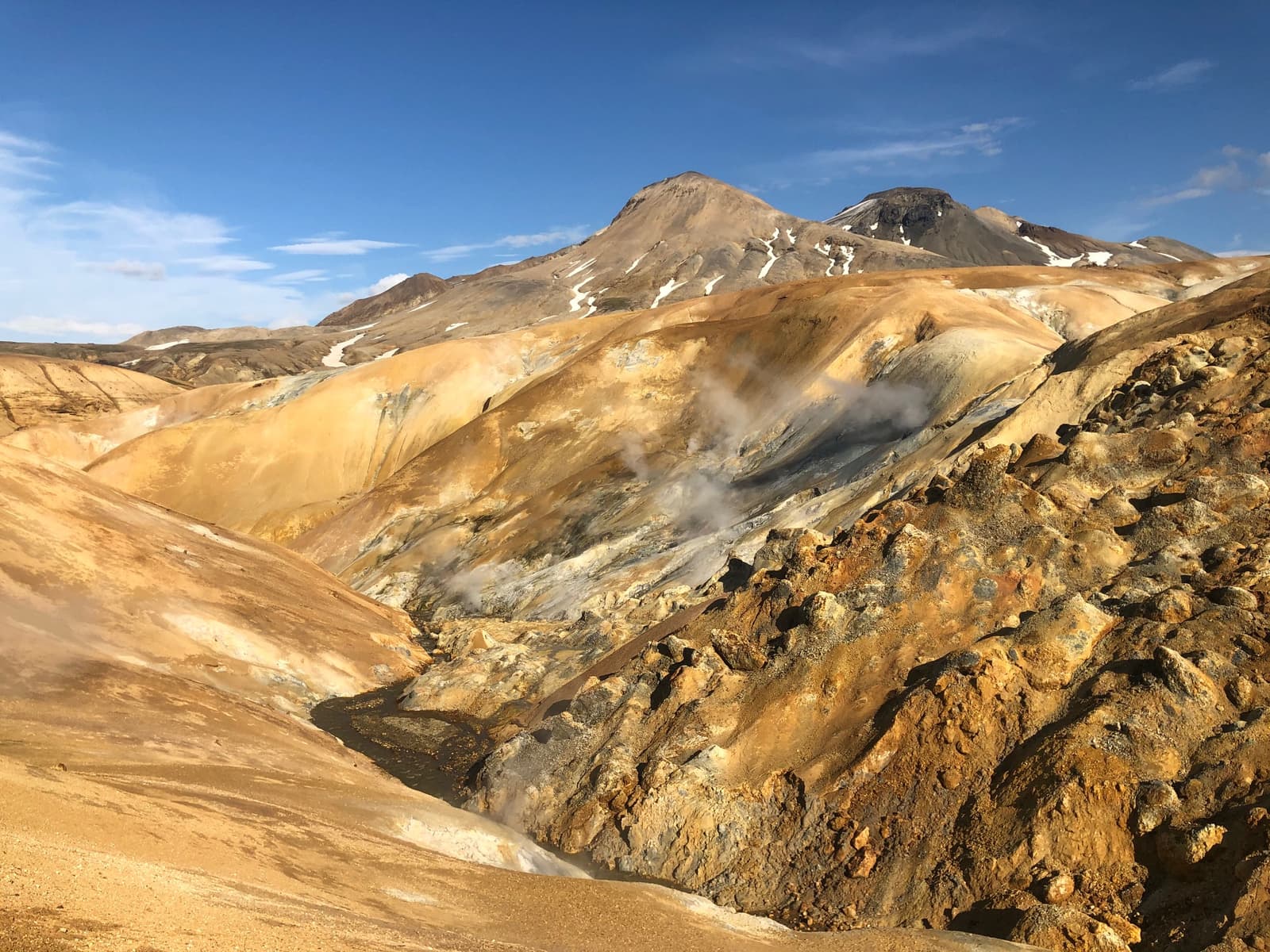
Steam and pale mineral ground make the walking area feel active, delicate, and weather-exposed.
Hveravellir: plan at least a deliberate stop, not a drive-by
Plan at least a deliberate stop, not a drive-by. The right length depends on whether you only walk the geothermal paths or also bathe, eat, rest, or add a marked walk.
Hveravellir visit styles
Visit style
Time to allow
Best use
Quick look
30-60 minutes
Use this when you need the geothermal field, photos, and a short leg stretch before continuing Road 35.
Balanced stop
1.5-3 hours
Use this when you want the paths, a slower break, and the hot pool if official visitor details fit.
Slow highland pause
Half day
Use this when Hveravellir is your main Kjölur stop and you want time for a marked walk or a long weather buffer.
Most travelers should choose the balanced version only if the driving day still has slack. The area rewards slowing down, but it does not reward rushing. If Kerlingarfjöll is also in the same day, decide which place gets the main walking energy before you start adding extra viewpoints.
Use the Environment Agency's marked walks to decide whether Hveravellir is a stop or a hiking base.
Official walk
Estimated time
Planning role
Hot-spring area wooden footpaths
15-30 minutes
The minimum useful stop for geothermal evidence, Eyvindartóft, and the old shelter.
Eyvindarhellir and Eyvindarrétt
30-45 minutes
A short cultural-landscape extension beyond the spring circuit.
Strýtur
3-4 hours
A real highland hike to the crater-rim formations, not an add-on to a rushed crossing.
Rjúpnafell and Grettishellir
5-7 hours
A full hiking objective that makes Hveravellir the base for the day.
A slower stop gives the landscape context time to register instead of reducing Hveravellir to a quick dip.
What checks matter before driving Road 35?
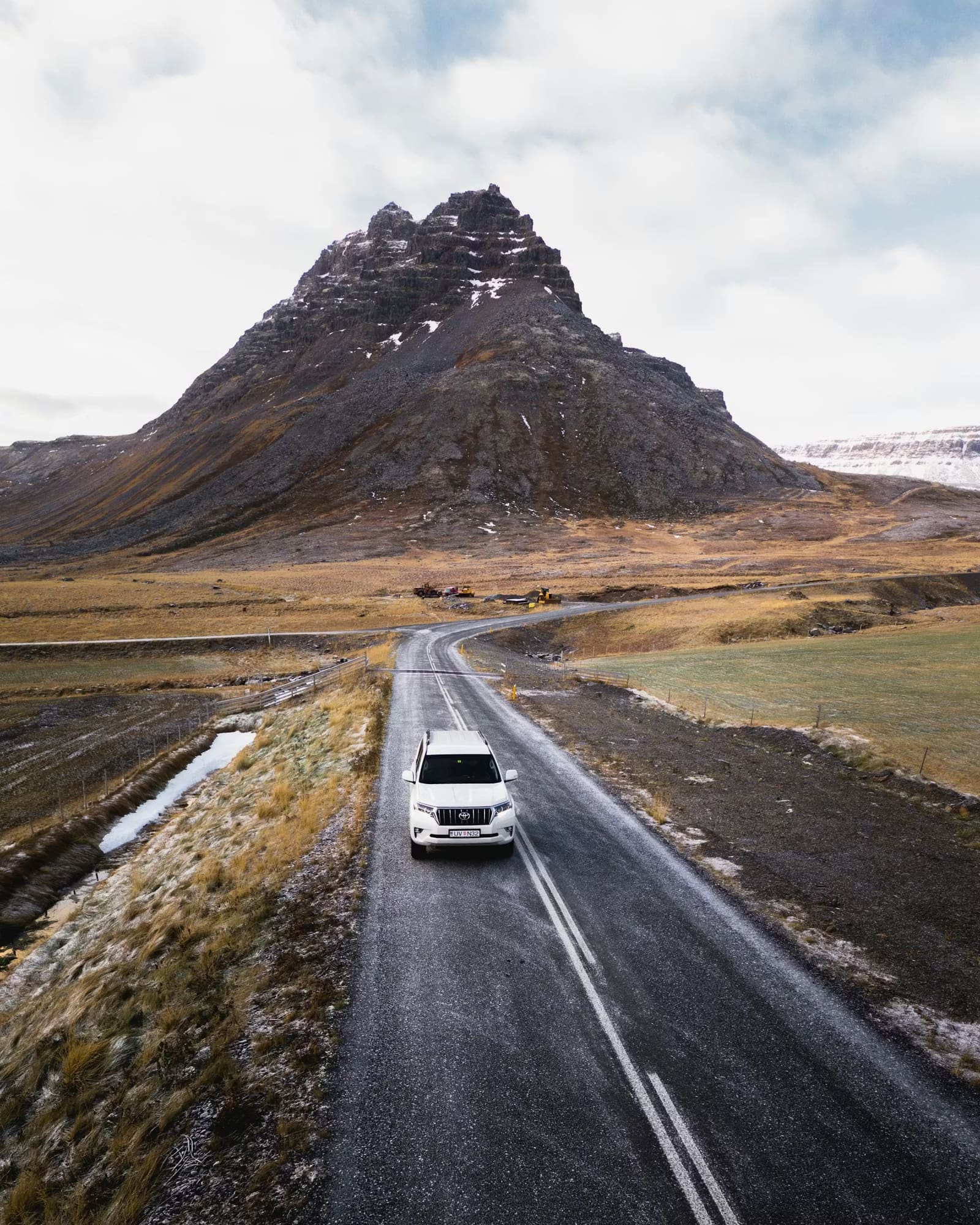
Road 35 and the surrounding highland conditions should decide the visit. Hveravellir is not a place to add from habit just because it appears between two map pins.
Start with official road conditions, then look at the Highlands forecast, wind, visibility, and any travel alerts. Rental rules and vehicle suitability also matter because a technically open road can still be a poor choice for your car, driver confidence, or schedule.
Around the geothermal area, stay on marked paths and wooden walkways. Boiling water, steam vents, thin crust, and protected mineral formations are not just scenery. The safest visit is the one that keeps photos, children, and tired adults away from tempting shortcuts.
The mineral edges are part of what you come to see, and also a reason to stay on marked surfaces.
Which nearby highland stops pair best with Hveravellir?
Kerlingarfjöll is the strongest nearby pairing because it belongs to the same Kjölur decision. The broader Highlands links work better as comparisons than as same-day checklist items.
Kerlingarfjöll gives the day a bigger hiking and rhyolite-mountain focus, while Hveravellir gives it geothermal rest and a more compact stop. Pairing both can work when the day is deliberately built around Road 35, but the combination becomes weak if it leaves no margin for gravel-road pace, weather, or daylight.
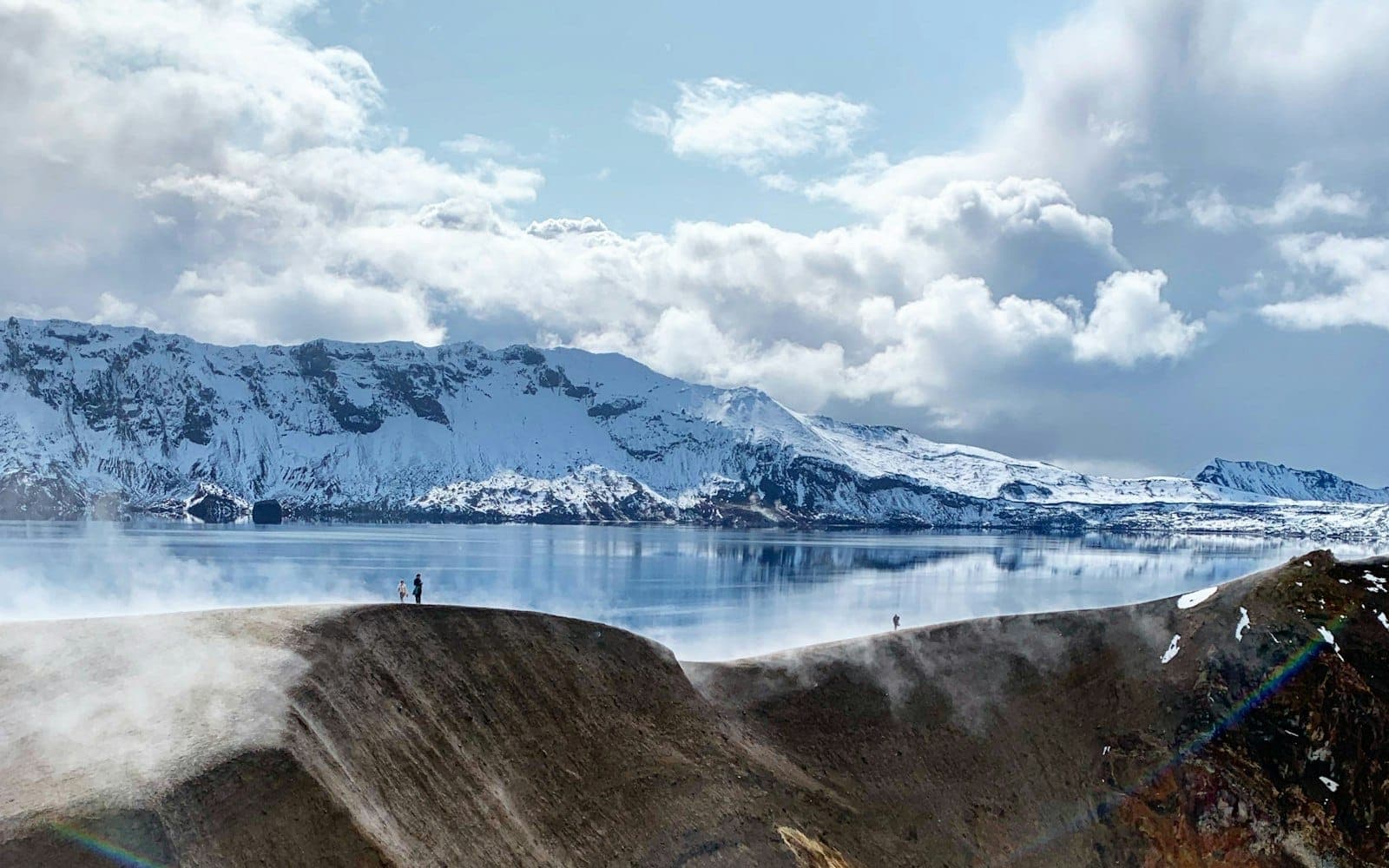
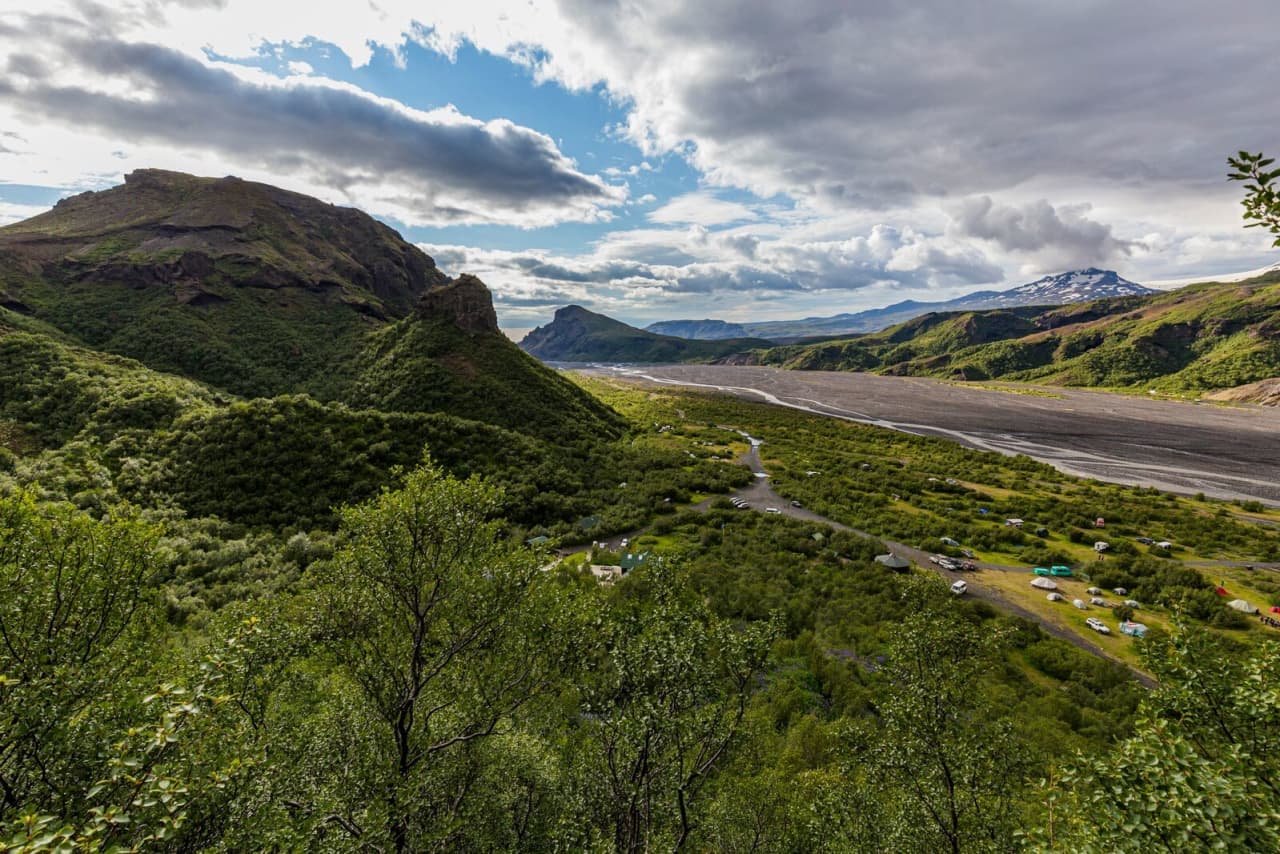
Hofsjökull views help explain the scale of the area, and Þjórsárver belongs to the same broad central-highland planning mindset. Landmannalaugar, Askja Caldera, and Þórsmörk are not casual add-ons from Hveravellir; they are useful comparisons when you are choosing which Highlands experience should own a separate day or trip.
Nearby and comparable highland choices
Place
Use it when
Tradeoff
Kerlingarfjöll
You want a stronger hiking and mountain-color focus on the same Kjölur plan.
It can absorb the energy and time that Hveravellir needs to feel unrushed.
Hofsjökull
You want glacier-scale context around the central Highlands.
It is more landscape context than a simple visitor stop.
Þjórsárver
You are comparing protected central-highland landscapes and remoteness.
It needs more specialist planning than a normal sightseeing stop.
Landmannalaugar
You want colorful rhyolite, hiking, and a different highland base.
It belongs to a separate route decision, not a quick Hveravellir extension.
You want a more remote volcanic objective with a bigger expedition feel.
It raises the access, distance, and weather stakes considerably.
What should you verify with official sources?
Use official sources for anything that can change: roads, weather, highland travel alerts, protected-area guidance, services, bathing rules, and visitor details.
The durable planning answer is simple: Hveravellir belongs in a flexible Highlands plan, not a fragile timetable. Build the day so an official road or weather check can change your route without breaking the whole trip.
Use for travel alerts and highland travel preparation.
Hveravellir FAQ
These questions matter because Hveravellir is remote, geothermal, and access-sensitive.
Can you visit Hveravellir without planning a full highland day?
Usually no; Hveravellir works best when Road 35 is already part of a deliberate Highlands plan. If your trip is focused on Reykjavik, the Golden Circle, or the South Coast, the detour can weaken the route.
Is the Hveravellir hot pool the main reason to go?
No; the strongest reason is the combination of geothermal field, highland setting, and a possible soak. Verify official visitor details before relying on the pool as the anchor of the day.
Is Hveravellir safe for children?
It can be a poor fit for children who cannot reliably stay on marked paths around hot water and fragile ground. Families should verify current visitor details and keep the stop flexible.
Should I choose Hveravellir or Kerlingarfjöll?
Choose Hveravellir for a compact geothermal stop and possible soak; choose Kerlingarfjöll for a bigger hiking and mountain-color day. Pair them only when road, weather, and time checks leave enough margin.