Yes, but plan around organized campsites, current rules, weather, season, and facilities. Campervans and motorhomes generally need campsites or landowner permission outside organized campsites.
Normal rule
Use organized campsites unless you have checked official exceptions and permission rules.
Campervans
Do not treat parking as camping; plan legal overnight stops.
Best season
Summer is easiest; shoulder season and winter need much stricter checks.
Main risk
Wind, cold, wet ground, closed facilities, and overlong driving days.
Decision summary
Normal rule
Use organized campsites unless you have checked official exceptions and permission rules.
Campervans
Do not treat parking as camping; plan legal overnight stops.
Best season
Summer is easiest; shoulder season and winter need much stricter checks.
In this guide
Camping starts with where you are allowed to sleep
The campsite decision comes before the scenic route.
Camping in Iceland can be a good way to travel, but it is not a free overnight shortcut. The normal planning move is to use organized campsites, then check the official rules for any exception before assuming a tent, campervan, caravan, or motorhome can stay somewhere else.
Wind, rain, cold ground, wet gear, and closed facilities
Use campsites and keep a bad-weather fallback
Campervan
You want a compact self-drive with legal campsite nights
Sleeping comfort, luggage space, heating, shower access, and parking assumptions
Place campsites before finalizing daily distance
Motorhome or RV
You need more indoor comfort and are staying on suitable roads and sites
Vehicle size, wind, road restrictions, fuel, and facility needs
Check road access, campsite space, electricity, and waste services
Mixed lodging
You want camping freedom but not every night outdoors
More booking work and less pure flexibility
Use guesthouses or hotels for arrival, bad weather, or laundry nights
If the goal is mainly to save money, compare the full cost: vehicle, fuel, campsite fees, showers, equipment, food, and backup lodging. Camping does not automatically make the trip cheaper.
Season and weather decide whether camping is a good idea
Summer is easier. That does not make it automatic.
Summer has the widest campsite access and the easiest daylight, but wind and rain still matter.
May and September can work with stronger gear and more facility checks.
Winter camping is not a first-time camping experiment.
Highlands, Westfjords, and remote areas need stricter road, weather, and opening-date checks.
If the trip depends on warm, dry nights, choose normal accommodation instead.
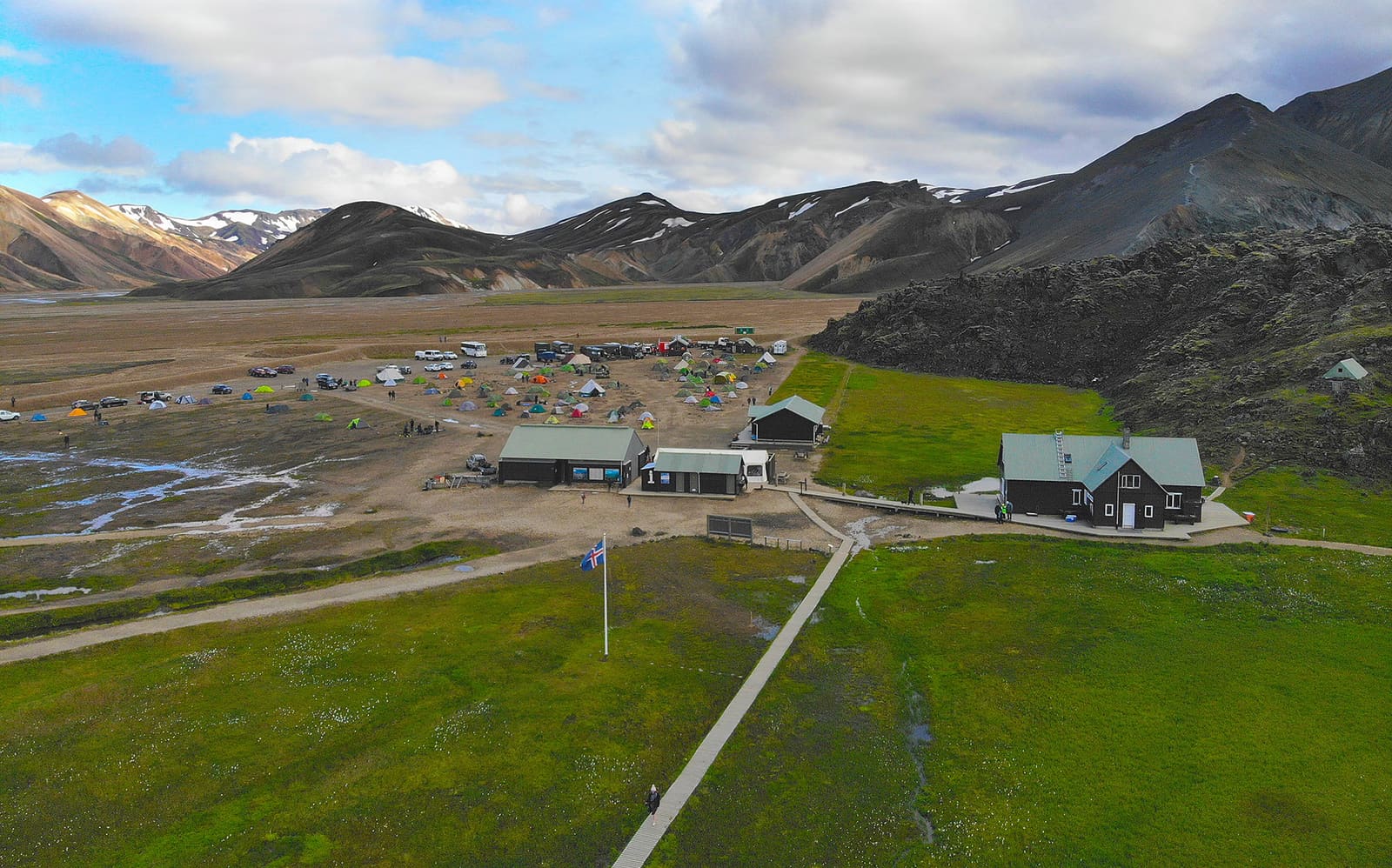
Remote campsites can be useful, but the weather and road context are part of the overnight decision.
Build the route around campsites
The right campsite is the one that makes the next day work.
Choose the route family: Reykjavik short trip, South Coast, Snaefellsnes, Ring Road, North Iceland, Westfjords, Eastfjords, or Highlands.
Mark legal campsites that are open for your dates.
Check facilities: showers, toilets, kitchen, laundry, electricity, waste, water, and late check-in.
Check road access and whether your vehicle is suitable.
Keep one backup option in each weather-sensitive region.
Official tourism-board camping overview with campsite and practical planning context.
Camping in Iceland FAQ
Short answers for the camping rules and planning questions visitors usually ask first.
Can you wild camp in Iceland?
Do not assume you can wild camp. Organized campsites are the normal plan. Tent exceptions are narrow and should be checked against official Environment Agency rules before relying on them.
Can I sleep anywhere in a campervan in Iceland?
No. Campervans, motorhomes, caravans, and similar vehicles generally need organized campsites or permission from the landowner or rightholder outside organized campsites.
Is camping in Iceland good for a first trip?
It can be good in summer if you like camping, have suitable gear, and build the route around campsites. It is not ideal if you are testing camping for the first time in difficult weather.
Do Iceland campsites need to be booked ahead?
Some do, some do not, and rules can change by season and location. Always check the campsite directly before relying on it.
Is camping cheaper than hotels in Iceland?
Often, but compare the full cost: vehicle, fuel, campsite fees, showers, equipment, food, backup lodging, and the route changes needed to use campsites legally.