Hike facts
- Type
- Mountain pass
- Region
- Near Ísafjörður
- Route fit
- Flexible hiking day
- Best for
- Clear-weather walkers
- Check first
- Wind, snow, visibility
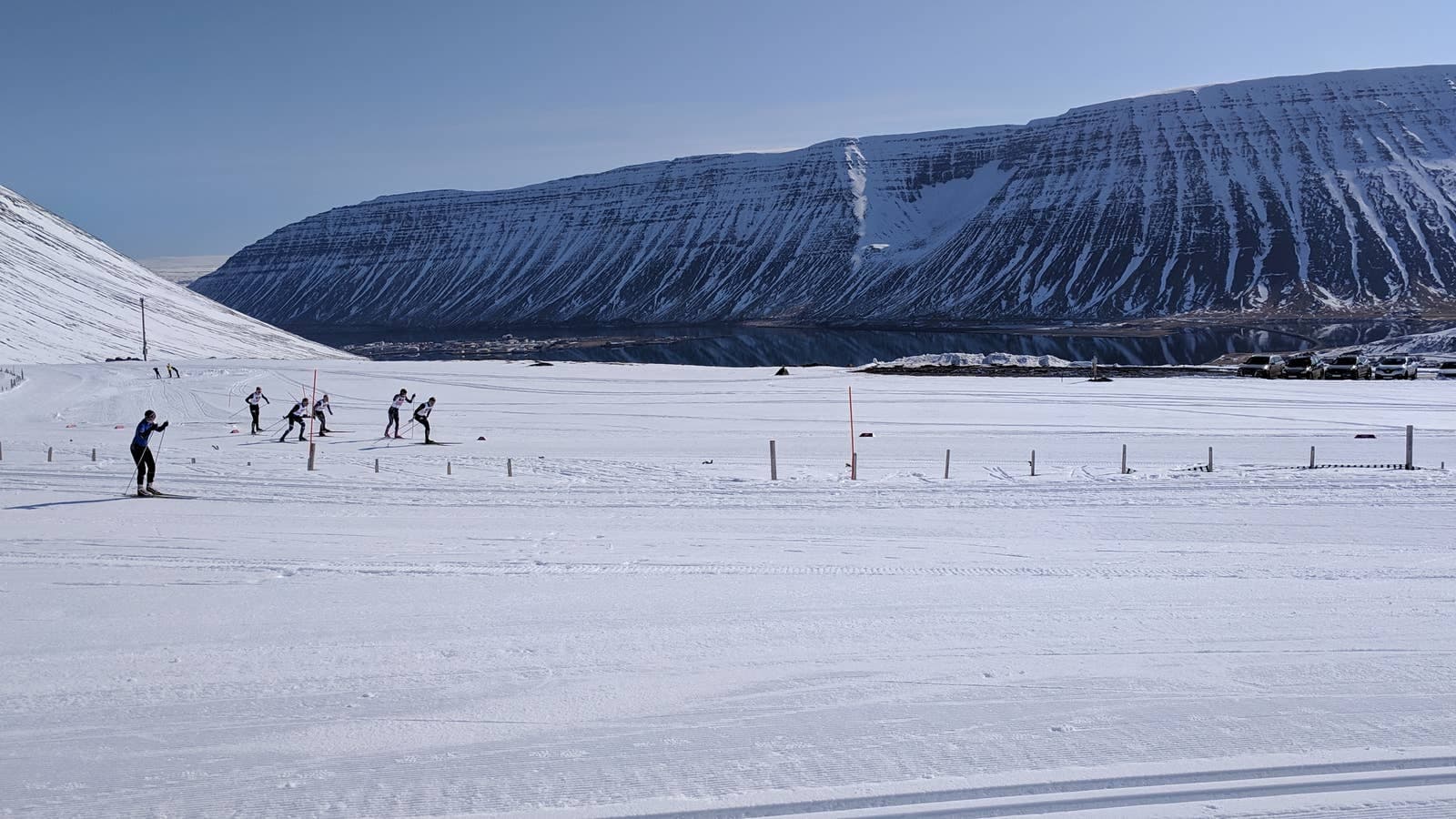
Þjófatindar is a mountain-peaks stop above the Ísafjörður area, best for travelers deciding whether a flexible Westfjords day can include a weather-dependent valley-to-valley walk with real scenic payoff.
Hike facts
Yes, Þjófatindar can be worth adding if your Westfjords plan already gives Ísafjörður a flexible day and your group wants a real walk rather than another roadside viewpoint.
The appeal is specific: peaks above the Seljalandsdalur and Hnífsdalur side of Ísafjörður, a pass that opens the view, and a feeling of moving between fjord valleys instead of just stopping beside the car. It is a better fit for active travelers than for anyone trying to tick off every famous Westfjords sight.
Add Þjófatindar when the day has space for weather checks, slower footing, and a plan B around Ísafjörður. Leave it out if the same clear window is needed for Dynjandi, Hornstrandir, or Látrabjarg, or if the group mainly wants short, certain stops.
The classic version is less about one summit photo and more about crossing a quiet Westfjords shoulder between valleys.
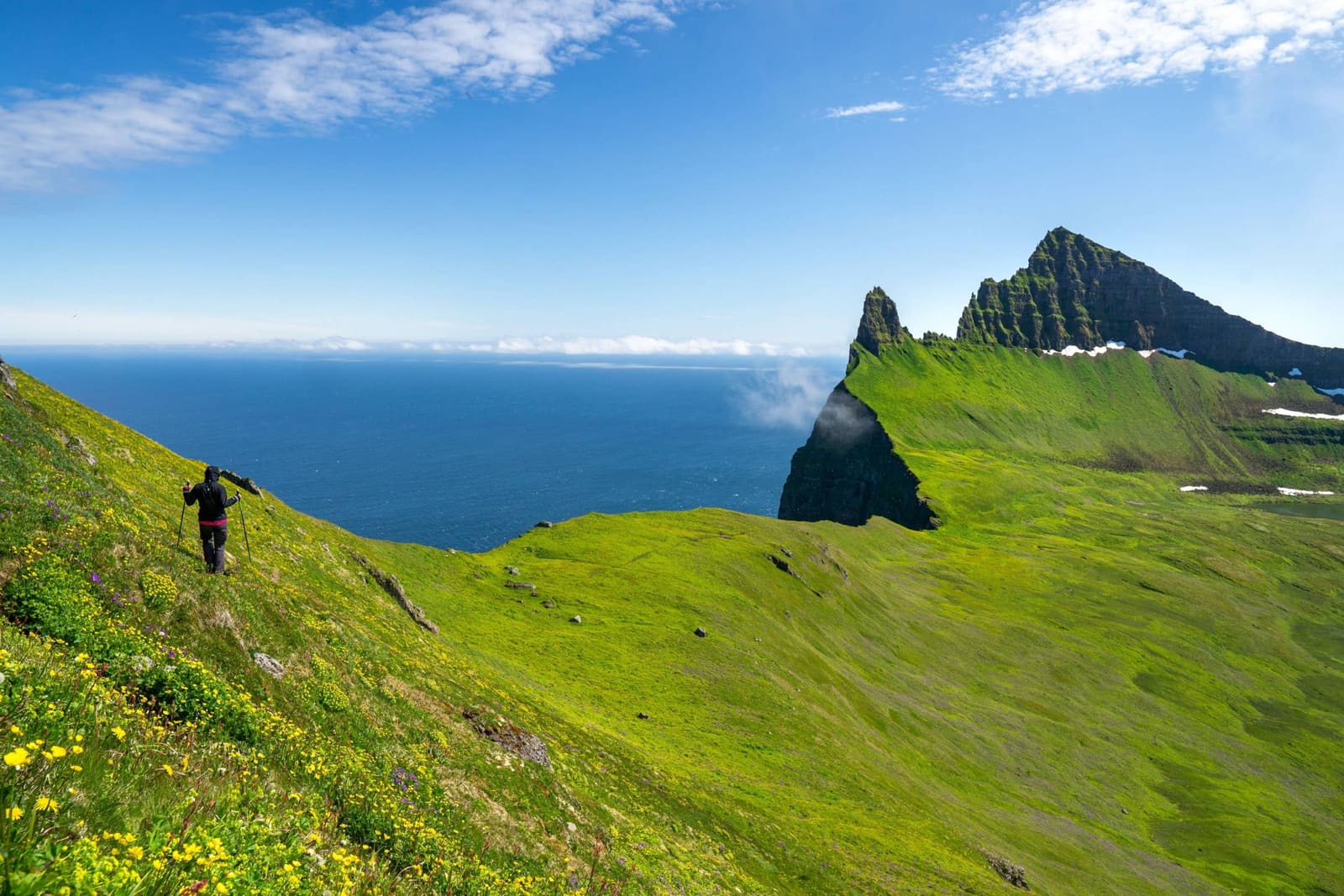
From the Seljalandsdalur side, the route can feel open and rounded at first: mountain slopes, streams, damp ground, and broad views that slowly replace the town feeling of Ísafjörður. As the peaks come closer, the walk becomes more about the pass and what the weather is doing around it.
The reward is the change in perspective. You are not looking at the Westfjords from a roadside pullout; you are moving through the folds above Hnífsdalur and back toward the fjords around Ísafjörður. In clear conditions, that makes the stop feel much larger than its map distance from town.
The right version depends on weather, daylight, footwear, confidence, and how much of your Westfjords time you want to give to an active local stop.
| Visit style | Best fit | What to avoid |
|---|---|---|
| Quick valley look | Use Seljalandsdalur for scenery, fresh air, and a low-commitment Ísafjörður add-on. | Do not pretend this replaces the pass if mountain views are the reason you came. |
| Balanced pass walk | Choose this when visibility is good and the group is comfortable with uneven, weather-exposed walking. | Do not start late if daylight, transport, or a steeper descent would make the finish rushed. |
| Slow active day | Let Þjófatindar become the main local outing, with room for photos, breaks, and a simpler evening. | Do not stack it with a long Westfjords drive and several major detours. |
For many travelers, the balanced version is the sweet spot only when the conditions cooperate. If the weather is marginal, a lower walk around Seljalandsdalur plus time in Ísafjörður can be the more satisfying choice.
Þjófatindar should be planned with live-condition checks even though the public guide should stay durable.
Use official weather guidance for wind, precipitation, visibility, and warnings before you treat the pass as fixed. A mountain walk near town can still become unpleasant or unsafe when cloud drops, snow lingers, or the descent is wet.
Road conditions also matter because Westfjords driving can take more energy than the map suggests. If your route to or from Ísafjörður is already exposed to weather, keep the walk optional and protect the rest of the day.
Þjófatindar is strongest as an Ísafjörður-area active stop, not as the single reason to enter the Westfjords.
If you are still building the broad Westfjords route, start by deciding how much time the region deserves. Dynjandi gives a more certain scenic payoff, Hornstrandir is the larger wilderness hiking commitment, and Látrabjarg is a different coastal wildlife-and-cliff decision.
Once those bigger choices are clear, Þjófatindar becomes easier to place. It can fill a flexible Ísafjörður day, replace a weaker local stop in good weather, or sit as a backup active option when a longer detour would make the route too heavy.
In winter or shoulder-season conditions, also read winter driving in Iceland before assuming the Westfjords legs around the walk will feel routine.
These are the questions most likely to change whether Þjófatindar belongs in your actual Westfjords plan.
Plan on a half-day mindset for the valley-to-valley version. A shorter Seljalandsdalur look can work if you only want the setting, but the pass should not be squeezed into a tight transfer day.
It is better described as condition-dependent than simply easy. Good weather and dry footing make it more approachable, while wind, snow patches, wet ground, and the steeper section can change the effort.
Only treat a winter visit as flexible. Snow, daylight, wind, and local route advice should decide whether you walk low in the valley, use a guided option, or skip the pass.
No, not for most travelers. Þjófatindar is a useful local mountain walk near Ísafjörður, while Hornstrandir and Dynjandi are bigger Westfjords route decisions.
By ThorPublished Updated
Use these sources to verify the parts of the plan that can change after this guide is published.
Check wind, precipitation, visibility, and weather warnings before committing to an exposed walk.
Use this before building the walk into a longer Westfjords driving day.
Check outdoor travel guidance and conditions before relying on a mountain-pass plan.
Use operator route details as context for the Seljalandsdalur to Hnífsdalur walking line.
Map
Use nearby places and useful bases before opening directions.
Interactive planning map for Þjófatindar
Interactive map
Place context and external map links remain available without loading it.
Nearby outdoors
Use nearby outdoor places only when they offer a genuinely different effort, surface, or view.
Planning context
Open the region or practical guide that resolves the next planning decision.
Next step
Use the next page that helps turn this stop into a practical route decision.