Hornstrandir Nature Reserve is a roadless wilderness in the northern Westfjords, reached most commonly by scheduled or chartered boat. A guided landing can fill one long outing; independent hikers need navigation, shelter, food, designated campsites, and spare time for weather or pickup changes.
Coast snapshot
Access
Most visitors arrive by scheduled or chartered boat
Departure areas
Ísafjörður, Bolungarvík and Norðurfjörður, depending on service
Visit shape
Guided landing or self-supported multi-day hike
Camping
Only in designated campgrounds within the reserve
Serious variables
Fog, cold, rivers, snow, cliffs, communications and boat changes
In this guide
The boat ride is the threshold
Hornstrandir begins by leaving roads, towns, and dependable services behind. The crossing is not transport tacked onto the experience; it is the boundary between an ordinary Westfjords visit and remote travel.
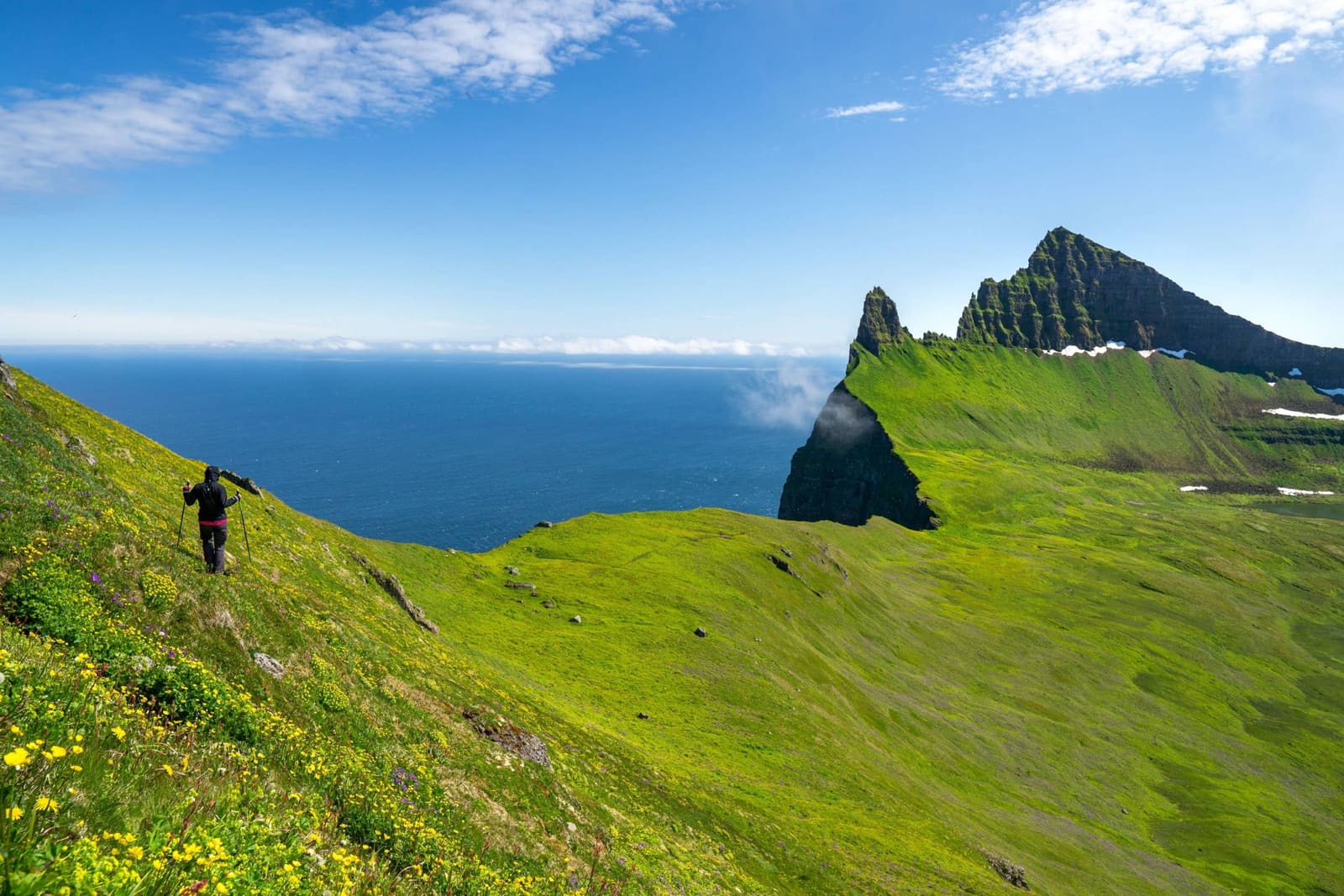
Come for steep green mountains, quiet fjords, abandoned settlement traces, bird cliffs, and Arctic fox habitat. Let visibility, water levels, sailing decisions, and group pace reduce the ambition without treating that change as failure.
A guided landing offers a meaningful first encounter. Independent hikers carry shelter, food, navigation, and judgment after the boat leaves.
Landings decide more than distance
There is no road into the reserve. Most visitors use a scheduled or chartered boat, and the named landing matters more than the straight-line distance on a map.
Services operate from Ísafjörður, Bolungarvík, and Norðurfjörður, depending on provider and destination. Match the outbound landing, intended walk, campground, and return collection before buying either direction.
Do not infer the return time from the outbound timetable. Sailing times are approximate, extra calls can change the crossing, and the captain can cancel for conditions. Protect any flight, long drive, or nonrefundable onward booking with a real buffer.
Landings determine the walk, equipment carried ashore, and consequences of delay.
Use to compare operators, destinations, approximate times, booking links, and weather caveats.
Fog can erase a cairn line
Marked paths do not make the terrain simple. Fog hides cairns, rain changes river crossings, snow remains into summer, and wet cliffs punish optimistic timing.
Carry a map and compass or reliable GPS, waterproof layers, shelter, all food, and extra supplies for delay. Know how to use the navigation tools offline. Poor mobile coverage means a phone should not be the only emergency assumption.
Hornbjarg is the signature cliff objective, not an easy viewpoint. The official hike from Hornvík is long, steep in places, and exposed near very high sea cliffs; visibility and footing must control how close the group gets.
Low cloud can remove both the view and the easy visual cues needed for movement near steep ground.
Use close to departure for wind, fog, rain, temperature, and exposed conditions.
A landing visit and a crossing are different commitments
Time alone does not separate the options; the amount of equipment, independence, and consequence changes with each format.
Three realistic Hornstrandir visit formats
Format
Strongest match
Main boundary
Guided landing
First encounter, wildlife or settlement context, lower navigation load
The boat and weather can still shorten or cancel the outing
Independent single landing
Experienced hikers using a conservative walk from one arrival area
Pickup timing leaves little tolerance for a wrong turn or slow crossing
Multi-day traverse
Self-supported hikers carrying camp, food, navigation, and emergency equipment
Snow, rivers, fog, fatigue, and changed boats affect the whole journey
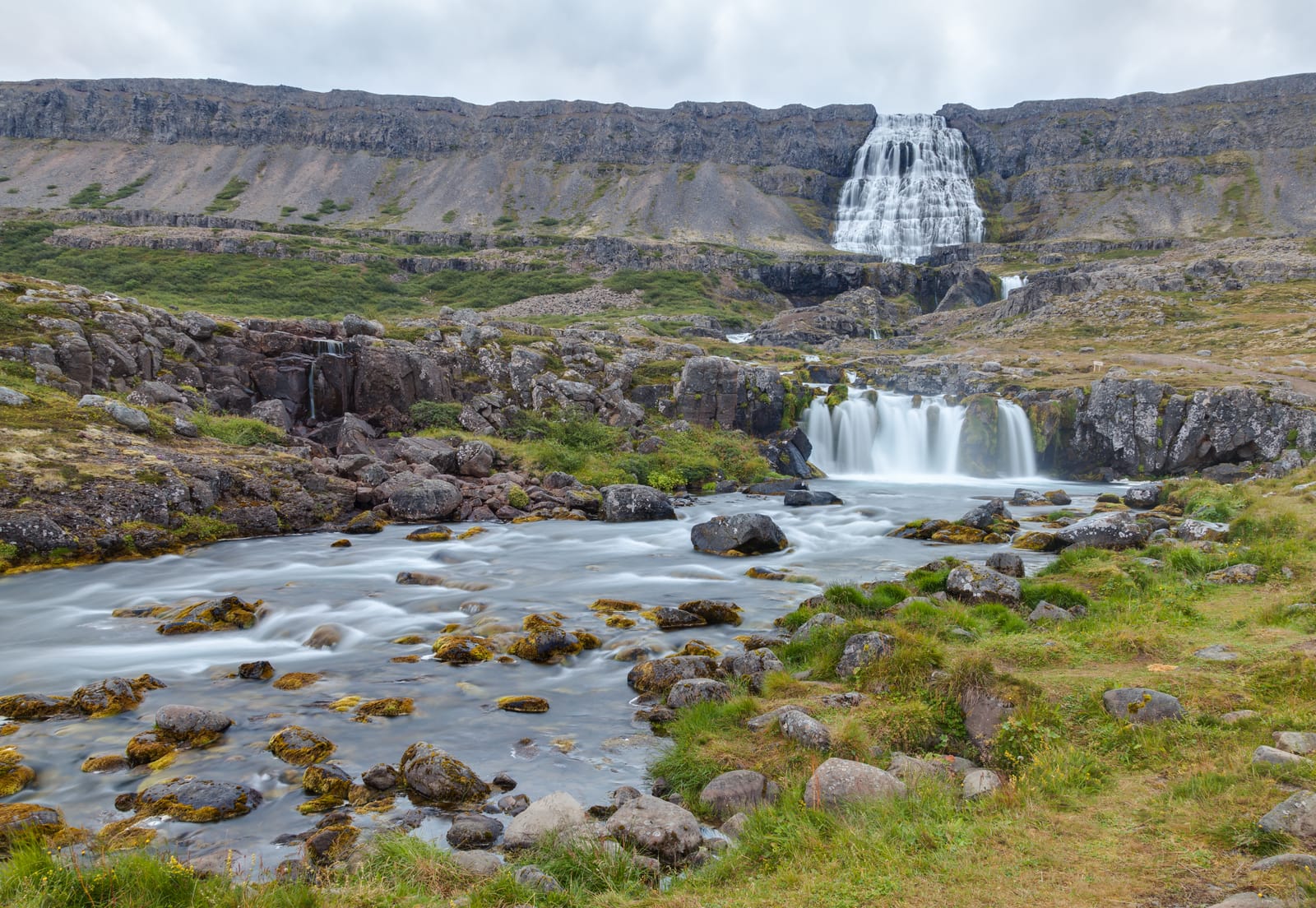
A crossing that looks modest in one photograph can become a serious boundary after rain.
Patience protects Arctic foxes
The reserve protects wildlife, vegetation, geology, and cultural remains. Quiet behavior is part of access, not a courtesy added after the photograph.
Camp only in designated campgrounds, use the toilets provided, carry rubbish out, avoid new cairns, keep cooking equipment controlled, and leave homes and historic structures private unless invited. Check electronic registration for the sensitive periods from 1 March to 15 June and 1 September to 1 November.
Never feed Arctic foxes. Official guidance asks visitors to stay at least 40 metres from dens, linger no more than 20 minutes at that distance, and move away quietly if a den or family is encountered. Keep the same restraint around nesting birds and cliff edges.
A calm distant sighting is better for the fox and more faithful to the reserve than close pursuit.Lighthouse sites and old settlements add human history, but buildings are not automatic shelters or public rooms.
Use for the wildlife, vegetation, geology, bird cliffs, and settlement value being protected.
The reserve must pass a final go-or-no-go test
A ticket does not settle the crossing. Weather, visibility, water, equipment, sailing confirmation, and the group’s condition all retain a veto.
Recheck the reserve guidance, exact boat message, Westfjords forecast, and every person’s gear before departure. Leave a SafeTravel travel plan and a separate contact who knows the intended landings, overnight areas, and expected return.
Use for the protected-area overview, visitor-centre contact, and registration reminder.
Answers before you leave the harbor
These answers define the minimum commitment; the live sources still control the actual crossing and hike.
How do you get to Hornstrandir Nature Reserve?
Most visitors travel by scheduled or chartered boat from Ísafjörður, Bolungarvík, or Norðurfjörður. Select the landing and return collection together because different destinations and weekdays have different services.
Can you drive to Hornstrandir?
No road enters the reserve. Limited overland approaches exist for serious wilderness travel, but they are not a vehicle alternative to the common sea access.
Can you visit Hornstrandir as a day trip?
Yes. Guided landings and some boat-based visits let travelers experience one area without carrying a multi-day camp. Weather and sailing decisions still control the result.
Do you need a guide in Hornstrandir?
Not always, but independent visitors need real navigation, remote hiking, river, weather, and camping competence. A guide is the safer match when those decisions are unfamiliar.
When can you visit Hornstrandir?
Scheduled visitor access is concentrated in summer. Exact service dates, snow, weather, registration requirements, and the chosen landing determine the practical window.
Can you camp anywhere in Hornstrandir?
No. Camping is restricted to designated campgrounds, and visitors should verify the campground map and sensitive-period registration requirements before departure.