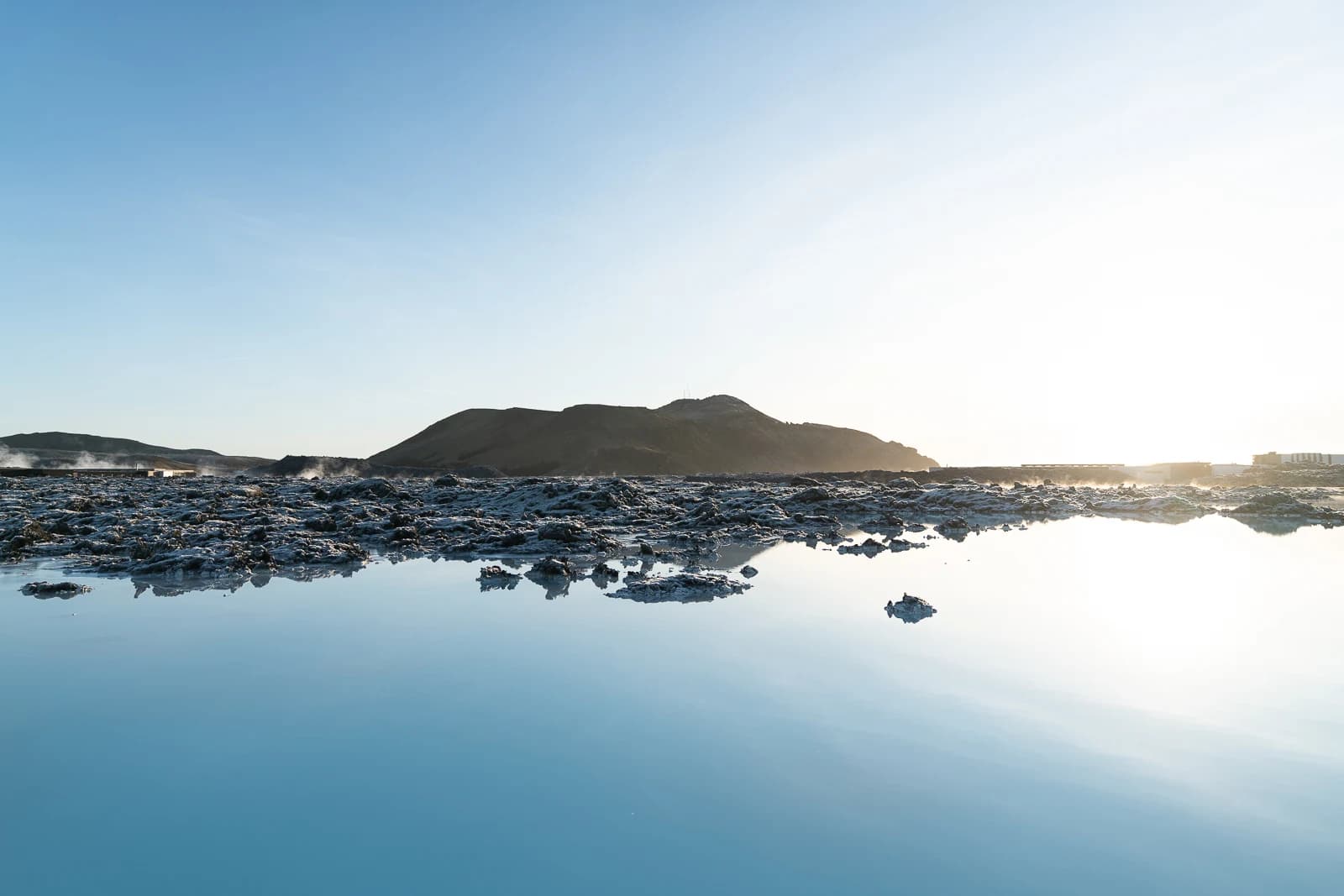
The Blue Lagoon is a booked geothermal seawater spa in the Reykjanes lava fields, with warm mineral-rich water, full changing facilities and access that can change during volcanic unrest.
Bathing details
What it is
A managed geothermal seawater spa, not a wild hot spring
Setting
Svartsengi lava fields on the Reykjanes Peninsula
Water temperature
Usually about 37-40°C
Time to allow
Roughly 2.5-4 hours for arrival, changing and bathing
Entry
Paid timed admission; check current entry and access directly
In this guide
The Blue Lagoon began with geothermal energy
This is a purpose-built spa around unusual geothermal seawater, not a naturally formed bathing pool untouched by people.
The lagoon formed in the 1970s beside the Svartsengi geothermal power station. Water brought up for energy production collected in the surrounding lava instead of draining away, and local people began bathing in it in the early 1980s. Blue Lagoon Limited was founded in 1992, and the site developed into the large managed spa visitors see today.
Today, pale water still lies among rough black lava, but the experience is fully managed, with reception, changing rooms, showers, staff, bars and other bathers. Travelers wanting solitude or an undeveloped spring should choose a different kind of bathing stop.
Official history of the Svartsengi water, early bathing and company formation.
Photo guide
Blue Lagoon in photos
A Blue Lagoon visit is a managed spa experience with real facilities and other bathers.
Silica gives the water its milky-blue appearance
The color is a property of the geothermal seawater and changing light, rather than blue dye or a clear pool reflecting the sky.
Ocean water and freshwater meet about 2,000 meters underground, where heat and pressure create geothermal seawater. It reaches the surface enriched with silica, algae and minerals. Fine silica particles scatter light and make the water appear pale blue; cloudy weather, darkness and sunlight can all change how intense that color looks.
The contrast between silica-rich water and black lava is the lagoon's defining visual feature.
The bathing water is generally around 37-40°C, though weather and conditions create some variation. It is warm enough for year-round bathing, but the walk between the building and water can feel cold or windy. The water is opaque, so move carefully rather than expecting to see the floor.
Official explanation of the water's underground origin, silica, algae, minerals and temperature.
A visit includes more than time in the water
Allow time for arrival, changing and the Icelandic pre-bathing shower as well as the time you want in the water.
Entry is tied to a booked arrival window. After check-in, visitors use a locker and shower thoroughly before putting on swimwear and entering the lagoon. Once in the water, you can move between open bathing areas and included or optional spa features. Package details change, so confirm what your ticket contains instead of relying on an older list online.
The silica mask and shared bathing areas belong to a managed spa visit, not a wilderness soak.
Allow roughly 2.5-4 hours from arrival to departure for a comfortable first visit. The lower end suits a straightforward soak, while a meal, treatment or longer time in the facilities can extend the visit.
The bathing area is large enough to explore, but it is still a shared spa rather than a private retreat. Some corners feel quieter than others, while bars, mask stations and the main entrances naturally draw people. Wind and steam can also change visibility across the water. Expect an easy, unhurried soak with facilities close by, not swimming lanes or a wilderness pool.
Choose the Blue Lagoon for a full spa visit
The strongest reason to come is that you want this particular combination of warm water, lava scenery and full facilities.
The Blue Lagoon is one of Iceland's best-known attractions, and it can be busy and expensive compared with a local swimming pool. Whether it feels worth the cost depends on what you want: it suits travelers looking for a polished destination spa who are happy to reserve several hours for it.
It is less convincing when the main goal is simply to bathe somewhere warm. Icelandic public pools provide hot tubs and local bathing culture at a much lower cost, while rustic geothermal pools offer a simpler setting with fewer services. The higher price is easier to justify when the distinctive water, lava landscape and organized spa environment are all important to you.
For a similar full-service spa closer to Reykjavík, compare Sky Lagoon. Gunnuhver and Krýsuvík offer raw geothermal landscapes without bathing. Choose between them by experience: a destination spa, local pool culture or an undeveloped geothermal landscape.
Check volcanic conditions and road access on the day
The spa lies in the active Svartsengi volcanic area, where operating decisions, roads and hazard guidance can change quickly.
Do not treat an old article, a saved map or a past itinerary as confirmation that the site is open. Check the Blue Lagoon's own access update and booking message on the day, then use the Icelandic Meteorological Office for volcanic information and Umferðin for roads. Follow current road signs because navigation apps can retain outdated approaches.
The lagoon operates year-round, but weather and access still need a live check.
Nearby Reykjanes stops show a less managed landscape
One nearby place is usually enough if the lagoon itself is the reason for the day.
Reykjanesviti adds a lighthouse and coastal scenery, while the Bridge Between Continents is a short stop centered on the peninsula's plate-boundary story. Keep the booking time fixed and add another stop only if road conditions and daylight leave a comfortable margin.