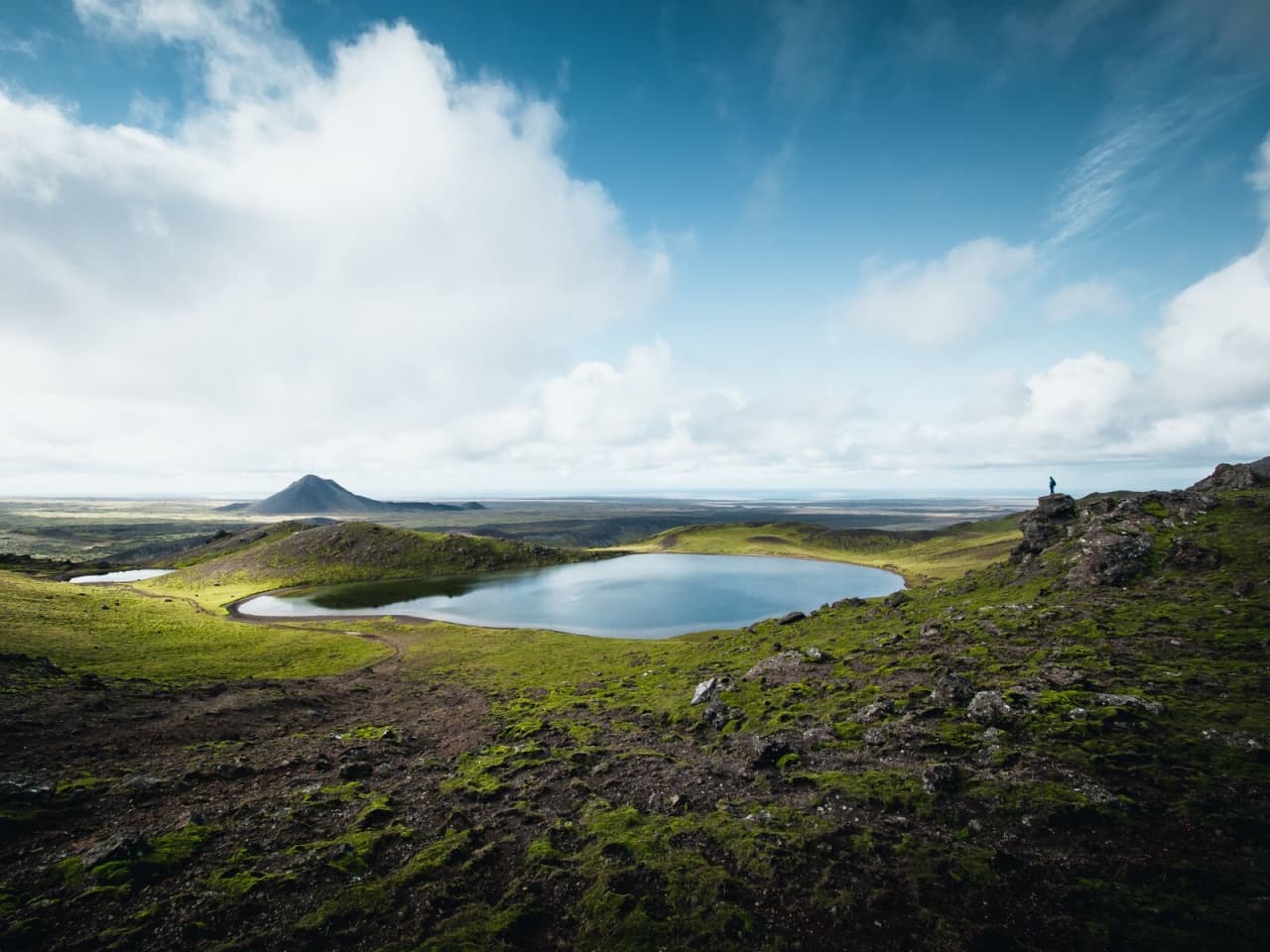
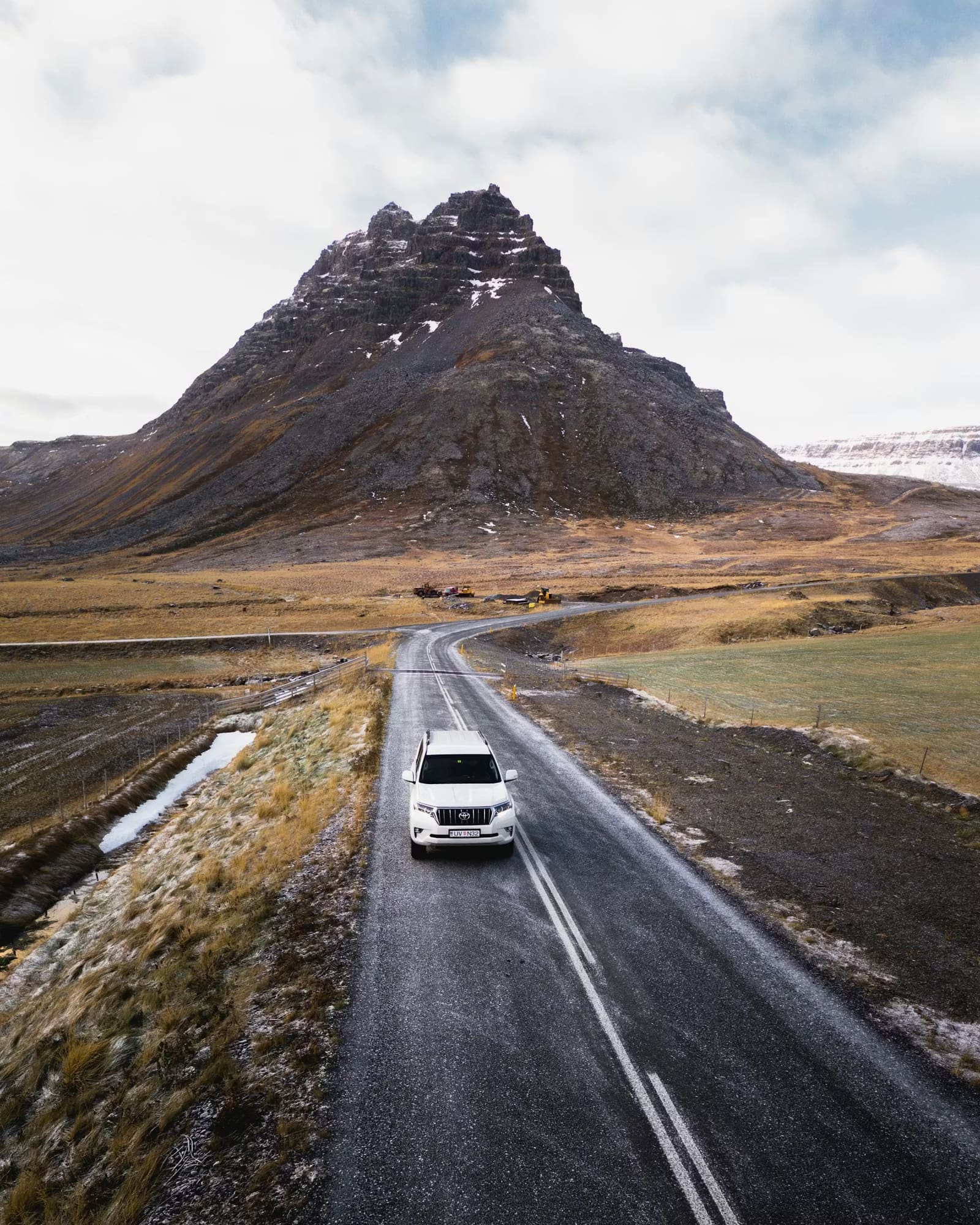
Spákonuvatn is a small crater lake in the volcanic hills of Reykjanes, worth adding when you want a quiet hike near Sogin and can handle rougher wayfinding confidently.
Geology snapshot
Type
Small crater lake and rough hiking stop
Region
Reykjanes Peninsula, near Sogin and the Trölladyngja area
Route context
Best inside a Reykjanes self-drive day, not as a standalone detour from Reykjavik
Time to allow
About 1.5-3 hours for a cautious hiking stop, depending on start point, pace, and conditions
Effort
Moderate by Reykjanes standards, with uneven ground and navigation that can be less obvious than major sights
In this guide
Spákonuvatn works best if you want a quiet Reykjanes crater-lake walk and are comfortable with a less polished hiking stop
Yes, if you want a quiet Reykjanes crater-lake walk and are comfortable with a less polished hiking stop. Skip it when your day needs simple sightseeing, quick access, or guaranteed views.
Spákonuvatn is not trying to compete with the Blue Lagoon, Kleifarvatn, or Seltún Geothermal Area. Its appeal is smaller and rougher: a still lake tucked into volcanic ridges, with Keilir and the lava fields making the surrounding landscape feel exposed and spacious.
Add Spákonuvatn when a Reykjanes day already has enough time for walking, weather checks, and a slower inland detour. Skip it on a flight day, in low cloud, or when the traveler has not yet seen the more legible peninsula stops.
What does the place feel like?
The visit feels open, volcanic, and understated. You are looking for a crater lake in a landscape of mossy lava, low ridges, and big weather rather than a staffed viewpoint.
Official regional tourism material groups Spákonuvatn with Djúpavatn and Grænavatn in the hyaloclastite ridges of Vesturháls and Sveifluháls. That context matters because the lake is not just a blue patch on the map; it sits inside the same rough Reykjanes geology that shapes Sogin, Trölladyngja, and nearby lava-field walks.
Spákonuvatn is a landscape stop first: lake, ridge, trail, and lava-field horizon all matter.
Expect the reward to be the whole setting rather than a single dramatic feature. On a good day the lake gives you calm water, dark rock, short grass, and the cone of Keilir in the distance. On a poor-visibility day, the same stop can feel vague and harder to justify.
How hard is it to fit into a Reykjanes day?
It is best treated as a flexible hiking block, not a fixed photo stop. The practical question is whether your Reykjanes plan has spare daylight and patience for rougher ground.
Spákonuvatn sits inland from the busier airport, spa, and coastal-sightseeing side of the peninsula. That makes it useful for travelers who want Reykjanes to feel wilder, but weaker for anyone trying to compress the Blue Lagoon, coastal lighthouses, geothermal areas, and airport logistics into one tight day.
Use this comparison to decide whether Spákonuvatn deserves space in the day.
Trip situation
Spákonuvatn decision
Clear day with hiking time
Add it if you want a quieter inland Reykjanes stop and can move slowly.
Short airport stopover
Keep it optional and use simpler coastal or spa-side stops first.
Bad visibility or strong wind
Defer it unless the official checks and your gear make the hike sensible.
First Reykjanes drive
Compare it against Kleifarvatn and Seltún before committing the time.
For most visitors, the stop makes the most sense after the core day shape is already sound. If adding Spákonuvatn forces backtracking or eats the buffer before a booking, flight, or long drive, it is doing the wrong job.
Check the road, weather, safety, and regional visitor details before relying on Spákonuvatn
Check the road, weather, safety, and regional visitor details before relying on Spákonuvatn, especially outside easy summer conditions or when volcanic-area advisories affect Reykjanes travel.
Official road conditions before driving inland Reykjanes roads.
Official weather guidance for wind, visibility, precipitation, and temperature changes.
Official safety guidance for hiking, volcanic-area cautions, and changing local conditions.
Regional visitor information for place context, nearby geosites, and sensible pairings.
Do not treat the map distance from Reykjavik or Keflavik as the whole planning problem. Wind, fog, wet ground, snow, and unclear trail lines can change the value of the stop more than the driving distance does.
Winter scenery can be beautiful, but the decision should come from road, weather, daylight, and safety checks.
Spákonuvatn: the strongest pairings stay on the Reykjanes Peninsula and share the same volcanic-landscape logic
The strongest pairings stay on the Reykjanes Peninsula and share the same volcanic-landscape logic. Do not pull Spákonuvatn into a day just because it looks close on a map.
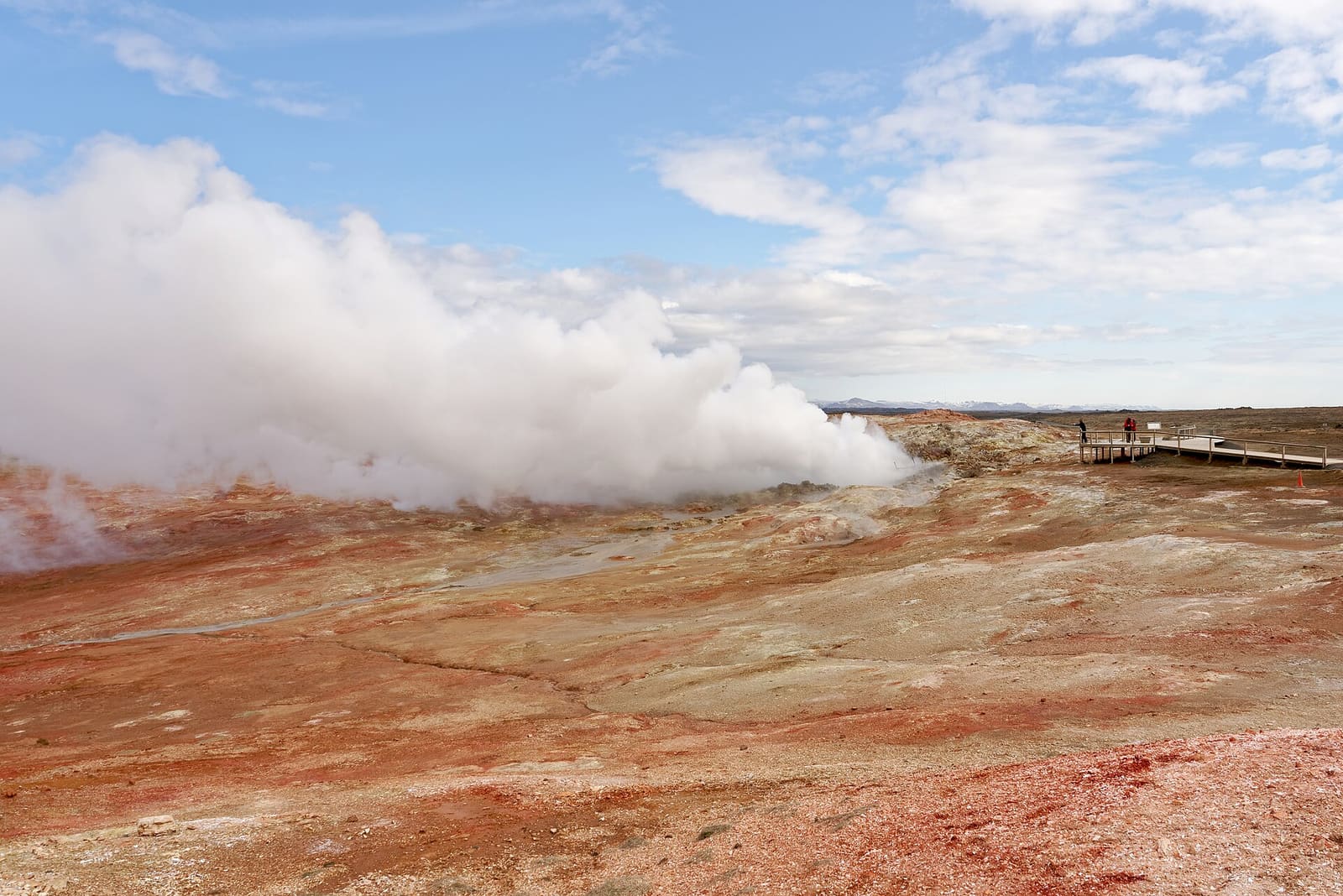
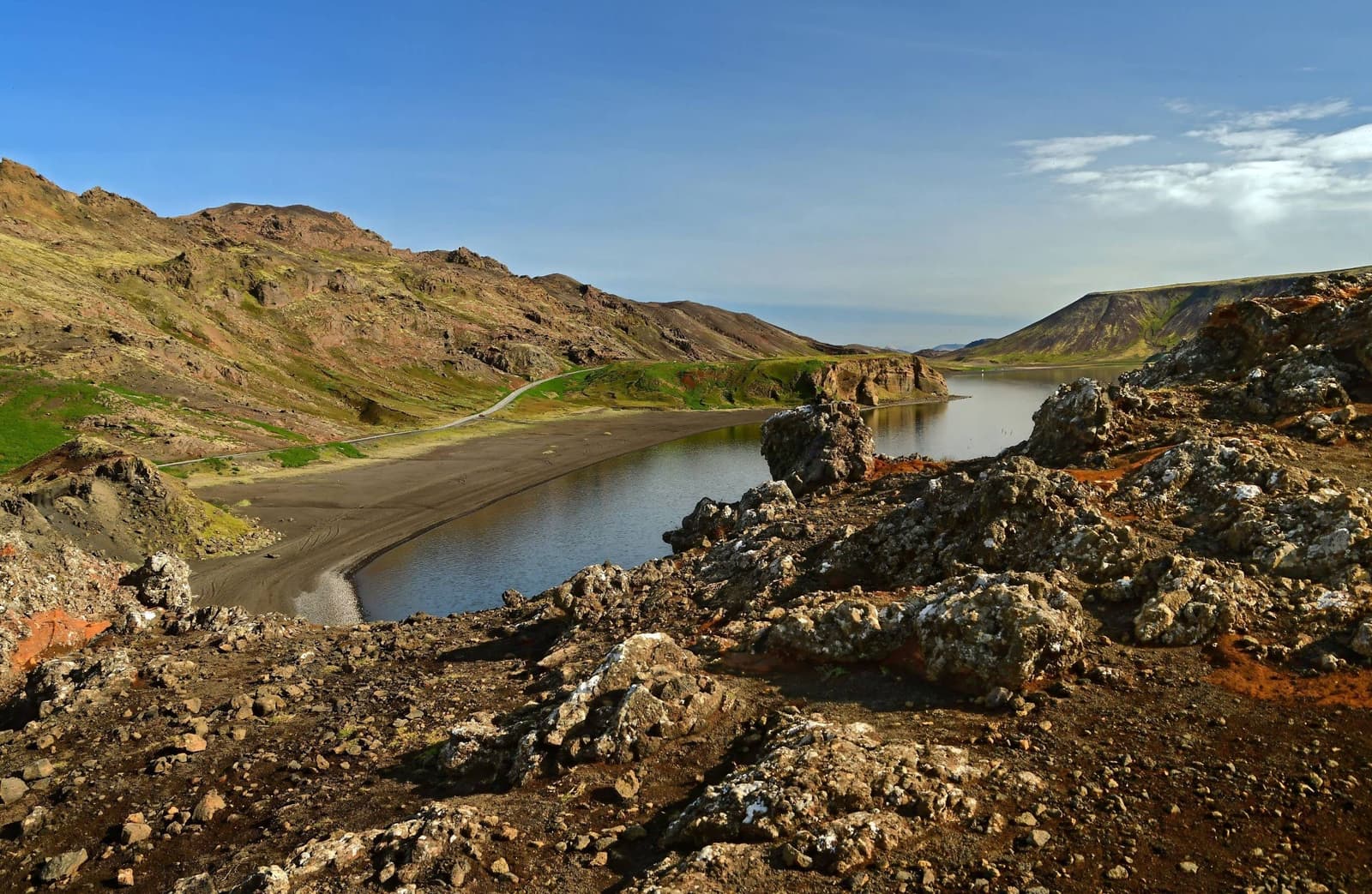
Kleifarvatn is the cleanest comparison if you want a lake stop with easier scenic-drive logic. Seltún Geothermal Area adds a more obvious geothermal boardwalk-style contrast, while Blue Lagoon works when the day needs a timed bathing anchor rather than another open-ended landscape stop.
Keilir and Lambafellsgjá are natural hiking pairings because they sit in the same rough Reykjanes landscape. Use them only when you are building a hiking-heavy day, not when the main goal is a smooth first introduction to Iceland.
The lake works best when the surrounding Reykjanes hills and lava fields are part of the plan.
Spákonuvatn: skip it if you need certainty, speed, or a clearly maintained visitor stop
Skip it if you need certainty, speed, or a clearly maintained visitor stop. Spákonuvatn is better for patient travelers than for checklist sightseeing.
This is not the best first stop for travelers who are tired after a flight, anxious about unpaved or variable access, or trying to collect as many Reykjanes sights as possible in a few hours. The stop asks for attention: to the sky, the ground, the time, and the return to the car.
Is Spákonuvatn a quick roadside stop?
No. Treat Spákonuvatn as a hiking stop rather than a quick roadside viewpoint, and check local access details before making it a fixed part of the day.
Is Spákonuvatn good for a first Reykjanes visit?
Sometimes, but only if you want a quieter hiking stop. First-time visitors with limited time usually get clearer value from Kleifarvatn, Seltún Geothermal Area, or the Blue Lagoon.
Can winter conditions change the plan?
Yes. Winter wind, visibility, snow, ice, and daylight can change whether the hike is sensible, so use official road, weather, and safety guidance before going.
Spákonuvatn: use official and specialist sources to confirm the place context and the day-of travel checks
Use official and specialist sources to confirm the place context and the day-of travel checks. Keep the live details out of the fixed plan until close to departure.