Is Skriðuklaustur worth the detour in East Iceland?

Yes, if you are already giving Fljótsdalur or Egilsstaðir real time. Skriðuklaustur is strongest as a calm cultural stop that adds history to an East Iceland day, not as a long-distance detour for one photo.

The site combines Gunnarshús, the former home connected with writer Gunnar Gunnarsson, with interpreted medieval monastery ruins below the house. That mix gives the visit a different rhythm from Hengifoss, Hallormsstaðaskógur, or Lagarfljót: you slow down, read the landscape, and connect the valley to literature, archaeology, and older travel routes.

A local Iceland travel editor would add Skriðuklaustur when a day based around Egilsstaðir needs a quieter cultural stop after waterfalls or forest scenery. They would skip it when the route is already stretched toward Seyðisfjörður, Höfn, or the next long Ring Road leg.

Skriðuklaustur visit decision
ChoicePlanWhy it works
GoYou are nearby in Fljótsdalur, Egilsstaðir, or the Hengifoss areaThe stop adds culture without breaking the day
Keep it shortYou mainly want the house, ruins, and a short pauseThirty to forty-five minutes can still make the stop meaningful
SkipYou are driving a long eastbound or westbound leg with little daylightThe cultural value drops if the stop creates pressure later
Check firstIndoor exhibitions, services, or group visits matter to your planOfficial visitor information should decide the detailed timing

Worth the stop?

When this stop makes sense

Good match for

  • travelers who want East Iceland culture between waterfalls, forests, and fjord drives
  • self-drive visitors using Egilsstaðir as a base or route reset
  • readers interested in Gunnar Gunnarsson, medieval ruins, and Fljótsdalur history
  • families or slow travelers who prefer a short cultural stop over another viewpoint

Think twice if

  • travelers rushing through East Iceland with no time beyond the main driving line
  • visitors who only want dramatic outdoor scenery and no museum or heritage context

Pair it with

East IcelandEgilsstaðirSnæfellKárahnjúkavirkjun

Which version of the stop should you plan?

Choose the visit length before you arrive. Skriðuklaustur can be a short grounds-and-ruins stop, a balanced cultural visit, or part of a slower East Iceland day.

Ways to use Skriðuklaustur
Visit styleTime rangeBest fit
Quick grounds stop30-45 minutesYou want Gunnarshús, the ruin layout, photos, and a short break before moving on
Balanced cultural stop1-2 hoursYou want exhibitions, the writer context, the monastery story, and time to read the signs
Slow Fljótsdalur pause2-3 hoursYou are using the valley as a calmer day around Hengifoss, Hallormsstaðaskógur, or Egilsstaðir

Most travelers should choose the quick or balanced version. The site is not difficult to understand, but it rewards a slower pace because the story is layered: a twentieth-century writer’s home above the remains of a much older religious and care-giving community.

The value of Skriðuklaustur comes from the whole site: house, grounds, valley setting, and a pause from road momentum.

What will you actually see at Skriðuklaustur?

Expect a compact site rather than a large open-air museum. The main pieces are Gunnarshús, the monastery ruins, the interpreted grounds, and the wider Fljótsdalur setting.

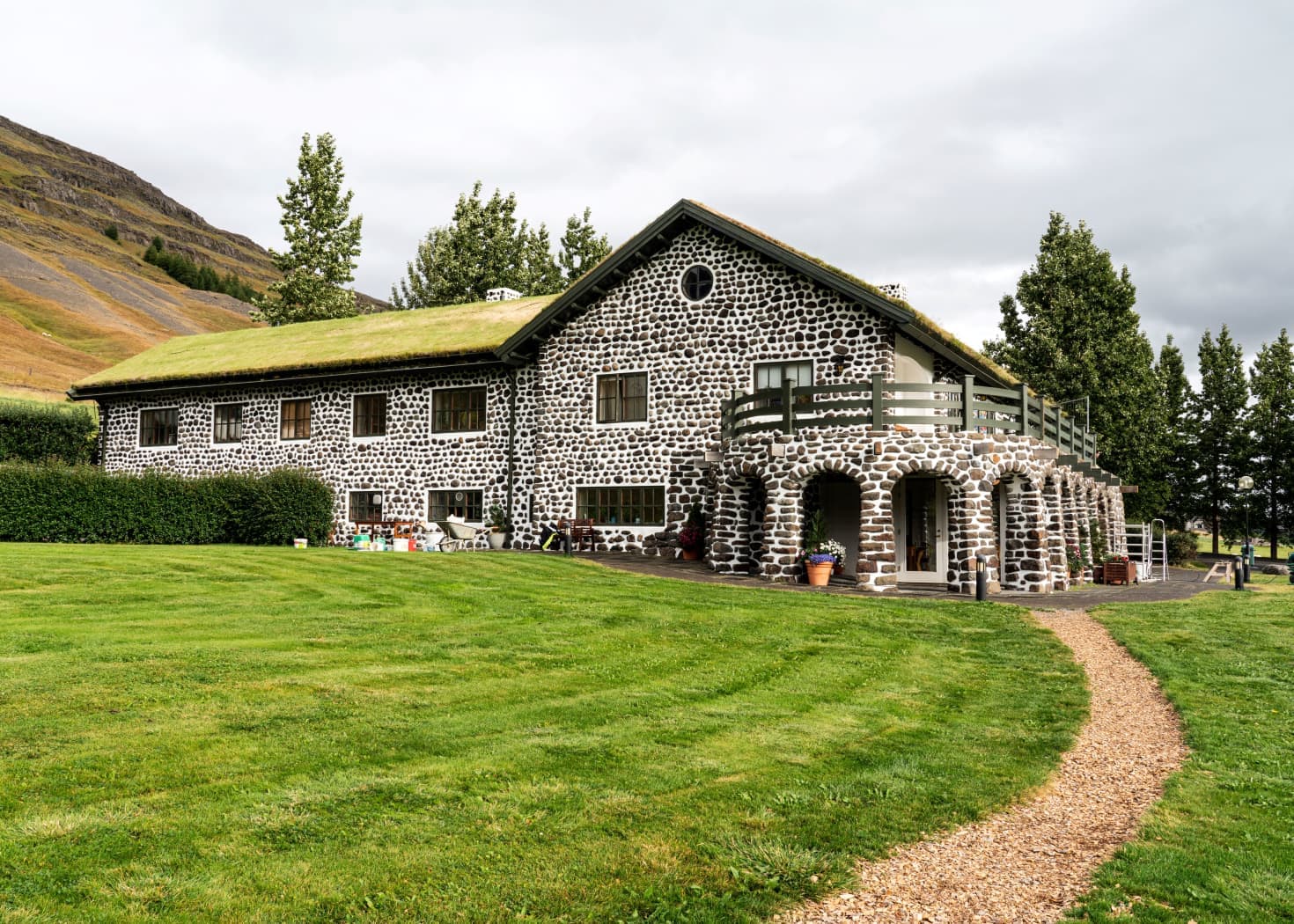
Gunnarshús is visually distinctive: a stone-patterned, turf-roofed house set below the valley slopes. It anchors the modern cultural centre and helps explain why Skriðuklaustur is more than a ruin field.

The monastery ruins are low and interpreted, so the visit depends on reading the site rather than expecting standing medieval walls.

The monastery remains are low outlines in the grass, with paths and interpretation helping you understand the scale. Official research describes Skriðuklaustur as a late medieval Augustinian monastery with excavation work that revealed buildings, graves, artifacts, and evidence of care for sick and poor people.

This is also where the stop connects to the larger East Iceland landscape. Snæfellsstofa, the Vatnajökull National Park visitor centre for the eastern area, sits at Skriðuklaustur, so the site can become a practical bridge between cultural history and the Snæfell side of the region.

Gunnar Gunnarsson’s presence gives the site its writer-house identity, while the ruins pull the story much further back.

How does Skriðuklaustur fit with nearby stops?

Treat Skriðuklaustur as part of an East Iceland cluster. It pairs best with places that already put you near Fljótsdalur or Egilsstaðir.

The easiest pairing is Egilsstaðir, especially if you are using the town as a base for inland East Iceland. From that base, Skriðuklaustur can sit alongside Hengifoss, Litlanesfoss, Hallormsstaðaskógur, and Lagarfljót without feeling like a random detour.

If your day points toward Snæfell or Kárahnjúkavirkjun, the stop can work as a softer cultural counterweight before wilder highland-edge scenery. If your plan is more fjord-led, compare the time against Seyðisfjörður before adding another inland stop.

The stop is easy to understand on arrival, but its route value depends on how much time you have around Egilsstaðir and Fljótsdalur.

What should you check before committing?

Use stable planning guidance for the page, then let official sources decide live details. That matters most if you need indoor exhibitions, services, access information, or a winter driving margin.

For the cultural centre, check official visitor information before relying on exhibitions, services, guided visits, events, dining, or access details. For the drive, check Umferðin, the Icelandic Meteorological Office, and SafeTravel before treating an inland East Iceland stop as fixed.

The stop itself is not a high-effort hike, but the surrounding plan can become fragile. Weather, daylight, road conditions, and the distance to your next base matter more than the walking effort around the grounds.

Official planning checks

Common questions about Skriðuklaustur

These are the practical questions that decide whether the stop belongs in a real East Iceland route.

Is Skriðuklaustur mainly a museum or an outdoor ruin site?

It is both, but most travelers should think of it as a compact cultural site. Gunnarshús, exhibitions, and the monastery ruins work together, so the stop is strongest when you have time for both indoor and outdoor context.

How long should I spend at Skriðuklaustur?

Allow 30-45 minutes for a quick look at the grounds and ruins, or 1-2 hours if exhibitions and the writer-house story matter to you. Add more time only if you are building a slow Fljótsdalur day.

Can I pair Skriðuklaustur with Hengifoss?

Yes, that is one of the most natural pairings if road, weather, and daylight conditions support the day. Skriðuklaustur adds a cultural pause near the same valley area rather than another walking objective.

Do I need to verify visitor details before going?

Yes, verify official visitor details if exhibitions, services, guided visits, dining, or access information matter to your plan. Use official road, weather, and safety sources before making the stop part of a tight driving day.