Skógar Museum is a South Coast cultural stop beside Skógafoss, useful when you want turf houses, regional artifacts, and old transport history instead of another quick waterfall-only pause.
Culture snapshot
Type
Museum, open-air heritage site, turf houses, and technical museum
Region
South Iceland, in Skógar beside the Skógafoss area
Route context
South Coast and Ring Road pause between Seljalandsfoss, Skógafoss, Sólheimajökull, Dyrhólaey, Reynisfjara, and Vík
Time to allow
About 1-2 hours for a focused museum visit; longer if you read closely or pair it with nearby walks
Best experience
Use it to add human history to a day otherwise dominated by waterfalls, coast, and glacier views
In this guide
Skógar Museum works best if you want the Skógar stop to include Icelandic everyday history as well as waterfall scenery
Yes, if you want the Skógar stop to include Icelandic everyday history as well as waterfall scenery. Skip it if the day is already too full for a museum pause.
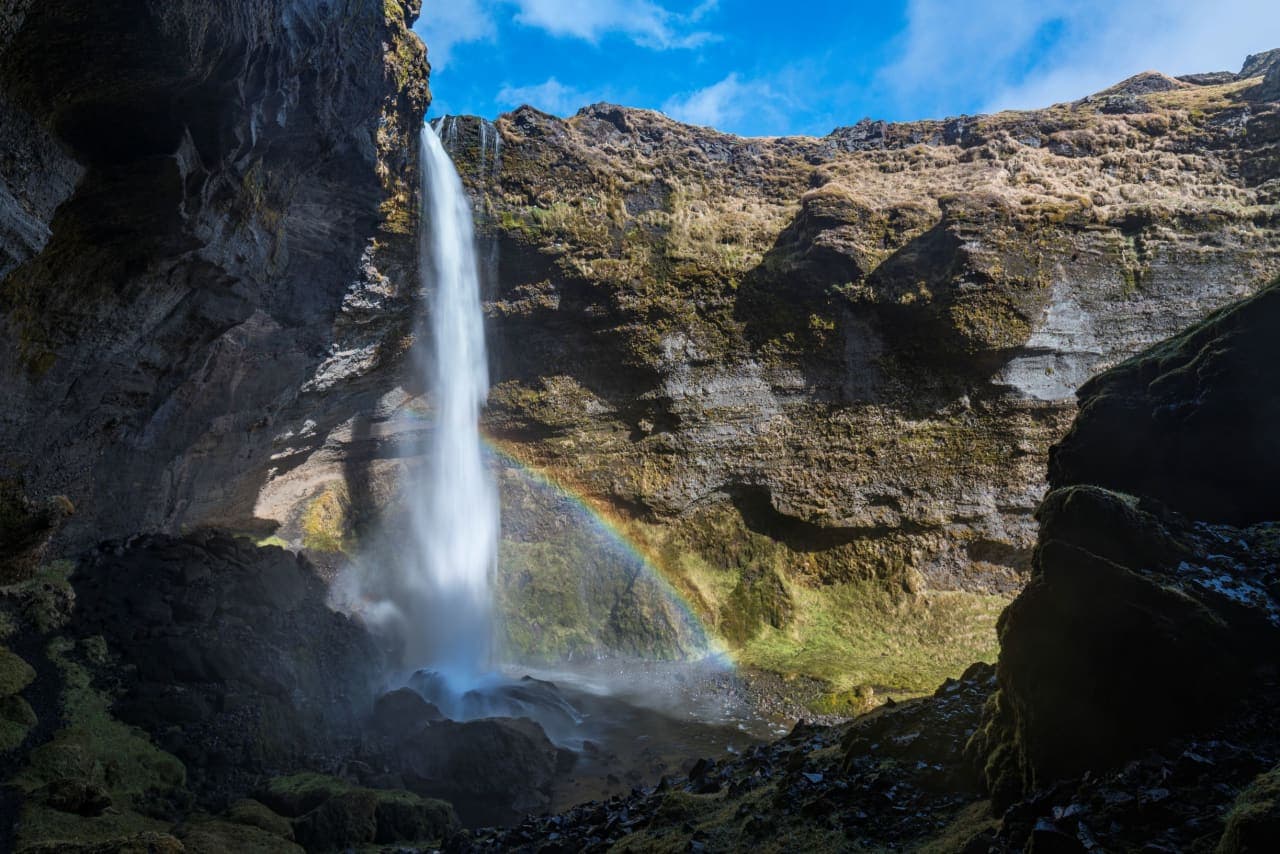
Skógar Museum sits in the same compact South Coast cluster as Skógafoss and Kvernufoss, so the decision is rarely about a long detour. The real question is whether you want your Skógar stop to be only spray, photos, and a fast turnaround, or whether the day needs a slower look at how people lived, worked, traveled, farmed, and fished in this part of Iceland.
Add the museum when a South Coast day needs texture between Seljalandsfoss and the Vík-area coast, especially for families, history-minded travelers, or bad-weather pacing. Skip it when the same day already includes Skógafoss, Kvernufoss, Sólheimajökull, Dyrhólaey, Reynisfjara, and a long drive.
Go if: turf houses, regional artifacts, old transport, and a slower Skógar cluster stop sound useful.
Skip if: your group only wants major outdoor scenery and has no patience for museum rooms.
Check before committing: official visitor information should decide admission, guided-tour, group, and access details.
Photo guide
Skógar Museum in photos
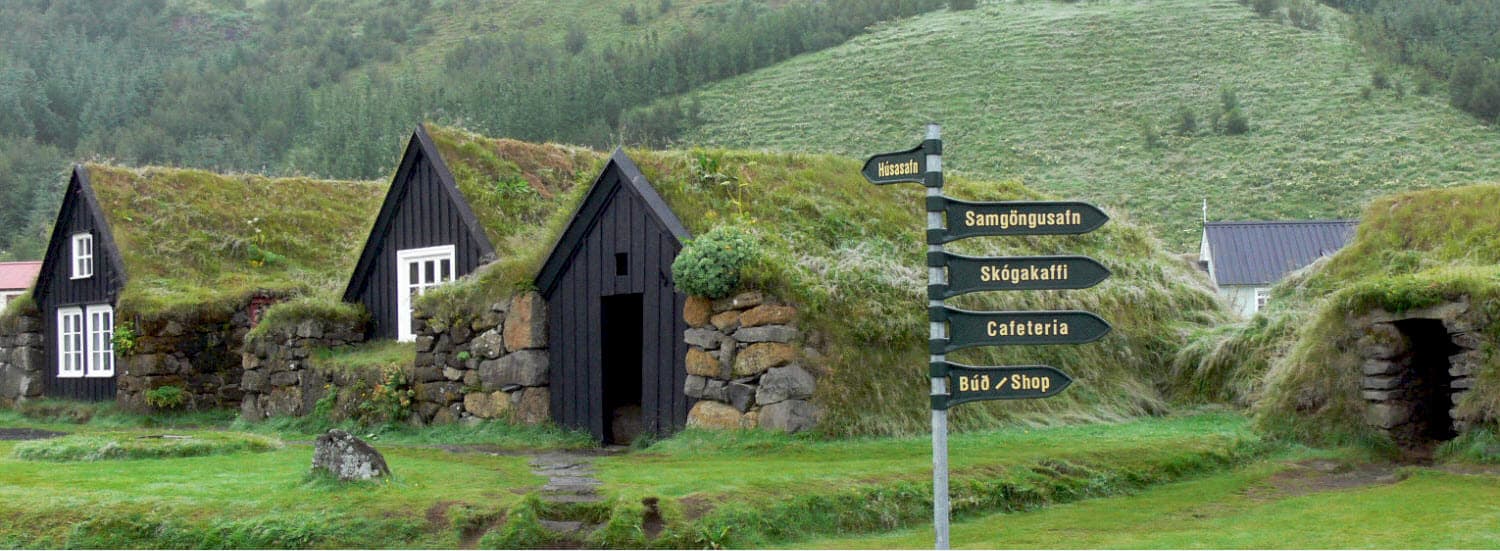
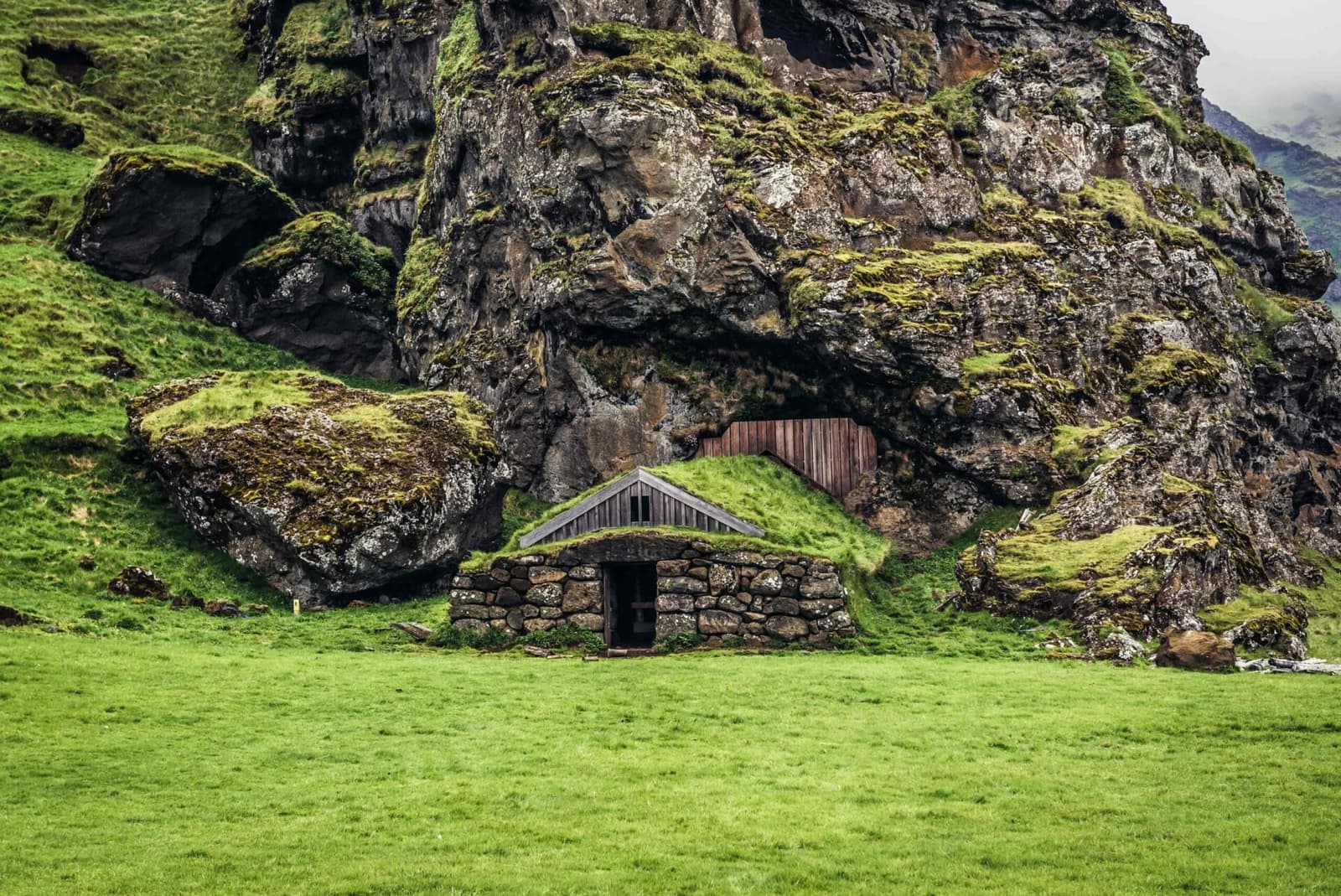
Turf houses make Skógar Museum readable as a cultural stop in the South Coast hub.
The museum is not just one turf house photo
The museum is not just one turf house photo. It combines a folk collection, an open-air heritage area, and a technical museum in the same Skógar site.
The Folk Museum is the core historical layer, with objects tied to fishing, agriculture, household life, textiles, handcrafts, and natural history. The south shore context matters: this part of Iceland had open Atlantic beaches rather than easy harbors, so boats, tools, and working-life artifacts carry more weight than they might in a generic local museum.
The Open Air Museum gives the stop its strongest visual identity. Turf-roofed buildings, a church, a schoolhouse, and other historic structures make the museum feel connected to the green slopes around Skógar rather than sealed off from the landscape.
The open-air area is the part most travelers remember because the turf buildings make the museum feel rooted in the South Coast landscape.
The Technical Museum broadens the story into transport, communication, and technology. That makes Skógar Museum especially useful for travelers who have already seen several natural stops and want a clearer human history layer before continuing the South Coast.
The technical section shifts the visit from turf-house heritage into transport and communication history.
How long should you allow and who will enjoy it?
Plan roughly 1-2 hours for a focused visit. Add more time if your group reads closely, uses guided interpretation, or pairs the museum with nearby walks.
The museum works best when it is given enough room to be a real stop, not a rushed bathroom-and-photo pause. A focused traveler can move through the main themes efficiently, while history-focused visitors, families, and bad-weather groups may find that the museum naturally slows the day.
This is also where the museum earns its place on a practical route. Skógafoss is a high-energy outdoor stop, Kvernufoss adds a short canyon walk, and Skógar Museum gives the same cluster a quieter cultural option. If your group has mixed interests, that contrast can make the day feel better balanced.
How Skógar Museum fits different South Coast days
Trip style
Museum fit
Planning note
Fast waterfall day
Optional
Use the museum only if Skógafoss alone feels too brief.
Family or mixed-interest day
Strong
The indoor-outdoor mix can break up scenery-heavy driving.
History and culture focus
Strong
Let the folk, open-air, and technical sections carry the stop.
Packed glacier-and-coast day
Weak
Save time for Sólheimajökull, Dyrhólaey, or Reynisfjara instead.
What should you pair with the museum in Skógar?
The cleanest pairing is Skógar Museum plus Skógafoss. Add Kvernufoss only when you have enough walking time and the day is not already overloaded.
Think of Skógar as a small cluster. Skógafoss is the obvious anchor, Skógar Museum adds culture, and Kvernufoss adds a quieter canyon walk from the museum area. That trio can be excellent, but it competes with other South Coast stops if you are also pushing east toward Sólheimajökull, Dyrhólaey, Reynisfjara, or Vík.
Westbound travelers often compare the museum against Seljalandsfoss and the remaining drive toward Reykjavík. Eastbound travelers need to decide whether the museum is the cultural pause before the glacier-and-coast section, or whether Skógar should stay short so the Vík-area stops have enough daylight.
Simple pairing logic
Best compact pair
Skógar Museum and Skógafoss
Best slower cluster
Skógar Museum, Skógafoss, and Kvernufoss
Best broader South Coast day
Choose between museum time and a longer push toward Sólheimajökull, Dyrhólaey, and Reynisfjara
Check official visitor information before treating the museum as fixed, then check road and weather sources for the wider South Coast day
Check official visitor information before treating the museum as fixed, then check road and weather sources for the wider South Coast day.
Museum details are the fragile part of this page. Admission, guided interpretation, group arrangements, visitor services, and access needs can change in ways that matter if you are building a tight schedule. Use the official museum site for those decisions rather than relying on a saved itinerary note.
The wider route also matters. Skógar is close to the main South Coast drive, but wind, winter roads, low visibility, or short daylight can still change whether a museum stop improves the day or crowds it. Check the official road and weather sources before committing to a long waterfall-museum-glacier-coast sequence.
Use for weather warnings and forecast context before the drive.
Skógar Museum FAQ
These answers help decide whether the museum deserves space in your South Coast plan.
Is Skógar Museum worth visiting if I am already seeing Skógafoss?
Yes, if you want cultural depth beside the waterfall stop. The museum adds turf houses, regional artifacts, and transport history that Skógafoss itself does not provide.
How long do I need at Skógar Museum?
Plan about 1-2 hours for a focused visit. Add more time if your group reads closely, arranges interpretation, or pairs the museum with Skógafoss and Kvernufoss.
Is Skógar Museum useful in bad weather?
Often yes, because it gives the Skógar area an indoor-outdoor cultural option. Still check official visitor details and the wider South Coast forecast before relying on it.
Should I choose Skógar Museum or Kvernufoss?
Choose Skógar Museum for culture and a slower heritage stop; choose Kvernufoss for a short canyon walk. Add both only if the day has enough time and walking margin.