Dyrhólaey is a high coastal headland near Vík, known for its sea arch, lighthouse and broad black-sand views. Wind, cliff edges and seasonal bird protection shape the visit.
Coast snapshot
Landscape
Cliff-top headland with a sea arch and lighthouse
Location
On the South Coast, west of Vík
Allow
About 30 to 60 minutes
Bird season
Nesting protection can restrict access in May and June
Safety
Stay on visitor paths and well back from cliff edges
In this guide
A headland built around one great coastal view
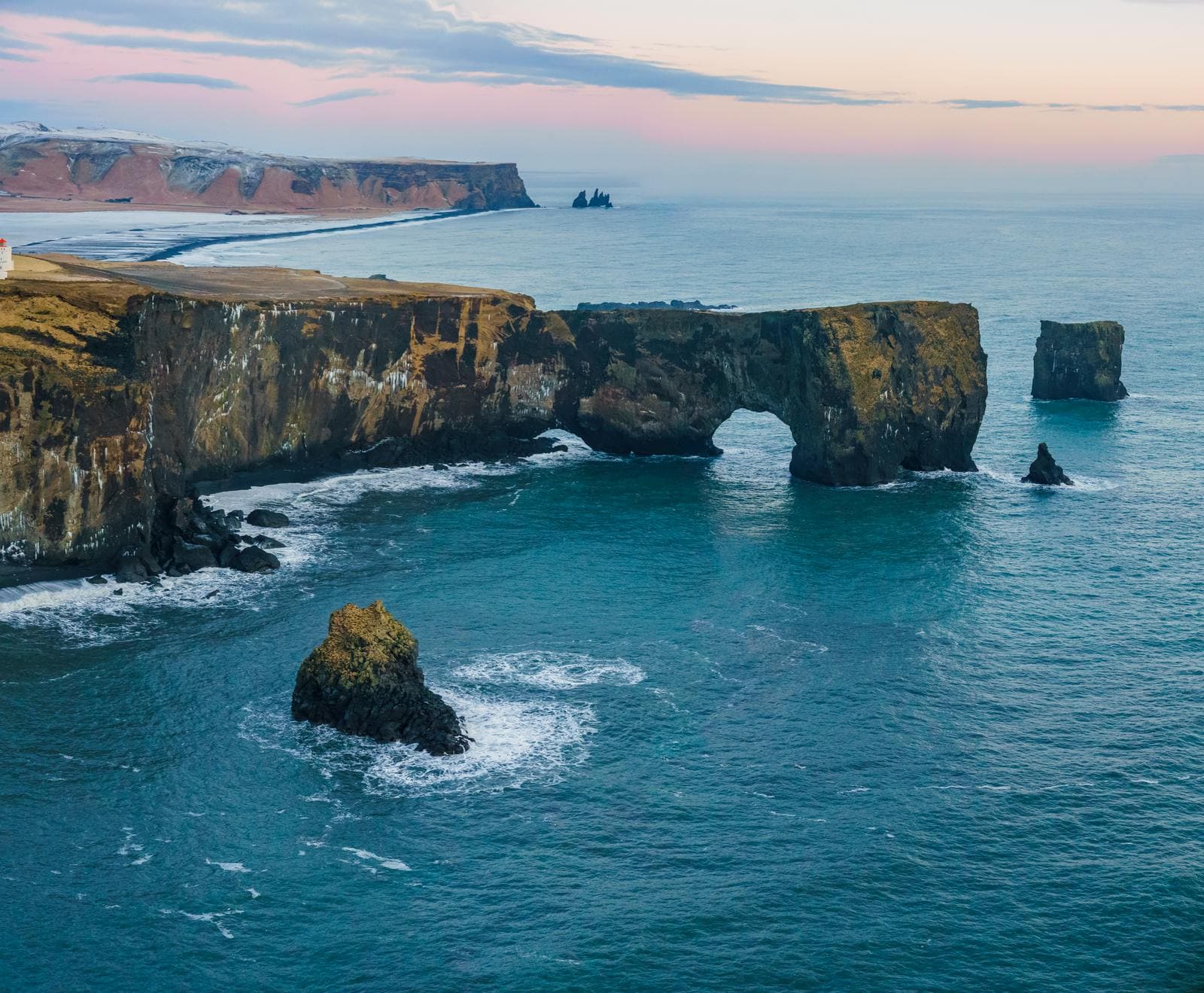
Dyrhólaey rises above the coast west of Vík, separating long black-sand shores with cliffs and a large natural arch. Its height turns familiar South Coast elements into a wider landscape.
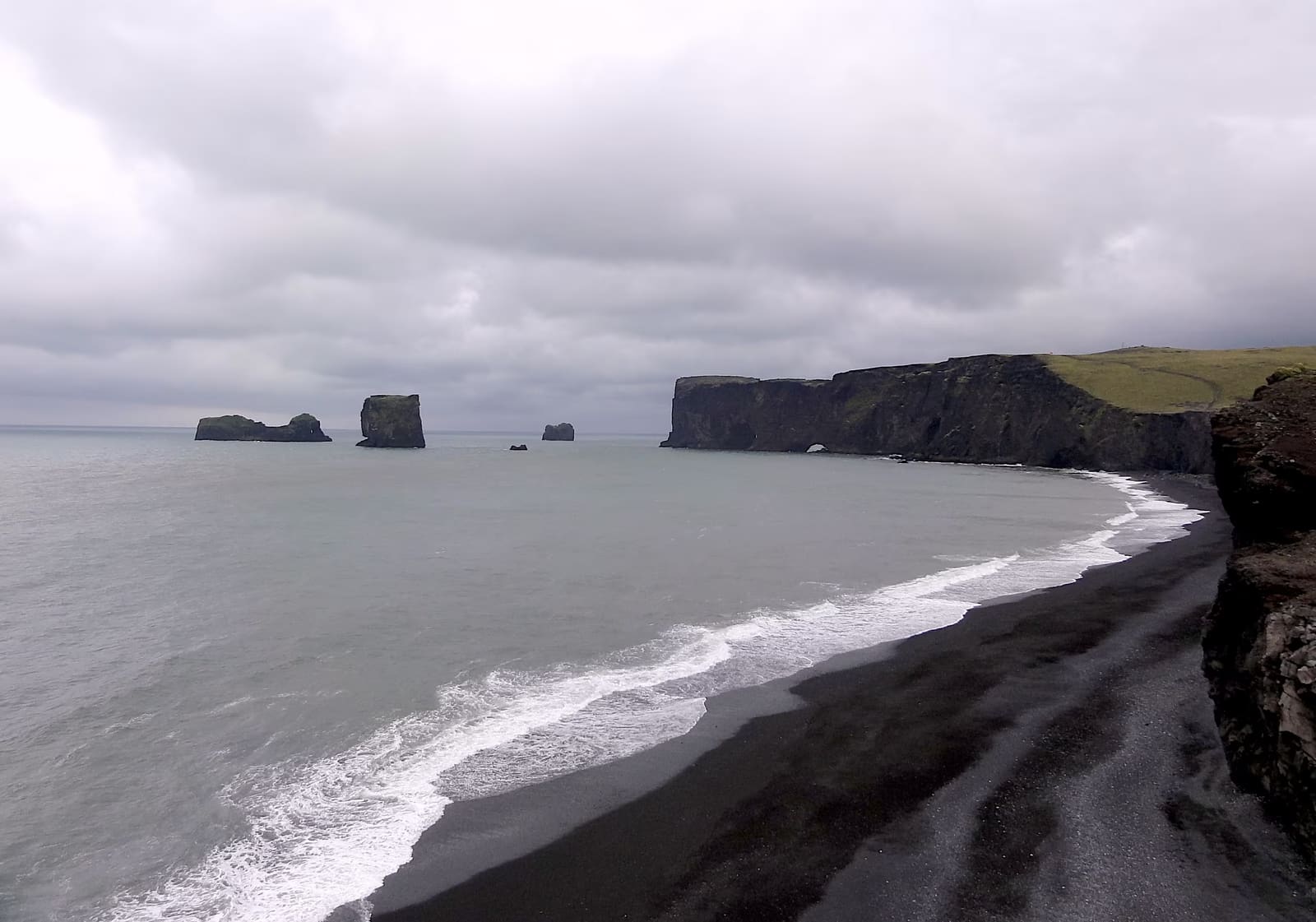
From the headland, pale lines of surf run along dark sand, Reynisdrangar stands offshore to the east and the coast stretches west in a broad, open sweep. The arch is the signature feature, but the view works because the cliffs, stacks and beaches are visible together.
This is primarily a viewpoint visit rather than a hike. Most people need about 30 to 60 minutes to look from the established visitor areas, take photographs and adjust to the wind. Moving between different viewing areas can take longer when conditions or traffic are slow.
Official protected-area background, natural features and visitor context.
The upper and lower views show different sides of Dyrhólaey
The lighthouse marks the upper part of the headland, while lower viewpoints give another angle on the arch, cliffs and coast. You do not need to force both when weather or access makes one uncomfortable.
The long black shoreline is as important to Dyrhólaey's identity as the arch itself.
Clear visibility adds scale, but dramatic weather is not automatically good viewing weather. Low cloud can erase the horizon, and strong gusts make cliff edges and exposed paths a poor place to linger. If one area feels unsafe, use the more sheltered available view or leave.
The arch gives Dyrhólaey its name and remains visible from established viewpoints when conditions are clear.
Nesting birds can change access in May and June
Dyrhólaey is a protected breeding area, not only a scenic lookout. Puffins and other seabirds draw attention in spring and summer, but their protection comes before a particular photograph or viewpoint.
The Environment Agency can restrict traffic and visits between 1 May and 25 June when nesting birds need extra protection. The decision is based on an annual specialist assessment, so do not treat an old closure notice—or an old open-access report—as the rule for your visit.
Official information about the possible 1 May to 25 June protection period and current management.
Cliff edges and wind require a conservative visit
There is no photograph at Dyrhólaey worth testing an edge, crossing a barrier or standing where a gust can upset your balance.
Use established paths and viewing areas, keep children close and step back before changing lenses or looking at a screen. Loose ground and wind can make the final metre near an edge much more dangerous than it appears. Drones and disturbance can also affect protected birdlife; follow current rules on site.
Dyrhólaey is an exposed protected coast, so safe distance matters more than the closest possible angle.
Check the South Iceland wind forecast before arriving. If a warning is active or opening a car door is difficult, a cliff-top visit is unlikely to improve once you are outside.
Official forecasts and warnings, including wind for South Iceland.
Reynisfjara gives the same coast a different scale
The most useful comparison is directly below: Dyrhólaey gives height and distance, while Reynisfjara puts basalt, sea stacks and dangerous surf at ground level.
Visit Reynisfjara only according to its current SafeTravel and on-site access rules; a view from Dyrhólaey does not tell you whether the beach is open. Vík is the practical nearby pause for food, fuel and a lower coastal view.
To the west, Skógafoss offers a simpler high-impact stop when cloud or wind removes the value of exposed cliff views. Choose it as an alternative when conditions call for one, not as another item that must be added to the same schedule.
From below, the headland becomes part of the wider Vík-area coastline rather than a single viewpoint.