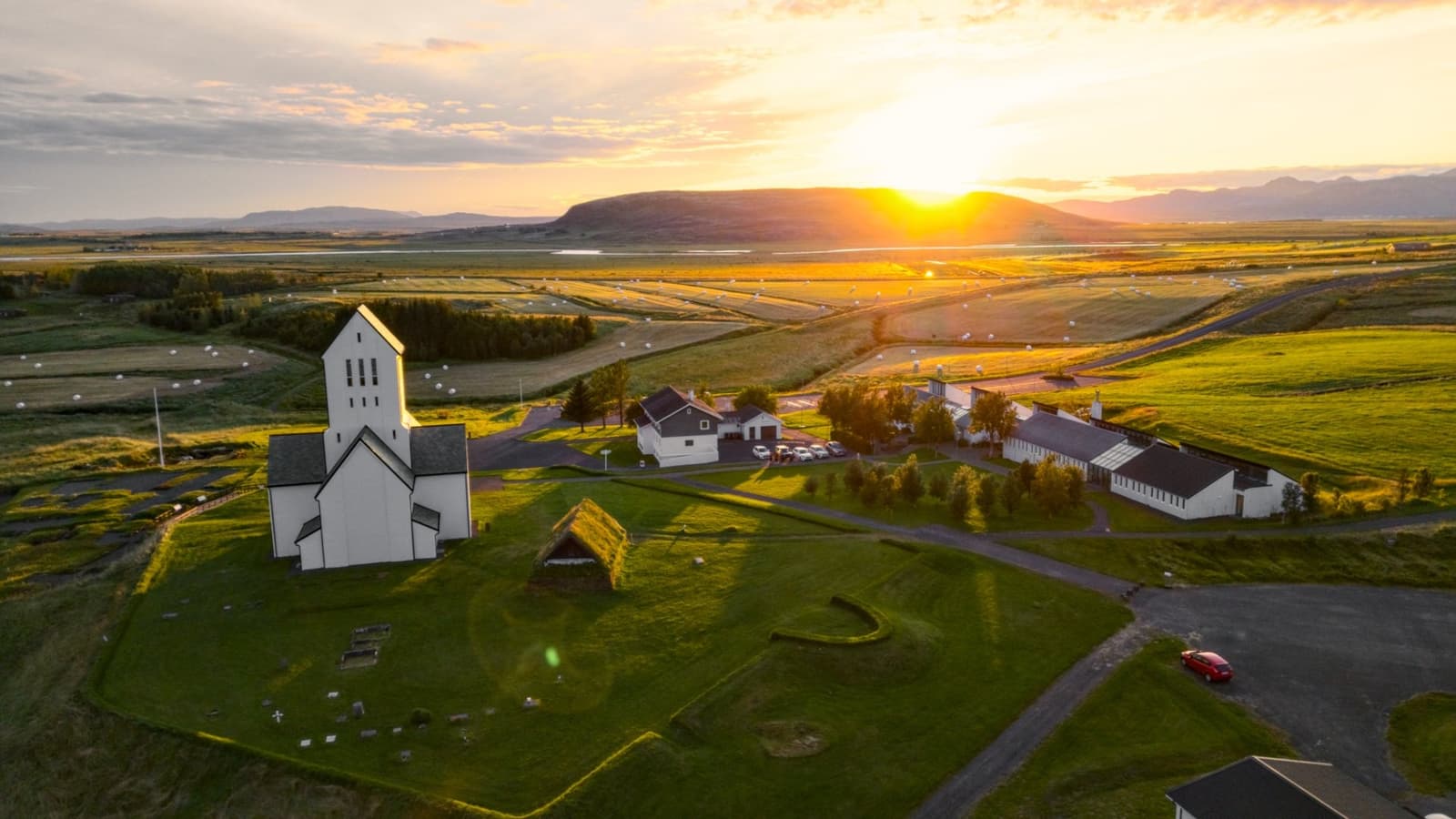
Is Skálholt worth adding to the Golden Circle?

Yes, Skálholt is worth adding when you want a quieter cultural stop between the Golden Circle's larger natural sights. It is skippable if your day is already stretched by Þingvellir, Geysir, Gullfoss, Kerið, food timing, and winter daylight.

Skálholt is not trying to compete with waterfalls, geysers, or rift-valley scenery. Its value is different: a white cathedral on an open South Iceland site, archaeological traces in the grounds, a small turf-church setting, and a history that helps explain why this quiet place mattered for centuries.

A local Iceland travel editor would add Skálholt to a Golden Circle day when the route needs a calm culture stop after Kerið or Brúarfoss Waterfall. They would skip it when the group only wants the classic scenic trio or when the day already feels too full before lunch.

Worth the stop?

When this stop makes sense

Good match for

  • Golden Circle self-drives that need a quieter culture stop
  • history-focused travelers
  • families who want a short, calm break from scenery stops
  • travelers pairing Kerið and Brúarfoss with a South Iceland heritage stop

Think twice if

  • travelers who only want dramatic natural landmarks
  • rushed Golden Circle days with no room beyond the classic trio

Pair it with

South IcelandKerið CraterBrúarfoss WaterfallGeysir

What do you actually see at Skálholt?

The visit is a mix of cathedral architecture, modern church art, archaeological remains, and a quiet landscape setting rather than one single viewpoint.

The present cathedral is the visual anchor: a simple, tall white church with a strong profile against low farmland and distant hills. Inside, the mood changes from open landscape to warm wood, colored glass, stone floors, and modern Icelandic church art.

Skálholt works best when you treat the cathedral, grounds, and archaeology area as one compact stop.
The cathedral interior gives Skálholt much of its cultural value, but access should be verified before a tight visit.

The site also has a more grounded, historical layer. The cathedral stands where earlier churches stood, and the surrounding area includes archaeological traces of the old settlement. That makes the stop stronger if you slow down enough to connect the church, the grounds, and the older layers of the place.

How long should you allow for the cathedral and grounds?

Most travelers should allow 30-60 minutes. The shorter version is enough for the cathedral exterior and a walk around the grounds; the longer version gives you time for the interior, archaeology context, and a less rushed stop.

Skálholt visit choices
Visit styleWhat it includesBest for
Quick stopExterior view, grounds, and a brief look toward the archaeology areaRoutes that need a calm pause without changing the day
Balanced stopCathedral, artwork, grounds, and time to read the site as a historic placeMost Golden Circle self-drives with room beyond the classic stops
Slow stopGuided history context, archaeology exhibits, and time for events or music when availableTravelers who care about Icelandic church history and culture

The balanced version is the best default. It keeps Skálholt meaningful without letting it take over a Golden Circle day that may still include Geysir, Gullfoss, Þingvellir, Kerið, or a geothermal stop.

Where does Skálholt fit with Kerið, Brúarfoss, and the classic stops?

Skálholt fits best as a softer stop in the Laugarás and Kerið side of the Golden Circle, especially when you want variety after scenic landmarks.

If your route already includes Kerið, Skálholt is a natural cultural contrast nearby: crater color first, then cathedral history and quiet grounds. If your day includes Brúarfoss Waterfall, Skálholt can keep the day from becoming only water, rock, and viewpoints.

For a first trip, do not force every nearby stop into the same day. Þingvellir, Geysir, and Gullfoss can easily own the core of the drive, while Skálholt works best as the optional stop that makes the day feel more rounded.

What makes the history here matter?

Skálholt was one of Iceland's most important religious, educational, and cultural centers for centuries, so the stop gives useful context to the South Iceland landscape around it.

Official Skálholt history describes the site as a national center from the middle of the 11th century to the late 18th century. It was tied to bishops, schooling, church power, written culture, and later archaeological work that exposed older layers under and around the cathedral.

Skálholt is strongest for travelers who want the old bishopric, archaeology, and church art to make sense together.

That history is the reason the stop can feel more substantial than its size suggests. You are not only looking at a modern church building; you are standing on a site where religious authority, education, farming, settlement, and cultural memory overlapped for a long time.

What should you check before relying on an interior visit?

Check official visitor information before relying on interior access, guided tours, events, services, or specific visitor arrangements. The page should help you plan the stop, not replace live local information.

Skálholt can host services, concerts, guided visits, and other activity that changes how the cathedral feels on arrival. If the interior, guided interpretation, or step-free movement is important to your group, verify those details with the official site before building the stop into a tight day.

Small site spaces add texture to the visit, but access details should be checked with official visitor information.

For winter or poor-weather routes, check road and weather services as you would for any South Iceland drive. Skálholt is not remote by Iceland standards, but slippery roads, low light, and changing weather can still affect whether the stop is worth keeping.

Go if, skip if, check before committing

Use Skálholt as a route-quality decision, not as an automatic extra. The stop is most useful when it changes the feel of the day for the better.

  • Go if you want a calm South Iceland history stop between bigger Golden Circle sights.
  • Go if Kerið and Brúarfoss Waterfall are already in the plan and you want a cultural counterweight nearby.
  • Skip if your group only wants high-impact scenery or if the classic Golden Circle stops already fill the day.
  • Skip if interior access is essential and you have not verified official visitor information.
  • Check before committing: official visitor details, event or service conflicts, weather, roads, and winter daylight.
The stained glass and church art are part of why Skálholt rewards a slower look.

Skálholt FAQ

These are the practical questions most likely to change whether Skálholt belongs in your driving day.

How long do you need at Skálholt?

Most travelers need 30-60 minutes at Skálholt. Allow longer if you book a guided history visit, want to read the archaeology context, or are visiting around an event.

Is Skálholt a main Golden Circle stop?

Skálholt is better as a cultural add-on than as the main reason for a Golden Circle day. It pairs well with Kerið, Brúarfoss Waterfall, Geysir, Gullfoss, and Þingvellir when the route has room.

Can you rely on going inside Skálholt Cathedral?

Do not rely on interior access without checking official visitor information first. Services, events, recordings, maintenance, or local arrangements can affect what visitors can see.

Is Skálholt useful in winter?

Skálholt can be useful in winter because the visit is compact, but road conditions, daylight, weather, and interior access checks still matter before keeping it in a tight route.

Official checks and references

Use these sources for visitor details, cultural context, weather, road, and safety checks before you make Skálholt a fixed part of the day.