Is Hvítserkur worth the Vatnsnes detour?

Yes, Hvítserkur is worth visiting when you already have room for a northwest Iceland detour or want a distinctive coastal photo stop between West and North Iceland. It is less convincing when the day is already packed with long driving and bigger North Iceland anchors.

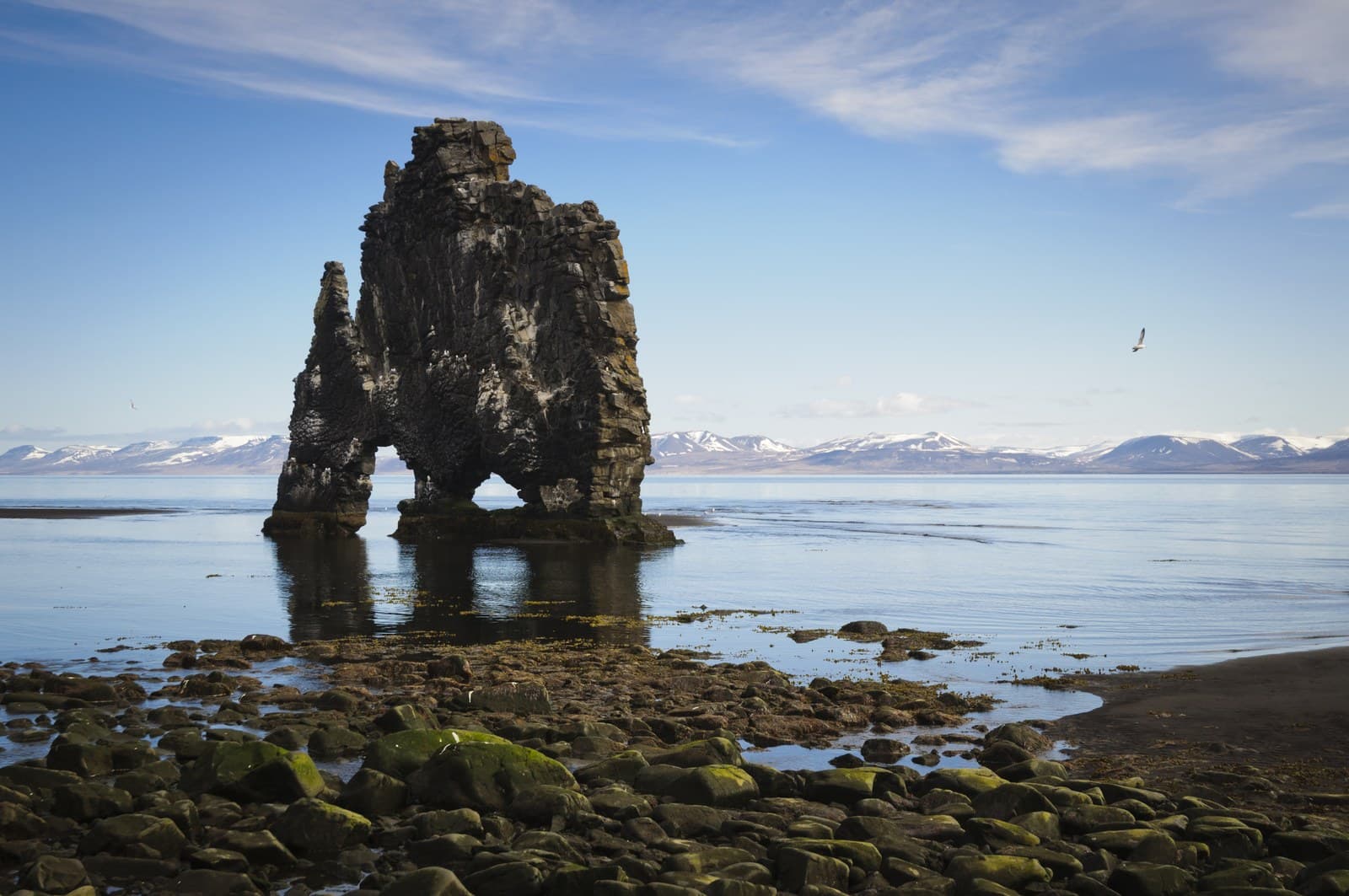
The appeal is very specific: a dark, animal-like basalt stack standing just offshore, with Húnaflói behind it and a quiet Vatnsnes coastline around it. This is not a large activity or a place that needs half a day. It works best as a focused stop where the viewpoint, beach, birds, seals, and weather all decide how long you linger.

If your route is moving from Snæfellsnes or West Iceland toward Akureyri, Mývatn, Goðafoss, or Dettifoss, Hvítserkur can add a memorable northwest edge to the trip. If you are trying to cross the north quickly, it may be the stop to save for a slower return trip.

Worth the stop?

When this stop makes sense

Good match for

  • self-drive travelers with room for a northwest detour
  • photographers
  • seal and bird watchers who keep distance
  • travelers linking West and North Iceland

Think twice if

  • travelers on a tight Ring Road day
  • visitors who need paved-road simplicity in poor weather

Pair it with

North IcelandVatnsnesLake MývatnGoðafoss Waterfall

The sea stack is small, strange, and very specific

Hvítserkur is memorable because its shape is odd enough to feel personal. Depending on the angle, travelers see a troll, rhino, elephant, dinosaur, or a creature lowering its head toward the sea.

Visit North Iceland identifies the formation as a 15 m sea stack just off the eastern side of Vatnsnes. The official regional framing matters because it sets expectations: the attraction is one rock and one coast, not a developed visitor complex.

The name and folklore add texture without needing to carry the whole visit. The white staining that helps give the rock its name comes from birds, while local stories connect the shape to a troll turned to stone. In practical terms, the thing to look for is the silhouette: the hollowed base, the narrow legs, and the way the stack changes from the upper view to the shore.

Viewpoint first, beach second

Start with the upper viewpoint. It gives the simplest view of the rock, takes the least effort, and helps you decide whether the beach adds enough value that day.

The Icelandic Seal Center describes two practical choices from the parking area: one path toward a viewing platform and another down toward the beach. That split is the core on-site decision. The platform is the reliable version; the beach is more atmospheric but more dependent on tide, footing, wind, and daylight.

At the viewpoint, you get the clean stack shape and can keep the stop efficient. Down on the beach, the rock feels closer and the black sand, river mouths, birds, and seals become more present. Choose the beach only when conditions make it sensible, and leave enough time to climb back without rushing.

Tide, light, and weather change the payoff

Hvítserkur is a better stop when the shoreline is readable, the wind is manageable, and the light lets the dark sea stack stand apart from the water.

Low shoreline conditions can reveal more of the base and make the beach-level view stronger. Higher water, rough weather, or poor visibility can make the upper viewpoint the better choice. Do not make the page's best photo version the fixed expectation for your trip.

Summer gives longer daylight and easier flexibility, but it is also when birds and seal watching can draw people closer than they should go. Winter and shoulder season can be beautiful but make Road 711, the path, and the beach more condition-dependent. Check official weather and road sources close to the drive.

How Hvitserkur fits Vatnsnes and a North Iceland route

Hvitserkur works best as part of a Vatnsnes loop or a slower northwest segment, not as a standalone target from far away.

The local Seal Circle links Hvammstangi, Vatnsnes, Hvítserkur, Borgarvirki, Kolugljúfur, and seal-watching places into one northwest idea. You do not need to complete every stop, but the cluster explains why Hvítserkur makes more sense when you are already giving Vatnsnes some space.

For a larger North Iceland plan, think of Hvítserkur as the coastal contrast before or after the more familiar inland and waterfall stops. Mývatn, Goðafoss, and Dettifoss are stronger route anchors; Hvítserkur is the smaller, stranger side trip that adds texture when the drive has enough room.

Nearby pairings that make the side trip easier to justify

The stop becomes more useful when it is paired with nearby Vatnsnes places instead of isolated as a single photo errand.

  • Vatnsnes gives the broader peninsula context around the rock, coastline, farms, and seal-watching places.
  • Ósar is the immediate setting to understand if you are combining the rock with beach and seal views.
  • Illugastaðir is another seal-watching location to consider when wildlife is a real reason for the detour.
  • Borgarvirki adds a short historic and landscape stop if you are already circling the peninsula.
  • Blönduós can work as a practical Ring Road reset before or after the northwest loop.

Keep the pairing modest. A day that tries to include Hvítserkur, the full Vatnsnes loop, a long transfer, and major stops around Mývatn or Dettifoss can become weaker than a simpler plan with fewer but better-timed stops.

Wildlife and beach etiquette matter here

Seals and birds are part of the Hvítserkur experience, but they should not become an invitation to push closer.

The Icelandic Seal Center notes that seals haul out around the Ósar area and may also be seen in the water. The best visitor behavior is quiet, patient, and distant. Let binoculars or a longer camera lens do the work.

Do not shout, throw things, cross toward resting seals, or fly drones around wildlife. Disturbance can push seals off their resting areas and affects birds as well. If the wildlife is too far away for a good phone photo, that is a sign to watch rather than approach.

Official checks before you drive Road 711

Road, weather, and travel-condition checks matter because the final detour is more exposed and less forgiving than a simple paved roadside stop.

Visit North Iceland lists Road 711 for Hvitserkur. Before relying on that approach, check Umferðin for road notifications, the Icelandic Met Office for northwest weather, and SafeTravel for current travel conditions. This is especially important in winter, strong wind, thaw-freeze cycles, heavy rain, or poor visibility.

Avoid treating old reports, map estimates, or last week's conditions as final. A good Hvitserkur stop is easy to enjoy when the road and coast cooperate, and easy to skip when they do not.

Hvitserkur FAQ

These questions matter because the stop depends on detour value, road conditions, beach access, and wildlife expectations.

How long should I spend at Hvitserkur?

Most travelers should allow about 30 to 60 minutes at Hvitserkur. Use the shorter end for the viewpoint and photos, and the longer end if beach conditions are good and your group moves comfortably.

Is Hvitserkur worth it on a Ring Road trip?

Hvitserkur is worth it on a Ring Road trip when you have room for the Vatnsnes detour. Skip it if the day already depends on long driving, major North Iceland stops, or uncertain road conditions.

Can I walk down to the beach at Hvitserkur?

You can often use the beach path when conditions are suitable, but it should stay optional. Tide, wind, wet sand, ice, and daylight can make the upper viewpoint the better choice.

Will I see seals at Hvitserkur?

Seals are often part of the Ósar and Vatnsnes experience, but sightings are never guaranteed. Watch quietly from a respectful distance and do not use drones or noise to move animals.

Do I need a 4x4 for Hvitserkur?

A 4x4 should not be treated as a universal requirement, but the sensible vehicle choice depends on current road and weather conditions. Check Umferðin and local travel guidance before relying on Road 711, especially outside easy summer conditions.