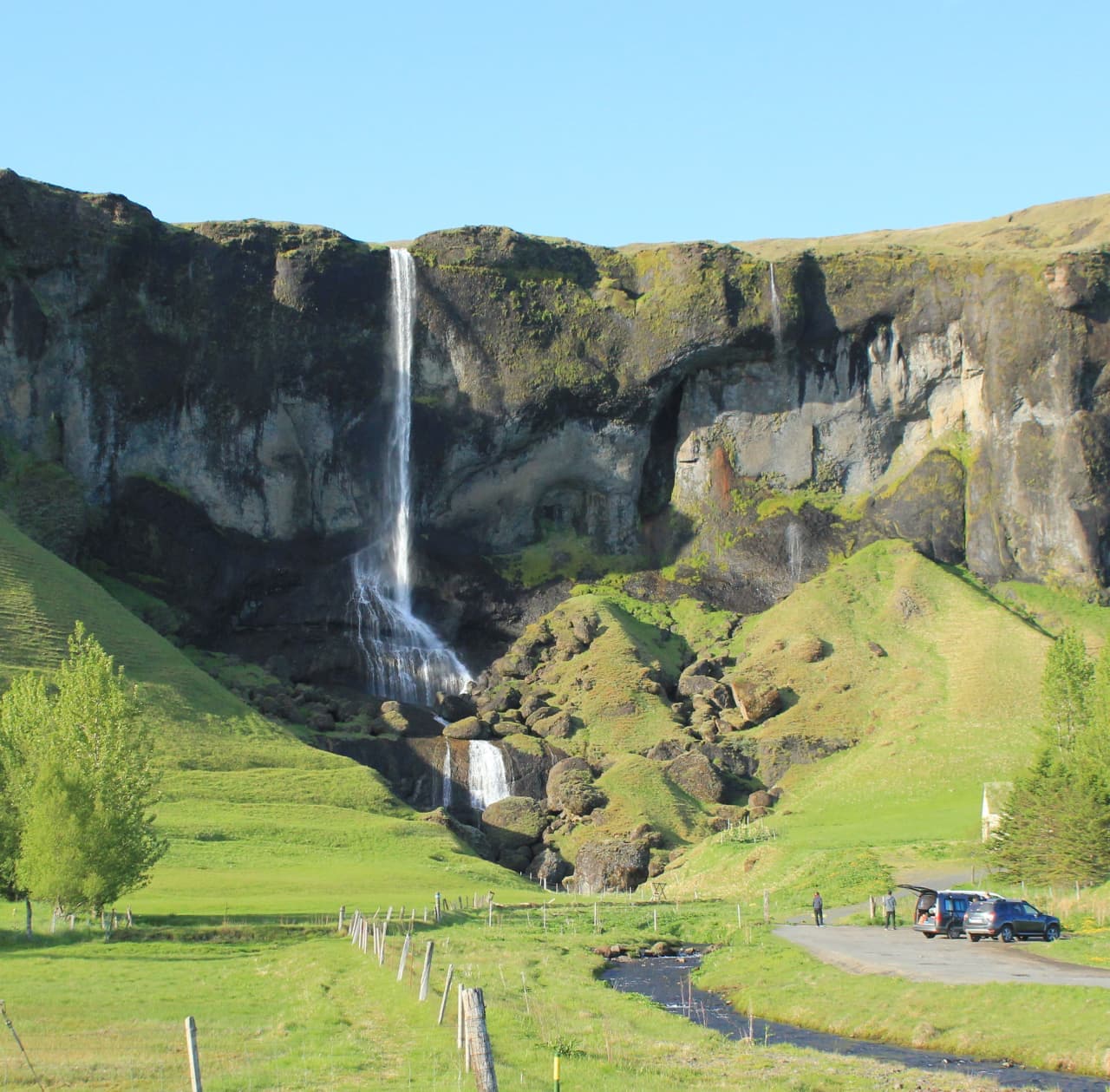
Foss á Síðu is a slender waterfall above an old farm east of Kirkjubæjarklaustur, best as a quick South Coast pause when you want roadside scenery without adding a full hike.
Waterfall facts
Type
Waterfall and old farm setting on the South Coast
Area
About 10 km east of Kirkjubæjarklaustur in South Iceland
Route context
Best as a short Route 1 pause between Vík, Kirkjubæjarklaustur, Skaftafell, and Jökulsárlón
Time to allow
10-25 minutes for a simple viewpoint pause; longer only if signs and conditions support a walk
Best experience
Use it as a calm scenic break, not as the main reason for a South Coast day
In this guide
Is Foss á Síðu worth stopping for on the South Coast?
Yes, Foss á Síðu is worth a short stop if you are already passing east of Kirkjubæjarklaustur and want a quiet waterfall pause. It is not a stop that should force the shape of the whole day.
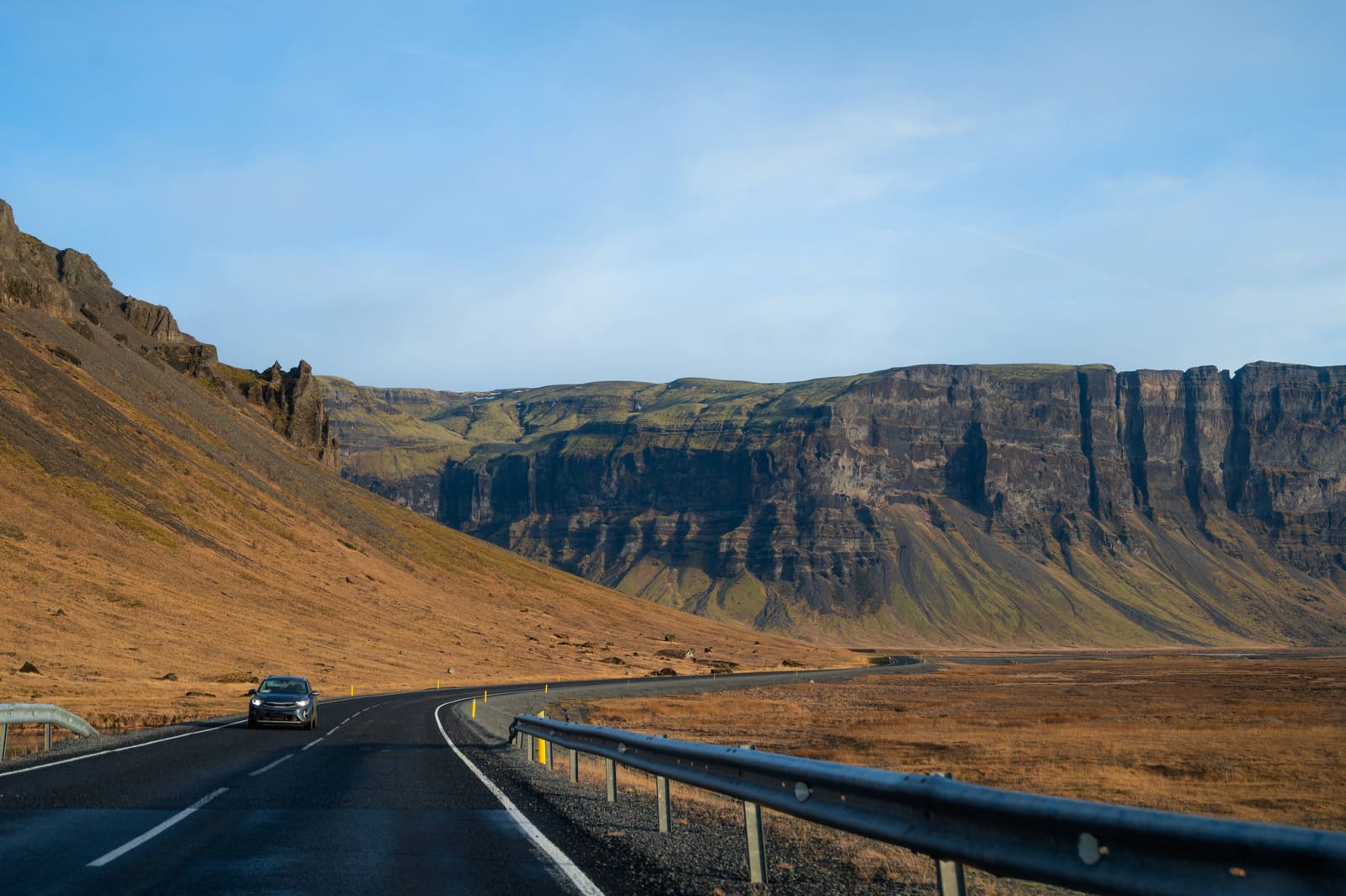
The appeal is the setting: a slender waterfall dropping from a high cliff above an old farm, with the South Coast road running close enough that the scene appears suddenly as you move through Síða.
The useful travel judgement is simple. Add Foss á Síðu when your South Coast or Ring Road plan has breathing room; skip it when the same day already asks you to cover Reynisfjara, Skógafoss, Fjaðrárgljúfur, Skaftafell, or Jökulsárlón without much margin.
What does the visit feel like?
Foss á Síðu feels more local and farm-edged than Iceland's biggest waterfall stops. The waterfall is narrow, the cliff is broad, and the lower landscape makes the place feel tied to the old settled strip below Síða.
Visit South Iceland describes the waterfall as flowing from Lake Þórutjörn above the farm. That upper source matters because the waterfall can look delicate rather than forceful, especially compared with the broad power of Skógafoss or the dramatic beach-and-cliff mood near Reynisfjara.
This is exactly why the stop works. It gives a softer break between the famous South Coast anchors, with enough cliff, water, pasture, and local texture to justify slowing down when the day allows it.
The waterfall can feel very different when snow and wind shape the cliff face.
How do you fit Foss á Síðu into a South Coast day?
Use Foss á Síðu as a small route pause around Kirkjubæjarklaustur, not as a stand-alone destination. It works best when it reduces the feeling of a long drive instead of adding pressure to it.
On a west-to-east day, it can sit after Vík-area stops and before the slower choices around Fjaðrárgljúfur, Eldhraun, Skaftafell, and Jökulsárlón. On an east-to-west day, it can break the drive after glacier-lagoon or Skaftafell time before you continue toward Vík.
When Foss á Síðu makes sense
Trip shape
Best use
Fast South Coast day
Usually a photo pause only, or skip if the bigger stops need the time.
Slower Kirkjubæjarklaustur segment
Pair it with nearby canyons, lava fields, and small waterfall stops.
Ring Road transfer day
Use it to break the drive without adding a long detour.
Bad-weather day
Keep it optional and use official road, weather, and safety checks before committing.
Should you walk toward Þórutjörn or keep it as a viewpoint stop?
Keep Foss á Síðu as a viewpoint stop unless signs, conditions, and official visitor details clearly support a walk. The waterfall sits in a farm setting, so respect for land boundaries matters as much as scenery.
Visit South Iceland and Katla Geopark both mention a trail toward Lake Þórutjörn, but that does not mean every traveler should treat the walk as automatic. Access expectations can change, weather can make the ground awkward, and the attraction is strongest when visited without creating friction for the people who live and work nearby.
Use the obvious viewing area first and read any local signs before walking farther.
Avoid crossing fences, farm tracks, or private-looking ground unless visitor guidance clearly allows it.
Choose a simple viewpoint pause when wind, rain, ice, or daylight makes a walk feel marginal.
If a longer walk is the goal, compare the time against stronger walking stops such as Fjaðrárgljúfur or Skaftafell.
What should you check before relying on the stop?
Check official visitor details when access matters, and use the official safety, road, and weather sources when the stop affects your timing. Foss á Síðu is easy to notice from the route, but Icelandic conditions can still change the value of stopping.
The main fragile details are not the waterfall itself. They are the day around it: wind, rain, icy surfaces, daylight, road conditions, and whether local visitor guidance supports anything beyond a simple view.
The best pairings depend on how much time you have. Foss á Síðu works naturally with Kirkjubæjarklaustur-area stops, then hands off to bigger South Coast anchors if the day has enough room.
For a short scenic cluster, combine Foss á Síðu with Fjaðrárgljúfur and Eldhraun when you want canyon and lava-field contrast near the same route segment. Lakagígar belongs to a more serious volcanic-landscape plan, so do not add it casually to a fast Ring Road day.
For a broader South Coast plan, use the South Iceland region guide or the South Coast road trip page to decide whether the day should lean west toward Skógafoss and Reynisfjara, or east toward Skaftafell and Jökulsárlón.
How long do you need at Foss á Síðu?
Most travelers only need a short pause. Allow more time only if local signs, weather, and visitor guidance make a walk appropriate.
Can you walk up to Foss á Síðu?
Do not assume a walk is available or appropriate. Use on-site signs and official visitor details, and respect farm boundaries before leaving the viewing area.
Is Foss á Síðu worth visiting in winter?
It can be worthwhile as a flexible viewpoint stop. Check road conditions, weather, daylight, and footing before making it part of a tight winter day.