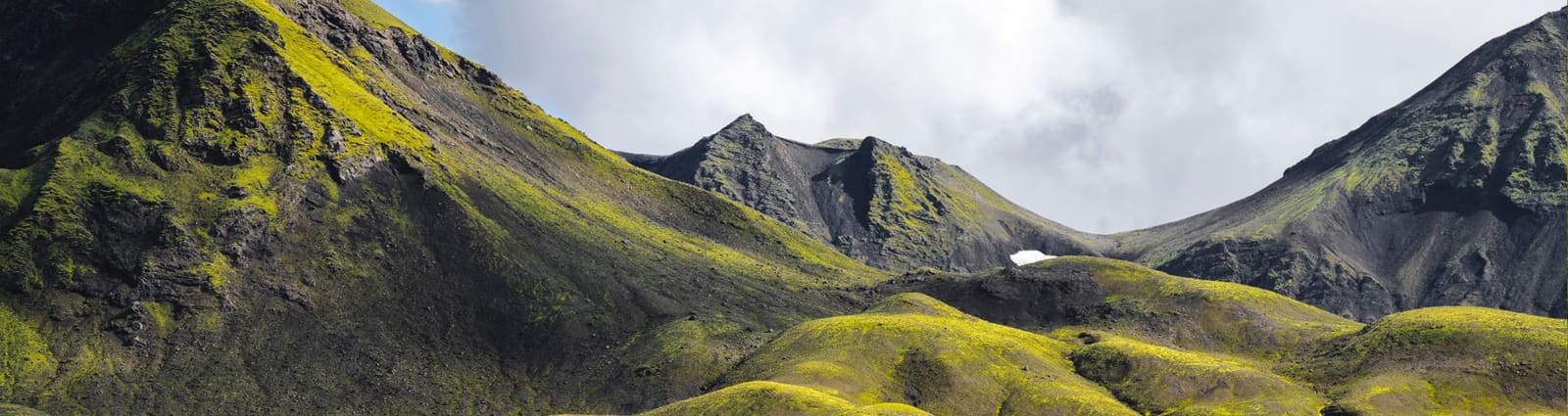
Bláhnjúkur is a 945-meter blue-black peak above Landmannalaugar in Fjallabak Nature Reserve. Its steep marked trail climbs above the lava field and colored ridges; FÍ lists a 4 km route taking about 3 hours, with 330 meters of ascent.
Access reality
Location
Above Landmannalaugar in Fjallabak Nature Reserve, in the southern Highlands
Published route
FÍ lists 4 km and about 3 hours; longer trail combinations need extra time
Ascent
330 meters of climbing on FÍ’s listed route; summit altitude is 945 meters
Terrain
Steep marked path with loose ground and exposed sections; weather affects footing and visibility
Arrival
Plan Landmannalaugar road access and parking separately; the map pin marks the summit
In this guide
The blue-black peak above Landmannalaugar
Bláhnjúkur rises to 945 meters above sea level beside the Laugahraun lava field and Grænagil ravine.
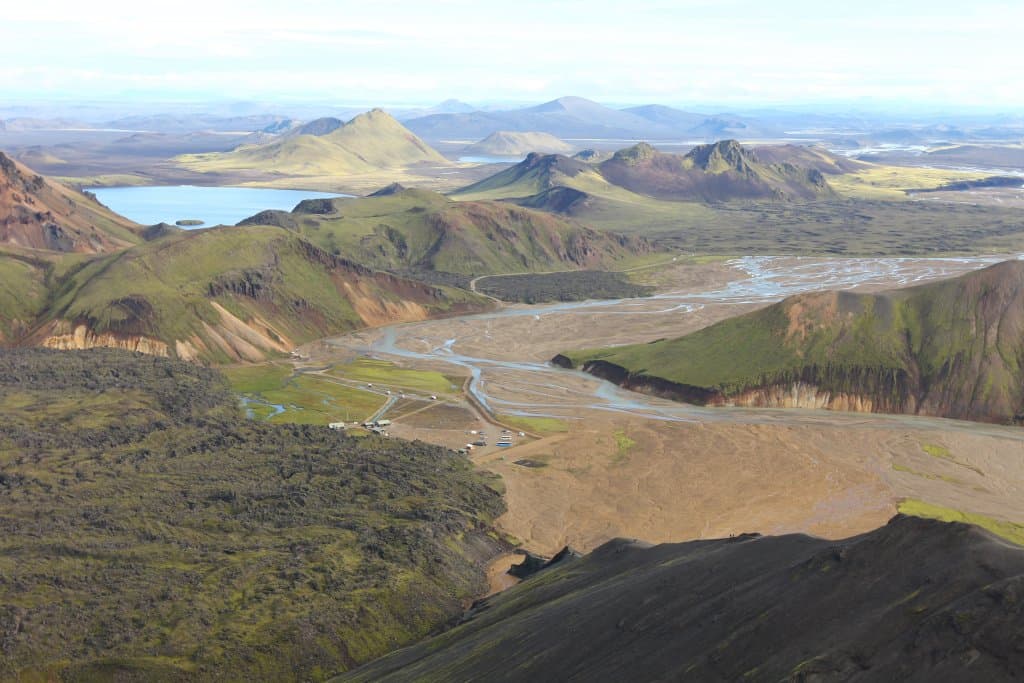
From higher on the mountain, the hut area, dark lava, pale river braids, and colored Fjallabak ridges open into a wide view. The summit is most rewarding in clear weather, when you can see how the valley and surrounding mountains fit together.
The tradeoff is effort and exposure. The route is short compared with full-day Highlands hikes, but it climbs quickly, crosses loose volcanic ground, and loses much of its value in strong wind, low cloud, or a rushed schedule.
Go if Landmannalaugar is already your main stop and the summit can be the day’s high point.
Skip if your group wants an easy valley walk, predictable footing, or a quick scenic pause.
Check official road, weather, safety, and protected-area guidance before making the climb the fixed plan.
Bláhnjúkur distance, ascent, and walking time
Ferðafélag Íslands (FÍ) lists its marked Bláhnúkur route at 4 km, about 3 hours, and 330 meters of ascent. The 945-meter summit altitude is not the amount you climb. Allow additional time for breaks, slower footing, and longer trail combinations.
Bláhnjúkur visit choices
Choice
Best when
What to decide
Quick version
You want a short taste of the lower slope and approach without committing to the summit.
Turn around early if wind, cloud, footing, or group energy feels wrong.
Balanced summit
You can allow at least the published 3-hour estimate plus breaks, and weather and group ability support a steep climb.
Make Bláhnjúkur the main hike, then keep the rest of the valley simple.
Slow route day
You are building a broader Fjallabak or Highlands plan and can absorb weather delays.
Pair the summit with easier Landmannalaugar walking, not too many distant detours.
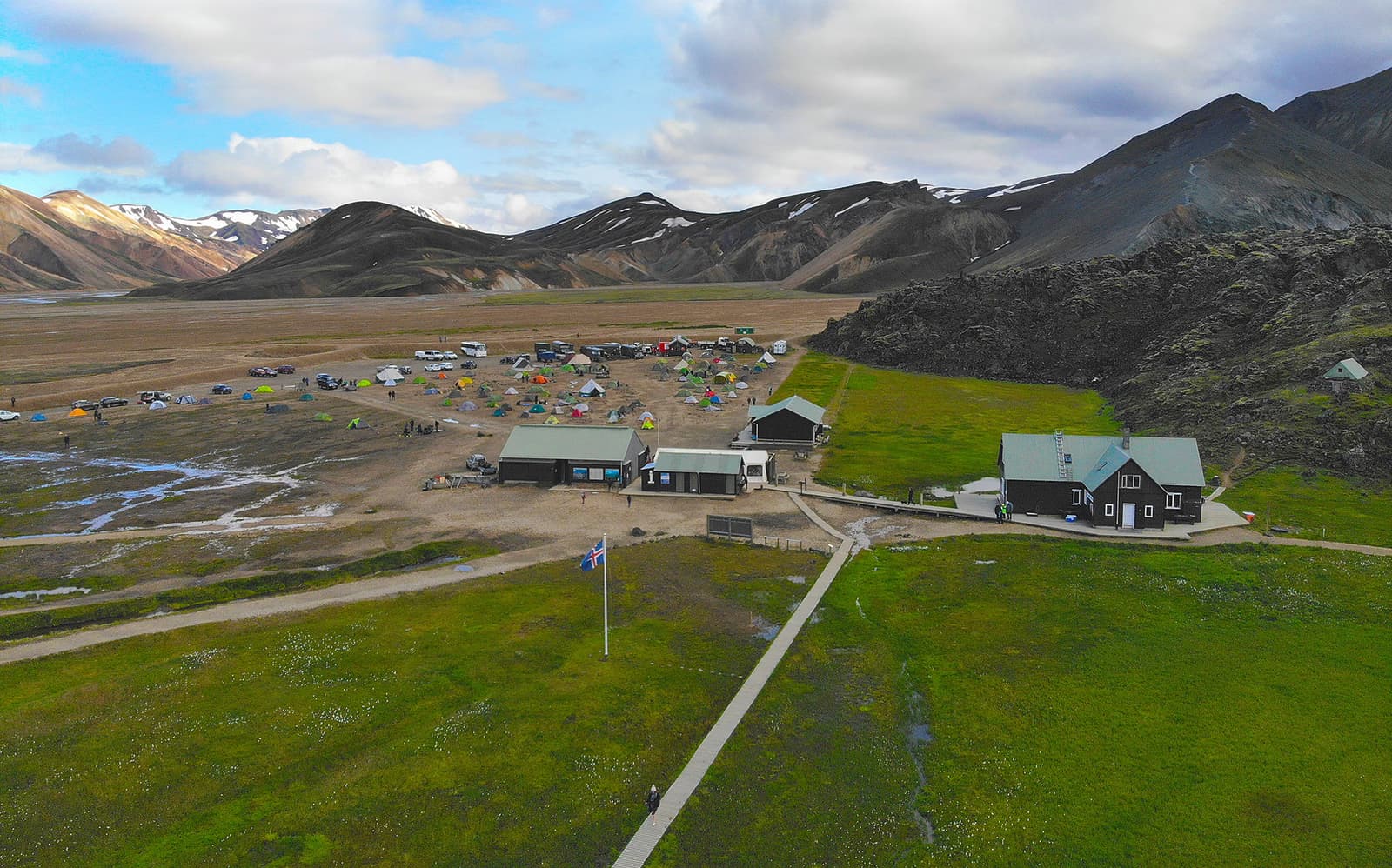
The bridge and marked approach lead toward Bláhnjúkur’s dark slopes above the valley.
Plan around the slowest walker and the group’s comfort on steep, loose ground. Allow enough time to descend without rushing. A lower valley walk can be a better choice when someone is tired, unsure of the footing, or short of suitable equipment.
Follow the marked ascent and choose your descent
The path climbs quickly from the Landmannalaugar valley onto dark volcanic slopes, with increasingly open views.
FÍ describes starting from the hut area toward Grænagil, crossing Brennisteinsöldukvísl, and following the marked path up Bláhnjúkur. Check the local route and crossing conditions before setting out; a photograph of the approach is not a live trail report.
The summit view is the reason to climb. In good visibility, the colored mountains around Landmannalaugar, the black lava, the valley floor, and the wider Fjallabak reserve spread out below you. In poor visibility, the same route can feel like effort without the main reward.
Bláhnjúkur earns its place when the summit view opens across the Landmannalaugar ridges.
FÍ describes returning the same way or taking a marked, steep descent west into Grænagil. Continuing toward Brennisteinsalda and through the lava field is a longer combination; do not assume every variation has the same 4 km distance or 3-hour timing. Use the current trail map and keep the return conservative if weather changes.
Reach Landmannalaugar before starting the hike
The summit pin is not a driving destination. Work out your Highlands approach, parking, and walking route as separate parts of the day.
Official Fjallabak guidance distinguishes the northern Sigölduleið approach on road 208 from southern F208 and the F225 Dómadalur approach. The final road into Landmannalaugar is F224. Verify the whole approach on Umferðin, including road openings, vehicle suitability, rental restrictions, and any river crossings; a parking reservation does not confirm that a road is open.
Parka identifies P1 before the final two river crossings on the Landmannalaugar approach, with a pedestrian bridge onward. Using P1 avoids those final crossings; it does not remove crossings or other restrictions elsewhere on your chosen route. Seasonal daytime parking reservations and a separate service fee apply. Check Parka’s current dates, hours, and terms before arrival.
This is a summer walking plan. Highland roads can close as conditions change, and winter access requires separate specialist planning; a standard rental 4x4 is not a winter access plan. At the trailhead, check wind, visibility, cold rain, and footing before deciding whether to climb.
Weather changes the value of the summit quickly; the safer plan keeps a valley-walk fallback.
Keep other walks within the Landmannalaugar day
Leave room for the descent and the drive out before adding another trail or a distant stop.
Start with Landmannalaugar itself. The broader Landmannalaugar guide helps you decide whether Bláhnjúkur should be the main hike, a backup, or something to skip in favor of lower valley trails and the hot-spring area.
For route context, Fjallabak and Dómadalur are more useful than piling on famous South Coast stops. They keep the day in the same Highlands logic, where roads, weather, and slow travel are part of the plan.
If you are comparing rougher objectives, Strútslaug and Krakatindur can help frame how much remote walking and driving your trip can support. If that sounds like too much, an easier South Coast road trip with places such as Skógafoss may be the better use of time.
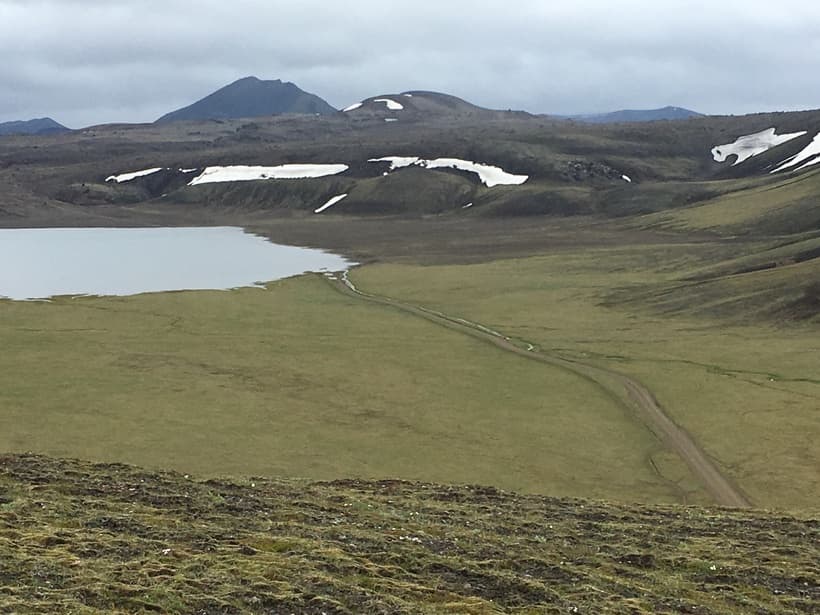
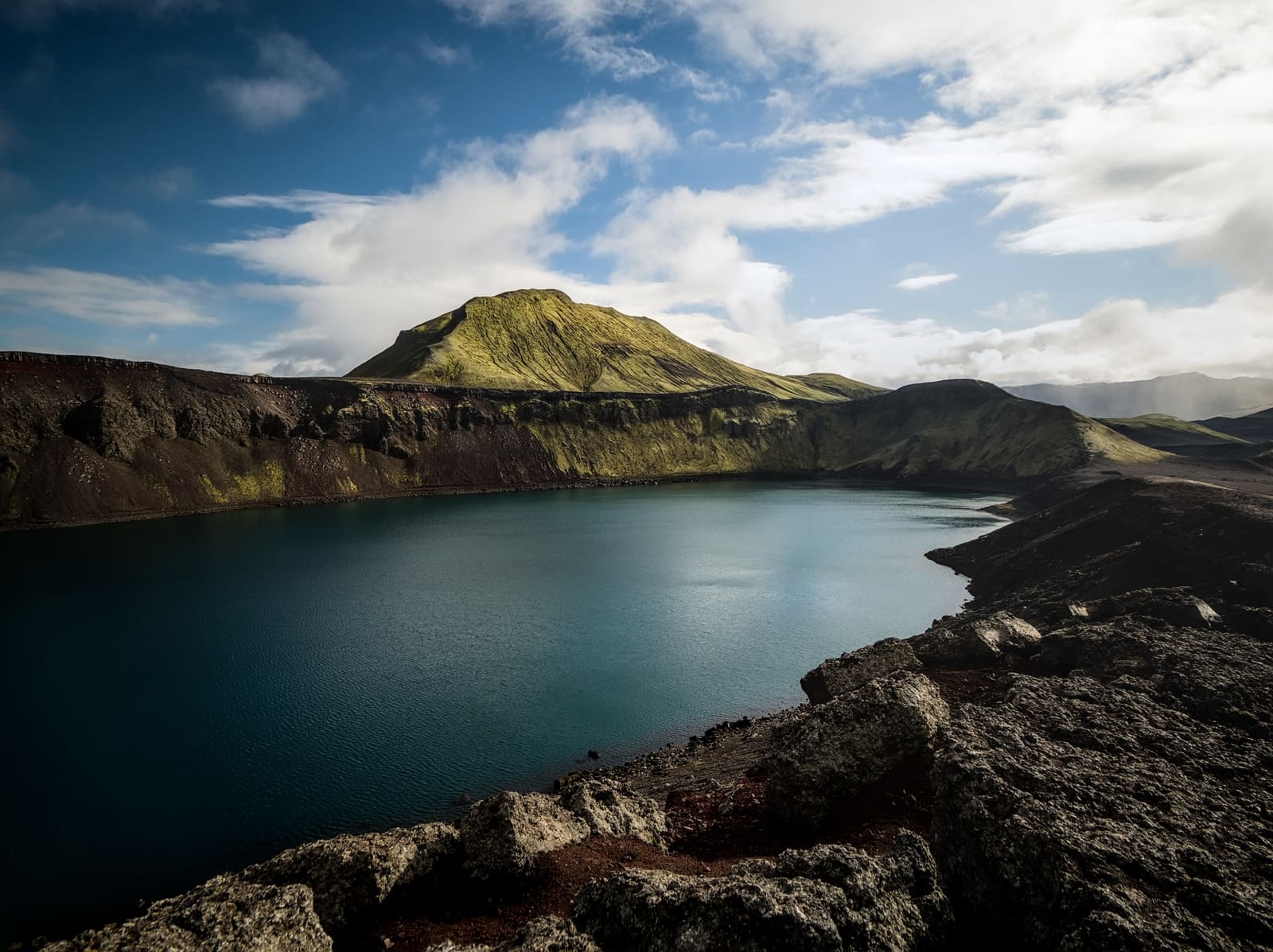
Reddish gravel contrasts with pale, striped ridges around Landmannalaugar.
Trail, parking, and Highlands condition sources
Use FÍ for the published walking route, the protected-area authority for visitor rules, and current road and weather services for the day’s decision.
Road conditions: check official road information before driving Highlands routes toward Landmannalaugar.
Weather: check the Central Highlands forecast and warnings before choosing the summit over lower trails.
Safety alerts: check Safetravel before remote Highlands travel or hiking in marginal conditions.
Protected-area guidance: check official Landmannalaugar and Fjallabak visitor information for parking, access, trail, and conduct rules.
Operator details: verify hut, bus, guided-hike, or visitor-service information with the relevant operator before relying on it.
Use for Central Highlands weather and warning checks.
Bláhnjúkur FAQ
These are the questions that usually decide whether the summit belongs in a Landmannalaugar day.
How long does the Bláhnjúkur hike take?
FÍ lists its 4 km marked Bláhnúkur route at about 3 hours, with 330 meters of ascent. Add time for breaks, slower footing, or a longer combination with other Landmannalaugar trails.
Is Bláhnjúkur difficult?
Yes, it is short but steep enough to treat as a real hike. Loose ground, narrow-feeling sections, wind, and visibility can make it harder than the distance suggests.
Can you hike Bláhnjúkur as a quick stop?
Only the lower approach works as a quick taste. The summit is better when Landmannalaugar is the main stop and the day has enough buffer.
Should I choose Bláhnjúkur or easier Landmannalaugar walks?
Choose Bláhnjúkur for height and big views in good conditions. Choose easier valley walks when weather, footwear, time, or group confidence makes the summit a weak trade.
Do I need to check access before going?
Yes. Check the complete road approach, weather, trail advice, and current Landmannalaugar parking and service-fee arrangements. The mountain pin marks the summit, not a car park or trailhead.