Experience fit
- First swing
- Guide-set and rope-protected
- Wall share
- Ask how many climbing turns
- Boot fit
- Verify boots, sizes, crampons
- Route fork
- Sólheimajökull or southeast
Ice climbing in Iceland can mean a few coached turns during a glacier hike, a technique-focused session, or a longer small-group day. Start with the amount of climbing you want, then match the guide format and Sólheimajökull or southeast base to your route.
Experience fit
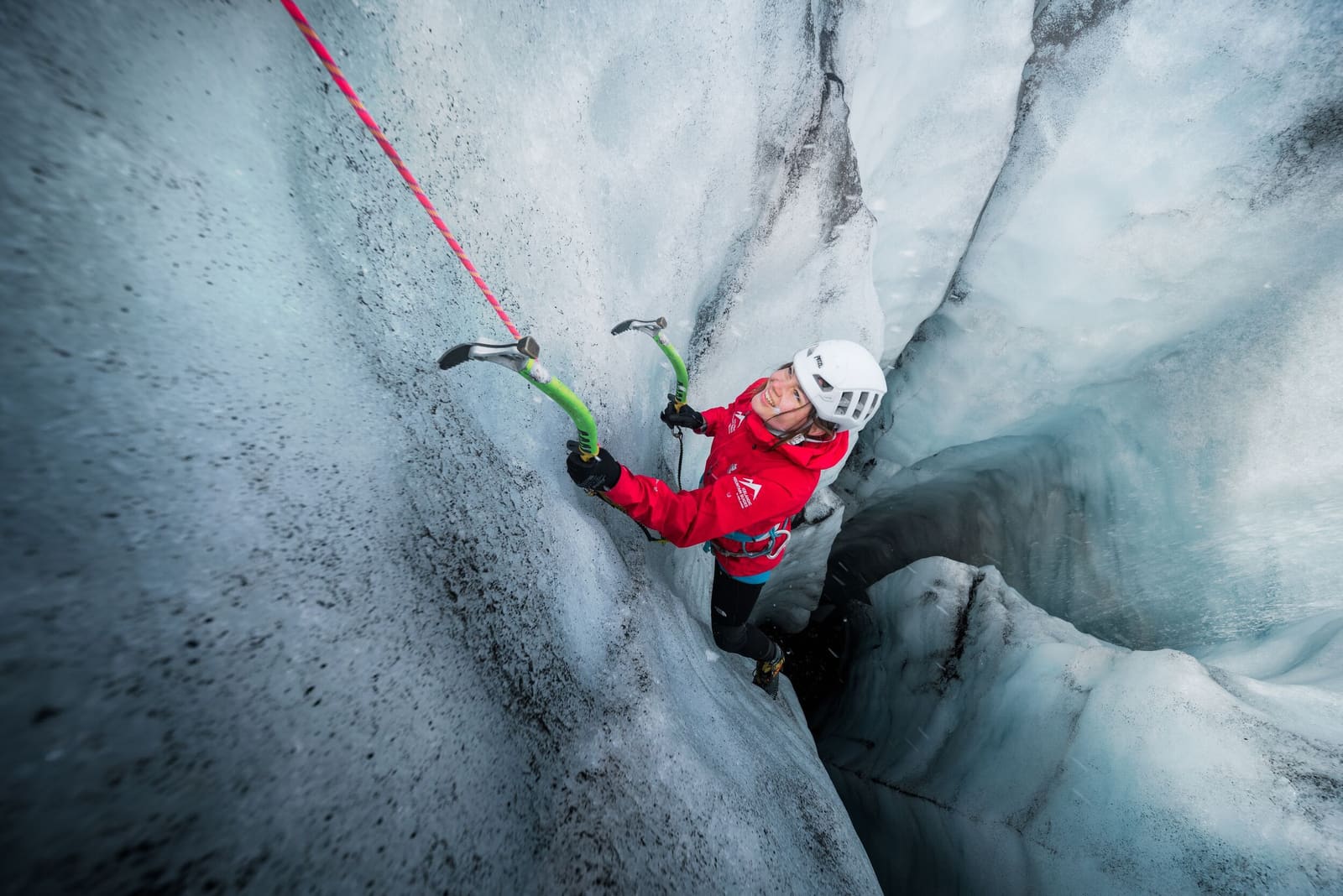
Your crampon points are set into the ice, the rope is already above you, and the guide asks for a small, controlled kick. Two short axe placements follow. The pleasure is surprisingly precise: shift your hips, stand on your feet, and feel the tools hold.
A guided first climb can be satisfying without previous climbing experience because the guide chooses the feature, fits the technical equipment, demonstrates the movement, and manages the rope. You still do the climbing. The difference is that the difficult safety decisions have not been handed to a beginner.
The best first booking is usually an introduction that would still make a good glacier outing if the wall section is brief. That keeps the day rewarding when the route changes or turns are shared. If you want to practise technique and climb repeatedly, look for a session built around those aims instead of relying on the words “ice climbing” in the title.
Photo guide
1 / 7
An axe bites into the wall while a rope runs below the climber.
Good to know
Visitor ice climbing ranges from a first try within a glacier hike to a technique-led or longer small-group outing. Decide what you want to learn and how much of the day you want on the wall.
| What you want | Format to look for | Climbing share to verify | Guide setup | Base clue |
|---|---|---|---|---|
| A curious first swing | Glacier hike with climbing introduction | How many turns and how long the wall section may be | Guided group that explicitly accepts first-timers | Sólheimajökull or Skaftafell already on the route |
| Time to learn movement | Technique-led climbing and glacier travel | Whether instruction and repeated turns lead the outing | Small group with participant rules that suit you | Freysnes or another southeast meeting point |
| Climbing as the main event | Extended, adaptable, or private-style outing | How the guide adjusts terrain and climbing time | Very small group or a format with more individual attention | Hali or a southeast overnight base |
For most curious beginners, the first row is enough. Move toward a technique-led or longer day when learning axe and foot placement matters more than fitting in several South Coast stops. A low-effort view, cave, or vehicle-based day belongs in the broader glacier activities comparison.
An ice-climbing photograph freezes the most dramatic second. The outing also includes meeting the guide, fitting equipment, walking to the glacier, learning how to move, reaching a suitable feature, taking turns, and returning.
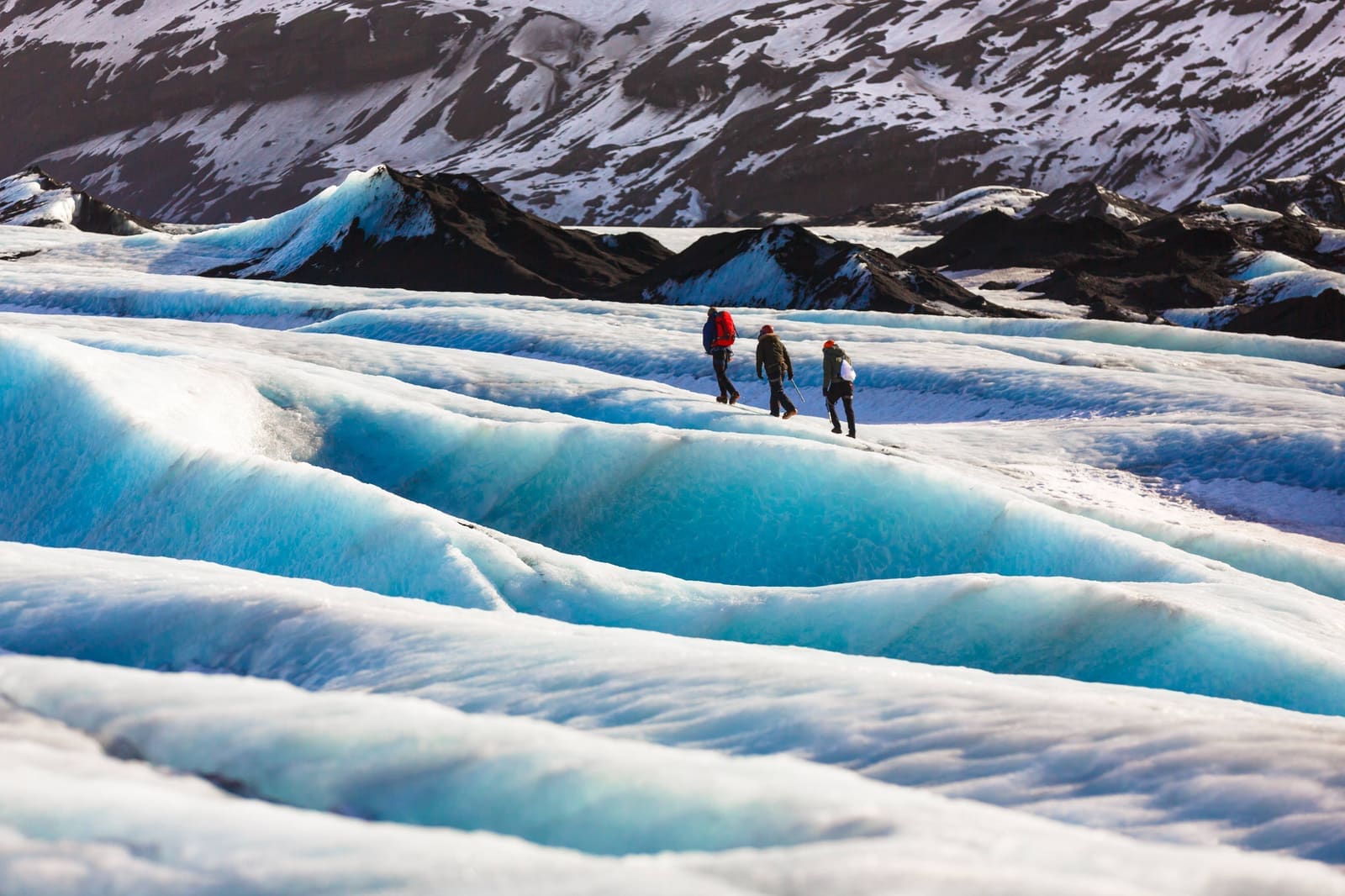
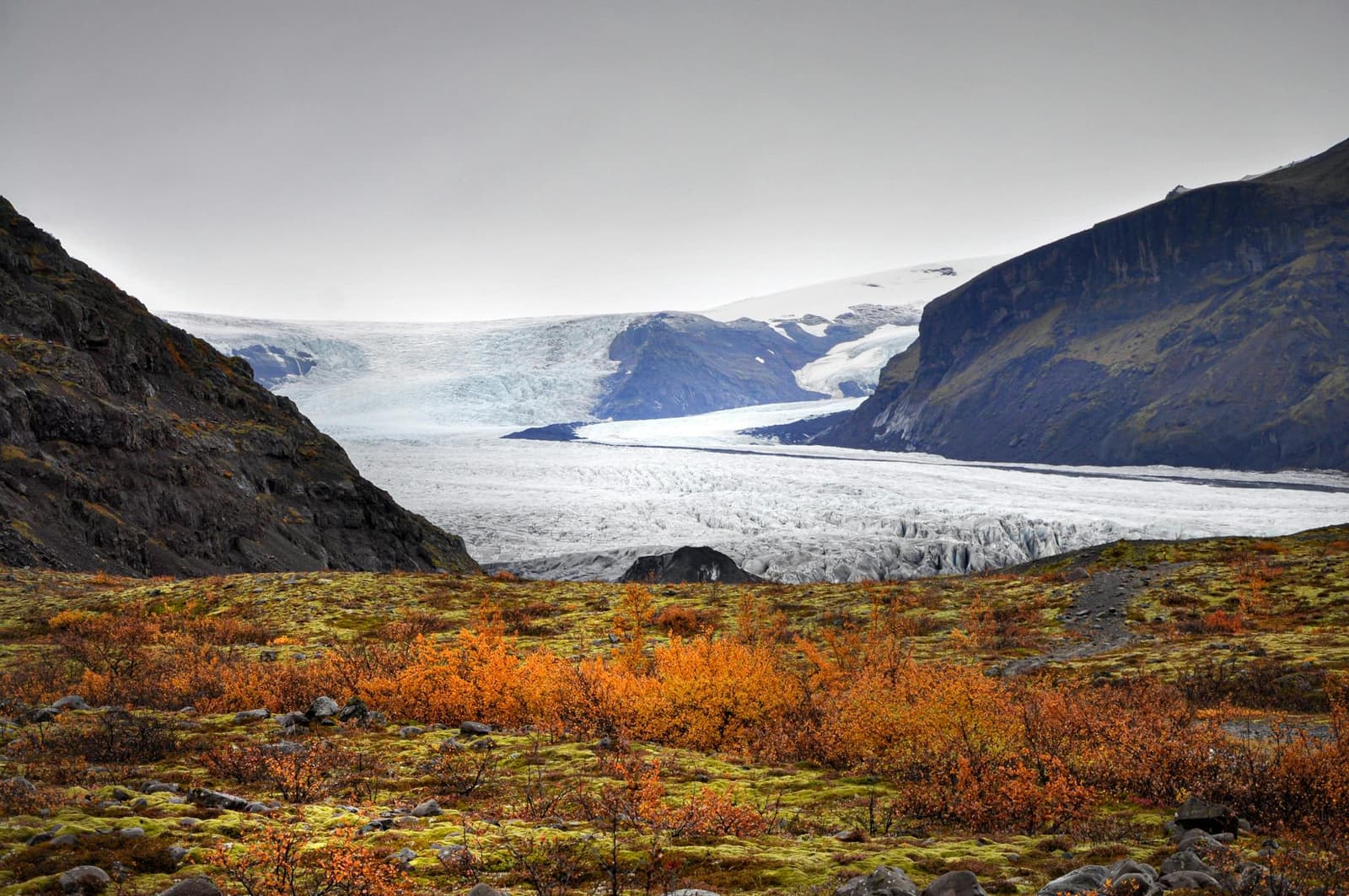
That sequence is not wasted time. The glacier walk brings you across ridges, cracks, melt channels, and changing textures that make the setting worth seeing. The instruction also determines whether the first swing feels controlled or confusing.
Ask about the division of time before you book, especially if climbing is the reason for the detour. Total duration alone cannot tell you how far the group walks, how long fitting takes, or how many people share the rope.
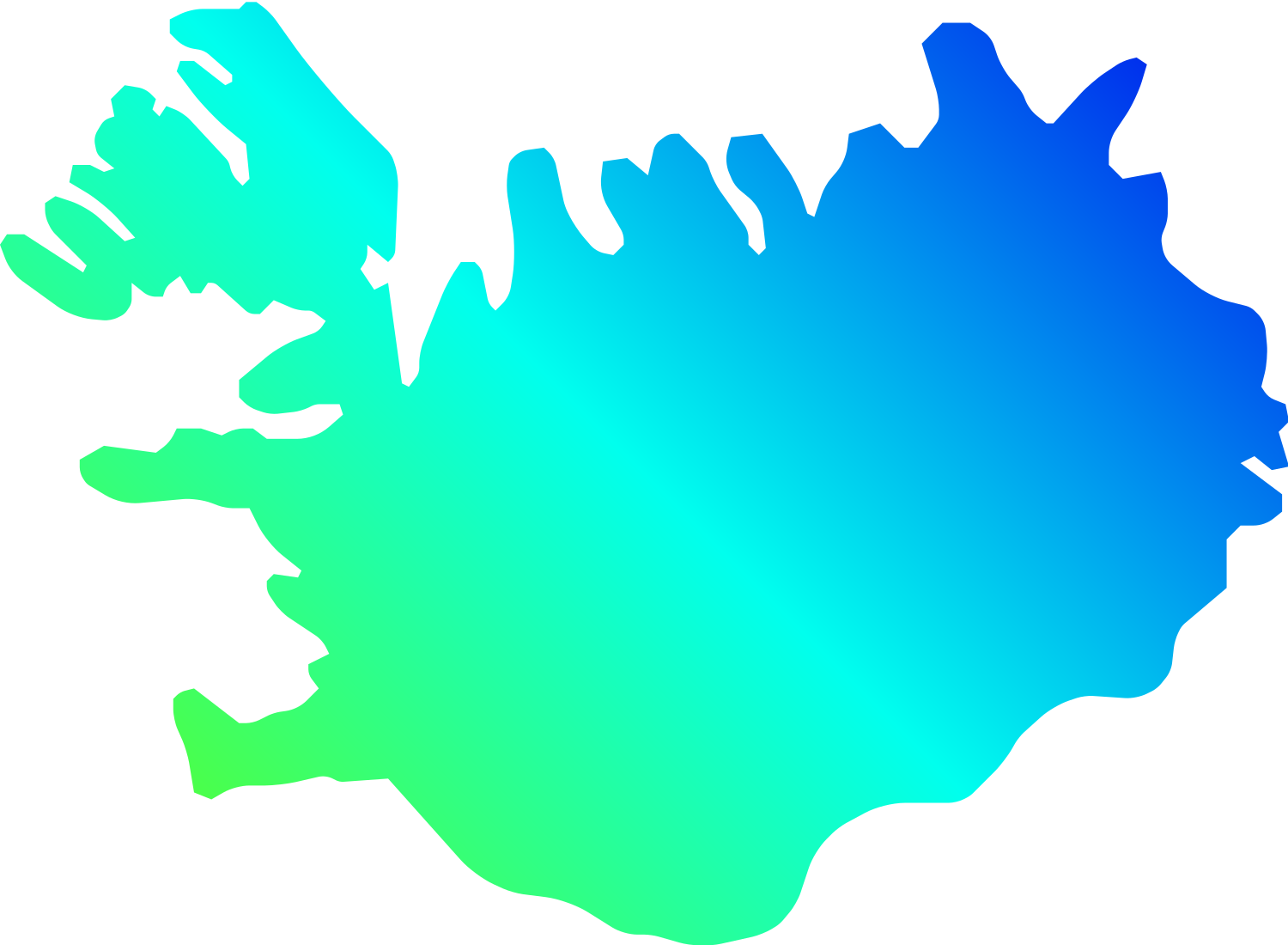
The base is a route choice before it is a climbing choice. Sólheimajökull sits on the western half of the South Coast, while Skaftafell, Freysnes, and Hali belong to a longer southeast plan.
Choose Sólheimajökull when the glacier activity needs to fit between Reykjavík, the western waterfalls, and Vík. It can make sense as a booked anchor on a shorter South Coast trip, provided the drive and live glacier plan remain workable.
Choose Skaftafell, nearby Freysnes, or Falljökull when the southeast is already part of the trip. That side pairs more naturally with a park stay, Vatnajökull, or the Jökulsárlón area than with a hurried out-and-back from the capital.
A named meeting point does not guarantee a particular wall. Glacier routes and usable features change, so the guide may walk to a different area or alter the activity. Book the base and format; leave the exact ice feature open.
Ice climbing uses short, deliberate movements, but it is not effortless. Calves work as the front points bite, forearms tire when the axes are gripped too hard, and cold hands can make simple adjustments slower.
Do not borrow an age, fitness, shoe-size, or equipment promise from another tour. Some services supply climbing boots; others set boot or participant limits differently. Read the exact requirements and tell the operator about injuries, balance concerns, or uncertainty before choosing the harder format.
These guided formats differ most in climbing share, teaching emphasis, group size, and meeting point. Compare the outing that surrounds the wall as carefully as the wall itself.
Use the direct service pages to verify the live glacier plan, participant rules, equipment, and booking terms before choosing.
Icelandic Mountain Guides
Best forA first attempt where the glacier walk matters as much as trying the climb.
Keep in mindThe climbing is an introduction inside a broader glacier outing, not a wall-led day.
Check firstConfirm the expected climbing share, participant limits, boots, and live Sólheimajökull plan.
Tröll Expeditions
Best forTravelers meeting in Skaftafell who want a glacier hike with top-rope climbing.
Keep in mindA shared small-group format means walking, instruction, and other participants' turns remain part of the outing.
Check firstConfirm the meeting point, participant rules, climbing share, and route chosen for the day.
Local Guide of Vatnajökull
Best forTravelers who want technique and glacier-travel skills to lead the session.
Keep in mindThe Freysnes meeting point suits a southeast stay better than a short trip from Reykjavík.
Check firstRecheck participant limits, boots, season, meeting instructions, and how much climbing the guide expects.
Glacier Adventure
Best forA southeast-based traveler who wants a longer outing and a very small group.
Keep in mindHali is a substantial route commitment, and the exact climbing still adapts to ability and glacier conditions.
Check firstConfirm that the format is being offered, the Hali meeting plan, participant fit, and equipment.
Glaciers move and fracture, crevasses can appear, and weather can change the usable route. A photograph or earlier tour description cannot prove what a group should climb on a later day.
Treat the guide's choice as part of the activity. A suitable beginner feature may be a short wall, crevasse edge, or another rope-protected section selected after the team sees the ice. The plan may also become a different glacier outing or be cancelled when the guide cannot offer a sound alternative.
Use for glacier alerts, changing crevasse information, and the guided-travel boundary.
Use for the national overview of guided formats and common technical equipment.
Use for park guidance on glacier equipment and experienced guides.
Use before driving to a South Coast or southeast meeting point.
Use for forecasts and warnings before an exposed glacier outing.
The practical questions are short, but their answers can separate a satisfying first try from the wrong booking. Read beyond the total duration and promotional photographs.
Choose a glacier-hike introduction when a few genuine turns would make an already interesting ice day better. Choose technique-led or longer small-group time when the movements themselves are the reason to go. If the harness, wall, or physical effort feels like the wrong emphasis, compare ice caves, snowmobiling, or a glacier viewpoint instead.
By ThorPublished Updated
Regions
See which part of Iceland is most convenient for this experience and what else you can visit nearby.
Road trips and itineraries
See where this experience fits into a road trip or day-by-day itinerary.
More things to do
See other activities that may suit the same day, season, or part of Iceland.
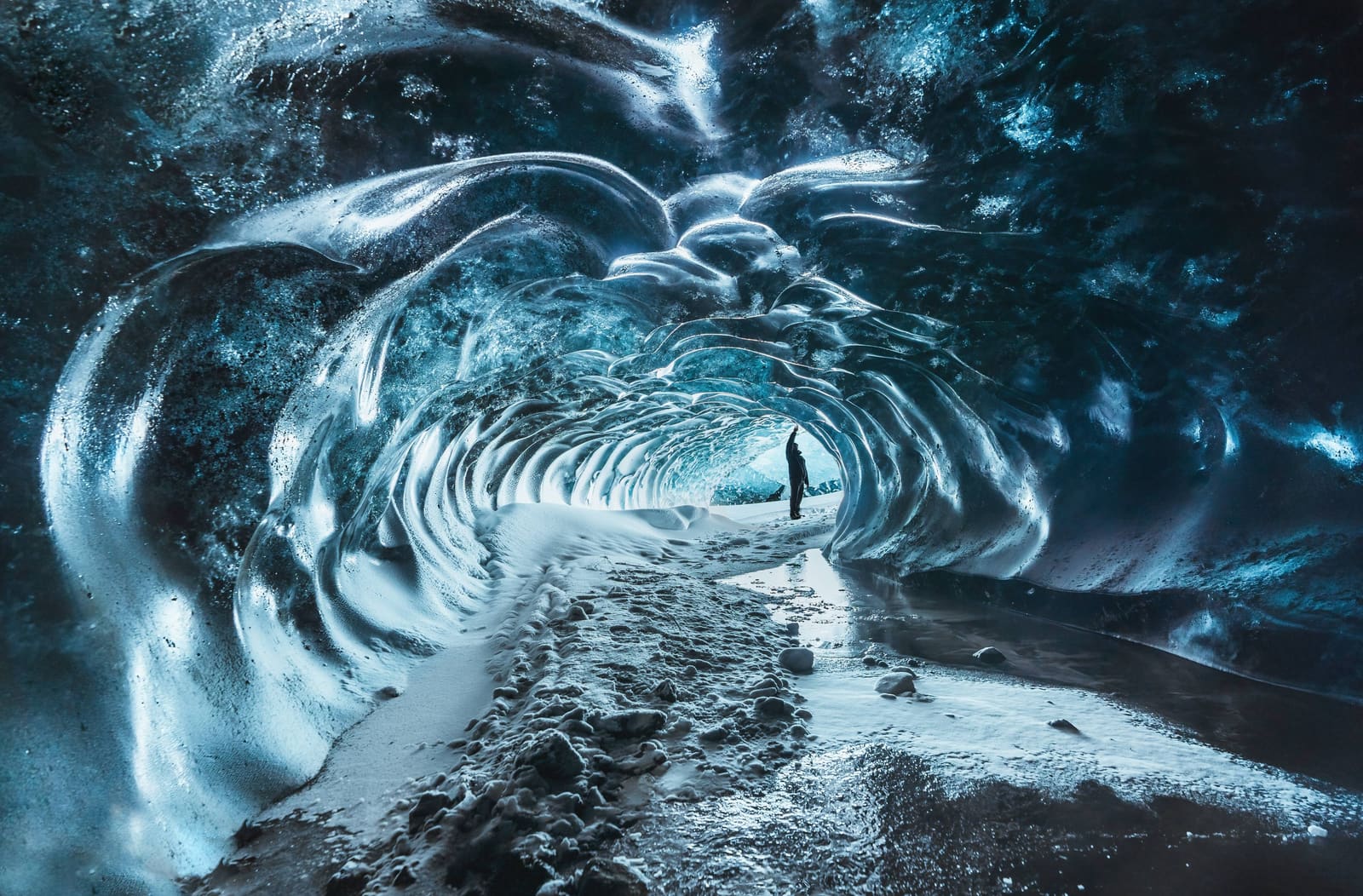
Ice caves are worth planning only when you choose the right cave promise: natural winter ice, ash-striped Katla ice, a Langjökull tunnel, or a safer glacier backup. Use season, base, guide need, effort, and flexibility before booking anything.
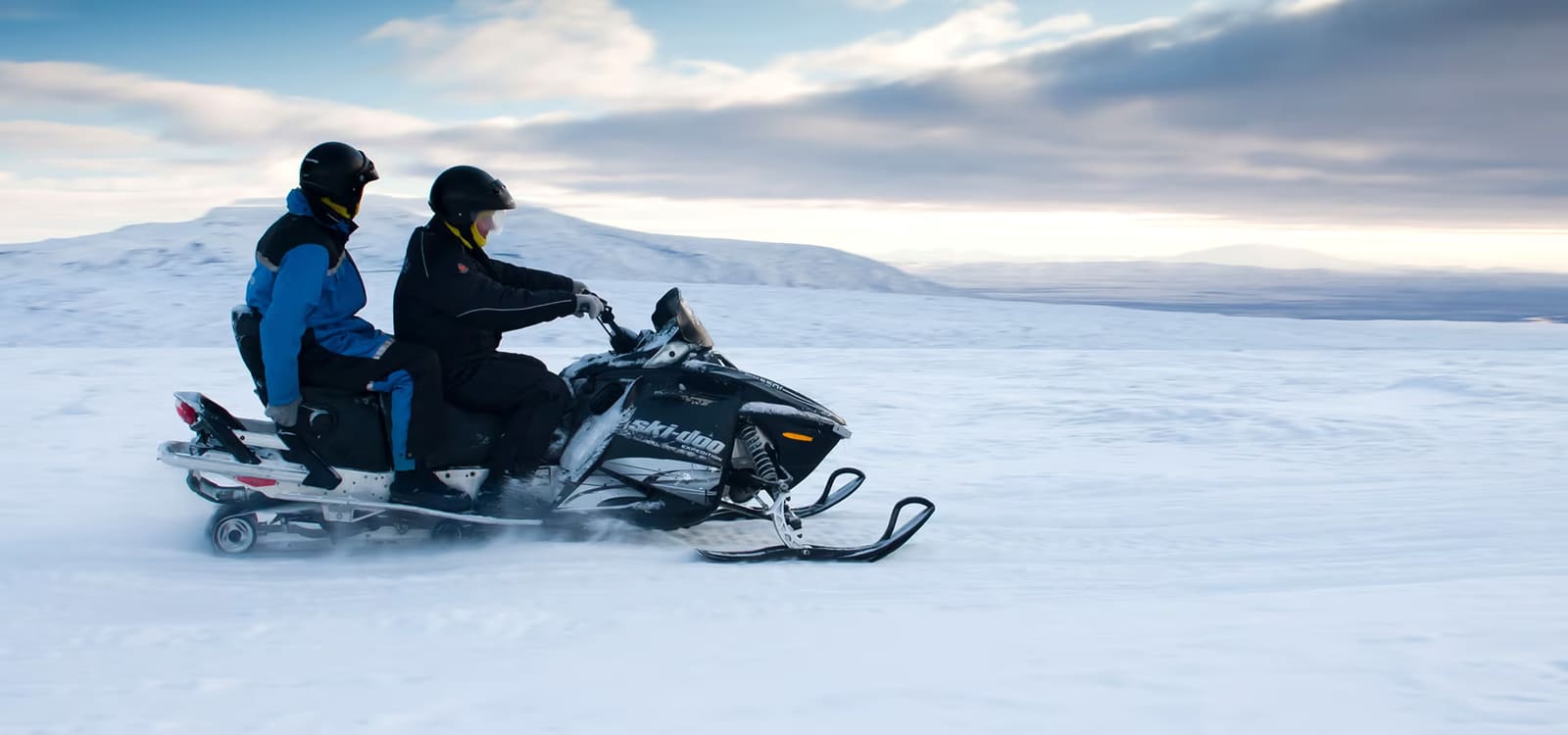
Snowmobiling can put you high on an Icelandic ice cap, but the ride is only one part of the outing. The best choice depends on where you are staying, how you will reach the glacier, and whether you want to drive, share a machine, or travel as a passenger.
Travel advice
Read more about driving, weather, safety, and other details that may affect your trip.
Next glacier decision
Move from the wall to the wider glacier choice, the South Coast route, or a southeast base.