Hvítá River, often searched as Hvita River, is the glacial river behind Gullfoss and several rafting routes, useful as planning context when South Iceland water scenery or activities shape the day.
Waterfall facts
Type
Glacial river, waterfall source, canyon corridor, and viewpoint area
Region
South Iceland, mainly useful to travelers on the Golden Circle
Route context
Best understood through Gullfoss, Brúarhlöð, and nearby Golden Circle stops
Time to allow
About 20-45 minutes for one viewpoint, or 1-2 hours if pairing Gullfoss with Brúarhlöð
Best experience
Use Gullfoss for scale and Brúarhlöð for the quieter canyon-and-river texture
In this guide
Is Hvítá River worth adding to a Golden Circle day?
Yes, Hvítá River, often searched as Hvita River, is worth noticing if your Golden Circle day already includes Gullfoss or if you want a quieter river-and-canyon stop at Brúarhlöð. It is less useful as a standalone destination because the river is a corridor rather than one single visitor site.
For most travelers, Hvítá matters because it explains why Gullfoss feels so powerful. The river carries glacial water into the waterfall, then continues through canyons, farmland, and rafting sections before joining the wider South Iceland river system.
The practical way to visit is simple: let Gullfoss be the high-impact stop, then decide whether Brúarhlöð adds enough contrast to your day. If you are also trying to fit Geysir, Strokkur, Thingvellir, Kerið, and a bathing stop, keep the river plan focused.
Where can you actually see Hvítá River?
The easiest places to see Hvítá are Gullfoss and Brúarhlöð. Gullfoss shows the river at full scenic force; Brúarhlöð shows the river inside a narrower rock gorge south of the waterfall.
Gullfoss is the clearest first choice because the paths, viewpoints, services, and protected-area context are built around visitors. It gives you the river’s scale without needing to search for informal access points.
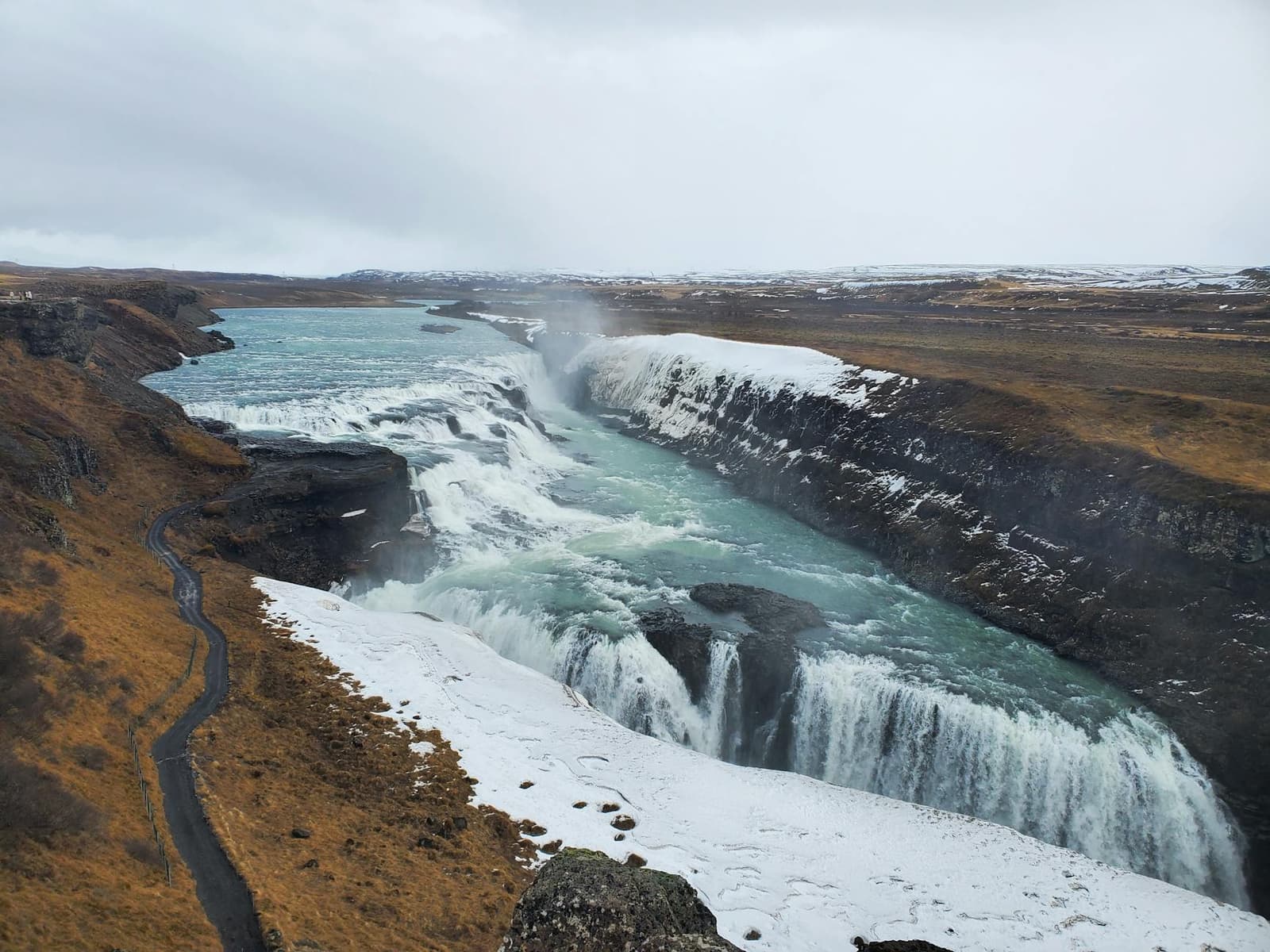
Gullfoss is the most direct way to understand the force of Hvítá River.
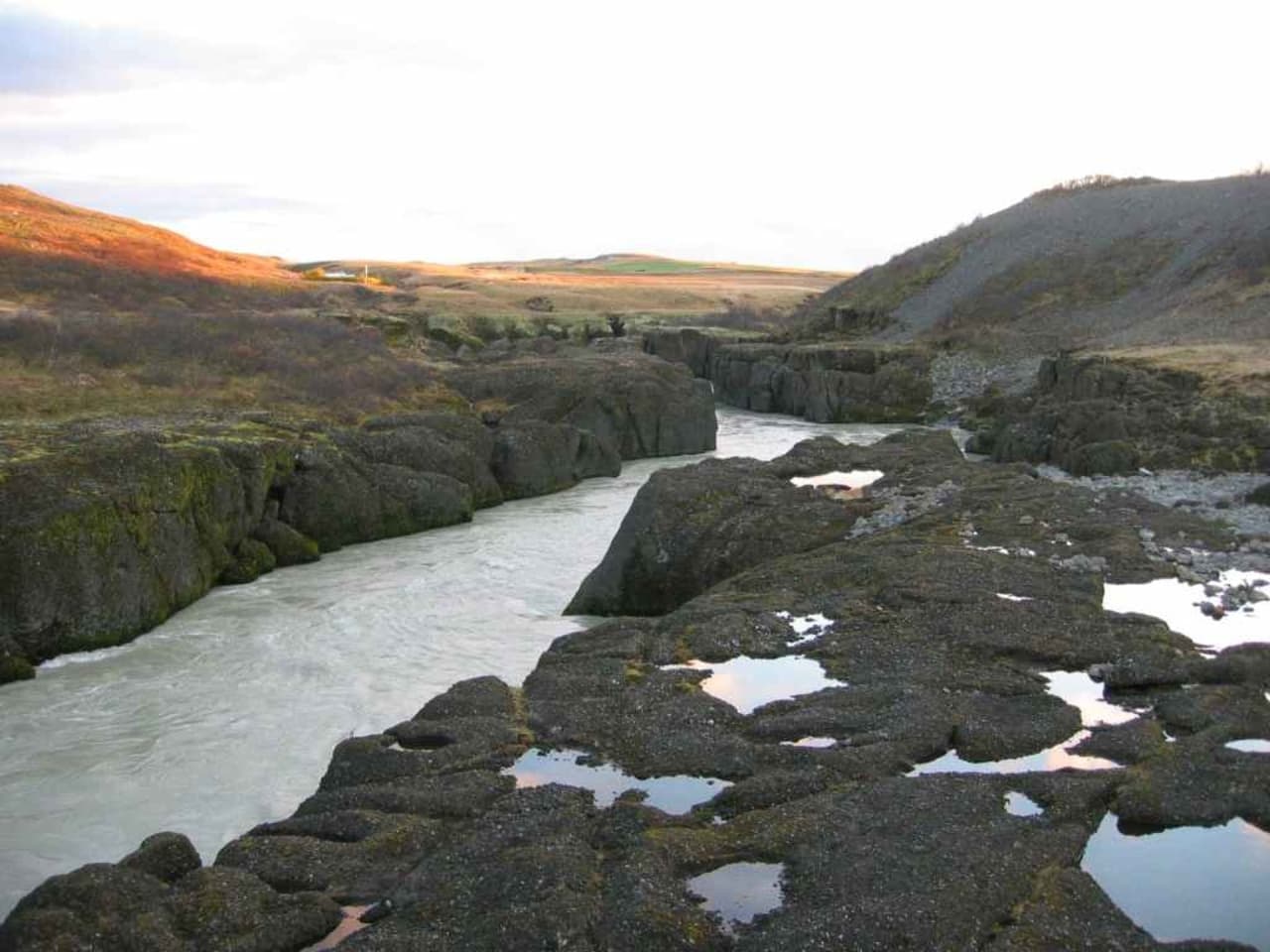
Brúarhlöð is more specific and lower-key. Visit South Iceland places it on road 30, about three kilometers south of Gullfoss, where Hvítá has cut into rock formations and created a short, memorable gorge stop.
What does the river feel like at Gullfoss and Brúarhlöð?
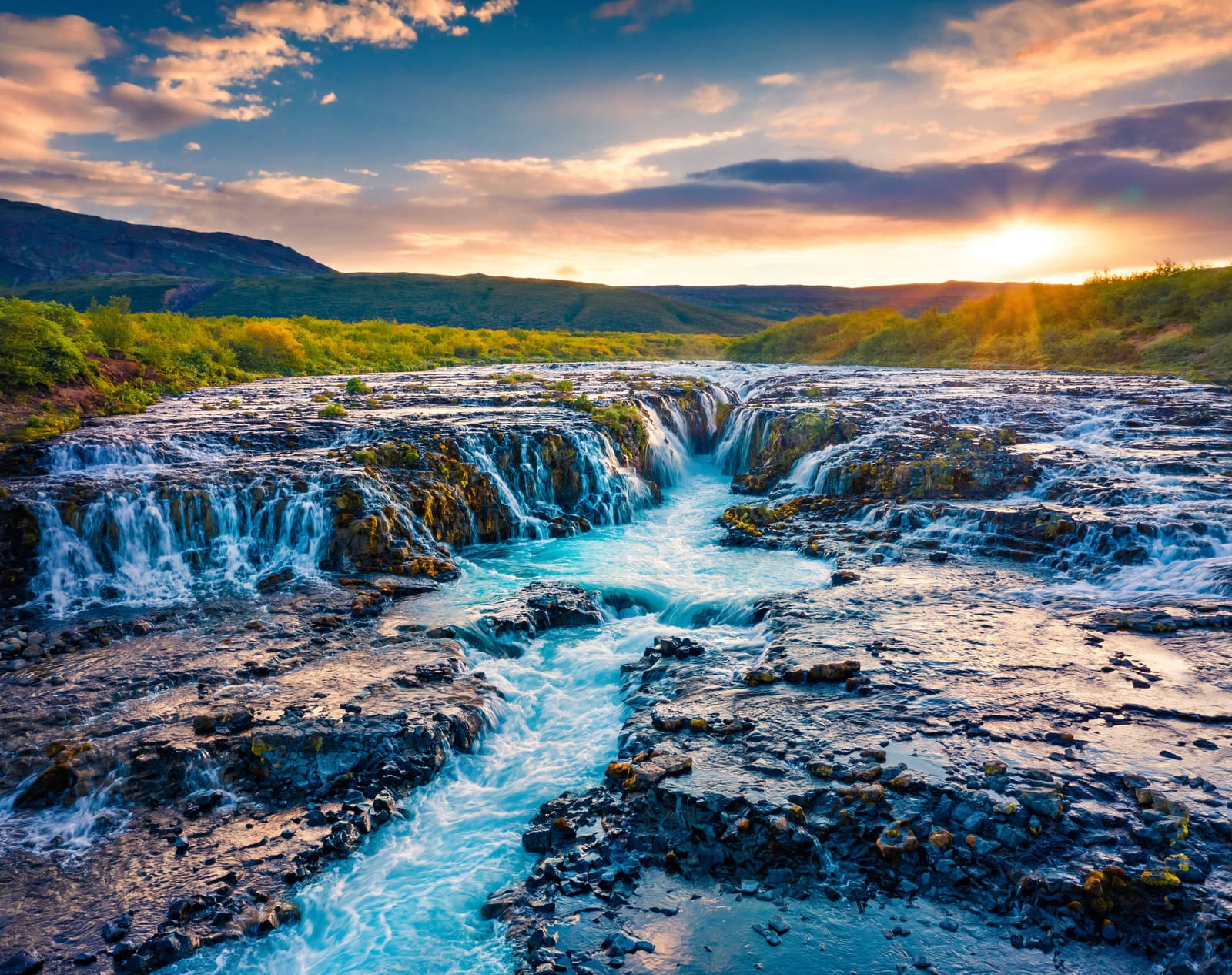
At Gullfoss, Hvítá feels loud, wide, and overwhelming. At Brúarhlöð, it feels closer and more geological, with pale glacial water moving between dark, carved rock.
That contrast is the reason the river page is useful. Gullfoss is the public face of Hvítá: mist, cliff edges, viewing platforms, and the strongest photo stop. Brúarhlöð is the detail view: rock pillars, potholes, a bridge, and a tighter sense of the current.
Brúarhlöð gives Hvítá a quieter canyon setting after the scale of Gullfoss.
If you only have time for one, choose Gullfoss. If you want the river to feel like more than a waterfall backdrop, add Brúarhlöð before continuing toward Geysir, Flúðir, or the next Golden Circle stop.
How much time should you allow for the river stops?
Allow 20-45 minutes for one river viewpoint, or 1-2 hours if you pair Gullfoss with Brúarhlöð at a calm pace. A guided rafting plan turns the river into a separate half-day activity decision.
Use your available time to decide how much Hvítá belongs in the day.
Available time
Best use
Watch for
15-30 minutes
Gullfoss viewpoint only
Parking, wind, ice, and photo stops can still slow the visit
45-75 minutes
Gullfoss plus a short Brúarhlöð look
Do not add too many smaller Golden Circle detours
1-2 hours
A calmer river-focused pairing with time for both settings
Road 30 timing, weather, and daylight
Half day
Professional rafting or a slower local base plan
Booking, operator guidance, cold water, and safety equipment
How does Hvítá fit with Gullfoss, Geysir, and nearby stops?
Hvítá fits best as a Golden Circle layer. Start with Gullfoss and Geysir or Strokkur, then add Brúarhlöð, Brúarfoss, Secret Lagoon, or Flúðir only when the day still has room.
The cleanest route is to treat Gullfoss as the river anchor and Geysir as the geothermal anchor. Strokkur gives the most reliable eruption experience in the same area, while Brúarfoss is a more delicate blue-water stop that suits travelers who want a smaller waterfall contrast.
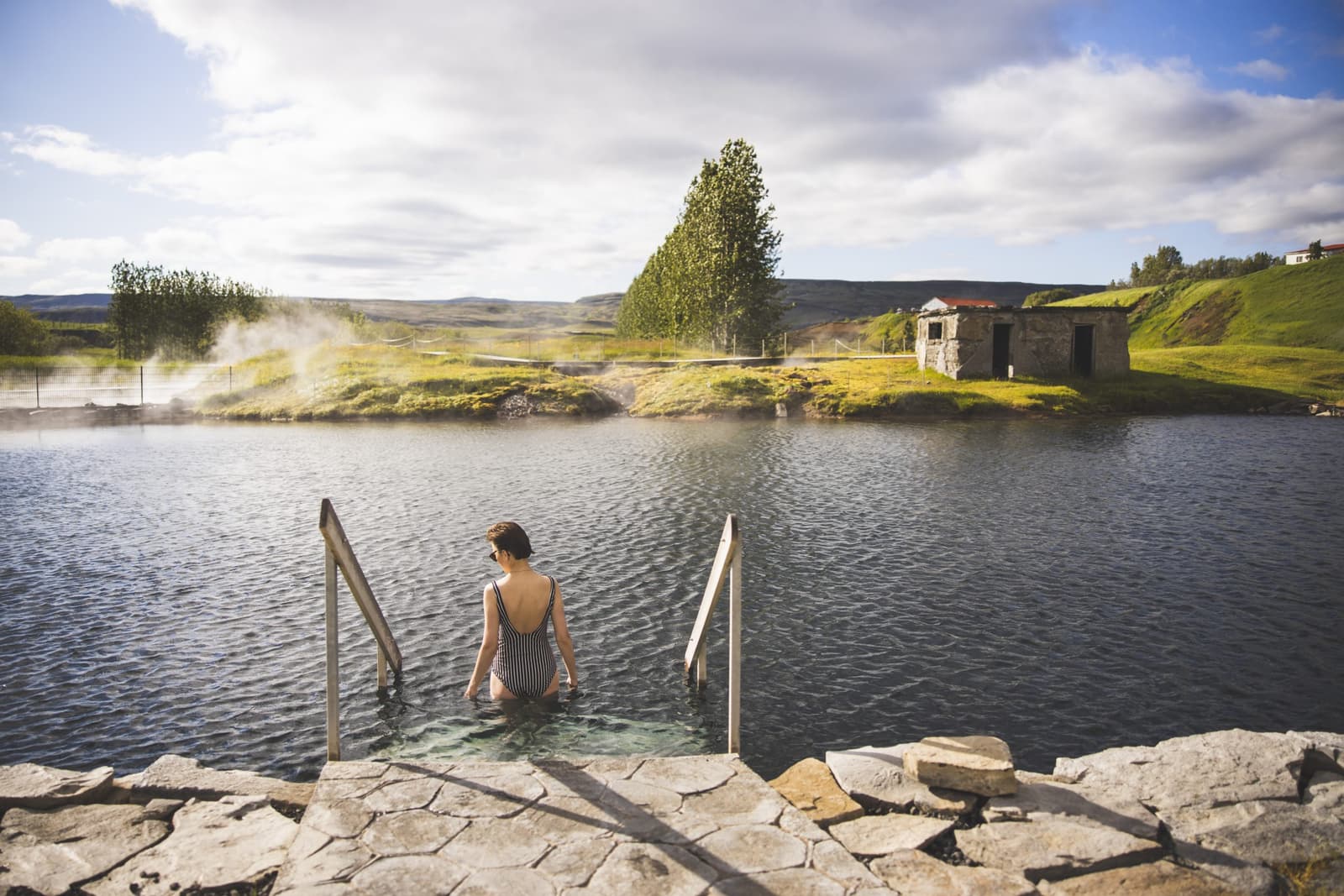
Hvítá can also support a slower local loop. Flúðir and Secret Lagoon make sense when the day is partly about an overnight base or bathing stop rather than a fast checklist. Kerið and Thingvellir are better used as broader Golden Circle anchors, not as reasons to chase every minor river viewpoint.
The river can be an activity setting, but that belongs in a guided plan rather than casual water access.
Choose Gullfoss if you want the main landmark view.
Choose Brúarhlöð if you want a quieter rock-and-river stop close to Gullfoss.
Choose Brúarfoss if blue water and a smaller waterfall suit your route better.
Choose Secret Lagoon or Flúðir when the day needs a base or bathing rhythm.
If the river itself is the activity, make it a guided plan with local safety judgment.
What should you check before getting close to the river?
Check roads, weather, safety alerts, and operator guidance before treating Hvítá as more than a viewpoint stop. The river is cold, fast, and changeable even when nearby roads look simple.
This matters most at informal edges, winter viewpoints, and riverbank pullouts. A safe-looking bank can be slick, undercut, or too close to strong current. Wind and ice can also change how exposed Gullfoss and Brúarhlöð feel.
Use for wind, precipitation, and winter-weather checks.
Hvítá River FAQ
These are the questions most likely to change whether Hvítá is a quick scenic layer or a separate activity plan.
Is Hvítá River a single attraction stop?
No, Hvítá River is better planned as a corridor with several access points. Gullfoss and Brúarhlöð are the most useful places for most travelers to see it.
Should I visit Hvítá River if I am already visiting Gullfoss?
Yes, but you may already be seeing the strongest part of Hvítá at Gullfoss. Add Brúarhlöð only if you want a quieter canyon view and have enough time.
Can I raft on Hvítá River?
Yes, guided rafting operates on sections of Hvítá, but it should be planned as a separate activity with a professional operator. Do not treat rafting as casual river access.
Is Hvítá River good in winter?
Hvítá can be scenic in winter, especially around Gullfoss, but roads, ice, wind, and daylight matter more. Check official road, weather, and safety sources before adding smaller river stops.
Is Hvita River the same as Hvítá River?
Yes. Hvita River is the common ASCII spelling for Hvítá River. It is the glacial river associated with Gullfoss, Brúarhlöð, and several South Iceland rafting routes.