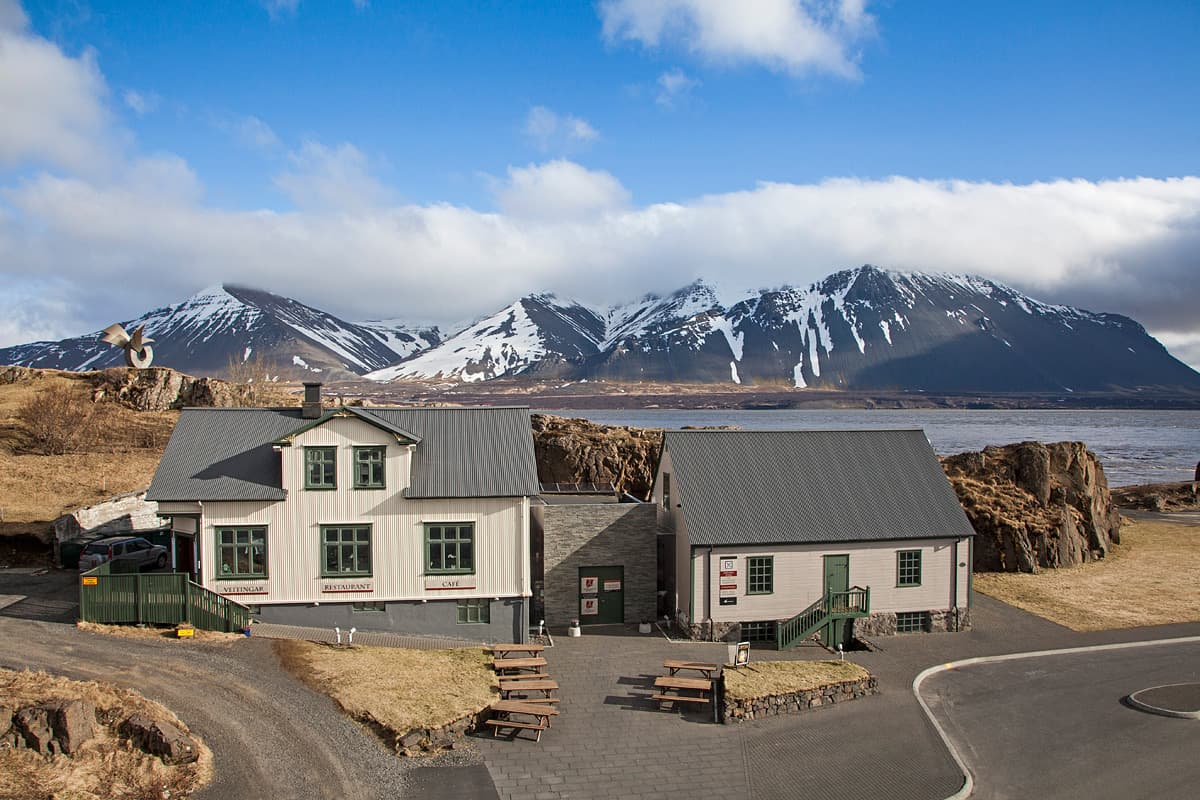
The Settlement Center is a story-led museum in Borgarnes, useful when West Iceland or Snæfellsnes plans need cultural context, an indoor-leaning pause, and enough time to check visitor details before committing.
Quick guide
Type
Museum, saga exhibition, and cultural attraction
Where
Borgarnes in West Iceland, on the westbound approach toward Snæfellsnes and Borgarfjörður
Route context
Best as a Borgarnes culture stop, arrival-day pause, or weather-flexible break on a western route
Time to allow
About 60-120 minutes, depending on exhibit pace and whether you add a meal or longer town stop
Best experience
Use the audio-led exhibitions to connect Iceland's settlement story with Egils Saga before scenic West Iceland stops
Access reality
Museum access, admission, languages, food service, and group details should be verified with official visitor information
Nearby pairings
Borgarnes town, Hvalfjörður, Reykholt, Deildartunguhver, Hraunfossar, Húsafell, and Snæfellsnes
Weather note
Useful in poor weather, but winter and westbound driving still need road, daylight, and forecast checks
In this guide
Should you stop at the Settlement Center in Borgarnes?
Yes, if your West Iceland day needs history, shelter, or a slower Borgarnes pause. Skip it when you only have time for outdoor scenery or when a Snæfellsnes day is already packed.
The Settlement Center is most useful when it gives the landscape around Borgarnes a human story. The museum focuses on Iceland's early settlement and Egils Saga, so the stop works best before or after a day that otherwise risks becoming only fjords, waterfalls, and driving.
Add it when Borgarnes is already the lunch stop, overnight base, or western route hinge. Skip it on a one-day Snæfellsnes sprint where Kirkjufell, cliffs, beaches, and long driving already compete for daylight.
Quick decision guide for adding the Settlement Center
Plan
Add it when
Skip or keep optional when
Quick route pause
Borgarnes is already on the drive and you want one cultural layer.
You need a fast fuel or food stop and nothing more.
Balanced museum stop
You can give the exhibitions real attention before continuing west or inland.
The group has low interest in museums or saga history.
Slow Borgarnes break
You are staying nearby or using the town as a softer weather-day anchor.
Official visitor details do not fit the route day.
Photo guide
The Settlement Center in photos
1 / 4
The exhibition imagery makes the museum identity clear at card size.
Worth the stop?
When this stop makes sense
Good match for
West Iceland drivers who want culture between scenic stops
Snæfellsnes or Borgarfjörður routes that need an indoor-leaning pause
travelers interested in Icelandic settlement history and Egils Saga
families and mixed-weather days when a compact museum stop helps the route
Think twice if
travelers who only want outdoor scenery and photo stops
The visit is built around two connected ideas: how Iceland's settlement story began, and why Egils Saga matters so much in this part of West Iceland.
The Settlement Exhibition gives the wider origin story. It is designed to make early Iceland feel less abstract through staged scenes, narration, and visual storytelling. That makes it easier to understand why farm sites, fjords, and old place names around West Iceland carry so much cultural weight.
The Settlement Exhibition uses staged scenes and audio-led storytelling rather than a large object collection.
The Egils Saga exhibition is more local. Egill Skalla-Grímsson is tied closely to Borgarfjörður, so the story has more force here than it would in a generic museum room. If you are heading toward Reykholt, Hvanneyri, Hraunfossar, or Húsafell, the stop can make the inland route feel less anonymous.
The Egils Saga side of the visit gives Borgarnes a sharper local identity.
How long should you allow?
Plan on about 60-120 minutes. The shorter version works for one focused exhibition and a look around; the longer version fits both exhibitions, questions, food, or a gentler family pace.
This is not a huge museum, but it is easy to under-plan because the exhibitions are story-led. If you rush through, the center becomes a quick indoor stop. If you give it time, it can reframe the surrounding westbound route.
Go if the day needs culture, shelter, or a stronger sense of place.
Skip if you are already short on daylight for Snæfellsnes, Hvalfjörður, or inland Borgarfjörður.
Check before committing if admission, audio language, group arrangements, food service, or access details affect your plan.
Where does it fit in a West Iceland route?
The strongest fit is as a Borgarnes anchor: an indoor-cultural stop before Snæfellsnes, after Hvalfjörður, or before the inland line toward Reykholt, Deildartunguhver, Hraunfossar, and Húsafell.
From Reykjavík, Borgarnes is a natural pause before the trip splits west toward Snæfellsnes or inland toward Borgarfjörður. The Settlement Center helps most when that pause already makes sense for food, weather, overnight timing, or a slower start.
If the day continues inland, pair the museum with Deildartunguhver, Hraunfossar, and Húsafell only when the route still has breathing room. If the day continues west, use the Snæfellsnes Peninsula Road Trip to decide whether Borgarnes should be a real stop or just a staging point.
What should you notice in the old buildings?
The buildings matter because the center is not only an exhibition inside a neutral box. It occupies historic Borgarnes structures that make the stop feel tied to the town.
Official material describes the center as based in two of Borgarnes's oldest buildings, with the old merchant house, warehouse, and reception hall forming the visitor experience. That gives the museum a town-history layer before the saga storytelling even begins.
The historic buildings help the stop feel rooted in Borgarnes rather than detached from the town.
That is the best way to approach the visit: first as Borgarnes context, then as national history. The stop becomes stronger when you connect the harbor-town setting, the old trading buildings, and the saga material instead of treating the museum as a stand-alone indoor diversion.
Which nearby stops pair best with it?
Keep the pairings practical. The Settlement Center works best with nearby West Iceland stops that already fit the same driving direction.
Hvalfjörður pairs well if you want the drive itself to feel scenic before reaching Borgarnes.
Deildartunguhver adds a short geothermal contrast on an inland Borgarfjörður day.
Hraunfossar and Húsafell make sense when you are building a slower west-inland route rather than rushing to the peninsula.
Snæfellsnes works when Borgarnes is a staging stop before the peninsula, not when the museum squeezes the whole day.
Avoid stacking too many cultural and scenic stops into one westbound day. The museum is most useful when it clarifies the route, not when it becomes another box to tick between longer drives.
The museum is strongest when you have time to follow the staged story, not only glance at the displays.
What should you check before relying on the visit?
Treat this as a museum visit with official visitor details to verify, not as a roadside viewpoint you can assume into any route.
Use official visitor information for admission, language options, access details, group arrangements, restaurant or cafe plans, and any seasonal changes. For winter or tight westbound routes, road conditions and weather warnings should decide whether Borgarnes remains a comfortable pause.
Use for weather warnings and forecast checks before committing to the route.
Common planning questions
Is the Settlement Center worth visiting if I am not a museum person?
Yes, if you want one compact story stop that makes West Iceland feel less anonymous. Skip it if your group only wants outdoor landscapes and has no interest in settlement history or sagas.
Is it better before or after Snæfellsnes?
It is usually easier before Snæfellsnes or on a Borgarnes overnight. After a long peninsula day, it can feel like one stop too many unless you have deliberately kept the schedule light.
Can I rely on food, languages, or access details?
Verify official visitor details before relying on them. Treat restaurant, cafe, audio-language, group, and access information as details to confirm, not fixed assumptions.
What is the best nearby outdoor contrast?
Deildartunguhver is the easiest geothermal contrast on an inland Borgarfjörður route, while Hvalfjörður is better if you want the drive itself to be scenic.