Deildartunguhver is a powerful boiling hot spring in West Iceland's Borgarfjörður area, best visited as a short Silver Circle stop where safety, nearby pairings, and Krauma bathing context shape the decision.
Spring details
Type
Boiling hot spring and geothermal viewing area
Region
West Iceland, in Borgarfjörður near Reykholt
Route context
Best as a Silver Circle or Borgarfjörður stop, often paired with Hraunfossar and Barnafoss
Time to allow
About 20-45 minutes for the spring, barriers, photos, and a careful look around
Best experience
Watch the boiling water and steam from the marked viewing area, then continue the West Iceland cluster
In this guide
Deildartunguhver is worth a stop when you are already building a West Iceland day around Borgarfjörður
Yes, Deildartunguhver is worth a stop when you are already building a West Iceland day around Borgarfjörður, the Silver Circle, or the waterfall pair farther inland. It is short, distinctive, and more useful as route texture than as a standalone destination.
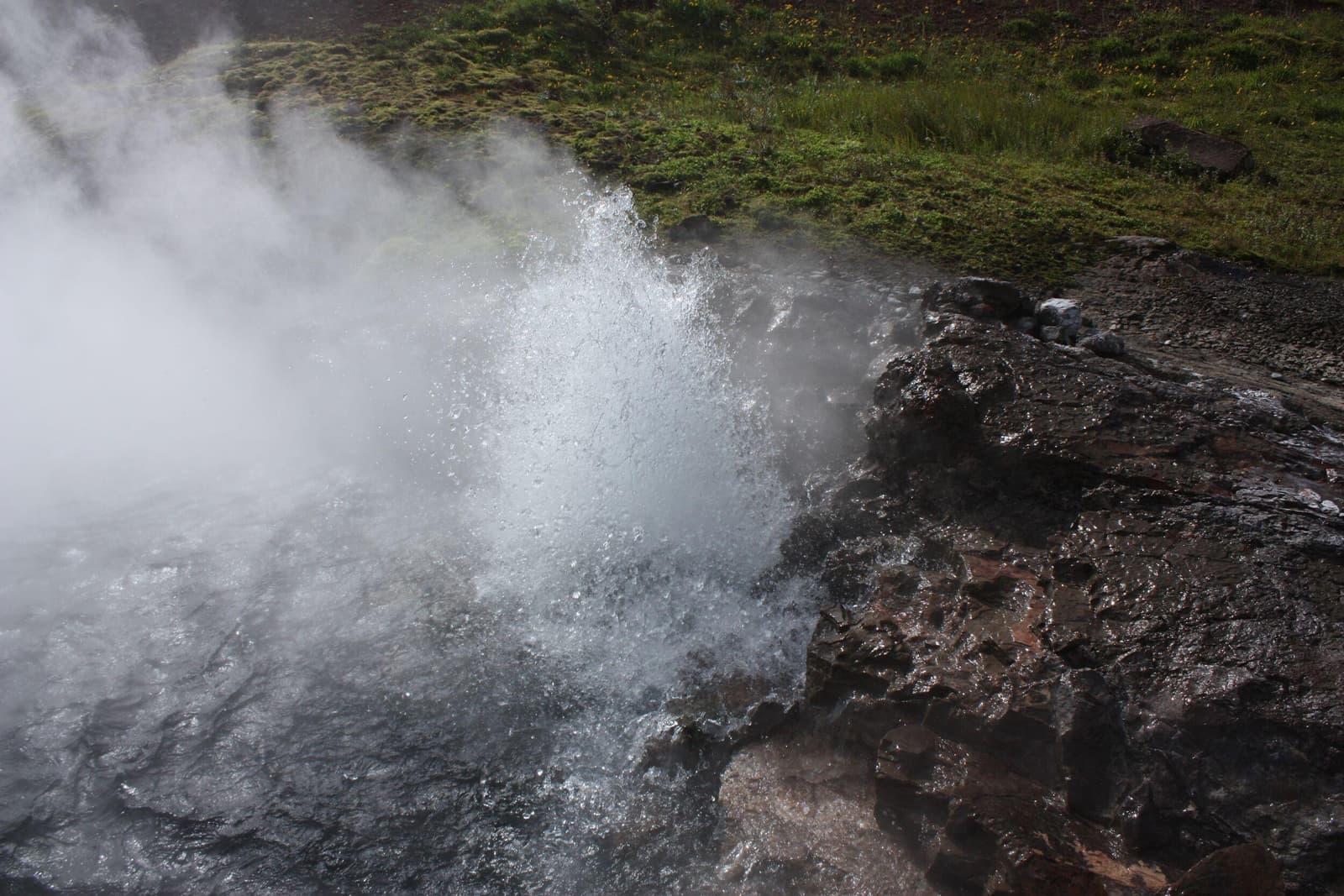
The main value is not a long walk or a spa moment. It is the chance to stand safely behind the viewing barriers and see boiling geothermal water, steam, mineral-stained rock, and the source that helps explain why hot water shapes daily life in this part of West Iceland.
Deildartunguhver earns its time beside Hraunfossar, Barnafoss, Reykholt, Krauma, or a broader Borgarfjörður drive. When the day already spans distant regions—or when a natural bathing pool is the real goal—the detour adds less than it costs.
What are you seeing at the hot spring?
You are seeing hot water surge out of a small geothermal area in Reykholtsdalur, with steam drifting over moss, red-brown mineral rock, and channels that carry the water away from the spring.
West Iceland's regional tourism page describes Deildartunguhver as Europe's most powerful hot spring, with about 180 liters of 100 C water each second. That number matters less as trivia than as an explanation for why the stop feels forceful even though the viewing area is compact.
The viewing platform is part of the experience because the spring is too hot to approach directly.
The spring is also practical infrastructure. Visit West Iceland says the water supplies much of the central heating used in Borgarnes and Akranes through a 64 km pipeline; it still reaches Akranes at roughly 78-80°C. That turns the spring from a steam-photo stop into visible evidence of how geothermal water supports ordinary homes in this region. Krauma is a separate controlled bathing use of the same source.
How long does the visit take, and how careful do you need to be?
Most travelers should allow about 20-45 minutes. That covers a careful look from the barriers, photos, reading the site context, and a small buffer for steam, wind, ice, or slower group movement.
The physical effort is low compared with a waterfall hike, but the risk is real because the water is boiling and steam can hide what is happening close to the ground. Keep children close, stay on marked surfaces, and avoid leaning past rails for a better angle.
Close detail is best seen from protected viewpoints, not from the spring edge.
Quick version: stop for the main viewing area and continue toward the waterfall pair.
Balanced version: give the steam time to shift, then add Reykholt or Krauma nearby.
Slow version: use Deildartunguhver as one piece of a full Borgarfjörður day rather than a single detour.
Where does it fit in West Iceland?
Deildartunguhver fits best in the inland Borgarfjörður part of West Iceland. It is strongest when it connects Reykjavík, Borgarnes, Reykholt, Hraunfossar, Barnafoss, Husafell, or a westbound route toward Snæfellsnes.
Add the stop when the day already has a West Iceland spine: Borgarnes, Reykholt, Deildartunguhver, Hraunfossar, and Barnafoss. Skip it when adding the spring creates a long out-and-back just because the phrase most powerful hot spring sounds impressive.
If your larger plan is the Snæfellsnes Peninsula Road Trip, Deildartunguhver can work before or after the peninsula when the day has space. If you are following a short 5-Day Iceland Itinerary, it usually needs to replace something else rather than being added on top.
Deildartunguhver works best as part of a West Iceland cluster, not as an isolated detour.
Which nearby stops make the stop worthwhile?
The best pairings keep the day in Borgarfjörður instead of pulling you across unrelated regions. Choose the next stop by the kind of day you want: easy scenery, culture, lava-cave scale, or controlled geothermal bathing.
Use nearby stops to decide whether Deildartunguhver strengthens the day.
Nearby choice
Why pair it
Best for
Hraunfossar
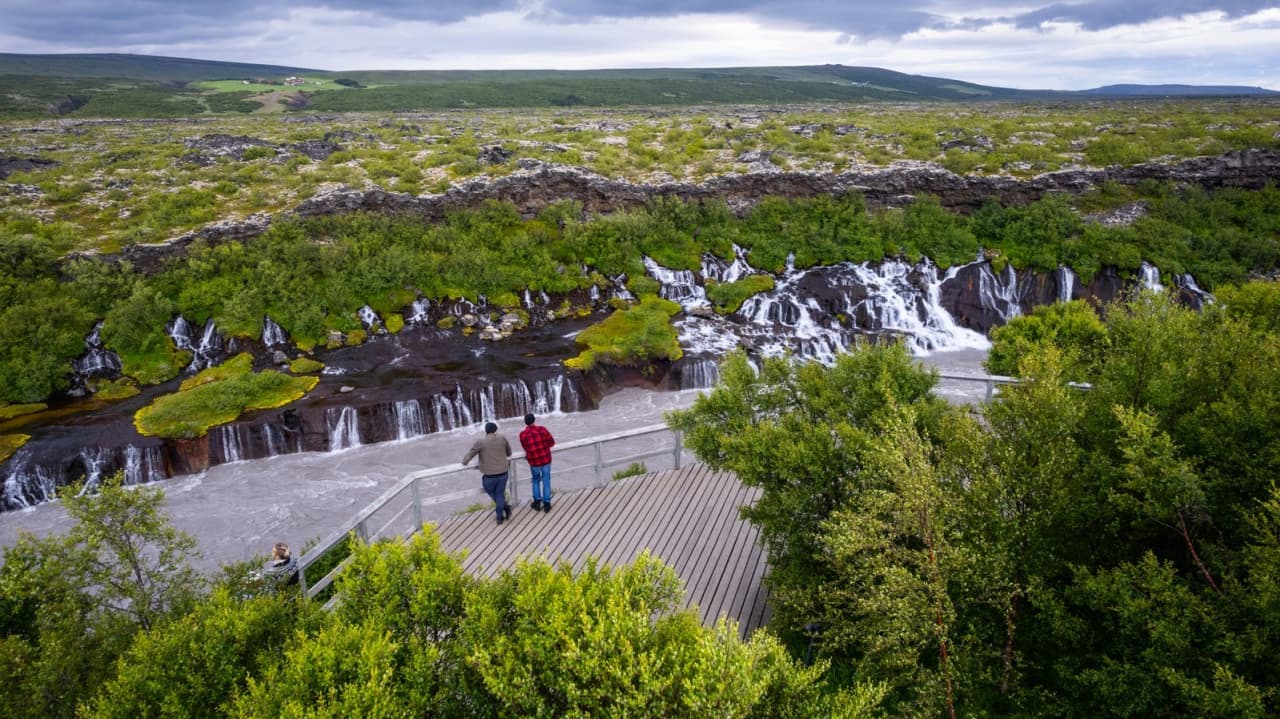
Adds a wide lava-fed waterfall area after the compact hot spring
Scenic West Iceland days
Barnafoss
Adds a stronger river gorge contrast beside Hraunfossar
Travelers who want more energy after the spring
Reykholt
Adds cultural and saga context close to the hot spring
Adds lava-cave scale if the day can absorb a booked or guided element
Travelers planning a fuller Husafell-area day
Krauma
Turns the hot-water source into a controlled bathing decision nearby
Travelers who want geothermal water without unsafe bathing
For most first-time West Iceland days, Hraunfossar and Barnafoss are the strongest scenic continuation. Reykholt, Snorrastofa, Husafell, Vidgelmir, Snorralaug, or Husafell Canyon Baths make sense only when the route has enough time for a slower inland day.
How does Krauma change the plan?
Krauma changes the stop from a quick viewing break into a paid bathing decision beside the spring. That can be useful, but it is a different experience from visiting Deildartunguhver itself.
The official Krauma page says its pools use water from Deildartunguhver after controlled cooling. That makes Krauma the practical answer if you want to bathe in geothermal water in this exact area, while Deildartunguhver remains the place to see the boiling source.
Do not assume the bathing stop fits just because the spring stop fits. Verify official visitor information, booking details, access needs, and any facility details before building Krauma into a tight route day.
The natural spring is a viewing stop; nearby bathing requires a separate controlled setting.Barriers and official signs should decide how close you get to the hot spring.
Check official visitor information, road conditions, weather, and any Krauma details that matter before making Deildartunguhver a fixed part of a tight day
Check official visitor information, road conditions, weather, and any Krauma details that matter before making Deildartunguhver a fixed part of a tight day. This is especially important in winter or when the stop sits between longer drives.
Use this guide for planning, not live access confirmation. Use official road and weather sources for the drive, SafeTravel for visitor-safety context, and the operator page if Krauma is part of the same plan.
Use for visitor safety and travel-condition guidance before departure.
Deildartunguhver Hot Spring FAQ
Most confusion comes from mixing up the boiling spring, the nearby bathing operator, and the wider West Iceland route.
Can you swim in Deildartunguhver?
No, Deildartunguhver itself is a boiling hot spring for viewing, not bathing. If you want a controlled geothermal bath nearby, verify official Krauma visitor information before planning that part of the day.
How long should I spend at Deildartunguhver?
Most visitors need about 20-45 minutes for the viewing area, photos, and safety signs. Add more time only if you are pairing it with Krauma, Reykholt, Hraunfossar, Barnafoss, or a broader Borgarfjörður route.
Is Deildartunguhver safe for families?
It can work for families who can stay behind barriers and follow signs. The water is boiling, steam can reduce visibility, and children need close supervision throughout the stop.
Is Deildartunguhver worth a detour from Reykjavík?
Usually only if you are already making a West Iceland day. It is more convincing when paired with Hraunfossar, Barnafoss, Reykholt, Krauma, or a westbound drive than as a single out-and-back stop.
What should I check before visiting in winter?
Check official road conditions, weather guidance, daylight, and visitor information before relying on the stop. The visit is short, but winter driving and icy surfaces can make the route feel very different.