Rauðasandur is a wide red-sand beach in the southern Westfjords, worth planning when road confidence, tides, weather, and a slower fjord day support the detour, with enough flexibility for conditions and nearby route choices.
Coast snapshot
Type
Remote red-gold sand beach and tidal flats
Region
Southern Westfjords
Route context
Westfjords Way detour via Road 614
Typical visit
45 minutes to 2 hours, longer for walking and photography
Access
Gravel-road descent; check current road and weather conditions before going
In this guide
Rauðasandur is worth the detour when you are already giving the southern Westfjords time
Rauðasandur is worth the detour when you are already giving the southern Westfjords time. It is not a quick Ring Road-style beach stop; the value is the scale, silence, shifting sand color, and the feeling of reaching a broad tidal edge after a demanding approach.
The beach works best for travelers who want one memorable slow stop near Patreksfjörður or Látrabjarg instead of another short viewpoint. If your day is already packed with ferry timing, long fjord drives, or a push toward Dynjandi, Rauðasandur can turn from beautiful to stressful.
Plan it as a place to walk, watch the light change, and decide how far along the shore you actually want to go. The red and golden tones are subtle in some weather and vivid in others, which is part of the point: this is a real coastal landscape, not a guaranteed postcard color.
Photo guide
Rauðasandur Beach in photos
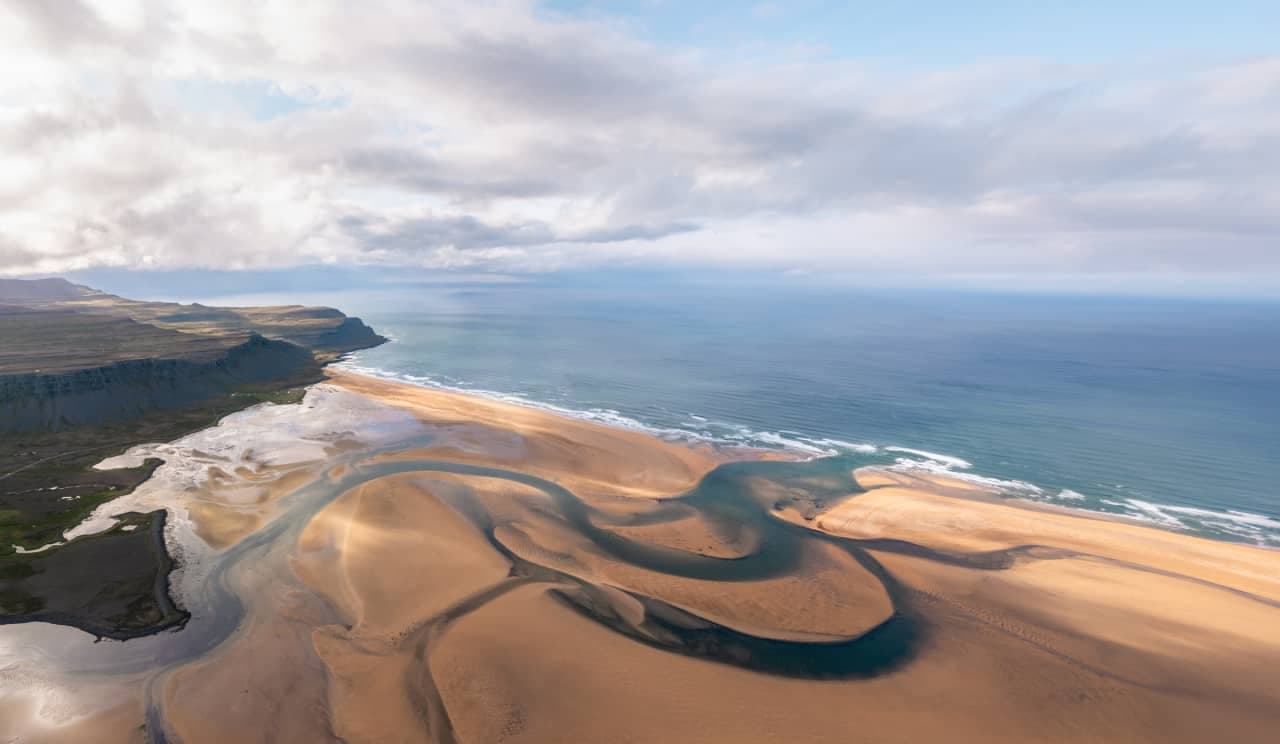
Shallow water and broad sand make Rauðasandur feel tide-shaped rather than like a single viewpoint.
Rauðasandur Beach: the first impression is usually space
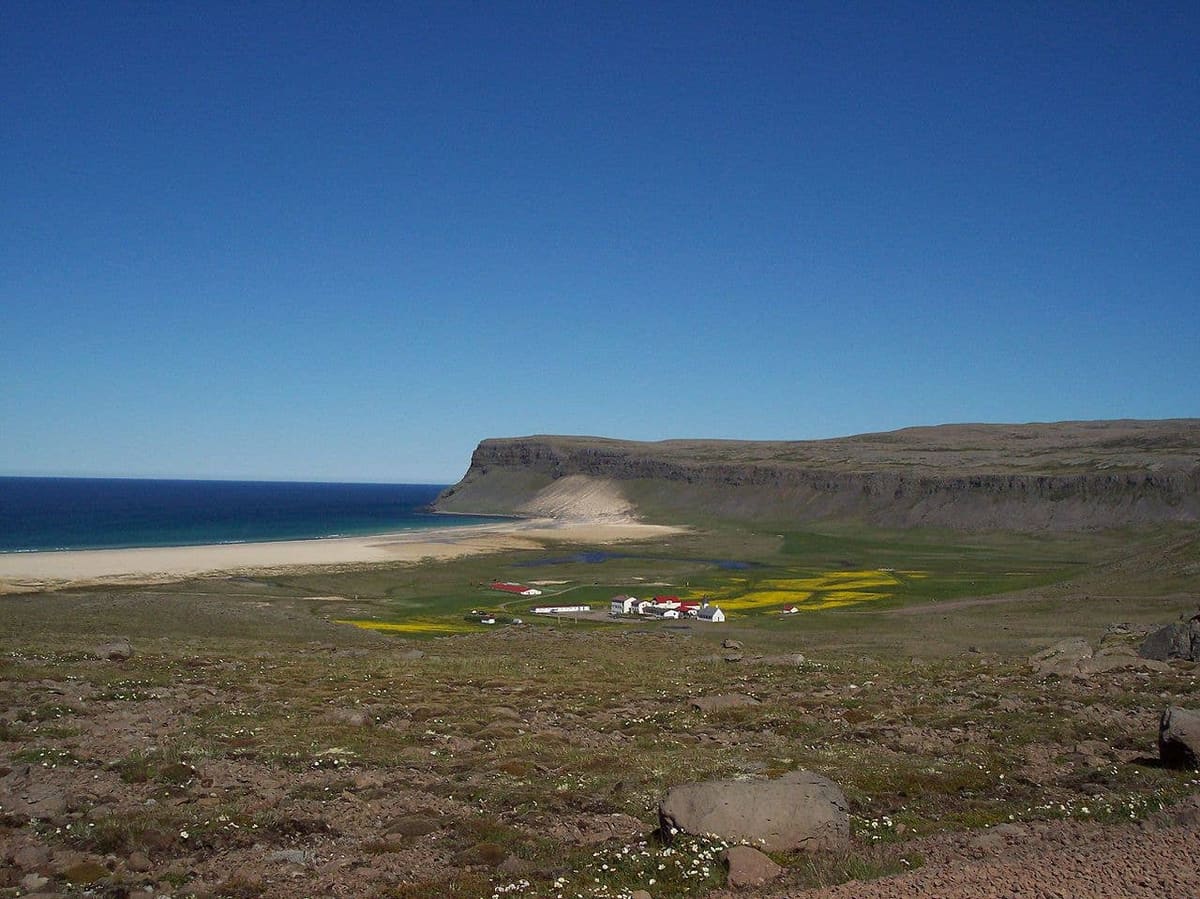
The first impression is usually space. Rauðasandur opens into a wide sweep of sand, shallow water channels, sea, cliffs, and distant mountains rather than one single object to photograph.
At lower tide the beach can feel almost oversized, with reflective flats and long curves of shell-colored sand. In cloudier weather the colors can soften toward gold, peach, grey, and pale orange; in stronger light they can look warmer and more red.
The best visit gives you time to look across the full beach before walking onto the sand.
It is quieter than the famous black sand beaches in South Iceland and much more dependent on your route choices. The reward is not facilities or a built-up viewpoint; it is the contrast between the remote Westfjords road, the wide beach, and the open Atlantic edge.
How do you fit Rauðasandur into a Westfjords day?
Use Rauðasandur as a southern Westfjords stop, not as a casual add-on from far away. The cleanest plan is usually Patreksfjörður plus Rauðasandur, with Látrabjarg added only if the day still has enough daylight, weather margin, and driver energy.
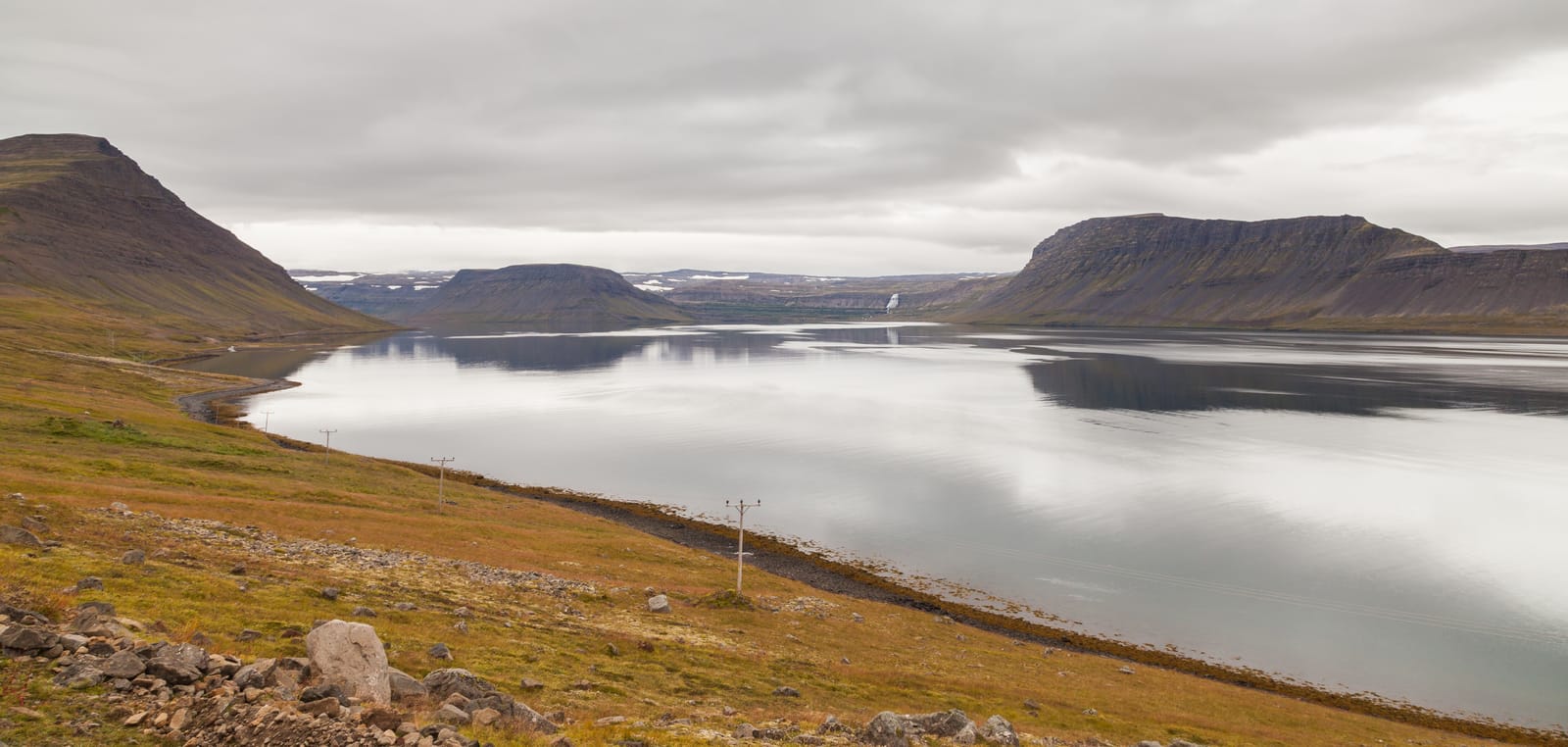
The local route context places Rauðasandur in the Westfjords Way cluster with Patreksfjörður, Látrabjarg, Örlygshöfn, and Dynjandi. That matters because the driving here is slower than map distance suggests, and the best days are built from nearby Westfjords anchors rather than from a long national checklist.
Base the day around Patreksfjörður if you want the least friction.
Pair Rauðasandur with Látrabjarg only in stable conditions and with enough time for the return drive.
Keep Dynjandi for the wider Westfjords route unless you have a long, well-paced day.
Avoid treating Rauðasandur as a same-day side trip from Reykjavík or a rushed Ring Road itinerary.
Rauðasandur rewards walking time more than a quick roadside stop.
Allow at least 45 minutes at the beach once you arrive
Allow at least 45 minutes at the beach once you arrive, and closer to two hours if you want to walk, photograph the flats, or wait for better light. The driving approach is the bigger planning factor.
Road 614 is the specific access road noted by Visit Westfjords. It is a gravel-road approach with a descent toward the coast, so current conditions matter more than a fixed drive-time promise. Slow down before gravel, leave space for oncoming traffic, and avoid rushing the return climb.
If the day is windy or visibility is poor, the beach can still be atmospheric, but the road, photos, and walking comfort may all be weaker. A flexible Westfjords plan is more useful than a fixed promise to visit regardless of conditions.
Rauðasandur Beach: the important checks are road condition, weather, daylight, tide awareness, and services
The important checks are road condition, weather, daylight, tide awareness, and services. Rauðasandur is not difficult because the beach itself is technical; it is difficult because the wider Westfjords context gives you fewer easy backups.
SafeTravel advises drivers in Iceland to match speed to conditions, slow down before gravel, avoid relying only on map apps for closures, and check road and weather information during the day. That guidance is especially relevant here because Rauðasandur sits away from the main paved travel corridors.
Check Umferðin for current road status before taking Road 614.
Check the Icelandic Met Office forecast for wind, visibility, and precipitation in the Westfjords.
Bring layers and footwear that can handle wet sand, wind, and a longer walk than planned.
Do not disturb birds or seals, and give wildlife more space than a phone camera makes tempting.
Official forecast for wind, precipitation, visibility, and temperature.
Rauðasandur Beach: patreksfjörður is the practical base, Látrabjarg is the strongest nearby wildlife and cliff pairing
Patreksfjörður is the practical base, Látrabjarg is the strongest nearby wildlife and cliff pairing, and Dynjandi is the broader Westfjords anchor when the route continues north or east.
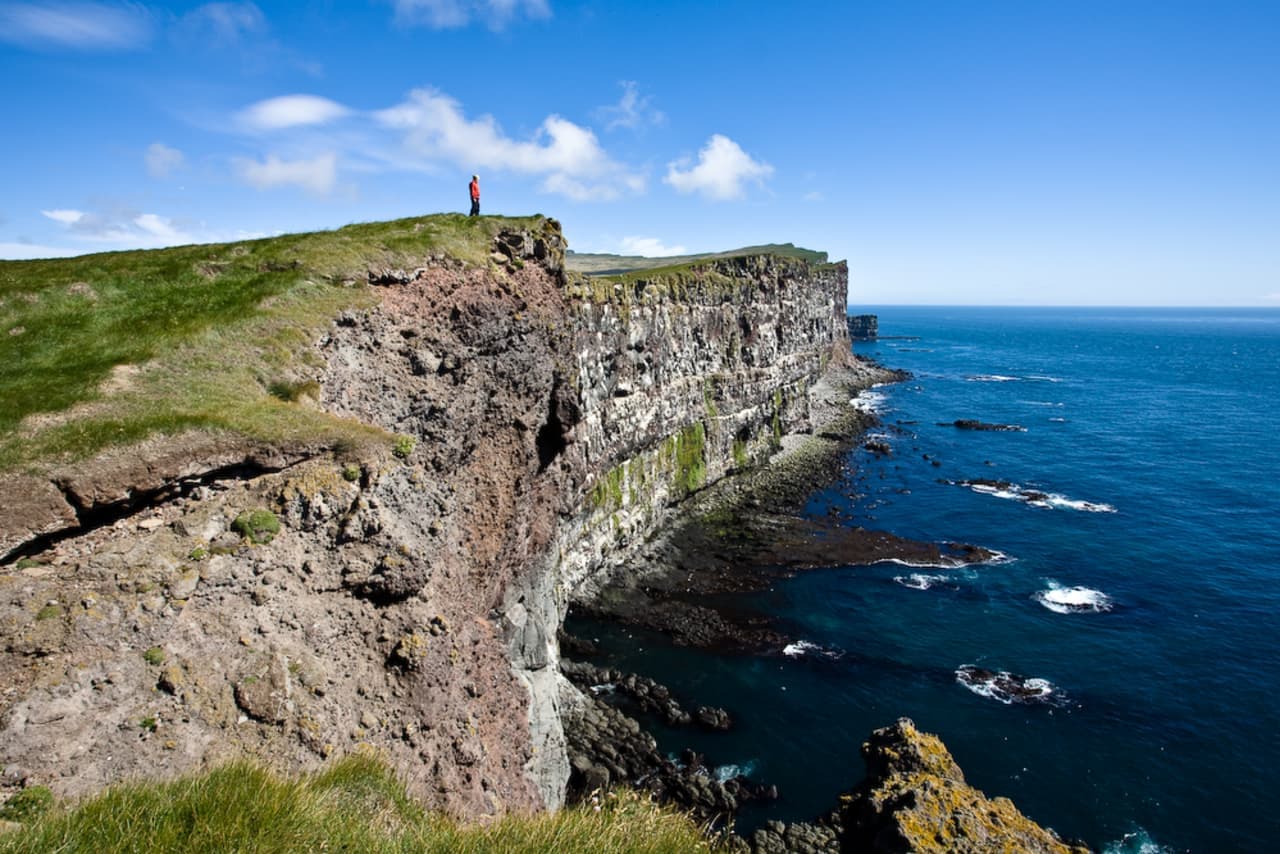
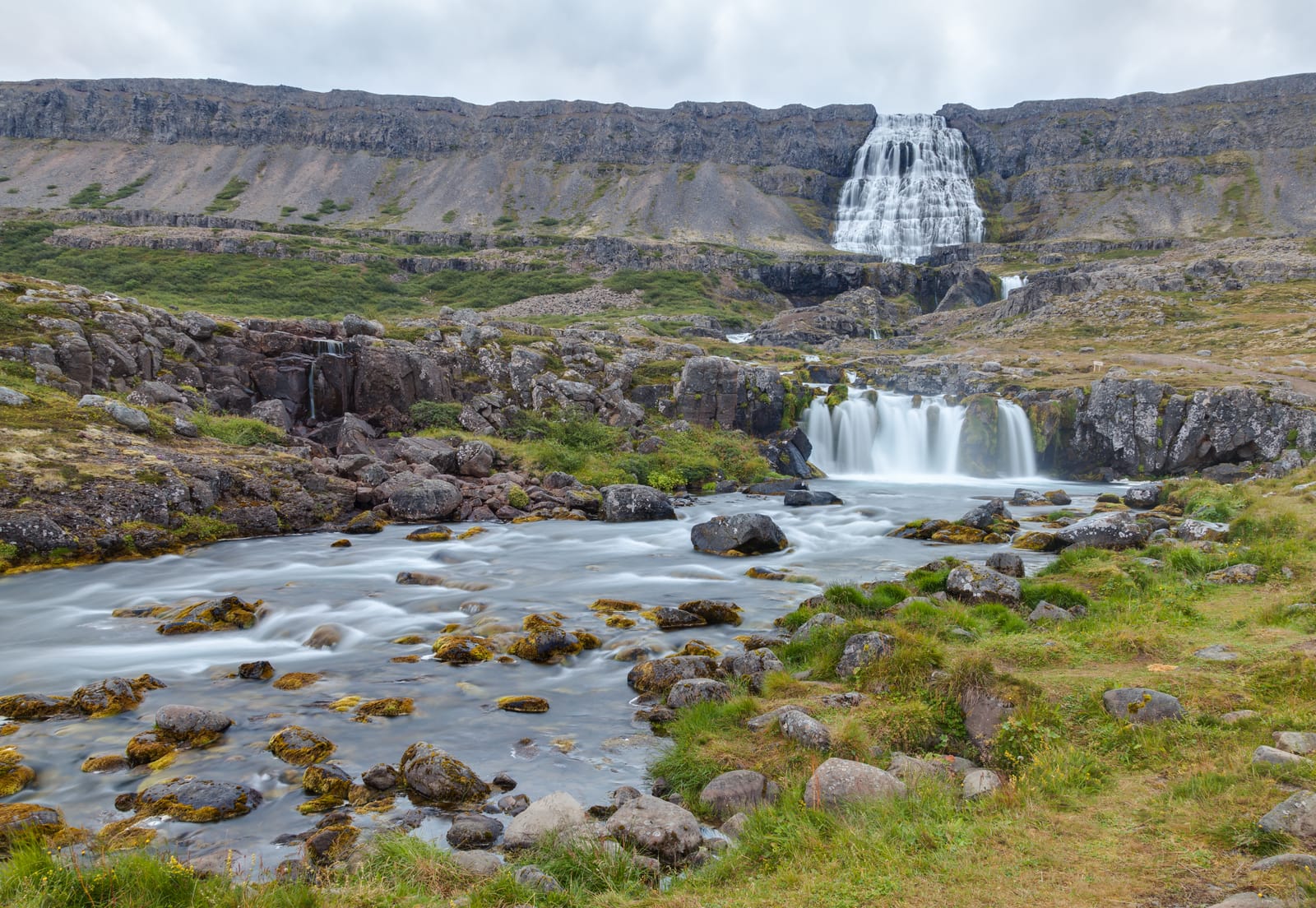
Patreksfjörður gives the stop its practical shape because it is where most travelers sort fuel, food, accommodation, and timing. Látrabjarg adds a high-drama bird-cliff visit, but it should not be forced on a marginal weather day. Dynjandi belongs to the larger Westfjords route and works better as a major stop on a planned loop than as a rushed extra after the beach.
The beach pairs best with nearby Westfjords stops when the day has room to stay slow.
If you are choosing between stops, Rauðasandur is the slow scenic one, Látrabjarg is the exposed cliff-and-birdlife one, and Dynjandi is the waterfall anchor. Trying to make all three feel relaxed in one tight day is usually the mistake.
Rauðasandur Beach FAQ
These are the questions that most affect whether the stop belongs in your actual plan.
Can you visit Rauðasandur in a normal rental car?
Yes, some travelers visit Rauðasandur in a normal rental car in good summer conditions, but you should check your rental terms, road status, weather, and comfort with gravel-road driving before committing.
Is Rauðasandur a quick stop?
No, Rauðasandur is not a good quick stop unless you are already nearby. The beach itself can be short, but the access road and Westfjords route context make it a slow-travel stop.
Is the sand always bright red?
No, the color changes with light, tide, moisture, and weather. Expect red-gold, peach, orange, yellow, and pale tones rather than one constant saturated red.
Should Rauðasandur and Látrabjarg be planned together?
Yes, they can work together on a well-paced southern Westfjords day, but only if road, weather, daylight, and driver energy are good enough for both remote stops.