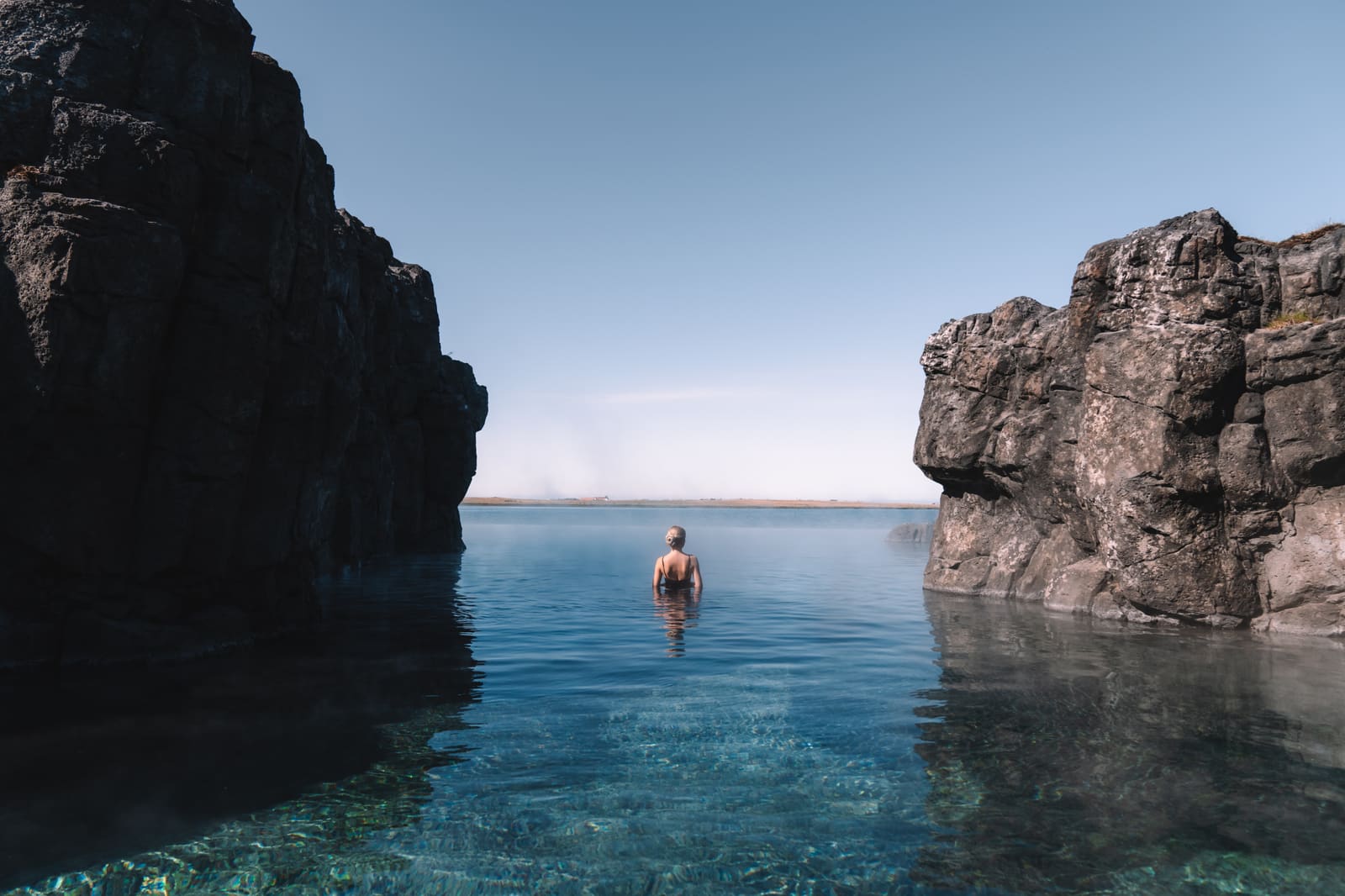
Bathing details
- Feature
- Natural hot waterfall and pool
- Setting
- Laugavalladalur, East Iceland
- Approach
- F910; suitable high-clearance 4x4
- Season
- Summer access depends on road opening
- Water
- Temperature varies; can be too hot
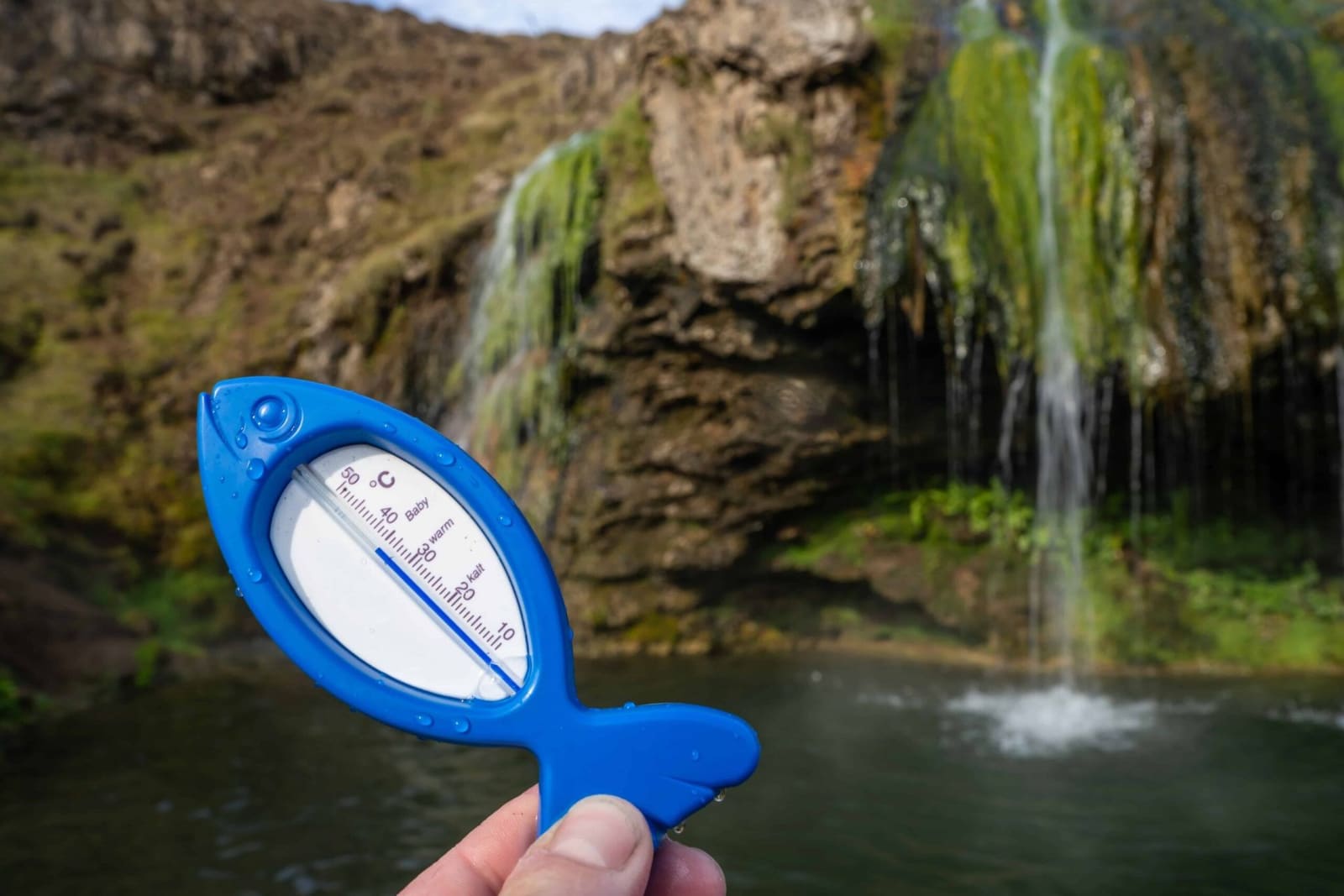
Laugavallalaug is a natural hot waterfall and bathing pool near the old Laugarvellir farm in East Iceland. Warm water drops over a low rock ledge into the green valley. Plan the Highland approach carefully: the drive is demanding and the water can become too hot.
Bathing details
Warm water cascades over a low ledge into a natural bathing area near the old Laugarvellir farm, in the remote East Iceland valley of Laugavalladalur.
The waterfall is the distinctive feature: a small geothermal stream drops through rock and greenery before joining the valley’s river. You may see Laugarvellir used for the farm and hot-waterfall area. Laugarvalladalur is the wider valley; Laugarfell is a separate place with operated stone-built pools.
The tradeoff is the approach. If your East Iceland day is already shaped around Egilsstaðir, rough-road patience, and enough daylight to adapt, the detour can feel like a real find. If you are simply driving between overnight bases, it can turn into stress.
The warm cascade is the reason Laugavallalaug stands apart from simpler natural pools.
Instead of stepping into a flat hot pot and calling the stop done, you arrive in a green valley where warm water, rock, moss, and a nearby stream all shape the scene. The waterfall gives the place movement and sound, which makes the soak feel more wild than polished.
This is a natural bathing place. Bring what you need for changing and drying, protect the vegetation and take your litter away. Keep clear of slippery edges and do not rely on the water having the same temperature throughout the pool or on a later visit.
| Good reason | Weak reason | Better choice |
|---|---|---|
| You want a remote hot waterfall | You only need a quick soak | Choose an easier managed bath |
| The rough road is part of the plan | The route is already overloaded | Stay with East Iceland anchors |
| Weather and daylight leave margin | The group dislikes uncertainty | Use a lower-effort stop |
The paved approach toward Kárahnjúkar and the onward F910 section have different vehicle requirements.
Visit Austurland describes Route 910 toward Kárahnjúkar as paved. Beyond the dam, the Highland Circle continues on F910, for suitable high-clearance 4x4 vehicles when open. Laugarfell’s ordinary-car summer access does not establish ordinary-car access to Laugavallalaug.
The final parking and walking approach must be checked locally. Do not follow a map pin across a river, closed track or fragile ground. If the onward route is unsuitable, turn back on the permitted road. A bath at Laugarfell or a lower-elevation day around Hengifoss has different access demands.
Laugavallalaug is easiest to justify when it improves a focused East Iceland day instead of pulling the route away from everything else.
Use Egilsstaðir as the practical base decision. From there, the question becomes whether your group wants a remote warm-water reward or whether a clearer sightseeing day around Hengifoss, Hallormsstaður, and the lake area is already enough.
If Stuðlagil Canyon is also in the plan, be careful with ambition. The canyon and hot spring can sound close on a map, but rough-road travel, photo stops, bathing time, and weather pauses can make the day feel bigger than expected.
Keep geothermal sightseeing separate from bathing. Hveradalir is a geothermal walking area, not an alternative hot pool. Landmannalaugar, Hveravellir and Askja each have their own access and safety rules; none is a nearby fallback if this detour fails.
The safest version of the plan is built around verification, not fixed assumptions.
Before you drive, check official road information, weather forecasts and warnings, and travel-safety guidance. Then keep the plan flexible enough to shorten, reverse, or drop the detour without damaging the rest of the day.
Bring food, drinking water, warm layers and offline navigation. Keep the bath optional if water temperature, footing or access is uncertain. Do not assume that this natural site supplies changing rooms, showers or other spa facilities.
Use for official road-condition checks before remote driving.
Use for forecasts, warnings, wind, and visibility.
Use for travel-condition and safety guidance.
Paved Route 910, the onward F910 section and summer/high-clearance vehicle limits.
Hot-waterfall setting and the warning about excessive water temperatures.
Laugarvellir is the old farm name used around the hot-waterfall area in Laugavalladalur. Laugavallalaug identifies the bathing spot. Laugarfell, with its operated pools and accommodation, is a different destination.
Yes. The main appeal is the combination of a natural hot spring and warm waterfall, but the rough East Iceland access is the part that decides whether the stop belongs in your day.
No. Visit Austurland warns that the water can rise above comfortable bathing temperatures. Check cautiously before entering and stay out when the temperature or conditions are uncertain.
By ThorPublished Updated
Map
Use nearby places and useful bases before opening directions.
Interactive planning map for Laugavallalaug Hot Spring and Waterfall
Interactive map
Place context and external map links remain available without loading it.
Things to do
Open a focused experience guide when the activity, booking, or conditions should shape the visit.