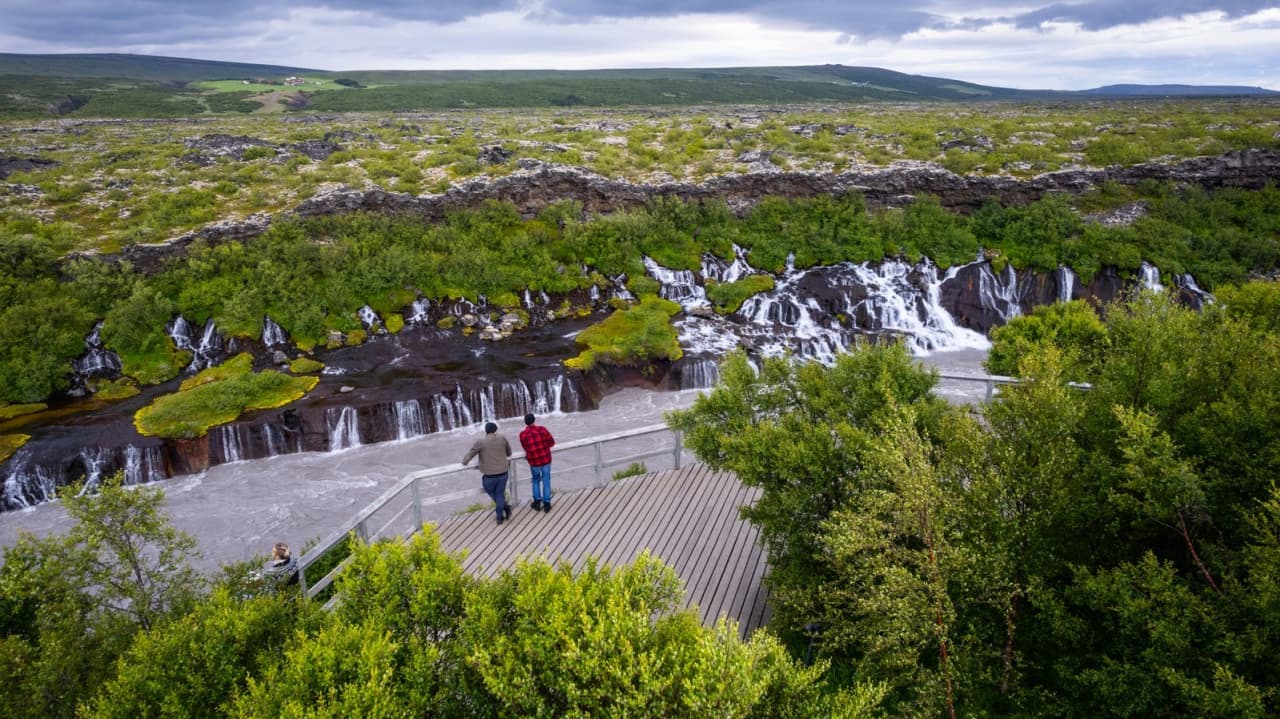
Glanni spreads across low lava ledges in the Norðurá river near Bifröst in West Iceland. A short marked path leads to the waterfall viewpoint, with the sheltered Paradísarlaut hollow nearby and Grábrók a separate stop in the same area.
Waterfall facts
Setting
Norðurá river near Bifröst, in the Grábrók lava landscape of West Iceland
Walking
Short marked paths to the waterfall viewpoint and Paradísarlaut; check footing and local signs
Time to allow
About 20–45 minutes for a short visit; allow longer for Paradísarlaut and photos
Parking
Paid parking at Glanni and Paradísarlaut; check Parka for current charges and terms
Nearby stop
Grábrók is in the same Bifröst area; Hraunfossar and Barnafoss require a separate inland drive
In this guide
Glanni’s low cascades in the Grábrók lava landscape
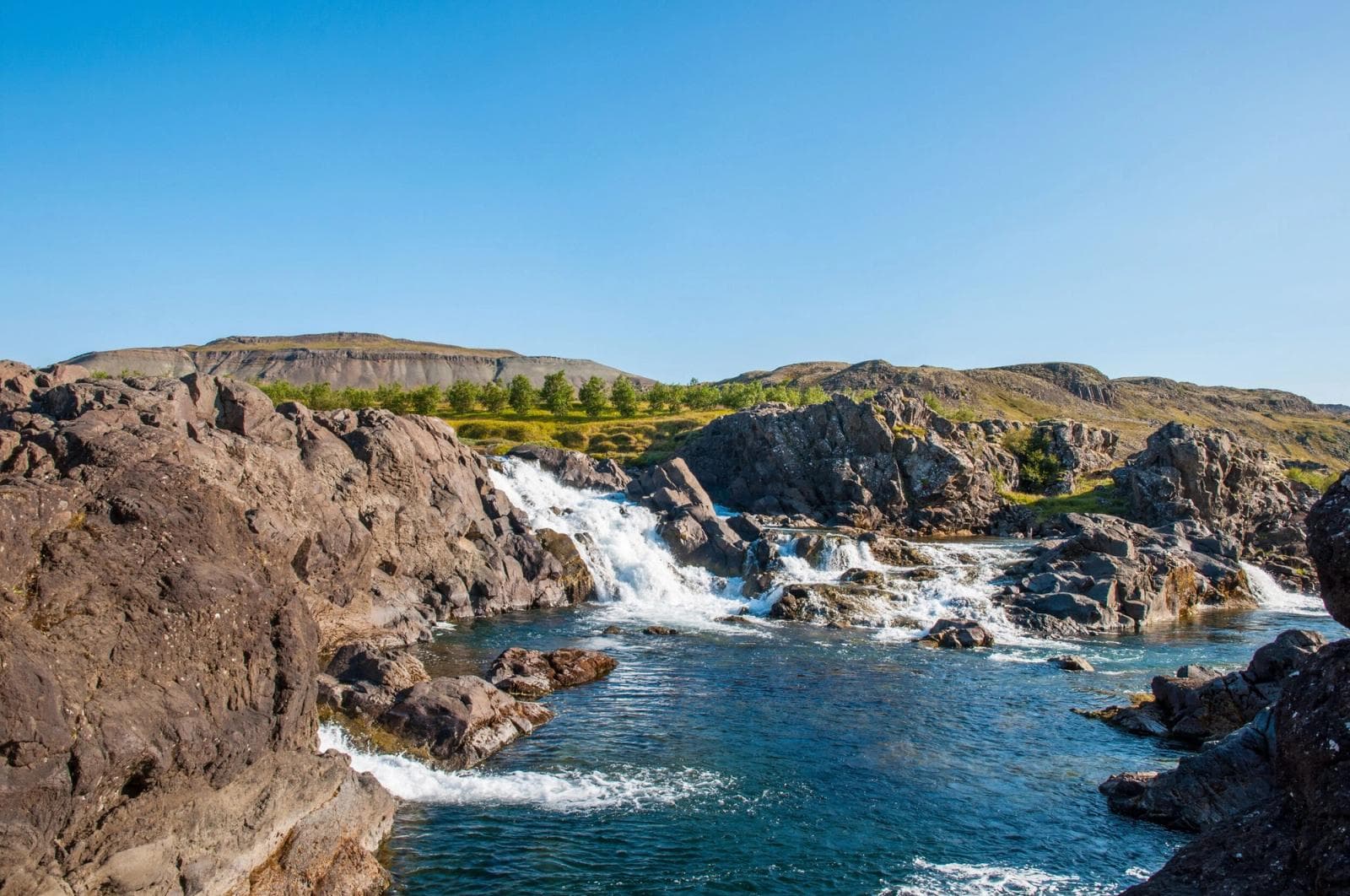
The Norðurá river divides into white cascades across dark rock at Glanni, just south of Bifröst.
Several low ledges spread the water across the river, with pools, lava walls, and vegetation around the viewpoint. The broad shape of the falls and the surrounding lava are the main features to look for.
Glanni fits naturally with Grábrók and the Bifröst area on a Ring Road drive. Hraunfossar Waterfalls, Barnafoss Waterfall, Deildartunguhver Hot Spring, and Húsafell belong to a separate inland drive; allow time for that journey rather than treating them as adjacent stops.
Photo guide
Glanni Waterfall in photos
1 / 3
Colorful evening clouds above Glanni’s low cascades and dark lava rock.
Walk from the parking area to Glanni and Paradísarlaut
Follow the Glanni and Paradísarlaut signs off Route 1 near Bifröst. The visitor parking area is by the golf course; the waterfall itself is reached on foot.
Use the marked path to the waterfall viewpoint. The map pin identifies Glanni’s natural feature, not an exact parking entrance. Follow local signs on arrival and keep to the paths rather than approaching the river across wet lava ledges.
Norðurá divides across low rock ledges at the Glanni viewpoint.
Paradísarlaut, or Paradise Hollow, is a separate small hollow nearby, with clear water below lava walls. Follow the marked path if you want to extend the walk. The hollow is a scenic stop; this guide does not recommend swimming or scrambling down to the water.
Parking at Glanni and Paradísarlaut is paid, and overnight stays in the parking area are prohibited. Use Parka’s current parking information below for charges and terms; do not assume that a short visit is free.
Allow time for the viewpoint and the hollow
About 20–45 minutes is a practical allowance for a short visit, including parking, walking, and photos. Add time if you include Paradísarlaut or your group walks slowly; these are planning estimates, not guaranteed route times.
Glanni timing choices
Visit style
Best when
Time to protect
Quick viewpoint pause
You are passing Bifröst and only need the waterfall view
20-30 minutes
Balanced short stop
You want the waterfall, lava texture, photos, and a little breathing room
30-45 minutes
Slower wander
You add Paradísarlaut or move carefully in wet, windy, or icy conditions
45-60 minutes
The paths are short, but wet rock, ice, and uneven ground can affect the visit. Short does not mean step-free: verify current access locally if your group has mobility needs. Use Winter Driving in Iceland and official road and weather checks when planning outside straightforward summer conditions.
Pair Glanni with Grábrók or an inland Borgarfjörður drive
Grábrók offers a crater walk close to Bifröst. The inland waterfalls and hot springs take you farther from Route 1.
Grábrók and Glanni give you contrasting views of the same local landscape: a volcanic crater, lava terrain, and a river waterfall. For a longer West Iceland day, plan a separate drive to Hraunfossar Waterfalls and Barnafoss Waterfall, with Deildartunguhver Hot Spring on the inland route.
Clear water sits below the lava walls of Paradísarlaut, a separate stop on the short walk near Glanni.
If the route is stretching toward Húsafell, keep Glanni brief. Húsafell, the inland waterfalls, lava-cave context, and hot-spring stops can absorb more of the day than the map suggests, especially when weather or daylight narrows your margin.
Check Glanni parking terms and local conditions
Use the parking provider for fees and terms, and official sources for conditions that affect the walk and the drive.
Use official road conditions before committing to a West Iceland driving sequence.
Use official weather guidance when wind, rain, ice, or low visibility could affect the viewpoint and onward drive.
Use official safety guidance if alerts, closures, or winter travel conditions could affect the area.
Check Parka’s Glanni and Paradísarlaut page for parking terms, then follow local visitor signs on arrival.
Keep Glanni optional if ice, poor visibility, or a weather warning makes the walk or onward drive unsuitable. Check locally before relying on refreshments or other visitor services.
Supports West Iceland, Bifröst, Norðurá, Grábrók, and Silver Circle context.
Glanni Waterfall FAQ
Practical questions about the walk, parking, and fitting Glanni into a West Iceland drive.
Is parking at Glanni free?
No. Parka lists paid parking for Glanni and Paradísarlaut. Check the current vehicle category, charge, and terms before your visit; overnight stays in the parking area are prohibited.
Is Glanni worth adding with Grábrók?
Yes, if you are already near Bifröst and want a short contrast between crater, lava, river, and waterfall scenery.
Should I choose Glanni or Hraunfossar?
Choose Glanni for a short stop near Bifröst and Grábrók. Choose Hraunfossar for the inland Borgarfjörður waterfall area, often paired with Barnafoss. They are separate drives, so use your route and available time to decide.
Can Glanni fit into a winter West Iceland day?
It can, but only if road, weather, daylight, and footing checks leave enough margin. Keep it optional when the drive is already tight.