Siglufjörður is Iceland's northernmost town and a former Atlantic herring capital under steep Tröllaskagi mountains; add it when the harbor, the country's largest maritime and industrial museum, or a coherent peninsula route is worth real north-coast time.
Town snapshot
Type
Harbor town, cultural stop, and mountain-backed destination area
Region
North Iceland, on the Tröllaskagi side of the north coast
Route context
Best on Arctic Coast Way, Tröllaskagi, and slower North Iceland plans
Time to allow
About 1-2 hours for the town, longer if herring history or outdoor time is the focus
Best experience
Harbor walk, town-and-mountain views, and one deliberate cultural or outdoor focus
In this guide
Siglufjörður is worth the detour when your route has real north-coast time
Yes, Siglufjörður is worth the detour when your route has real north-coast time. It is less useful as a rushed add-on between larger North Iceland anchors.
Siglufjörður is the kind of place that rewards a deliberate pause. Visit North Iceland describes Iceland's northernmost town growing from a tiny shark-fishing village in 1900 into one of the country's largest towns and the Atlantic herring capital. The harbor, industrial buildings, and steep Tröllaskagi setting let you read that boom-and-bust history in the town itself.
The choice is simple. Add Siglufjörður when Tröllaskagi, Skagafjörður, or an Arctic Coast Way-style day is already part of the plan. Skip it when the day only needs the fastest line toward Akureyri, Mývatn, or the next overnight base.
Photo guide
Siglufjörður in photos
The herring-era waterfront gives Siglufjörður a different rhythm from a pure scenery stop.
Siglufjörður feels enclosed and northern
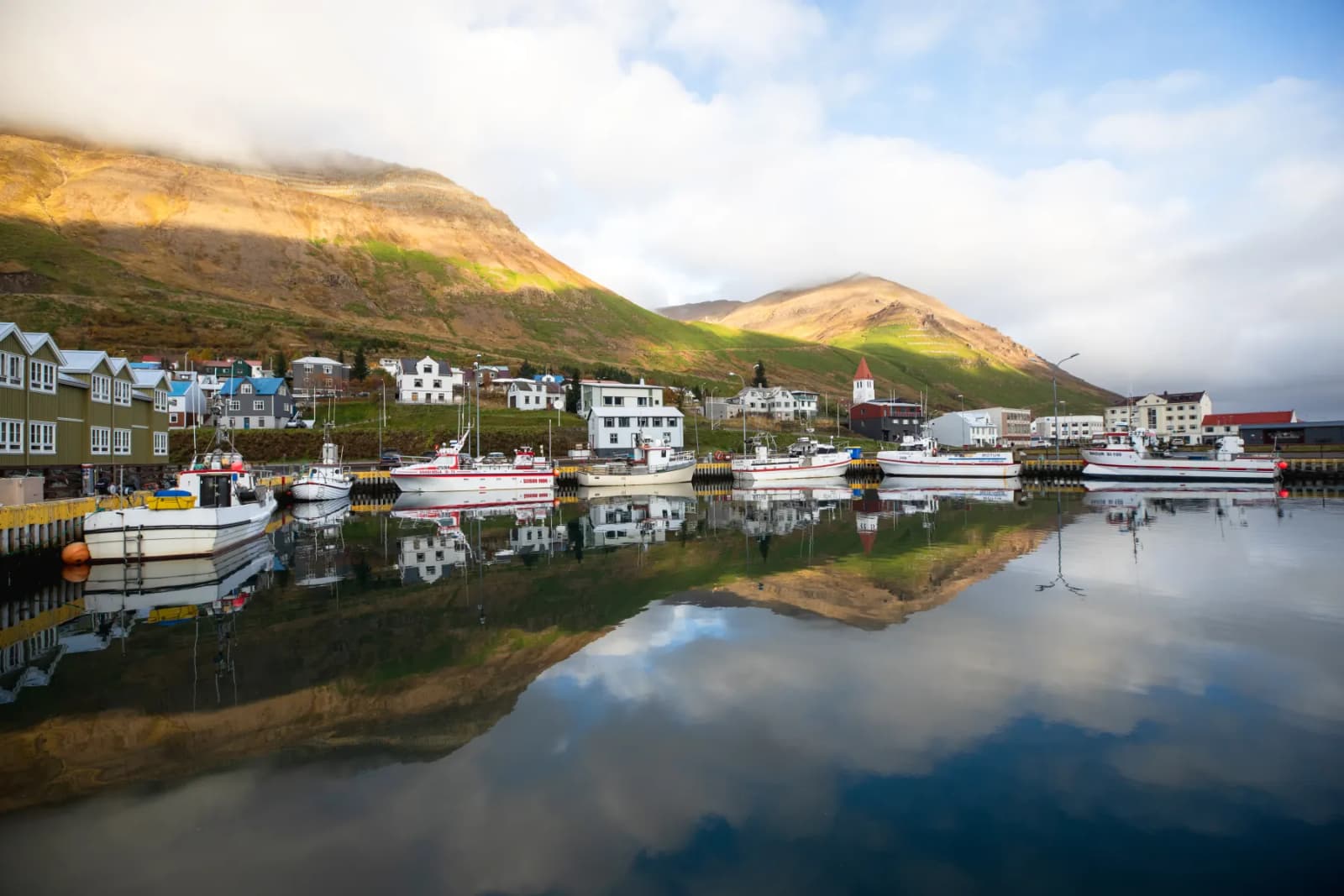
Siglufjörður feels enclosed and northern: boats in the harbor, compact streets, old industrial buildings, and mountains rising so close that the town feels carved into the fjord.
Start at the waterfront rather than treating the town as a roadside stop. The harbor gives Siglufjörður its scale, with fishing boats, painted buildings, calm water when the weather cooperates, and mountains that make even a short walk feel more dramatic than the map suggests.
The harbor is the quickest way to understand why Siglufjörður feels different from a simple north-coast drive-through.
The town is also more cultural than its size implies. Visit North Iceland identifies the Herring Era Museum as Iceland's largest maritime and industrial museum, spread across three distinct buildings that interpret worker housing, reduction processing, and the working port. If herring history is the focus, make that the anchor instead of turning the town into a checklist.
Siglufjörður: most visitors should choose one or two clear reasons to stop
Most visitors should choose one or two clear reasons to stop: the harbor, herring history, a short town walk, mountain scenery, or an outdoor plan that has been checked against conditions.
Herring history is the town's strongest cultural thread, and it gives the waterfront more meaning.
Go for the harbor if you want a compact waterfront pause with strong mountain context.
Go for herring history if cultural depth matters more than adding another scenic viewpoint.
Go for the town walk if the day needs texture between larger natural stops.
Go for outdoor activities only after checking official details, weather, and road conditions.
If you only have a short stop, do the harbor and the town center. If you have a slower day, add one cultural focus and keep enough margin for the drive out of the fjord.
How does Siglufjörður fit with Tröllaskagi and Skagafjörður?
Siglufjörður works best as the northern finish or turning point of a Tröllaskagi and Skagafjörður day. It is stronger when the route is built around the coast, not forced onto a packed Ring Road transfer.
From the east, Siglufjörður connects naturally with Dalvík and the Tröllaskagi mountain-and-fjord loop. From the west, it pairs with Hofsós, Skagafjörður, and cultural stops such as Glaumbær or Hólar in Hjaltadalur.
Siglufjörður is most useful when the route gives the town enough time to be more than a fuel-and-photo pause.
For a larger North Iceland trip, use Siglufjörður as a contrast to the better-known inland and volcanic anchors. It gives North Iceland a harbor-town and herring-history chapter that Mývatn, Goðafoss, and Dettifoss cannot provide.
A useful Siglufjörður visit usually needs about 1-2 hours
A useful Siglufjörður visit usually needs about 1-2 hours. Give it more time only when the town is a real route anchor or when a cultural, walking, or outdoor plan is the point.
Simple Siglufjörður timing choices
Visit style
Time to allow
Best when
Harbor and town pause
About 1 hour
You want the town's visual identity without reshaping the day
Town plus herring history
About 2-3 hours
Cultural context is one of the main reasons for the stop
North-coast slow day
Half day or more
You pair Siglufjörður with Tröllaskagi, Hofsós, Skagafjörður, or Dalvík
The town is compact, but the setting makes it feel larger than a quick map stop.Weather and light can change how the town feels, so keep the plan flexible.
Siglufjörður: check the official sources that match your reason for stopping
Check the official sources that match your reason for stopping. Road, weather, museum, pool, ski, and boat-related details are not things to guess from old trip reports.
For a normal sightseeing stop, the key checks are weather, road conditions, daylight, and the route sequence out of the fjord. For a culture-led or activity-led stop, check the relevant official visitor information before making the town the fixed point of the day.
Use for Iceland travel preparation and condition-aware decisions.
Which nearby stops make Siglufjörður work better?
The best pairings keep the day geographically honest. Choose a coherent north-coast cluster instead of trying to collect every famous North Iceland name in one push.
Cultural stops are strongest when they are paired with nearby places that share the same regional rhythm.
Tröllaskagi is the cleanest wider frame if the town is part of a mountain-and-fjord loop.
Hofsós works when the day is about small harbors and Skagafjörður coast rather than headline waterfalls.
Grettislaug belongs only if the day has enough margin and the local access details suit your plan.
Dalvík helps connect the east side of the peninsula when you are moving toward Eyjafjörður and Akureyri.
If you are comparing this against a faster north route, use Ring Road vs South Coast for the bigger pacing decision. Siglufjörður is a good stop when the route is allowed to feel northern, coastal, and specific.
Siglufjörður's identity is tied to herring-era buildings and local harbor culture, not only mountain scenery.
Siglufjörður FAQ
These are the questions that usually decide whether Siglufjörður belongs in a North Iceland plan.
Is Siglufjörður a good stop on a first Iceland trip?
Yes, if the trip includes real North Iceland time. It is usually too far north for short South Coast or Reykjavík-only itineraries.
Is Siglufjörður mainly a museum stop?
No. Herring history is a major reason to visit, but the harbor, mountain setting, town walk, and route role are just as important.
Can Siglufjörður be a quick stop?
Yes, but keep the goal modest. A short harbor walk works better than trying to force several visitor details into a tight day.
What should I check before driving to Siglufjörður?
Check official road, weather, safety, and local visitor information before relying on the stop, especially outside easy summer conditions.