Culture snapshot
- Type
- Maritime and industrial museum
- Region
- Siglufjörður, North Iceland
- Best for
- Harbor history and museum time
- Time
- About 60 to 120 minutes
- Route role
- Strongest on a Tröllaskagi stop
The Herring Era Museum is Siglufjörður’s most useful cultural stop, best for travelers who want the town’s harbor setting to mean more than a scenic pause on a North Iceland route.
Culture snapshot
Yes, if Siglufjörður is more than a quick scenic stop in your plan. The museum is the clearest way to understand why this small fjord town mattered far beyond its size.
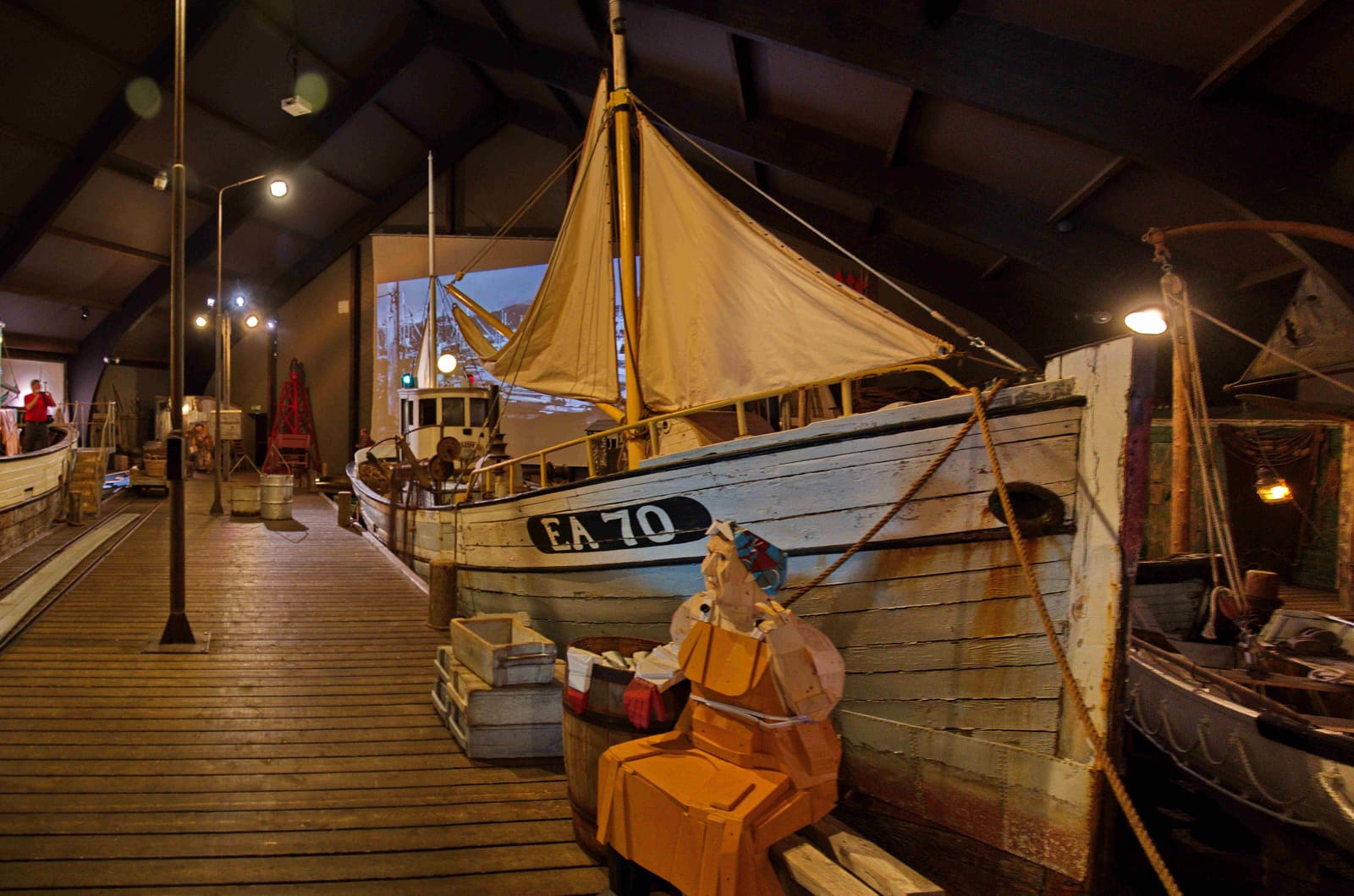
The Herring Era Museum works because it is not just a room of old fishing objects. It spreads the story across preserved and reconstructed herring-era spaces: a salting station, a fishmeal-and-oil factory, and a boathouse that makes the harbor feel active again.
Add it when Siglufjörður is a deliberate stop on a Tröllaskagi or North Iceland day. Keep it optional when the route is already tight and the only goal is reaching Akureyri, Mývatn, or the next overnight base.
Photo guide
The museum is strongest when Siglufjörður is a real stop, not just a quick harbor photo.
The visit is easiest to understand as three different scenes from the herring years: working, processing, and harbor life.
Róaldsbrakki is the human part of the stop. The former Norwegian herring station gives the salting work, seasonal labor, and bunkhouse life a physical setting, so the story feels closer than a standard museum panel.
Grána is the industrial part. Its machinery and factory framing explain how herring became meal and oil, and why this industry mattered to Iceland's economy rather than only to one fishing town.
The Boathouse is the most immediately visual part, with boats and quayside atmosphere. It helps visitors picture Siglufjörður as a working herring port, not just a pretty fjord settlement.
Most travelers should protect about 60 to 120 minutes. A faster visit can work, but the museum is better when the different buildings have room to feel distinct.
| Visit style | Best fit | Time to protect |
|---|---|---|
| Focused museum stop | You want the main buildings and enough context to understand the town. | About 60-90 minutes |
| Slower cultural stop | You like reading exhibits, comparing buildings, and lingering with boats or machinery. | About 90-120 minutes |
| Route is already full | You are only passing through Siglufjörður on a long transfer. | Keep it optional |
The weak version is trying to squeeze the museum between too many North Iceland anchors. If the same day already includes a long drive, Dalvík, Akureyri, and a late arrival, decide whether Siglufjörður itself is worth slowing down for.
Without the museum, Siglufjörður can feel like a beautiful harbor town. With it, the old waterfront starts to explain itself.
This is the main reason the museum belongs on the town page's shortlist. The surrounding mountains and harbor are obvious; the herring story explains the scale of ambition, money, labor, and decline behind the setting.
It also gives the day a useful indoor-outdoor balance. On a clear day, pair it with a waterfront walk. In rougher weather, use it as the cultural anchor that keeps a North Iceland day from becoming only a drive between viewpoints.
The most useful secondary angle is industrial history: herring was not a quirky local theme, but one of the forces that helped shape modern Iceland.
The museum's value grows when you see the herring era as labor, exports, technology, migration, and risk. Siglufjörður became a boom town because the fishery connected a remote fjord to wider European markets and Iceland's changing economy.
That makes the Herring Era Museum a strong companion to other cultural stops such as Akureyri Museum or the Reykjavik Maritime Museum. It is narrower than those museums, but the focus is exactly what makes it memorable.
Use official visitor information before making the museum a fixed part of a tight route, especially outside the easiest summer travel rhythm.
Use for visitor details and museum context.
Use for regional listing and location context.
Use before remote or weather-sensitive driving.
By ThorPublished Updated
Map
Use nearby places and useful bases before opening directions.
Interactive planning map for Herring Era Museum
Interactive map
Place context and external map links remain available without loading it.
Routes and itineraries
Compare road trips and itineraries that give this place a sensible position in the wider journey.
Planning context
Open the region or practical guide that resolves the next planning decision.
Keep Siglufjörður intentional
Use these links to decide whether the museum is your main Siglufjörður stop or part of a broader North Iceland day.