Is Norræna húsið worth visiting in Reykjavík?

Yes, if you are interested in architecture, Nordic culture, exhibitions, books, or a quieter Reykjavík stop. Norræna húsið is not a blockbuster museum; it is a calm cultural house whose value depends on your city rhythm.

The reason to go is the combination: Alvar Aalto architecture, a Nordic library, exhibition spaces, public events, a restaurant setting, and the wetland edge of the university area. It gives Reykjavík a different register from the louder city icons, which is exactly why some visitors remember it.

A local Iceland travel editor would add Norræna húsið to a Reykjavík day when the plan needs a thoughtful indoor pause between walks, museums, or weather changes. They would skip it when the traveler has only one short city loop and wants Hallgrímskirkja, harbor views, and a meal before leaving.

The stop works best when you treat it as selective rather than compulsory. Go for the building, the library, an exhibition, or a specific event; skip it if you need a high-impact landmark that explains itself in ten minutes.

Worth the stop?

When this stop makes sense

Good match for

  • architecture-focused Reykjavík visitors
  • travelers who like small cultural stops
  • rainy or windy city days
  • families who want a calm library break

Think twice if

  • travelers who only want big-ticket natural sights
  • visitors expecting a large museum collection

Pair it with

ReykjavikTjörninNational Museum of IcelandHallgrímskirkja

What kind of place is the Nordic House?

Norræna húsið is a Nordic cultural center in Reykjavík, operated under the Nordic Council of Ministers and designed by Finnish architect Alvar Aalto. Its public life is built around culture, language, literature, exhibitions, events, and debate.

The building opened in 1968 and still feels like a purpose-built cultural meeting house rather than a conventional attraction. The official background describes the library and Hvelfing exhibition hall as foundations of the program, while Visit Reykjavík emphasizes the house's place in the city's cultural calendar.

The house sits just outside the busiest downtown core, close to the university and Tjörnin walking area.

For travelers, that means the public experience can vary. One visit may be mostly architecture and library calm; another may revolve around an exhibition, a talk, a family program, or a meal. Check the official visitor information if a specific program detail is the reason you are going.

What will you notice in the building?

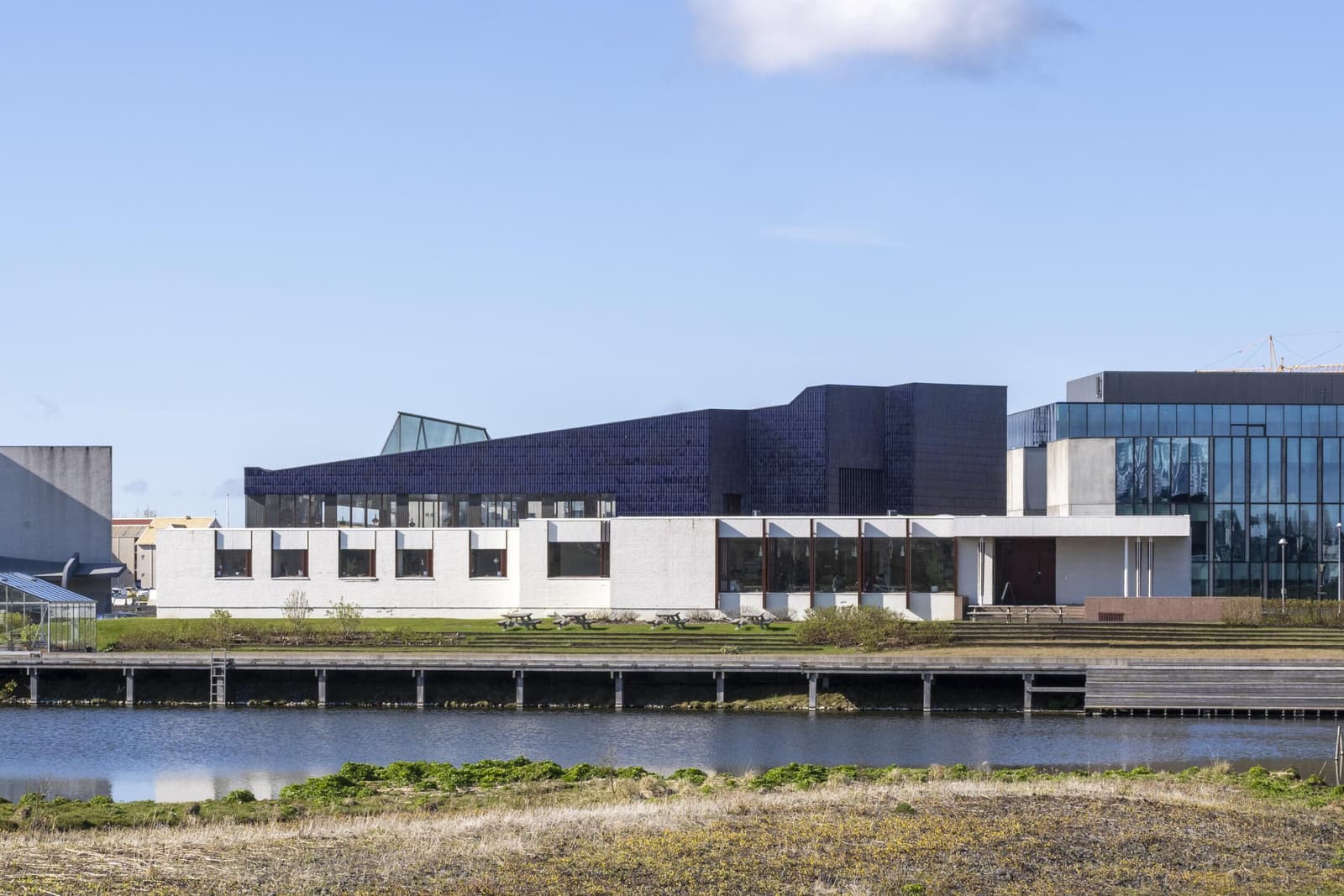
The building is the main attraction even when you do not attend an event. Look for the ultramarine blue roof, low white volumes, wood, tile, white plaster, Aalto lamps, custom furnishings, and the way daylight enters the library.

The official Nordic House description connects the roof shape to the mountain row beyond Reykjavík. In practice, the building feels less like a monument and more like a carefully proportioned place to sit, read, gather, and move slowly.

Inside, the library is the clearest everyday expression of the building's Nordic cultural role.

The library is usually the strongest interior moment for first-time visitors because it makes the Aalto design legible: shelves, lamps, pale wood, a central well, and a quiet public-room feeling. Even a short look inside can feel more specific than reading about the architecture from outside.

The auditorium and public rooms are part of the reason architecture-focused visitors make the detour.

How much time should you give it?

Most visitors should protect a flexible 30-90 minutes. The shorter end works for architecture and a quick library look; the longer end fits an exhibition, program, restaurant stop, or slower family break.

Nordic House visit choices
Visit styleChoose it whenTime to protect
Architecture lookYou mainly want to see the exterior, roof, and a few public interior detailsAbout 30-45 minutes
Culture pauseYou want the library, an exhibition, and enough time to move without rushingAbout 60-90 minutes
Program-led visitAn event, guided activity, family program, meal, or exhibition is the real reason to goBuild the day around official visitor details

The middle version is the safest default. It lets the house feel intentional without letting it take over a Reykjavík day that may also include Tjörnin, the National Museum of Iceland, or Hallgrímskirkja.

How does it fit with nearby Reykjavík stops?

Norræna húsið fits best into a compact west-central Reykjavík walk. It sits by the university and Vatnsmýri side of town, so it pairs naturally with water, parks, museums, and a slower city pace.

The easiest pairing is Tjörnin plus the National Museum of Iceland. Start with the cultural-house stop, continue toward the lake and Hljómskálagarður, then use the National Museum of Iceland if you want a deeper heritage visit. This keeps the day coherent instead of scattering small stops across the city.

If you are comparing Reykjavík landmarks, Hallgrímskirkja is more immediate and more iconic, while Norræna húsið is quieter and more architectural. Perlan is the better choice when you want a larger indoor attraction and city views, but the Nordic House is better when design and calm matter more than scale.

A short visit can still focus on the building's stairs, lamps, library well, and public rooms.
  • Pair it with Tjörnin when you want a gentle lake-and-culture walk.
  • Pair it with the National Museum of Iceland when the day needs deeper cultural context.
  • Pair it with Hallgrímskirkja only if you have room for both a major landmark and a quieter design stop.
  • Pair it with Perlan when weather pushes the day toward indoor or semi-indoor Reykjavík attractions.

When should you check official details first?

Check official visitor information whenever the visit depends on a specific exhibition, event, library use, food plan, children’s activity, guided program, ticketed element, or accessibility detail.

The durable way to plan Norræna húsið is to make the building and neighborhood the flexible base, then let official information decide the exact reason to go that day. This is especially important if you are building the stop around an event or family program rather than a general look at the house.

Weather can also change the value of the stop. On an exposed, windy, or wet Reykjavík day, a calm indoor cultural house may be more useful than it looks on a map. On a clear day with limited city time, you may prefer a landmark walk first and keep Norræna húsið as optional.

Who should skip it?

Skip Norræna húsið if your Reykjavík time is extremely short and you do not care about architecture, Nordic culture, exhibitions, books, or quiet indoor stops.

  • Skip it when you need one obvious city landmark and nothing more.
  • Skip it if the official program does not match your interests and architecture is not enough reason to go.
  • Skip a dedicated detour if your day already includes a large museum and a major indoor attraction.
  • Skip it on a fast arrival day if food, sleep, and a short walk are more useful.

The best compromise is to keep it as a nearby optional stop when you are already around Tjörnin, the university, or the National Museum of Iceland. That way the stop adds texture without forcing the whole day around it.

Norræna húsið FAQ

These questions decide whether the Nordic House should be a short architecture stop, an indoor culture pause, or an optional add-on.

How long do you need at Norræna húsið?

Most travelers need about 30-90 minutes, depending on whether they only want the building and library or also plan an exhibition, event, restaurant stop, or family activity.

Is the Nordic House mainly a museum?

No, it is better understood as a cultural house with architecture, library spaces, exhibitions, events, and public programs. Do not expect the scale or collection depth of a large museum.

What should you pair with Norræna húsið nearby?

The easiest pairings are Tjörnin, Hljómskálagarður, the University of Iceland area, and the National Museum of Iceland. Hallgrímskirkja and Perlan work better as broader Reykjavík comparisons.

Should families include the Nordic House?

Families should consider it when the official program, library, or children-focused spaces match the day. Check official visitor information before promising a specific activity to children.

Official checks and references

Use these sources for official visitor details, cultural programming, architectural background, and city context before building the stop into a fixed Reykjavík day.

Useful source checks