
Park snapshot
- Setting
- Public park around Suðurtjörn and Þorfinnstjörn
- Tree planting
- Planting in the park began in 1914
- Namesake
- Hljómskálinn band pavilion, built in 1923
- Visit style
- A short walk or rest beside Tjörnin
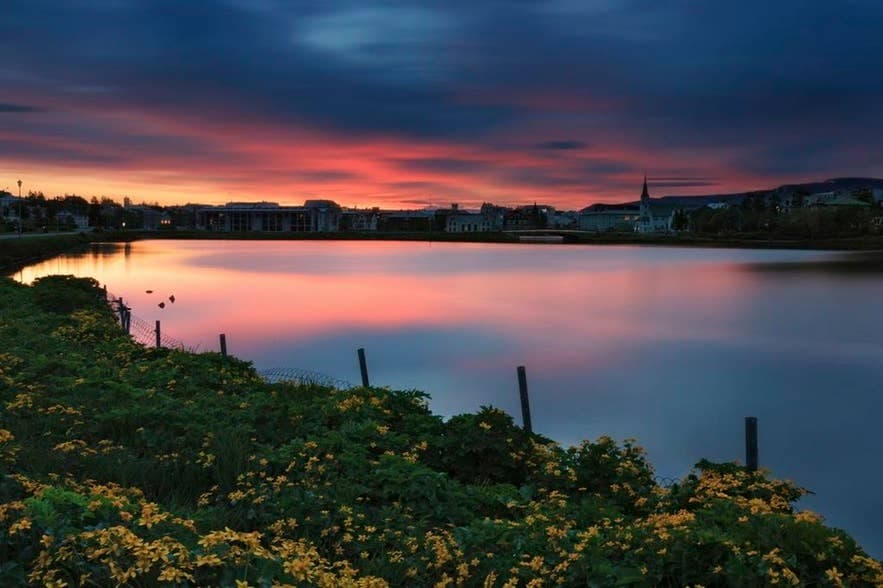
Hljómskálagarðurinn is a large public park around the south end of Tjörnin in central Reykjavík. Lawns, trees, paths, birdlife and the 1923 Hljómskálinn band pavilion make it a quiet place to pause between nearby museums and civic buildings.
Park snapshot
Hljómskálagarðurinn wraps around Suðurtjörn and the smaller Þorfinnstjörn, forming one of Reykjavík's larger public parks.
The park was created on filled ground after marshland at the pond's south end was drained. Tree planting began in 1914, and the grounds gradually expanded south as Reykjavík added more planting and paths. That history explains why the park feels greener and more sheltered than many open spaces in the city center.
Official park setting, history, ponds and wildlife context.
Reykjavík City's account of the park's planting and development.
Hljómskálinn was built in 1923 and used for brass-band practice; Hljómskálagarðurinn takes its name from this small music hall.
The pavilion is the park's clearest historic landmark. Old trees, lawns, sculptures and views across the pond give the wider space its character. It feels like a neighborhood garden despite sitting close to Reykjavík's central institutions.
Walking along the pond or sitting on a bench is enough to appreciate the park. There is no need to cover every path.
Several of Reykjavík's central cultural and civic buildings stand around Tjörnin, within an easy walk of the park.
Reykjavík City Hall stands at the north end of the pond. The National Gallery of Iceland is close to the eastern shore, while the National Museum of Iceland lies west of the park. Their proximity shows how closely Reykjavík's green spaces, civic buildings and museums sit together.
There is little shelter within the park. Rain, wind, snow or icy paths may make a short pause more sensible than a long walk, especially in winter.
Tjörnin's ducks, geese and other birds are part of the experience, but visitors should avoid disturbing or feeding them carelessly.
Reykjavík City asks people not to feed bread to birds during the warmer months. Bread can attract gulls and add nutrients to the water, harming ducklings and the pond ecosystem. Give birds room and follow any seasonal signs around nesting areas.
Current advice on bread, ducklings and the pond ecosystem.
Visitor-facing overview of the park, pond and nearby landmarks.
By ThorPublished Updated