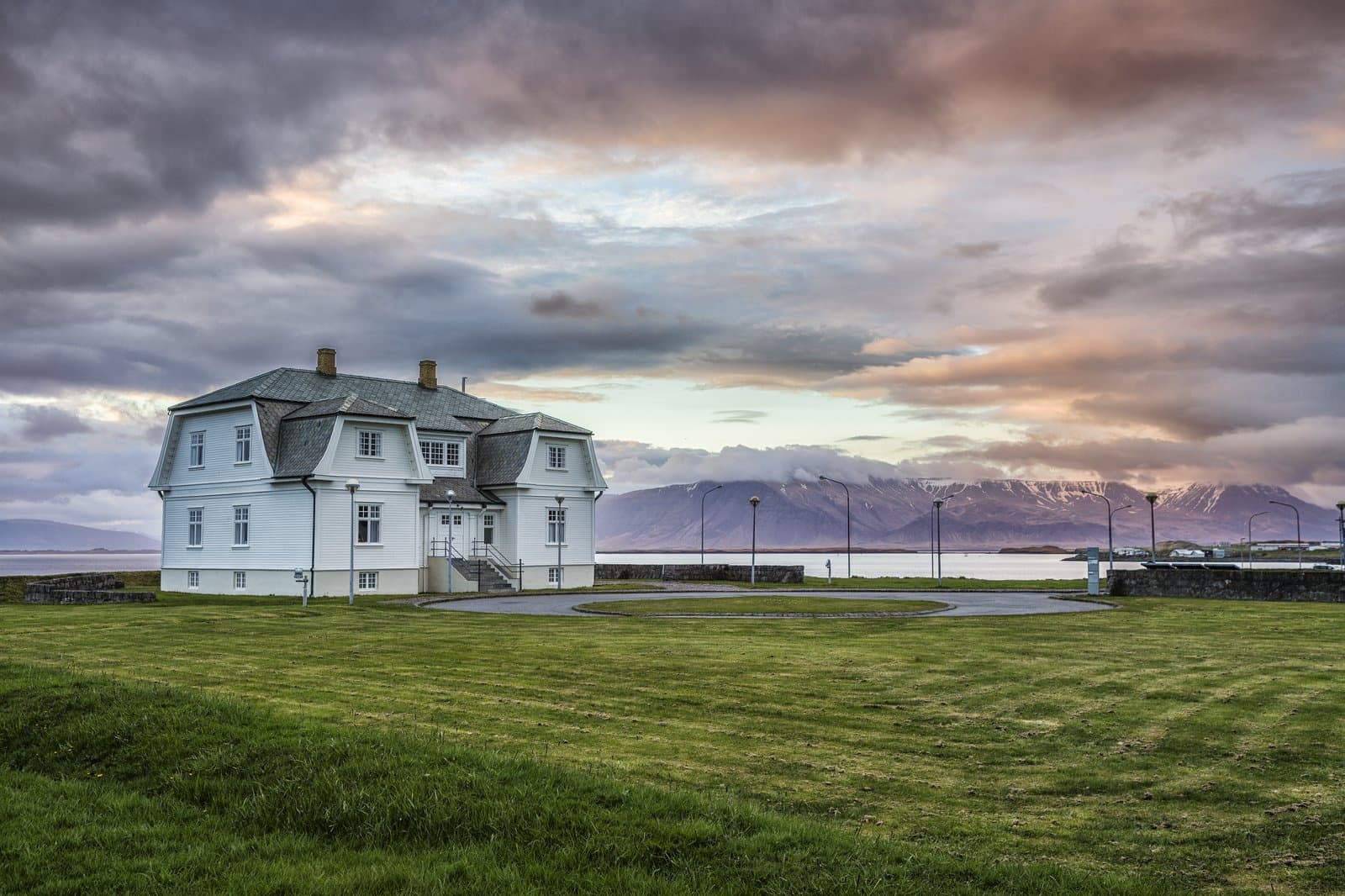
Höfði is a historic waterfront house in Reykjavík, best for a short exterior stop when Cold War history, architecture, or a harbor walk matters more than going inside.
Quick guide
Type
Historic Reykjavík house and cultural landmark
Setting
Borgartún waterfront area, east of the central harbor and downtown core
Time to allow
10-20 minutes for a quick exterior stop, or 30-45 minutes if folded into a waterfront walk
Best experience
Use it as a short history stop rather than a major standalone attraction
Access reality
Plan around the exterior unless official visitor information confirms a different access option
Season note
Works in any season, but wind, rain, ice, and low light can make the waterfront walk less pleasant
Nearby pairings
Hallgrímskirkja, Perlan, the waterfront, and other Reykjavík city landmarks
Before you go
Check official visitor information before relying on interior access or event-related details
Is Höfði worth visiting in Reykjavík?
Yes, Höfði is worth visiting if you want a short Reykjavík history stop, a waterfront pause, or a real-world setting for the Reagan-Gorbachev summit. It is weaker if you want a full interior attraction or a dramatic city viewpoint.
The visit is small by design. Most travelers should think of Höfði as a 10-20 minute exterior stop that adds diplomatic history and waterfront texture to a Reykjavík walk, especially when the day is already focused on the capital rather than open-road scenery.
A local Iceland travel editor would add Höfði when the route already includes the harbor side of Reykjavík, a walk through Borgartún, or a traveler with genuine Cold War history interest. They would skip it when the day needs a stronger anchor such as Hallgrímskirkja, Perlan, or a longer museum visit.
Choose the version of a Höfði stop that matches your Reykjavík day.
Visit choice
Use it when
Plan for
Quick look
You are nearby and want the building, lawn, and waterfront setting.
10-20 minutes outside.
Balanced city walk
You want a quieter history stop between stronger Reykjavík landmarks.
30-45 minutes with walking time.
Slow history focus
The summit story or building history is a real reason for your visit.
Check official visitor information before relying on interior access.
Photo guide
Höfði in photos
1 / 5
Höfði is strongest as a short waterfront history stop rather than a long standalone attraction.
Worth the stop?
When this stop makes sense
Good match for
Reykjavík city walks
Cold War history interest
short cultural stops
waterfront photo walks
Think twice if
travelers expecting a full museum visit
tight city days already focused on larger indoor attractions
Höfði looks modest compared with Reykjavík’s larger landmarks, but its reputation comes from what happened there. The house is closely associated with the 1986 meeting between Ronald Reagan and Mikhail Gorbachev, one of the best-known diplomatic moments connected with Iceland.
That history changes the value of the stop. You are not coming for a huge attraction footprint. You are coming because a white timber house beside the water became a recognizable Cold War setting, and because that story gives a short Reykjavík walk more context than another photo stop alone.
Interior images help explain the summit context, but travelers should verify official visitor details before relying on access inside the house.
What you actually see from the outside
The normal visitor experience is simple: a white historic house, a lawn, stone edges, the waterfront behind it, and a city setting that feels quieter than the central shopping streets.
The building is most satisfying when you arrive with the right expectations. The front is neat and restrained, the setting opens toward the water, and the surrounding streets make it feel like a piece of Reykjavík civic history rather than a showpiece attraction.
If you are choosing between city landmarks, Hallgrímskirkja gives the stronger skyline and viewpoint moment, while Perlan is the better choice for a more structured indoor attraction. Höfði earns its place when the historical context is part of the appeal.
From outside, Höfði is a compact landmark rather than a large visitor site.
Can you go inside Höfði?
Do not build your plan around going inside unless official visitor information supports it. For most travel planning, Höfði should be treated as an exterior landmark with possible access details to verify before you depend on them.
This is the main expectation to get right. Höfði is not a normal museum where every traveler can assume a standard interior visit. If the inside matters to you, check the official visitor page before you rearrange a day around it.
The interior helps explain the building’s character, but the practical plan should start with official access checks.
How to pair Höfði with a Reykjavík walk
Höfði works best when it is folded into a Reykjavík city day, not when it interrupts a route outside the capital. Keep it with waterfront time, nearby offices and hotels, or a broader city-landmark loop.
If you are staying in the city, use the Reykjavík region guide to decide whether your day should be history-led, viewpoint-led, or mostly food and neighborhood time. Höfði fits the history-led version better than a first-time landmark sprint.
Pair it with Hallgrímskirkja if you want one modest history stop and one stronger city landmark.
Pair it with Perlan if the day needs an indoor attraction, a broader view, and a less weather-exposed backup.
Keep it optional on arrival or departure days when jet lag, weather, or luggage timing may change the walk.
Do not let it crowd out a major museum or a route day unless the summit history is a priority.
The waterfront setting is part of the stop, especially when the weather makes walking pleasant.
When Höfði is easy to skip
Höfði is skippable when your Reykjavík time is tight and the story does not interest you. It is a useful city detail, not a landmark that every first trip has to include.
Skip it if you want a high-impact viewpoint or skyline photo.
Skip it if your city day already has a substantial museum, Perlan, and a downtown walk.
Skip it in rough weather if the waterfront approach would become the least pleasant part of the day.
Keep it as an optional add-on in a 5-day Iceland itinerary, especially when the non-city route days are already full.
The best use of Höfði is honest and small: add it when it gives your Reykjavík day a specific historical note, and leave it out when it would only become another place to tick off.
Höfði FAQ
These questions matter because Höfði is better planned as a short landmark than as a conventional attraction visit.
How long do you need at Höfði?
Most travelers need 10-20 minutes for an exterior look, or 30-45 minutes if Höfði is part of a wider Reykjavík waterfront walk.
Is Höfði worth a detour?
Höfði is worth a small detour if Cold War history or Reykjavík civic landmarks interest you. It is not worth reshaping a packed city day around by itself.
Can visitors enter Höfði?
Do not assume interior access. Check official visitor information before relying on entry, event access, or any building-use details.
What should you pair with Höfði?
Pair Höfði with Hallgrímskirkja, Perlan, waterfront walking time, or the Reykjavík region guide, depending on whether your day needs landmarks, views, or city context.
Official checks and references
Use these sources for official visitor details, historical context, and weather-sensitive city-walk decisions before you make Höfði a fixed part of the day.