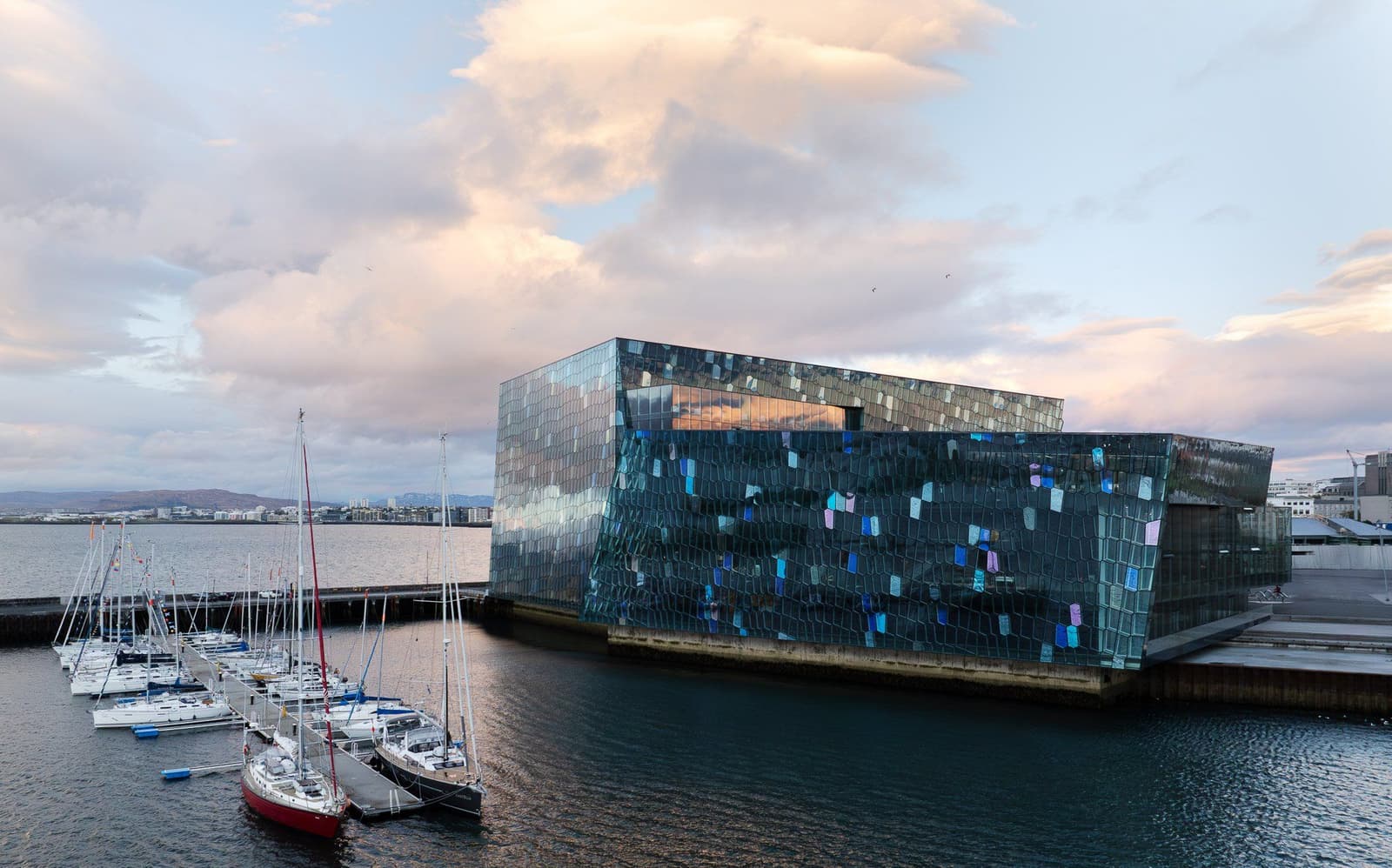
Harpa is Reykjavík's waterfront concert hall and one of the city's defining contemporary buildings, known for its geometric glass facade, luminous interior and active cultural program beside the old harbor.
City stop snapshot
Opened
2011 on Reykjavík's waterfront
Role
Concert hall, conference centre and public cultural landmark
Design
Henning Larsen and Batteríið; facade developed with Ólafur Elíasson
Recognition
2013 Mies van der Rohe Award for contemporary architecture
Public access
Free building entry; exhibitions and performances have separate admission
In this guide
Harpa is both a working venue and a Reykjavík landmark
The building stands where central Reykjavík meets the old harbor, functioning as a concert hall while giving the waterfront one of its most recognizable silhouettes.
Harpa opened in May 2011 and is home to the Iceland Symphony Orchestra and Reykjavík Big Band. Concerts, conferences and cultural events keep the halls in regular use. A daytime architecture visit and an evening performance offer different ways to experience the building.
A traveler does not need a concert ticket to understand the building. The exterior, lobby and views through the facade make a worthwhile short stop, especially when the harbor and changing daylight are part of the experience.
Harpa Concert Hall and Conference Centre in photos
1 / 2
Harpa's glass facade and waterfront plaza reflected in water.
The facade changes with light, weather and viewpoint
Harpa's glass skin is built from repeated geometric cells rather than a flat curtain wall, so the building can look dark, reflective or luminous within the same day.
Henning Larsen Architects and Icelandic studio Batteríið designed the building, with artist Ólafur Elíasson developing the glass facade in collaboration with the architects. Colored panels and repeated geometric forms reflect the water, sky and movement around the harbor.
The architecture received the European Union's Mies van der Rohe Award in 2013. The award helps explain Harpa's international reputation, but the design is easiest to appreciate by walking along the exterior and then looking back through it from inside.
From inside, the geometric glass breaks the harbor view into color, reflections and repeated forms.
Design team, facade concept and architectural award.
A casual visit focuses on the public interior
Without an event, the main experience is the scale of the foyer, the shifting glass and the framed views of the water and mountains beyond Reykjavík.
Walk far enough inside to see how the mirrored ceilings, dark structural frame and faceted windows change the sense of space. The major performance halls are not automatically part of a casual visit, so do not expect a self-guided tour through every auditorium.
The public interior makes the facade's depth and scale clearer than the waterfront view alone.
Hljóðhimnar is a free interactive sound space for children. Check Harpa’s family program for other activities during your visit. The public foyer is free to enter, while exhibitions and performances have their own admission arrangements.
Music exhibitions and the Volcano Express
Two indoor experiences offer different subjects and formats beyond the public foyer.
Visitor experiences inside Harpa
Experience
What to expect
Access to check
World of Icelandic Music
Icelandic music history through multimedia displays, interactive exhibits and a multilingual audio guide.
Ground floor near the main entrance; confirm step-free exhibition access, admission and hours with Harpa.
Volcano Express
A motion-seat film experience with eruption footage, heat effects and a separate pre-show area.
Floor K2. Check age and motion-related restrictions, current access and the time needed for the complete visit.
The music exhibition suits visitors interested in Icelandic artists and musical history. Volcano Express focuses on volcanic imagery and physical effects. Choose by the subject and format your group enjoys; neither requires attending a concert.
Allow roughly 20–45 minutes for a casual architecture stop. This estimate covers the exterior and foyer; exhibitions and performances need additional time.
Harpa is at Austurbakki 2 on Reykjavík’s waterfront. Sun Voyager continues the shore walk east, while Reykjavík City Hall leads toward Tjörnin and the old center. Hallgrímskirkja adds an uphill city walk when you have more time.
Elevators connect the parking garage and building floors. Wheelchair seating in the halls, assistance for visually impaired visitors and hearing equipment require advance arrangements with the box office. Confirm the arrangements for your particular event as well as current building hours.